




Geometric Cut Glass
Geometric cut glass brings sharp angles and heavy refraction to surfaces, capturing the rigorous design spirit of the early twentieth century.
Geometric Cut Glass
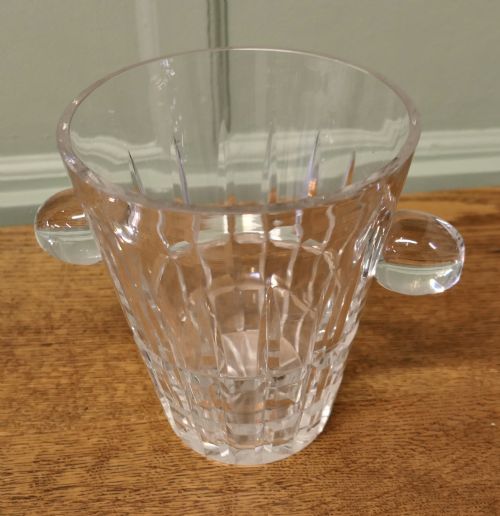
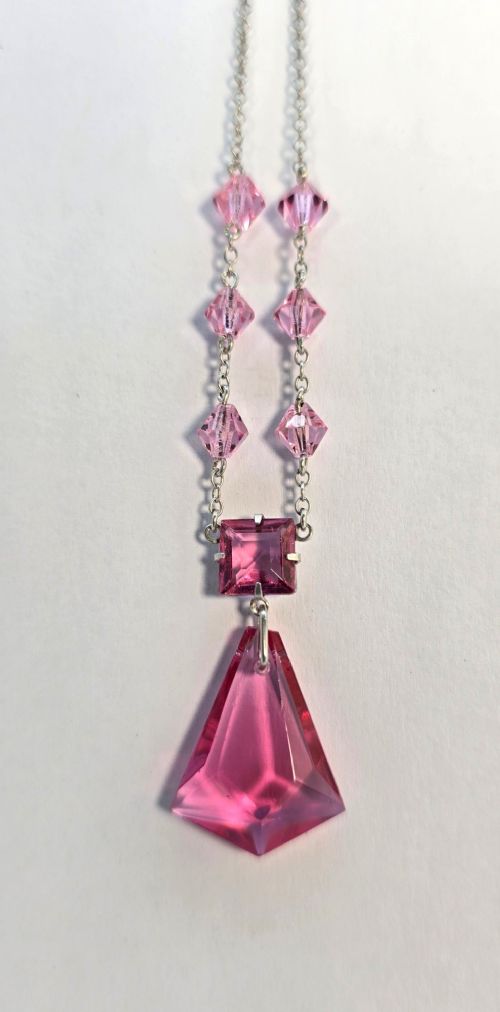
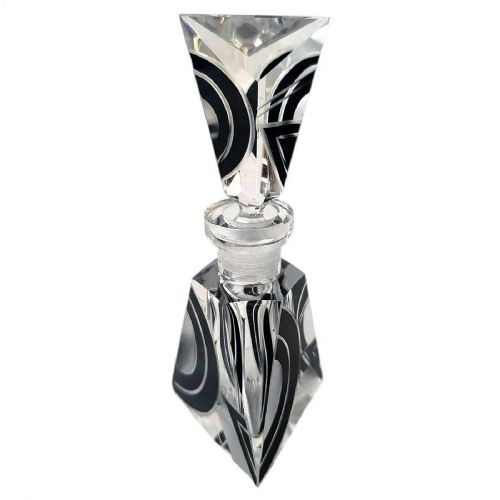
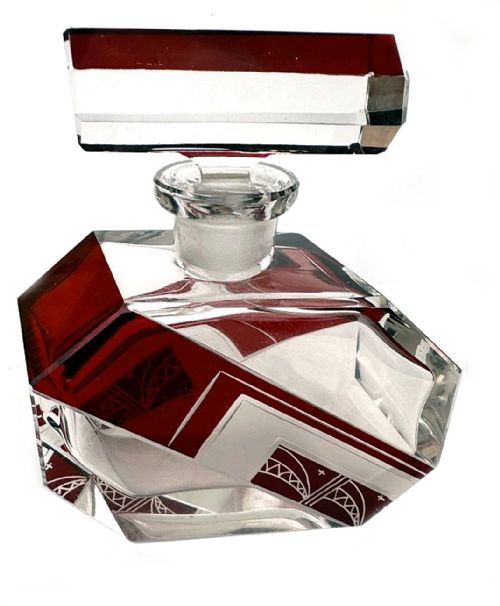
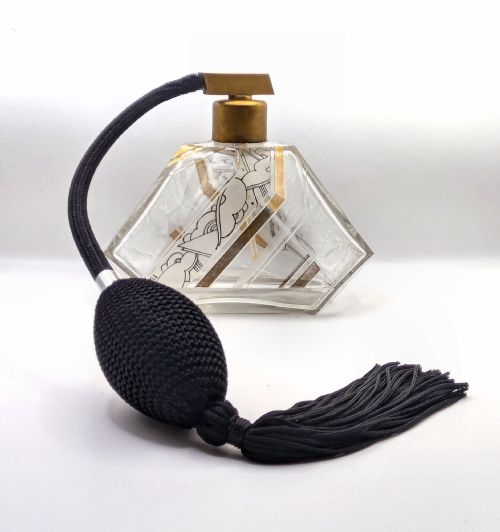
When you search for geometric cut glass, you encounter functional objects and dressing table items dominated by the Art Deco style, alongside earlier Victorian and Edwardian examples. Perfume bottles, decanter sets, and vases form the bulk of the selection, originating from makers across Britain, Bohemia, Belgium, and France.
The most common pieces date from the 1930s, utilising clear and coloured crystal shaped with panels, squares, and linear facets. These items range from small atomisers and finger plates to substantial claret jugs and wall mirrors, reflecting the modernist taste for precision and geometry.
Materials and production methods
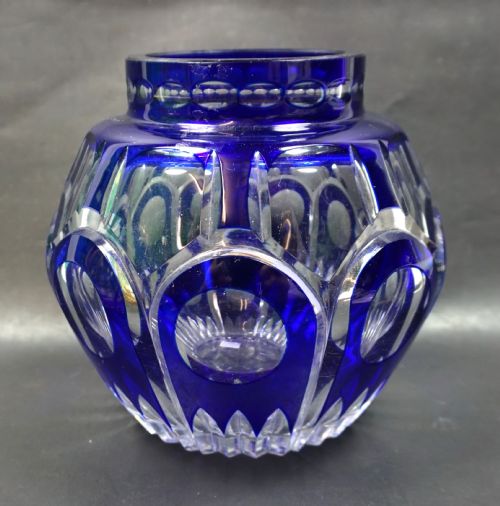
Makers utilised lead crystal, cut glass, and standard glass, frequently applying coloured glass overlays to create deep contrast when cut. Technicians ground facets directly into the material using wheels, then polished the surfaces to achieve sharp, clean edges that catch the light.
Metal mounts in silver plate and sterling silver, alongside enamel decoration, appear on select perfume bottles and decanters. These secondary materials complement the glass body through secure collars, stoppers, and hinged mechanisms.
Listings span the Victorian era through the 1940s, with a strong concentration of Art Deco pieces from the 1930s.
Factors that separate the grades
The precision of the facet cutting dictates the visual clarity of the piece, separating standard production from master craftsmanship. Crisp, aligned angles and deep, clean troughs indicate superior execution by the cutter.
The quality of the underlying glass material, whether clear lead crystal or saturated over-crystal, determines the weight and optical resonance. Weightier pieces with unclouded colour and minimal internal bubbles represent the higher tier of manufacture.
Karl Palda·Val St. Lambert·Hukin & Heath·Moser
The Geometric Cut Glass Glossary
- Atomiser
- A perfume bottle fitted with a bulb spray mechanism for misting fragrance. These often combine cut glass bodies with metal collars.
- Over-crystal
- A layer of coloured glass fused over a clear crystal core before cutting. Cutting through the top layer reveals the clear glass underneath.
- Claret jug
- A pouring vessel designed for wine, typically combining a glass body with a silver-plated handle, spout, and hinged lid.
- Finger plate
- A protective decorative plaque mounted around a door handle to prevent finger marks on the paint or wood. These frequently utilise geometric moulded or cut glass.
- Faceting
- The process of grinding flat planes into the surface of glass. This technique maximises light refraction across the object.
Geometric Cut Glass: Frequently Asked Questions
How do I date geometric cut glass?
Dating relies primarily on stylistic indicators such as Art Deco symmetry, Wiener Werkstätte influence, or Victorian silver hallmarks. Examining the manufacturing techniques and any factory marks helps narrow the decade of production.
Most items date from the interwar period, whilst earlier examples show heavier Victorian proportions or Edwardian floral integration alongside the cutting.
Are crystal and glass the same?
Crystal contains metal oxides such as lead, which increases the weight, refractive index, and clarity compared to standard soda-lime glass. This composition allows for sharper facet cutting and a brighter ring when tapped.
Listings distinguish between standard glass, cut glass, and lead crystal based on the specific material properties recorded by the dealer.
How were perfume atomisers used?
Perfume atomisers served on dressing tables to dispense liquid fragrance through a squeeze bulb connected to a fine interior tube. They allowed users to apply scent evenly without removing the stopper.
Many survive with their original metal hardware, though the rubber components inside the bulbs often require replacement over time due to perishing.