


Vintage Konya Carpet
A vintage konya carpet brings grounded Central Anatolian village character to a floor through rich tribal geometry and authentic hand-spun materials.
Vintage Konya Carpet
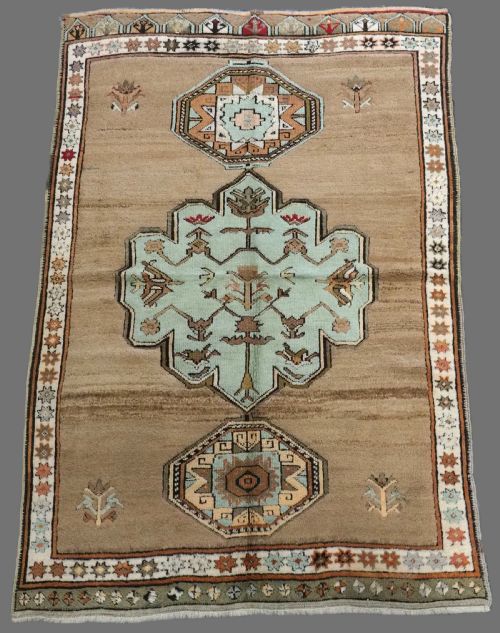
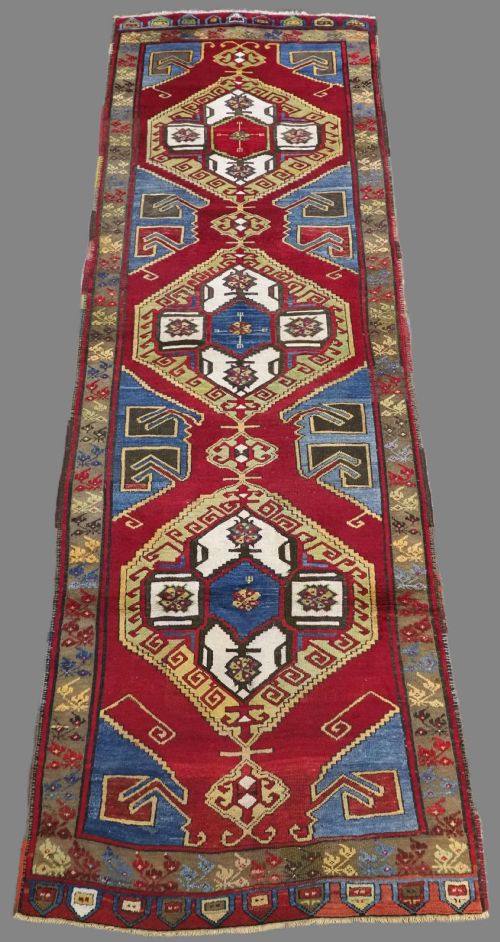
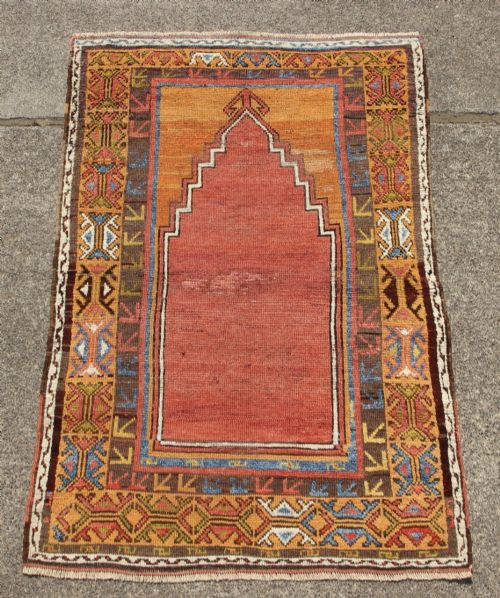
When you search for a vintage konya carpet, you encounter traditional woven floor coverings originating from the central plateau of Anatolia. The selection spans distinct formats, appearing frequently as village rugs, long runners, flatwoven kilims, and prayer rugs defined by specific architectural mihrab designs.
Most examples date across the nineteenth and early twentieth centuries, reflecting the enduring tribal weaving traditions of the region. Pieces range from smaller ivory ground format floor pieces to expansive room-sized village carpets and half-kilim hybrids.
The aesthetic relies heavily on Anatolian tribal motifs, executed by village weavers who utilised local iconography passed down through generations. These textiles carry a distinct regional identity that separates them from commercial urban workshop production.
Assessing Quality
Quality rests upon the fineness of the weave and the integrity of the natural materials used in the pile and foundation. The best examples exhibit careful control of hand-spun wool and precise execution of traditional tribal patterns.
Visual harmony and the preservation of soft, natural colours distinguish superior pieces from standard examples. The balance between the field design and the border geometry determines the overall aesthetic success of the textile.
Object forms documented in this category include prayer rugs, long runners, half-kilims, and traditional village area rugs.
The Vintage Konya Carpet Glossary
- Anatolian
- Pertaining to the historic region forming the Asian part of Turkey. This term encompasses the diverse village and tribal weaving traditions found across the central plateau.
- Prayer Rug
- A textile featuring a distinct arched design known as a mihrab. These pieces were traditionally used for personal daily prayer by pointing the niche toward Mecca.
- Kilim
- A flatwoven textile produced without a pile by tightly interweaving warp and weft strands. These pieces offer lighter floor coverings and distinct geometric surface patterns.
- Yatak
- A term describing a specific type of plush, long-piled Turkish sleeping rug or heavy floor covering. These pieces generally display a softer, thicker handle than standard utility rugs.
- Mihrab
- The arched architectural niche depicted on prayer rugs. It symbolizes the direction of prayer and forms the focal point of the carpet's design.
Vintage Konya Carpet: Frequently Asked Questions
How do I care for a vintage konya carpet?
Vacuum gently without using a rotating brush roll to protect the historic wool pile and foundation fibres. Keep the rug out of direct sunlight to prevent natural dyes from fading over decades of use.
Professional cleaning should be handled exclusively by specialists experienced in antique tribal textiles. Avoid harsh chemical treatments or excessive water immersion during maintenance.
Where were these carpets made?
These textiles originate from Konya and surrounding villages in Central Anatolia. Local weavers produced them within traditional domestic environments rather than large urban manufactories.
Specific pieces trace their origins to regional centres and surrounding settlements such as Karapinar, Sivrihisar, and Kavak village.
How do I identify a prayer rug?
Look for the characteristic pointed arch or niche motif at one end of the field design. This architectural element represents the mihrab found in mosques.
The weaver typically designed the textile so the user could orient the arch during daily devotional practice.