



Anatolian Wool Runner
An anatolian wool runner brings centuries of regional weaving traditions into narrow spaces through durable floor coverings.

Anatolian Wool Runner
When you search for an anatolian wool runner, you encounter long, narrow floor coverings produced across Turkish regions from the nineteenth century into the twentieth century. These textiles encompass village productions, tribal weaving, and city workshop carpets designed for corridors and halls.
The selections available include long narrow runners alongside half kilim variants and village pieces bearing traditional motifs. Such floor coverings bridge functional hallway placement and decorative regional artistry.
Pieces span multiple historical periods, notably the nineteenth century, alongside later examples from the 1900s to the 1930s. Each example reflects the specific village or tribal group responsible for its construction.
How they were made
Weavers constructed these textiles predominantly using wool, cotton, hand-spun wool, and angora wool. These natural fibres provided the necessary tensile strength and soft pile required for heavy domestic use.
Techniques combined hand-knotting and flat-weaving methods, visible in examples such as kilims and half-kilim runners woven in parts. The interplay of hand-spun materials and traditional looping creates the characteristic dense structure.
Some nineteenth-century weavers cleverly solved loom limitations by simply weaving long runners in two separate sections and joining them together.
What varies in quality
Quality diverges according to the precision of the knotting and the complexity of the regional design execution. Finer examples display tight structural foundations and deliberate control over dye placement.
The integrity of the wool and the consistency of the hand-spun yarn dictate the durability and tactile weight of each piece. Variations in survival condition and structural preservation further separate standard village output from finer workshop productions.
The Anatolian Wool Runner Glossary
- Kilim
- A flat-woven carpet or rug produced without a pile. These textiles rely on tightly interlocked warp and weft threads to form geometric patterns.
- Prayer rug
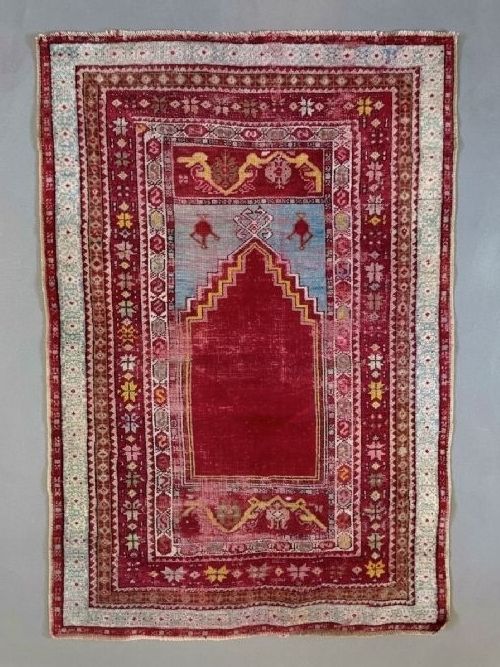
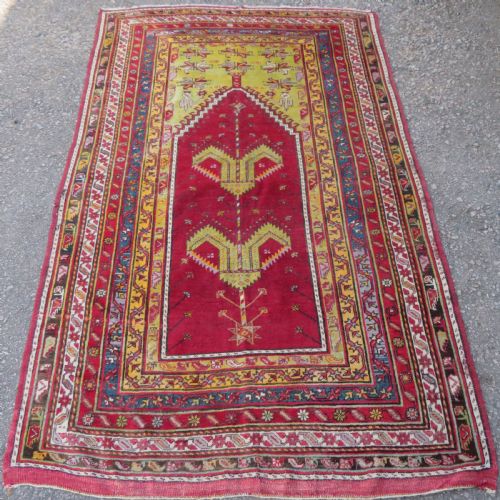
- A small textile featuring a mihrab or niche design, traditionally used for personal devotion. These pieces often originate from specific weaving centres like Kirsehir and Ladik.
- Runner
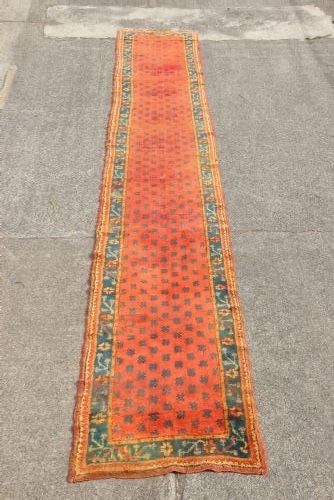
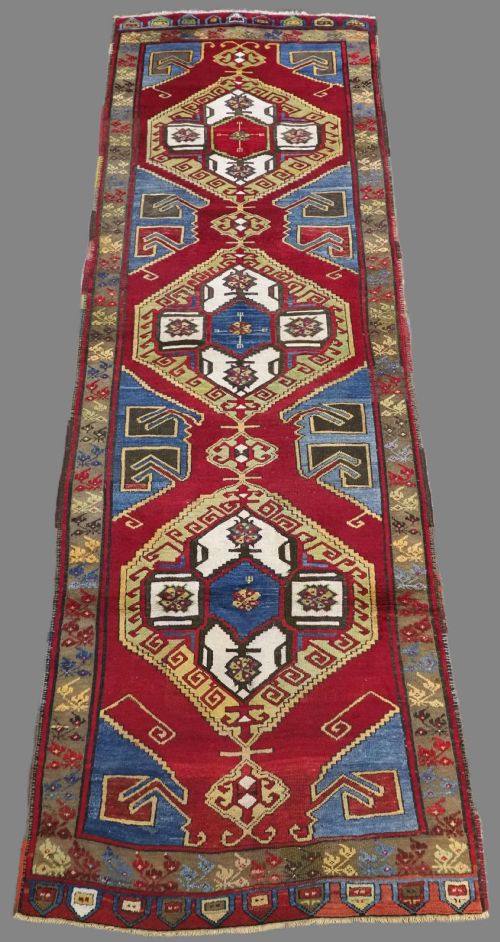
- A long, narrow carpet format suited for hallways, corridors, and stairs. Dimensions typically emphasise length over width to fit restricted floor areas.
- Warp
- The longitudinal threads stretched vertically on a loom before weaving begins. They form the structural skeleton of the textile and often appear at the fringes.
- Weft
- The horizontal threads passed across the warp to hold the knots or flat-weave in place. Beating the weft tightly down ensures structural density.
Anatolian Wool Runner: Frequently Asked Questions
Where were these runners placed?
These long textiles served primarily in corridors, halls, and narrow rooms within traditional homes. Their elongated dimensions accommodated transit routes while providing warmth on wooden or stone floors.
Village weavers designed them specifically to fit domestic layouts that required narrow rectangular floor coverings rather than broad square carpets.
How do I care for an old wool runner?
Maintenance requires regular gentle vacuuming without a rotating brush roll to protect the fragile wool pile. Professional cleaning suited for antique textiles preserves the natural lanolin within the fibres.
Placing a breathable underlay beneath the textile prevents slipping and reduces friction against hard flooring during daily use.
What defines an Oushak piece?
Oushak carpets originate from the town of Usak in western Anatolia, known for distinctive larger-scale floral or geometric motifs. These pieces frequently utilise softer pastel or muted colour palettes compared to more saturated tribal counterparts.
Workshop weavers in this region developed distinct decorative vocabularies that influenced international interior aesthetics over multiple centuries.
How can I tell village work from workshop pieces?
Village and tribal pieces display asymmetrical motifs, spontaneous colour shifts, and thicker hand-spun wool characteristic of domestic production. Workshop carpets tend toward controlled symmetry, finer knot counts, and balanced floral compositions.
Examining the reverse side reveals consistency in tension and material preparation that points toward either individual household weaving or organised workshop output.