

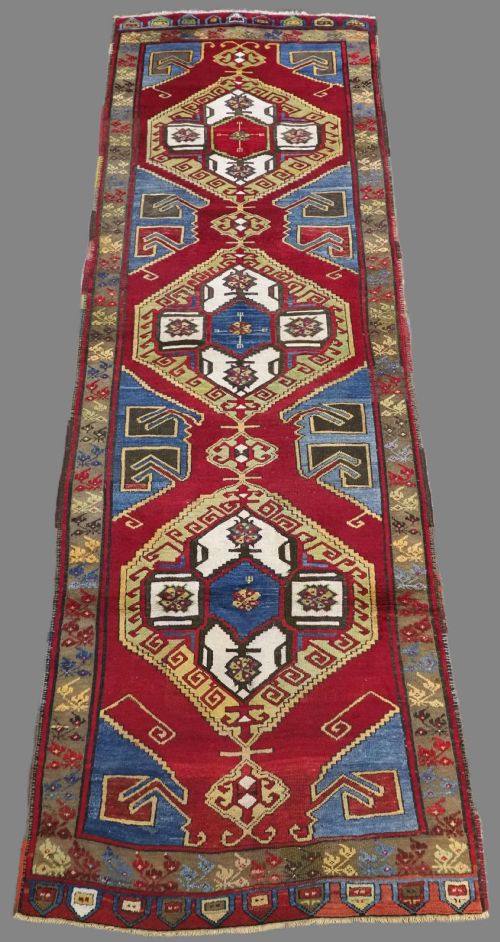


Vintage Middle Eastern Carpet
A vintage middle eastern carpet brings warmth and deep heritage into a room through dense wool and enduring regional designs.
Vintage Middle Eastern Carpet
When searching for a vintage middle eastern carpet, buyers encounter hand-knotted and hand-woven pieces originating from Persian and Anatolian weaving traditions. These textiles range from small village rugs to large palace carpets created across the nineteenth and twentieth centuries.
The selections available here most frequently include Persian tribal and traditional carpets, alongside Turkish prayer rugs and runners. Pieces associated with specific centres such as Kashan, Kirman, Hamadan and Malayer appear regularly alongside works by Kurdish and Afshar weavers.
Formats vary from square area rugs to long runners and grand kelleh carpets. Each piece reflects the distinct aesthetic vocabulary of its specific origin, whether geometric tribal motifs or intricate floral vase designs.
Materials and construction
The foundational structure of these textiles relies primarily on natural wool and cotton. Weavers utilised wool for the soft pile and foundation yarns, while cotton frequently served for warp and weft threads in urban workshops and some village contexts.
Construction involved meticulous hand-knotting or hand-weaving techniques passed down through generations. Natural dye stuffs provided the rich colour palettes seen in pieces dating from the Edwardian era back to the nineteenth century.
Listings feature pieces spanning from the mid nineteenth century through the 1940s, constructed entirely from wool and cotton.
Distinctions in quality
Quality in these carpets rests on the density of the knotting and the precision of the weave. Finer knots permit more intricate detail and sharper definition within complex floral or geometric compositions.
The choice of materials and the stability of the natural dyes also dictate the longevity and visual depth of a piece. Superior examples maintain structural integrity and colour resonance across decades of use.
Benlian
The Vintage Middle Eastern Carpet Glossary
- Knot
- The individual loops of wool tied around the warp threads that form the pile of a carpet. Higher knot counts often indicate greater detail in regional designs.
- Warp
- The vertical threads stretched tightly on the loom that carry the structural weight of the rug. Cotton and wool are the predominant materials used for these foundational elements.
- Weft
- The horizontal threads passed alternately over and under the warp threads to secure the knots in place. They contribute to the firmness and drape of the textile.
- Mihrab
- A niche design symbolising the direction of prayer, frequently found centring the composition of prayer rugs from Anatolia and Persia. This architectural motif guides the visual focus of the piece.
- Kelleh
- A large, elongated format of carpet traditionally used alongside larger room carpets in Persian interiors. These rectangular pieces offer substantial floor coverage for corridors or spacious rooms.
Vintage Middle Eastern Carpet: Frequently Asked Questions
How do I care for a vintage carpet?
Vacuum gently without a rotating brush roll to protect the wool pile from excessive friction. Professional specialist cleaning ensures the natural fibres and dyes remain stable over time.
Keep the textile out of direct, prolonged sunlight to prevent colour fading. Rotating the position periodically balances foot traffic and environmental exposure.
Where were these rugs made?
Production centres span traditional weaving regions across Persia and Anatolia. Village workshops, nomadic camps and urban manufactories each contributed distinct regional styles.
Specific areas include Hamadan, Kurdistan, Kirman, Kashan and various Anatolian provinces. Each locale utilised local materials and indigenous design patterns.
Are these carpets suitable for daily use?
Durable wool construction and sturdy foundational weaves make these textiles resilient against normal household activity. Placing an appropriate underlay beneath the rug prevents slipping and cushions the pile.
High-traffic areas benefit from denser weaves that withstand frequent stepping. Regular maintenance preserves the structural integrity of older pieces.
How do I identify the age of a rug?
Structural characteristics, material wear patterns and specific dye chemistry offer clues to a piece's chronological period. Stylistic motifs often align with nineteenth-century or early twentieth-century traditions.
Comparing construction methods with documented regional examples helps narrow down the decade of production. Expert examination of the foundation provides further confirmation.