


Vintage Kneehole Writing Desk
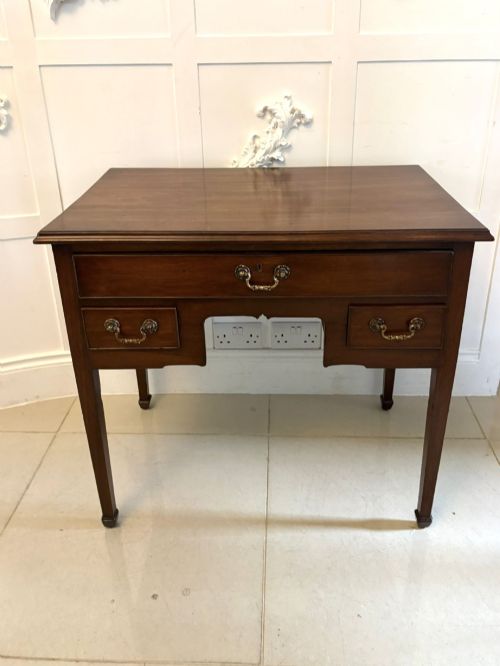
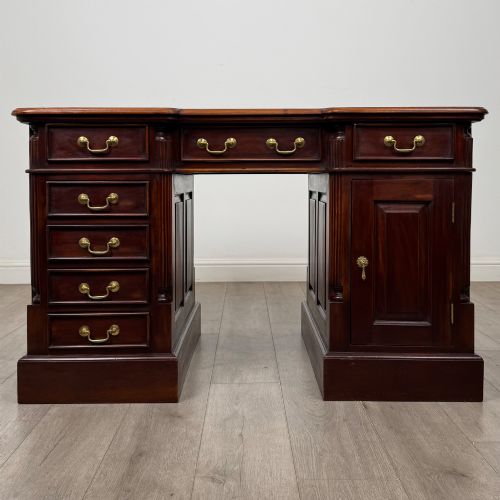
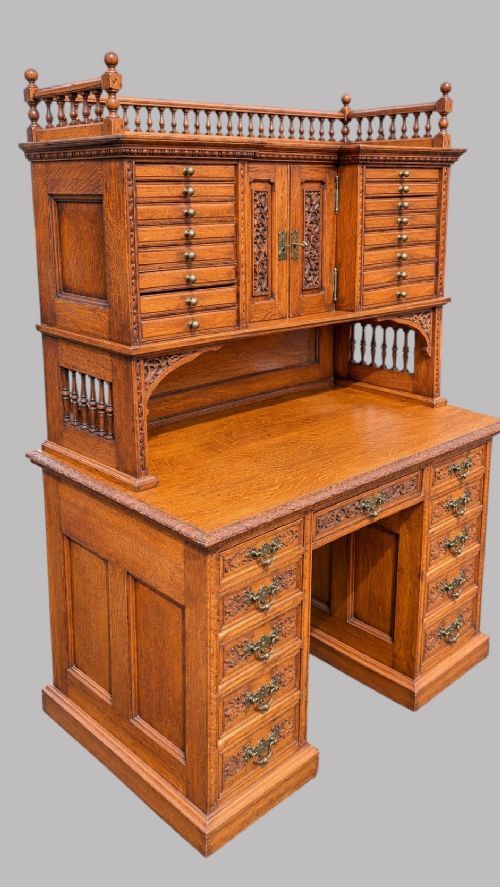
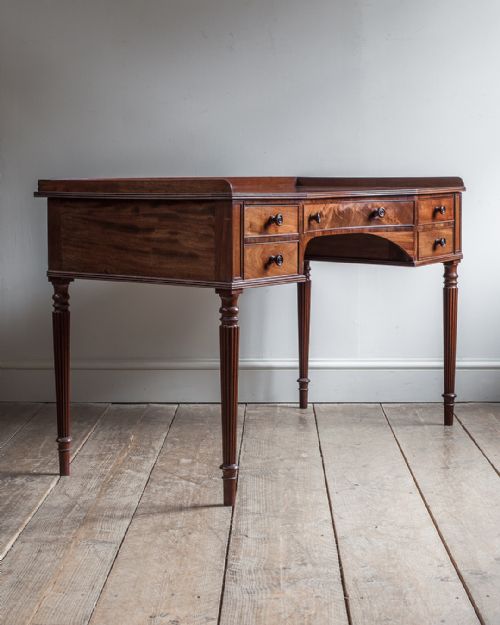
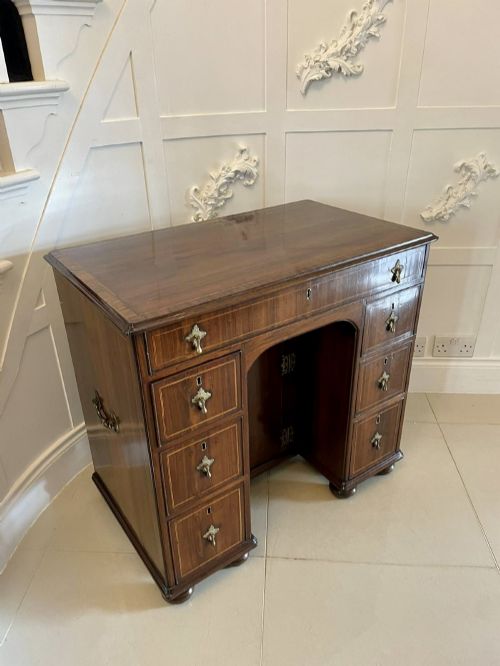
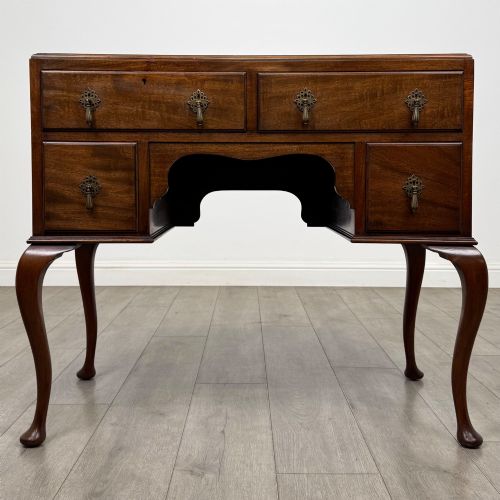
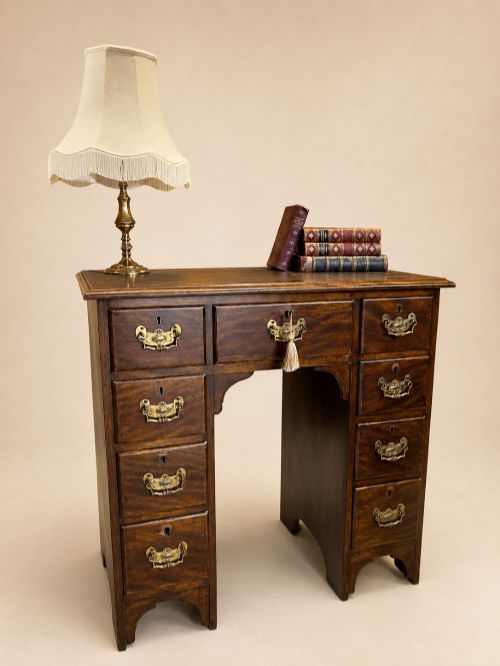
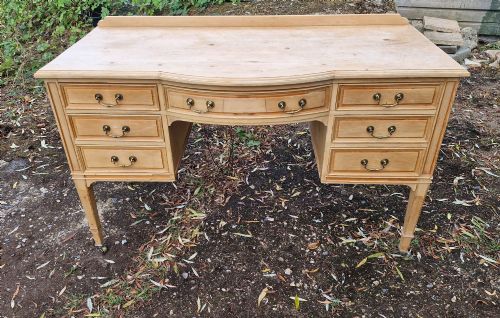
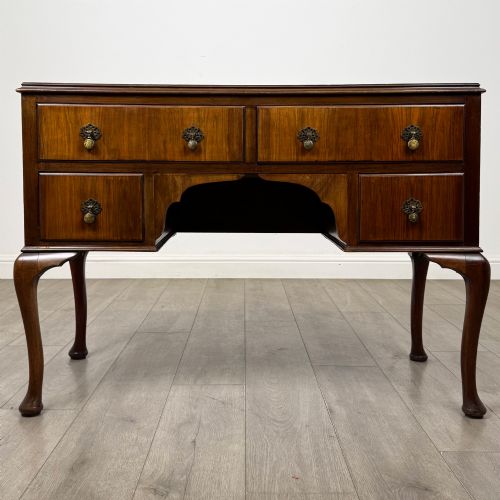
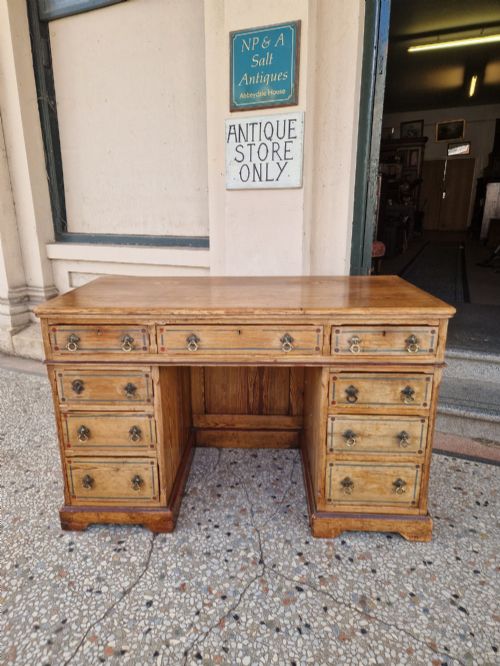
A vintage kneehole writing desk organises papers with central drawer access while offering substantial pedestals of storage on either side.
Vintage Kneehole Writing Desk
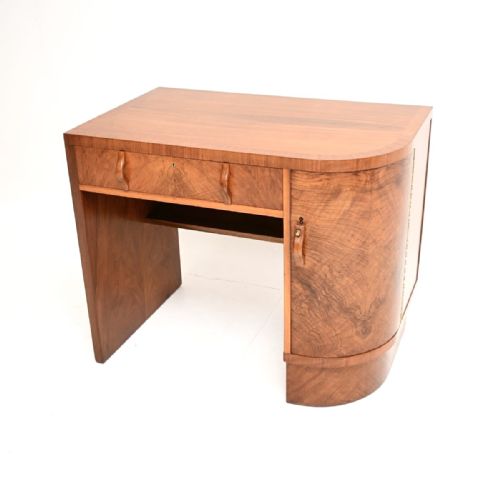
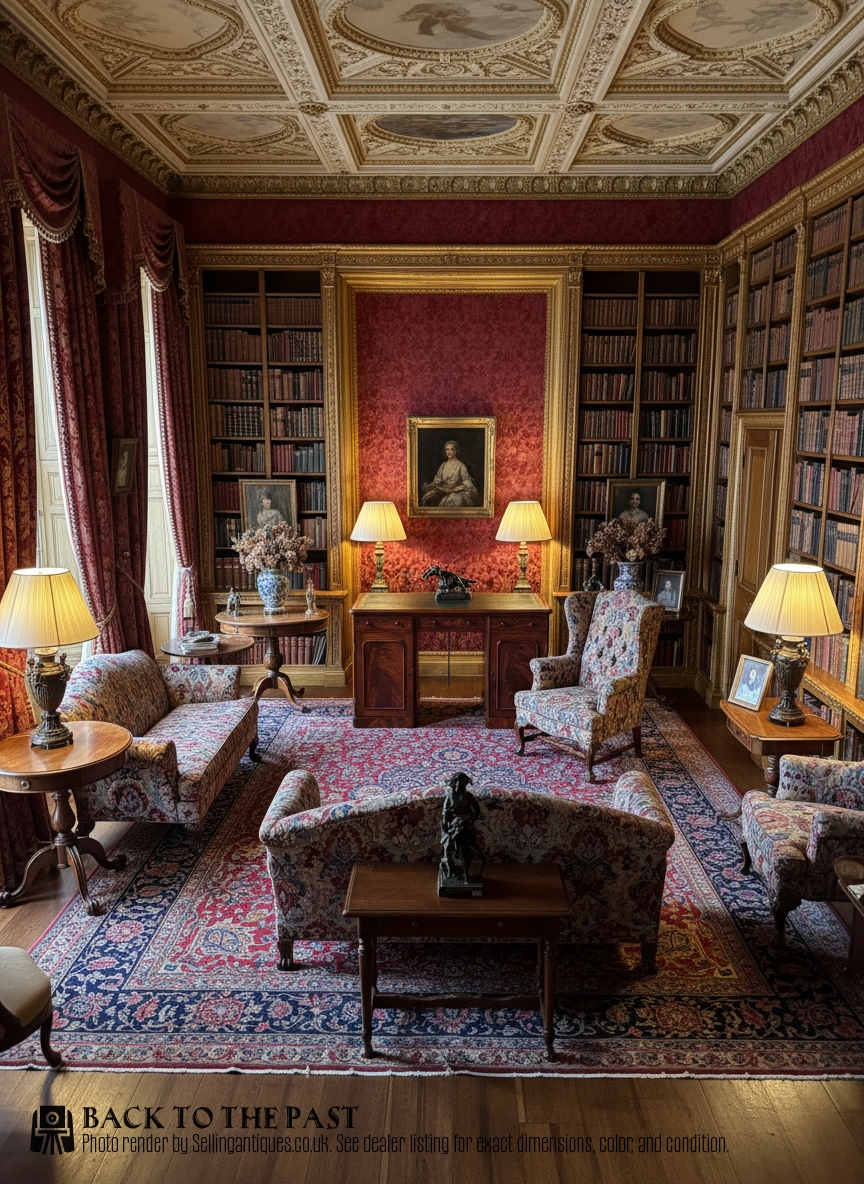
A vintage kneehole writing desk provides a compact work station with multiple side drawers and a recessed central space. These pieces emerge across the Victorian, Edwardian, and Art Deco periods, spanning the nineteenth and twentieth centuries.
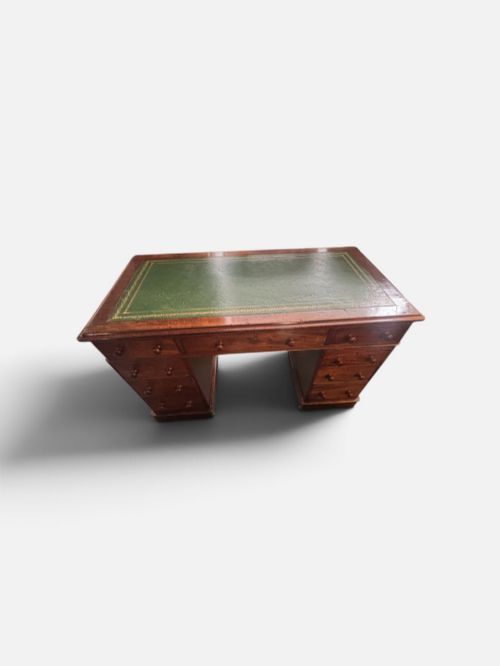
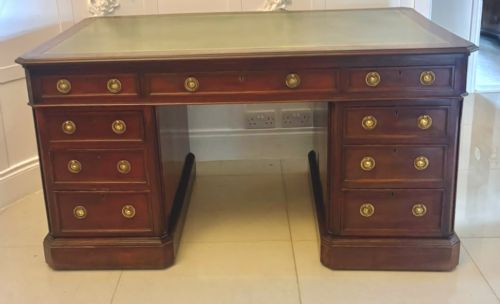
The common form on this page pairs a pedestal base in mahogany, walnut, or oak with a fitted writing surface, often lined in leather. Revival designs referencing Queen Anne, Chippendale, and Regency styles frequently appear alongside plain nineteenth-century examples.
Materials and construction
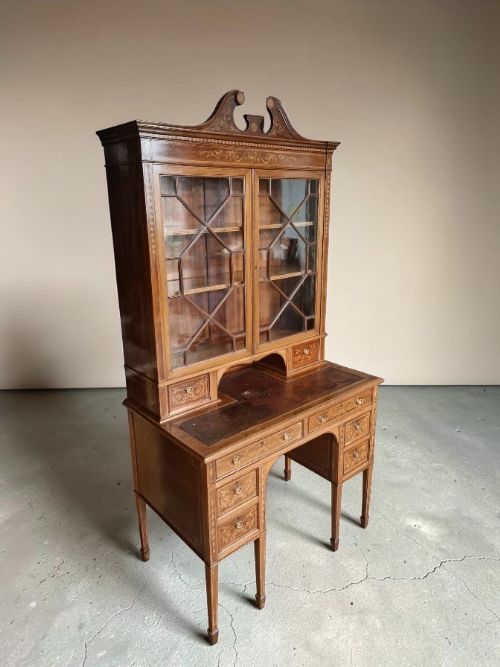
Cabinet makers constructed these desks using solid timbers like oak and pine for internal framing, alongside figured veneers of mahogany, burr walnut, and flame mahogany applied to drawer fronts and top surfaces. Brass hardware handles and escutcheons secure the drawer openings.
Writing surfaces frequently incorporate tooled leather inserts bordered by gilt tooling. Joinery techniques include dovetail construction for drawers and panelled backs that allow freestanding placement in a room.
Some estate desks still retain traces of nineteenth-century ink stains trapped inside the bottom drawer corners.
Distinctions in craftsmanship
Quality rests in the selection of timbers and the handling of veneers, where book-matched burr walnut or flame mahogany creates symmetrical grain patterns across multiple drawers. Superior examples display precise dovetailing and well-fitted interior stationery compartments.
Makers known for high output, such as Maple & Co., Holland & Sons, or Trollope & Sons, integrated secondary timbers and structural bracing with greater care than unlabelled workshop pieces. The retention of original brass handles and fitted writing slides preserves the integrity of the design.
Trollope and Sons·Maple and Co·Holland and Sons·Wylie and Lochhead Glasgow
The Vintage Kneehole Writing Desk Glossary
- Kneehole desk
- A pedestal desk featuring a recessed central space for the legs beneath a single top drawer. This layout creates two flanking stacks of smaller drawers.
- Pedestal desk
- A heavy writing table supported by two box-like columns of drawers that rest directly on the floor. These desks provide substantial storage capacity.
- Burr walnut
- A wood grain obtained from walnut tree growths that produces intricate, swirling patterns. Cabinet makers prized this veneer for decorative drawer fronts.
- Secretaire
- A desk or chest containing a pull-down writing flap that conceals small drawers and pigeonholes. It combines storage with a dedicated writing surface.
- Dovetail
- A joint formed by interlocking wedge-shaped fingers that secures drawer corners together. It is a sign of traditional hand woodworking.
Vintage Kneehole Writing Desk: Frequently Asked Questions
Where do you put a kneehole desk?
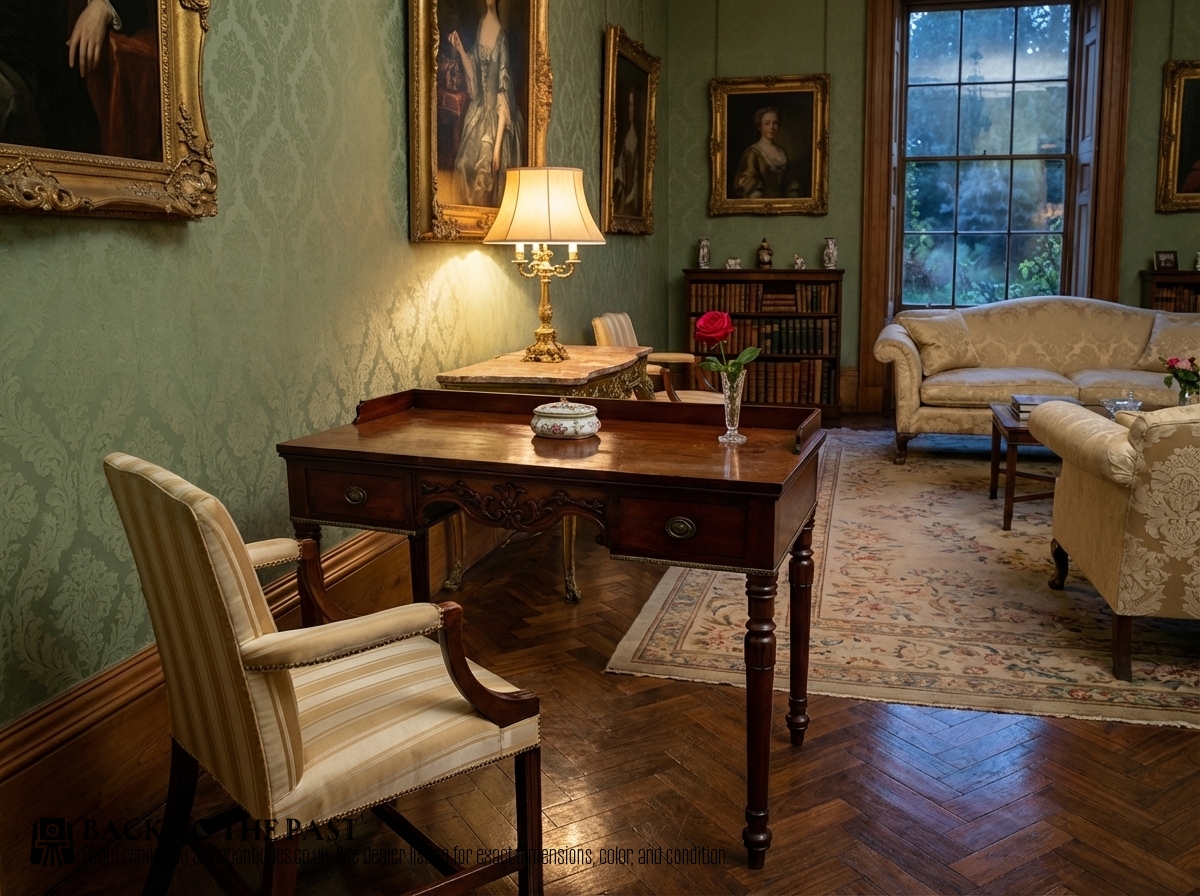
These desks suit placement against a wall or freestanding in the centre of a room. Finished backs on better examples allow them to sit away from boundaries.
Sufficient clearance behind the desk permits comfortable seating within the central recess while maintaining access to surrounding room space.
How do I care for leather inserts?
Leather writing surfaces benefit from periodic cleaning with a damp cloth and mild soap. Avoid harsh chemical cleaners that strip the original dye and gilt tooling.
Applying a specialist leather balm preserves suppleness and prevents the material from drying out over decades of use.
What is the difference between a kneehole and pedestal desk?
A kneehole desk specifically emphasises the recessed central compartment designed for sitting comfortably. Pedestal desks share the twin-stack drawer layout but focus broadly on overall structural mass.
Many kneehole desks originate as smaller domestic variants of larger executive pedestal tables.