
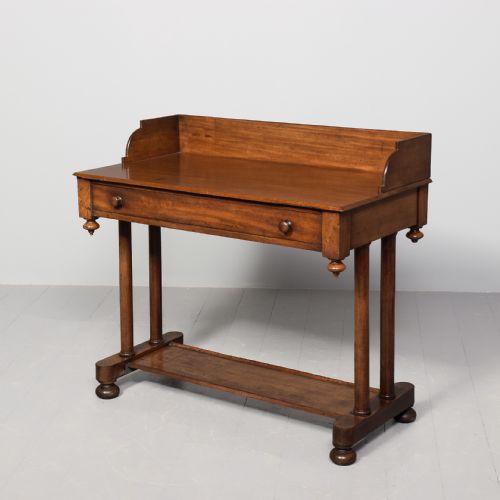


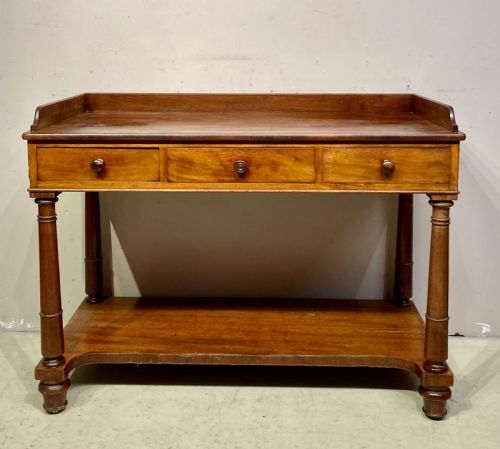
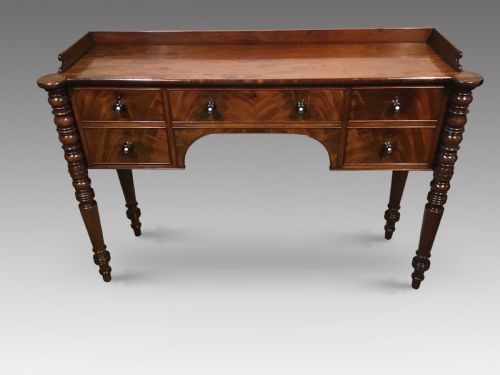


William IV Dressing Table
A William IV dressing table is a sturdy nineteenth-century piece built for the morning toilet, combining deep timber grains with practical surface space.
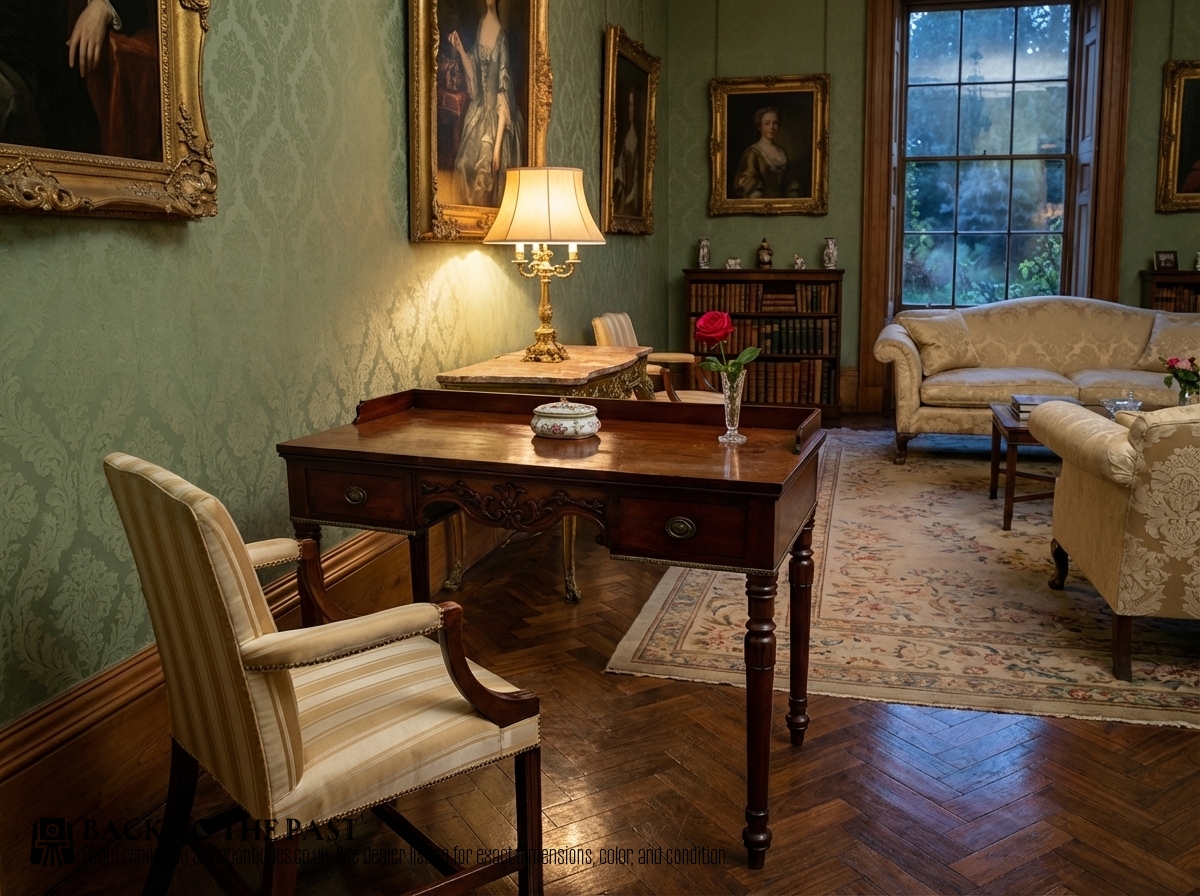
William IV Dressing Table
A william iv dressing table sits firmly in the nineteenth century, bridging late regency tastes and early victorian utility. These pieces appear as full-sized dressing tables, knee-hole variants, or smaller writing and side tables adapted for personal grooming.
The version most commonly met on this page is the mahogany dressing table or swing toilet mirror, often featuring pedestal supports or bow fronts. Compact toilet mirrors designed to sit upon chest of drawers also frequently represent the form.
Makers of the period utilised substantial timber frames, turning towards rich rosewood and flame mahogany to finish surfaces. Stools with x-framed designs and marble-topped variants occasionally accompany the main tables.
Judging quality and proportion
Quality rests in the selection of the timber grain, particularly where flame mahogany or well-figured rosewood covers the primary surfaces. The weight of the timber and the stability of the central pivot mechanisms dictate the structural integrity.
Carved details such as turned legs, scroll brackets, and brass accents distinguish a finely finished piece from a simpler utility table. The clarity of the original glass and the precision of the drawer dovetailing separate standard workshop output from superior cabinet work.
Objects span the nineteenth century, encompassing regency, georgian, and early victorian stylistic influences.
Gillows of Lancaster
The William IV Dressing Table Glossary
- Swing mirror
- A glass plate held within a movable frame that tilts between upright supports. This allows the user to adjust the angle of reflection during grooming.
- Knee-hole table
- A desk or dressing table featuring a central recess for the legs with banks of drawers on either side. This layout provides seated comfort while keeping grooming items close at hand.
- Flame mahogany
- Timber cut from the fork of the mahogany tree to reveal a rippling, flame-like grain pattern. Cabinet makers reserved this veneer for the most prominent surfaces.
- Toilet mirror
- A smaller tabletop mirror designed to sit upon a chest of drawers or a dedicated washstand. These pieces often incorporate small storage drawers within their base plinths.
- X-framed stool
- A seat built with intersecting diagonal legs forming an X shape beneath the cushion. These stools complement the dressing tables of the period.
William IV Dressing Table: Frequently Asked Questions
What is a William IV dressing table?
A William IV dressing table is a nineteenth-century furniture piece designed for personal grooming, typically constructed from solid mahogany or rosewood.
These tables frequently incorporate adjustable swing mirrors, small storage drawers, and robust turned or carved supports characteristic of the period.
How were these tables used?
Owners used them daily for hair styling, applying cosmetics, and organising personal accessories before the start of the day.
The integrated drawers held brushes and small bottles, while the surface provided space for washbasins or dressing equipment.
Where should I place one?
They suit bedrooms and dressing rooms well, functioning as traditional grooming desks or alternative writing tables.
Placing them near natural light helps utilise the pivoting mirror effectively for daily routines.
How do I spot a toilet mirror?
A toilet mirror is a compact version built to rest on top of a larger chest of drawers or side table rather than standing independently on the floor.
They feature a supportive base plinth fitted with small drawers beneath the pivoting glass frame.