
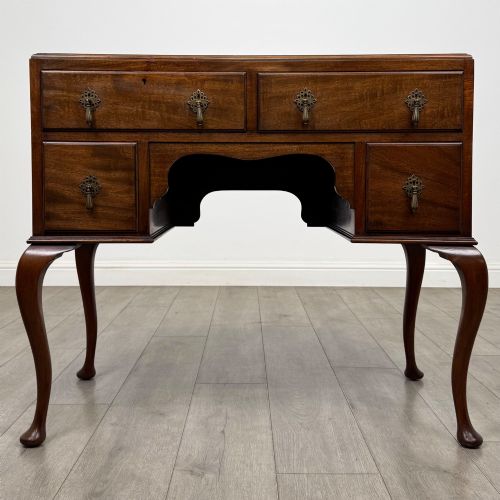
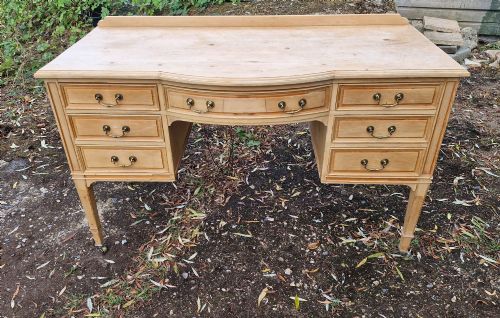
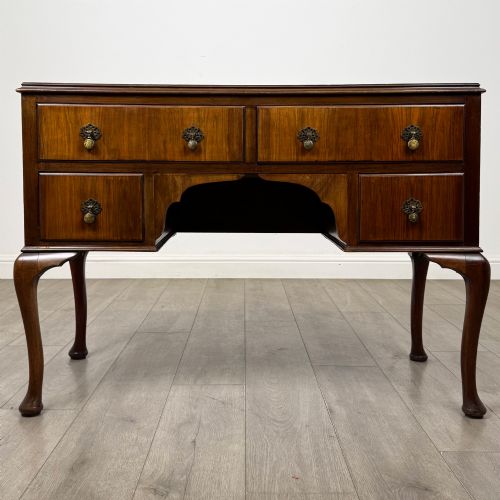
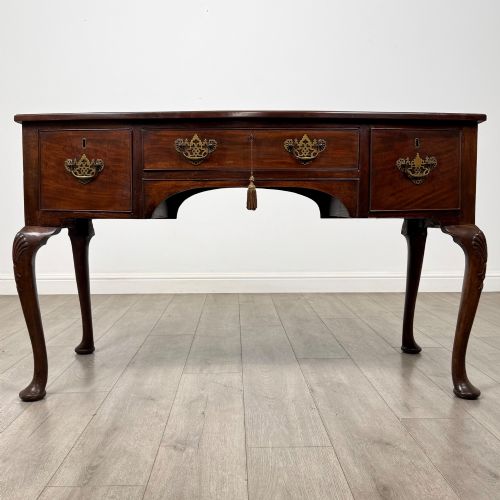
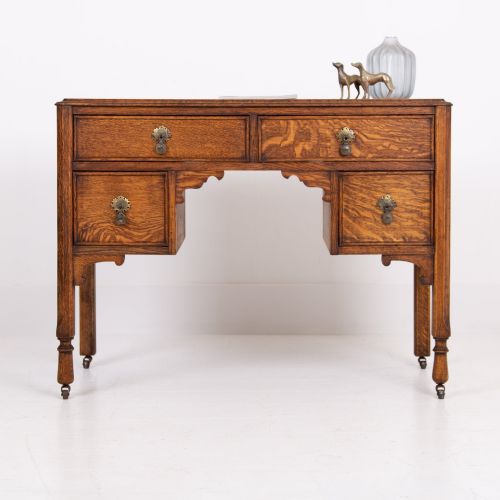
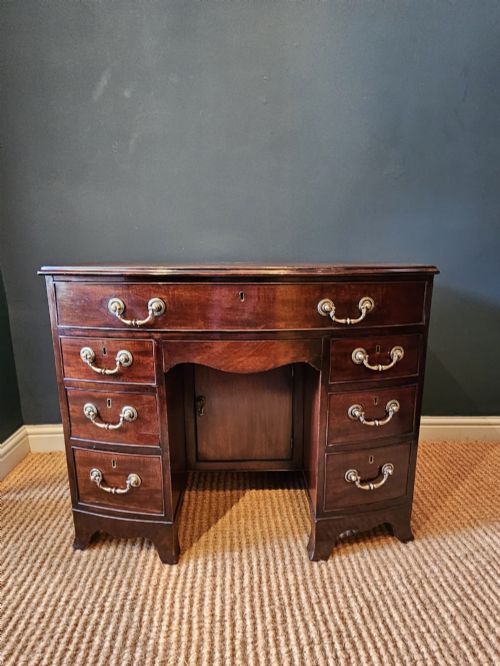
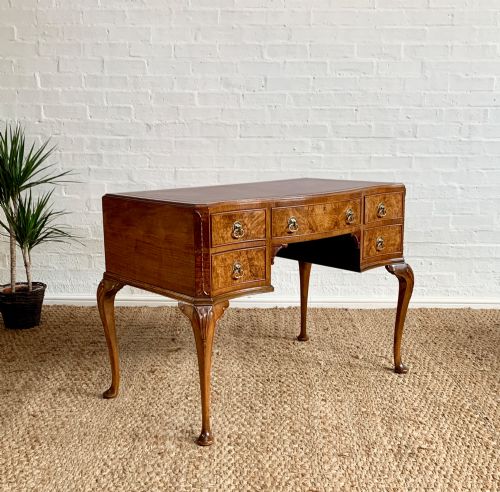
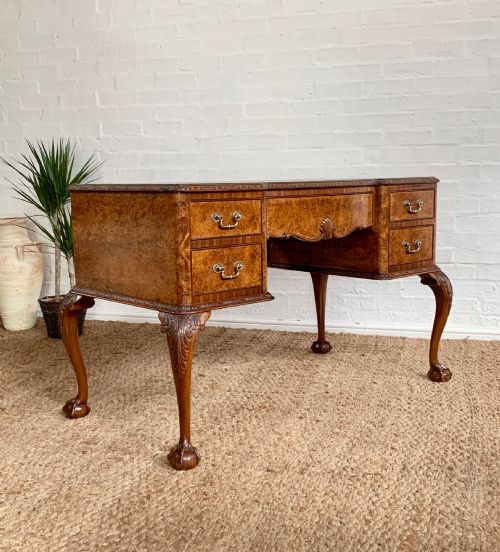

Vintage Kneehole Vanity Desk
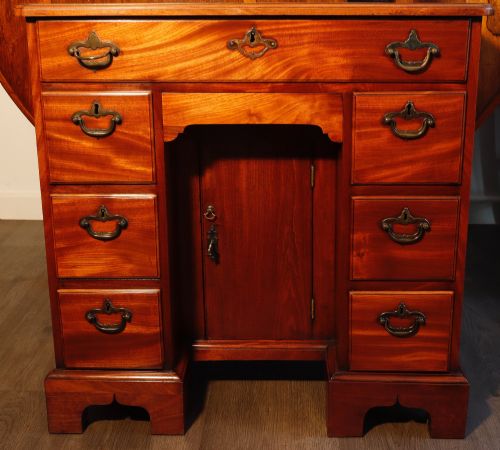
A vintage kneehole vanity desk offers practical elegance and central legroom, combining the function of a dressing table with the form of a pedestal desk.
Vintage Kneehole Vanity Desk
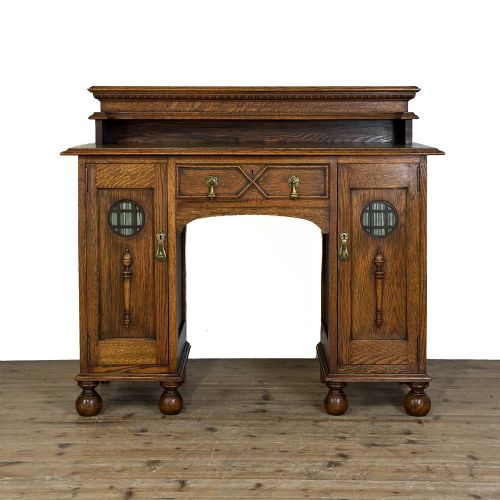
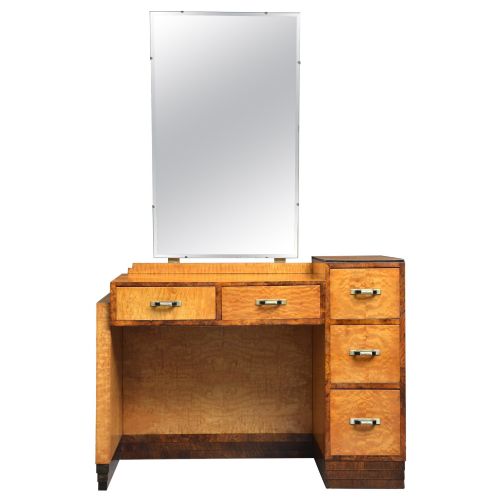
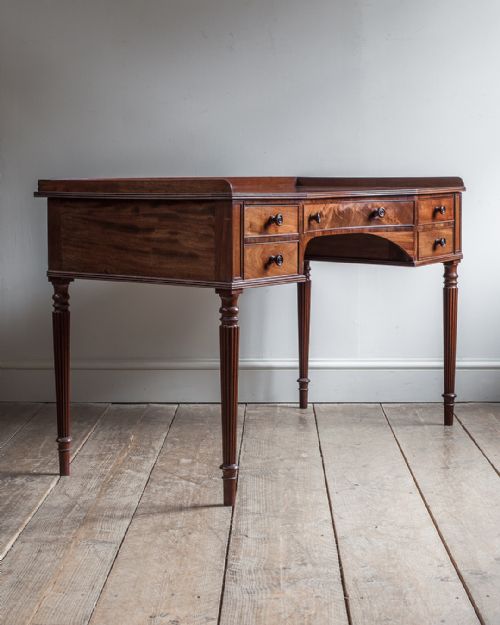
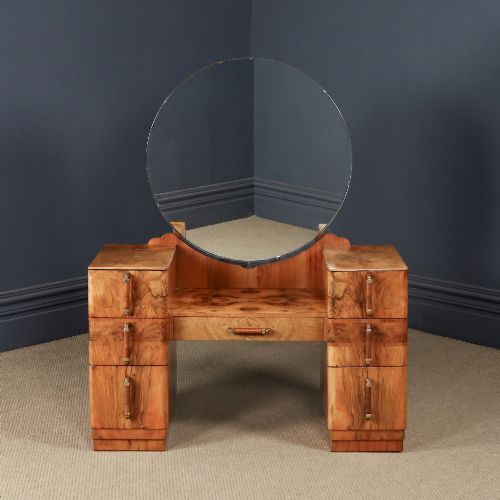
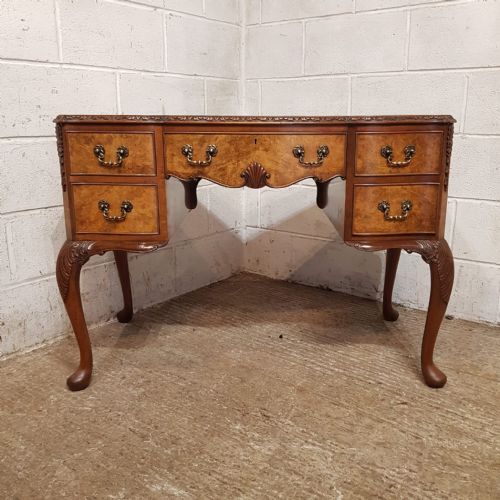
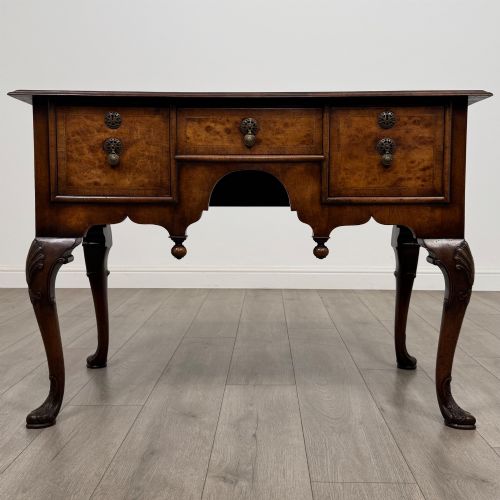
A vintage kneehole vanity desk serves as both a functional writing surface and a dedicated dressing table, characterised by a central recess flanked by pedestals of drawers. Buyers seeking a vintage kneehole vanity desk will encounter diverse interpretations spanning several centuries, from Georgian and Regency forms to Edwardian adaptations and Art Deco designs.
The materials reflect the prevailing tastes of their periods, ranging from rich mahogany and walnut to lighter satinwood and pine. These pieces function well as bedroom dressing stations or compact library desks, providing storage alongside a comfortable writing or grooming space.
Makers and workshops across Britain adapted classic proportions to suit changing domestic interiors, resulting in variations involving serpentine fronts, integrated mirrors, and tooled leather surfaces. The core form remains consistent: a central aperture allowing the user to sit squarely before the piece.
Assessing Quality and Craftsmanship
Quality rests upon the selection of timber and the precision of the veneer work, where book-matched grains create symmetrical patterns across drawer fronts and desk tops. Superior examples display refined carving, intact original hardware, and tight, clean joinery within the drawer construction.
Proportion and decorative restraint elevate finer pieces, distinguishing bespoke cabinet-maker output from mass-produced commercial furniture. The presence of original fitted mirrors, secondary internal compartments, and well-preserved leather inserts further distinguishes upper-tier pieces.
Some desks hide secret compartments behind their kneehole arches, perfect for storing clandestine love letters or spare house keys.
Wylie & Lochhead Glasgow·Heal & Sons Heals·Shapland and Petter·maples of London
The Vintage Kneehole Vanity Desk Glossary
- Kneehole
- A recessed central space beneath a desk or dressing table designed to accommodate the user's legs when seated. This arrangement allows drawers to be stacked vertically in pedestals on either side.
- Pedestal
- A vertical supporting column containing a stack of drawers, positioned on one or both sides of the central kneehole. Pedestals provide the primary structural support and storage capacity for the desk.
- Veneer
- A thin layer of figured wood applied over a secondary timber base to create decorative surfaces. Skilled makers used contrasting veneers to produce symmetrical patterns on drawer fronts.
- Secretaire
- A desk or cabinet featuring a pull-down writing flap that conceals smaller drawers and pigeonholes. This hybrid form often combines storage with a dedicated writing surface.
- Serpentine
- A curved shape characterised by a convex centre flanked by concave sweeps. This undulating profile adds visual movement and complexity to the front of a cabinet or desk.
Vintage Kneehole Vanity Desk: Frequently Asked Questions
How do I use a kneehole desk today?
These pieces adapt easily to modern home offices or bedrooms, serving as functional writing desks or dressing tables.
The central kneehole provides comfortable legroom for laptop work or daily grooming.
What is the difference between a desk and a vanity?
A desk focuses primarily on writing and paperwork surfaces, often featuring leather inserts or stationery drawers.
A vanity or dressing table typically incorporates mirrors, smaller cosmetic compartments, and spaces designed for personal grooming.
How do I date a vintage walnut desk?
Dating relies on examining construction techniques, hardware styles, and the specific treatment of walnut veneers.
Georgian and Victorian pieces utilise different dovetailing methods and internal timbers compared to Edwardian or 1930s Art Deco examples.
Are these pieces suitable for small rooms?
Many kneehole designs offer compact proportions with substantial built-in drawer storage within the pedestals.
Their shallow depth allows them to fit neatly against walls without dominating smaller living spaces or bedrooms.