




Vintage Kitchen Wall Art
Vintage kitchen wall art brings character to a room through oil paintings and period wooden display pieces.
Vintage Kitchen Wall Art
Vintage kitchen wall art spans oil paintings, wall clocks, signs and display shelving originating from the nineteenth century onward. Buyers look for these pieces to add authenticity and historical depth to domestic interiors.
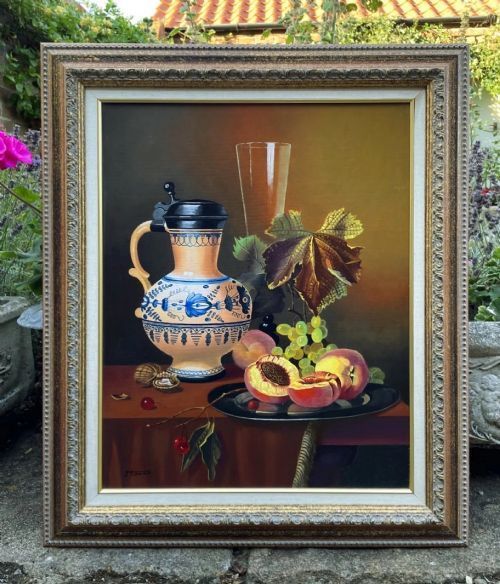
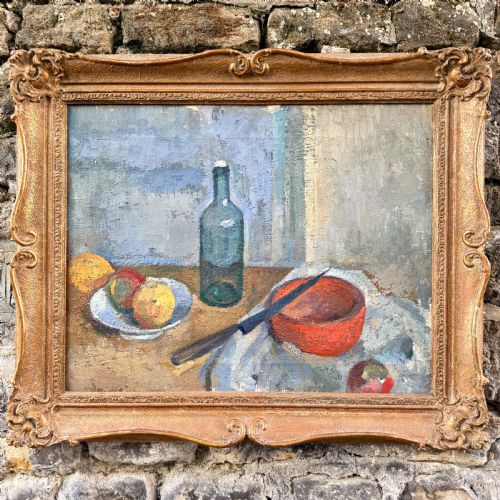
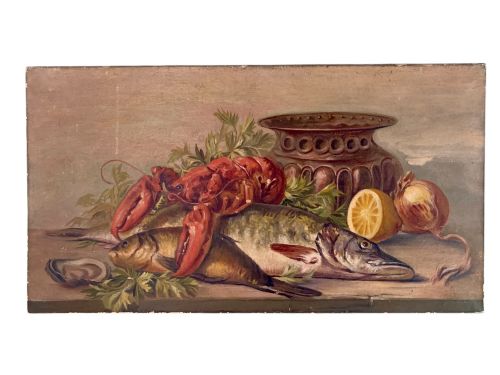
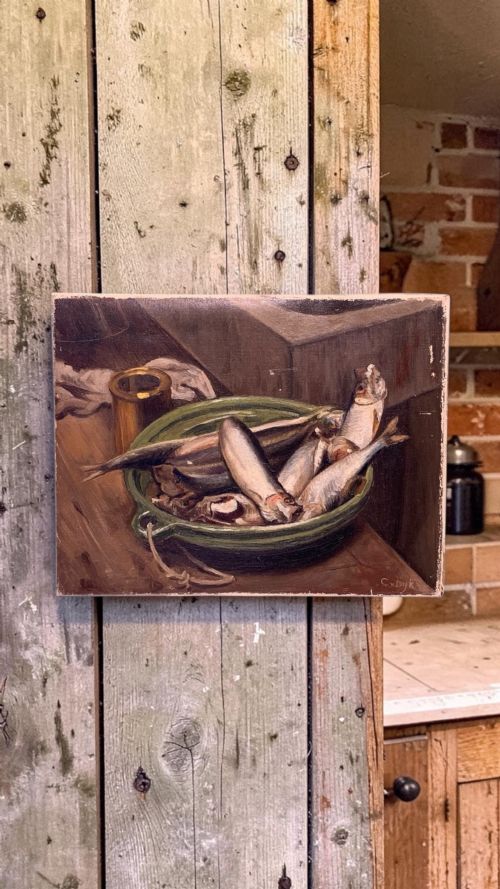
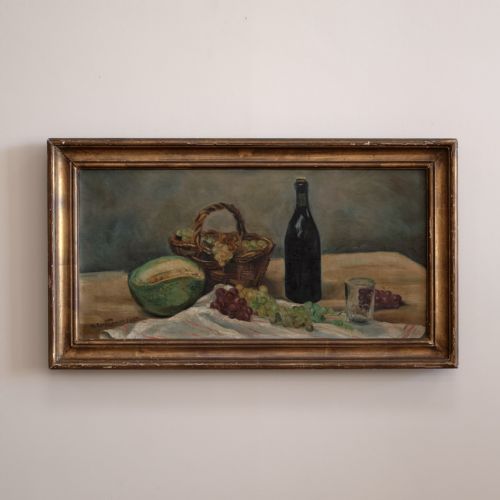
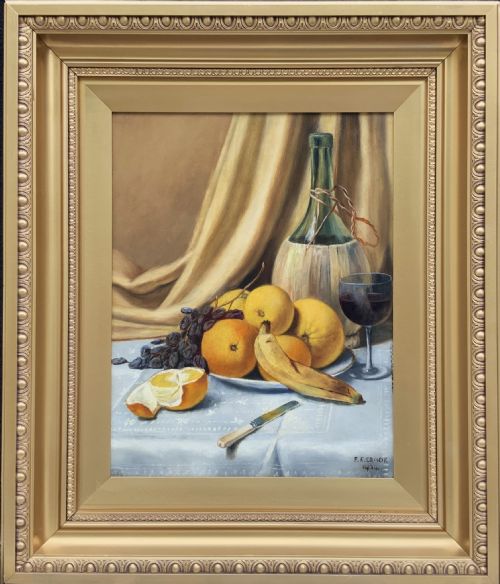
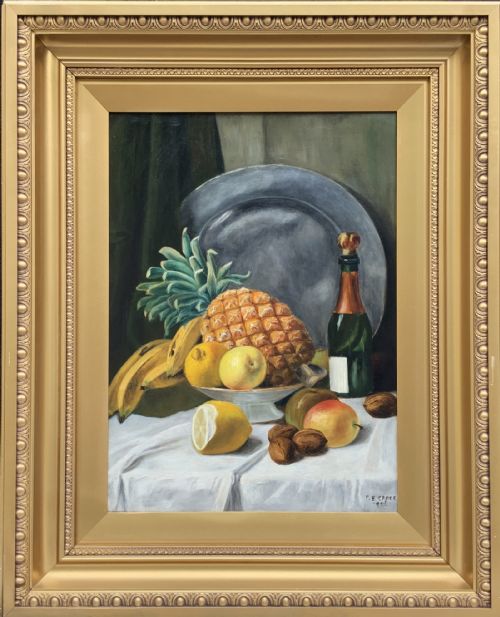
Still life paintings featuring fruit, fish and lobsters appear frequently alongside Edwardian display shelves and Art Deco clocks. These items reflect traditional culinary themes recorded across multiple European schools and periods.
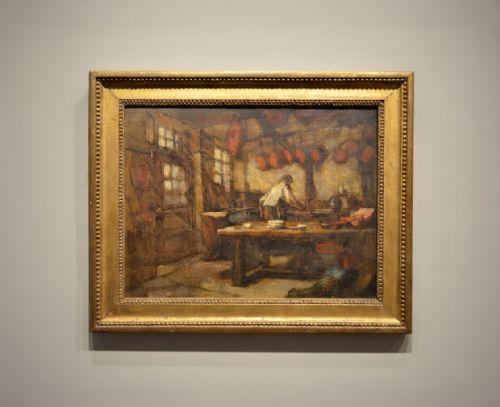
The selection ranges from early nineteenth century wood panel studies to mid-century European still life canvases. Each piece serves a functional or decorative purpose rooted in historical domestic spaces.
Materials and construction
Painters utilised oil on canvas and wood panels, often framing their work in solid wood or gilded frames. Brushwork and pigment application varied according to the academic or post-impressionist traditions of the period.
Carpenters constructed display shelves, dressers and spoon racks from oak, elm and painted timber. Brass and pewter feature in signage and tableware accessories associated with these interiors.
A solitary brass sign shaped as a spoon and fork stands ready to direct diners who lost their way to the kitchen.
Determinants of quality
Quality rests on the fidelity of the composition and the handling of paint within still life and interior scenes. Masterly control of light and subject matter distinguishes works by known artists from anonymous decorative output.
Structural integrity in wooden display pieces and clocks indicates superior craftsmanship. Original frames and untouched painted surfaces preserve the historical integrity of the object.
Vladimir Aldoshin·Edward Carter Preston·Thomas Couture·Gustav Goemans·Pauline Delacroix Garnier
The Vintage Kitchen Wall Art Glossary
- Still life
- A painting featuring inanimate objects such as fruit, fish or tableware. These works focus on everyday domestic subjects.
- Oil on canvas
- Pigment suspended in oil medium applied to a stretched woven fabric support. This technique allows for rich colour blending and texture.
- Wood panel
- A flat wooden board used as a painting support before canvas became dominant. Artists valued its rigidity for detailed work.
- Art Deco
- A design style emerging in the early twentieth century featuring geometric forms and streamlined shapes. It influences clocks and decorative objects from the period.
Vintage Kitchen Wall Art: Frequently Asked Questions
What subjects appear most often?
Still life studies depicting fruit, vegetables, fish and lobsters dominate the painted works in this category. Interior scenes and decorative wall signs also feature prominently.
These subjects reflect traditional domestic and culinary themes chosen by artists across the nineteenth and twentieth centuries.
How do I hang a heavy oil painting?
Large canvases in solid wood frames require secure fixings anchored directly into wall studs or heavy-duty masonry plugs. Ensuring the wire and D-rings match the weight of the piece protects the frame.
Positioning the art away from direct heat sources preserves both the canvas and the wooden support over time.
Are spoon racks and shelves functional?
Historical spoon racks and display shelves were built to hold spoons, plates and small culinary items in everyday kitchens. Many retain their original structural capacity for lightweight display.
Placing ceramics or period spoons on these shelves mirrors their historical use in domestic interiors.
How do I identify an Edwardian piece?
Edwardian items date from the reign of Edward VII, typically showing refined craftsmanship and traditional decorative motifs. Painted wooden display shelves from this era often use specific historic paint colours.
Comparing construction methods and framing styles helps distinguish these pieces from later mid-century productions.