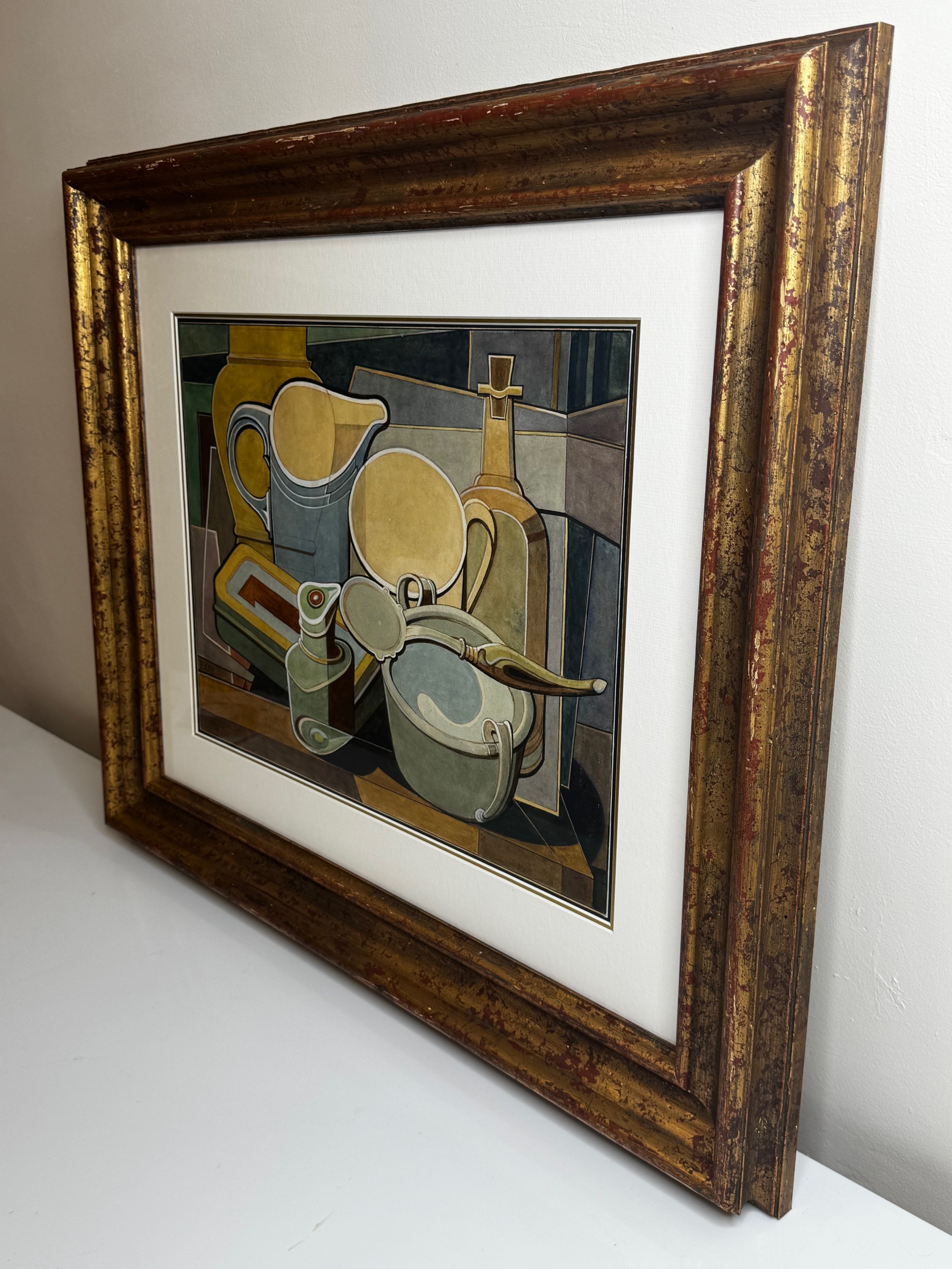
Cheshire Antiques Consultant Ltd has dated this Cubist Still Life Painting to the 1920s.
This is an independent date report produced by Sellingantiques using its own proprietary system. The process uses the photographs shown on this page. The system is never told the date the dealer has declared. This report shows that the two dates corroborate.
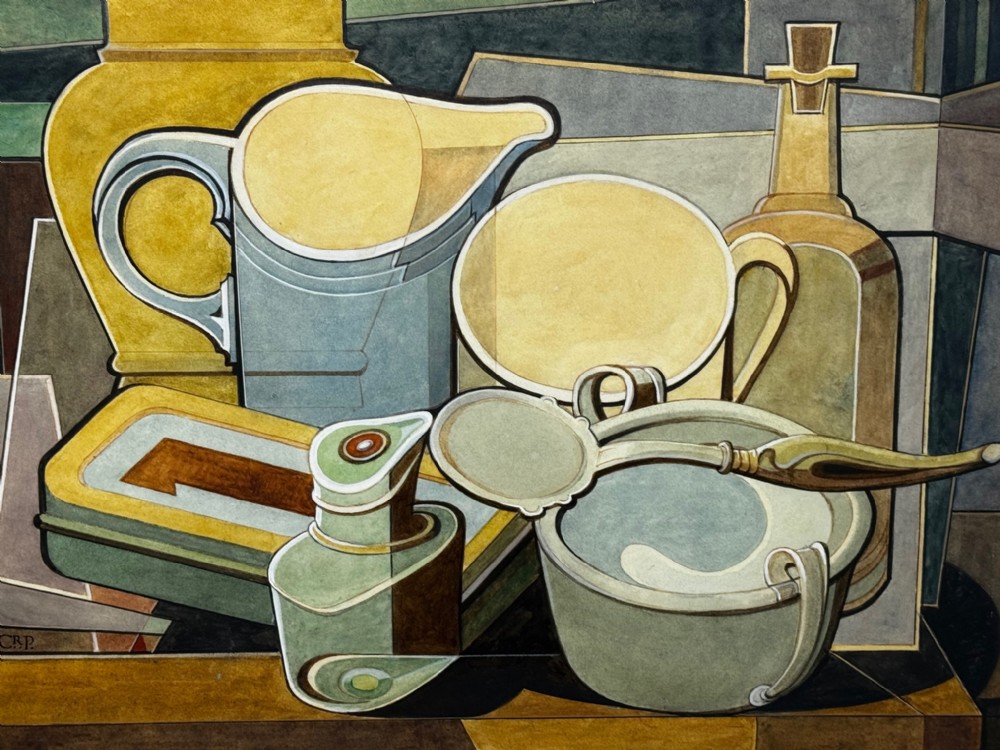
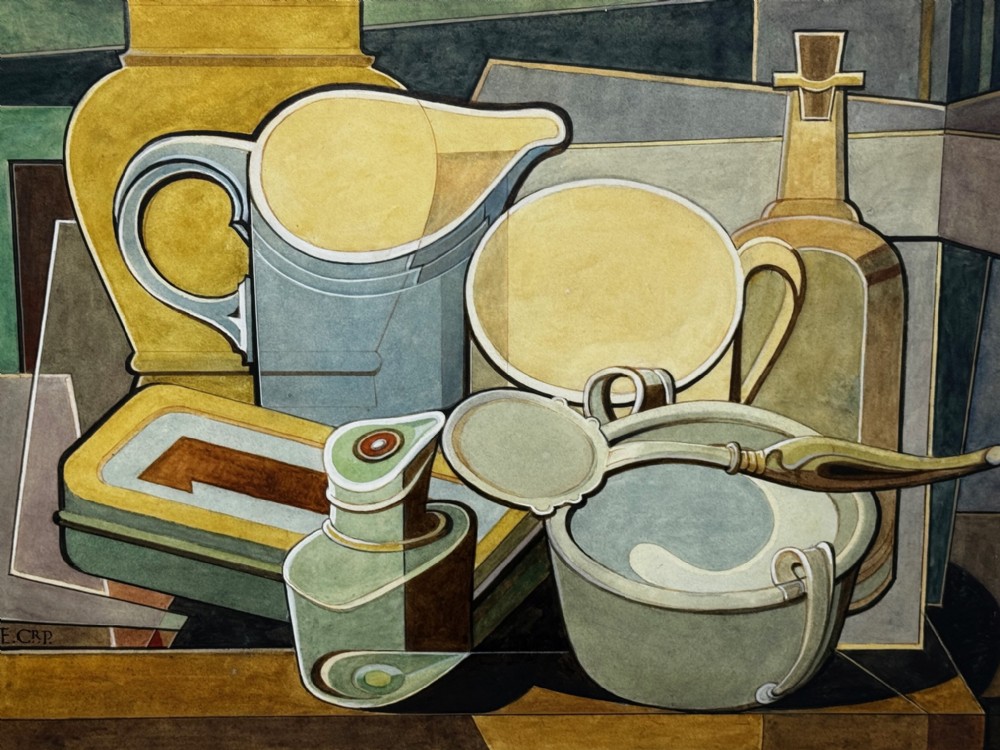
Domestic Kitchen Geometry — Jug, Pot & Bottle: A Cubist Study
Subject & Medium
Medium: Watercolour on paper
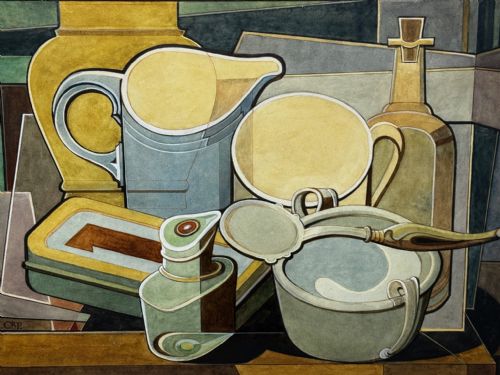
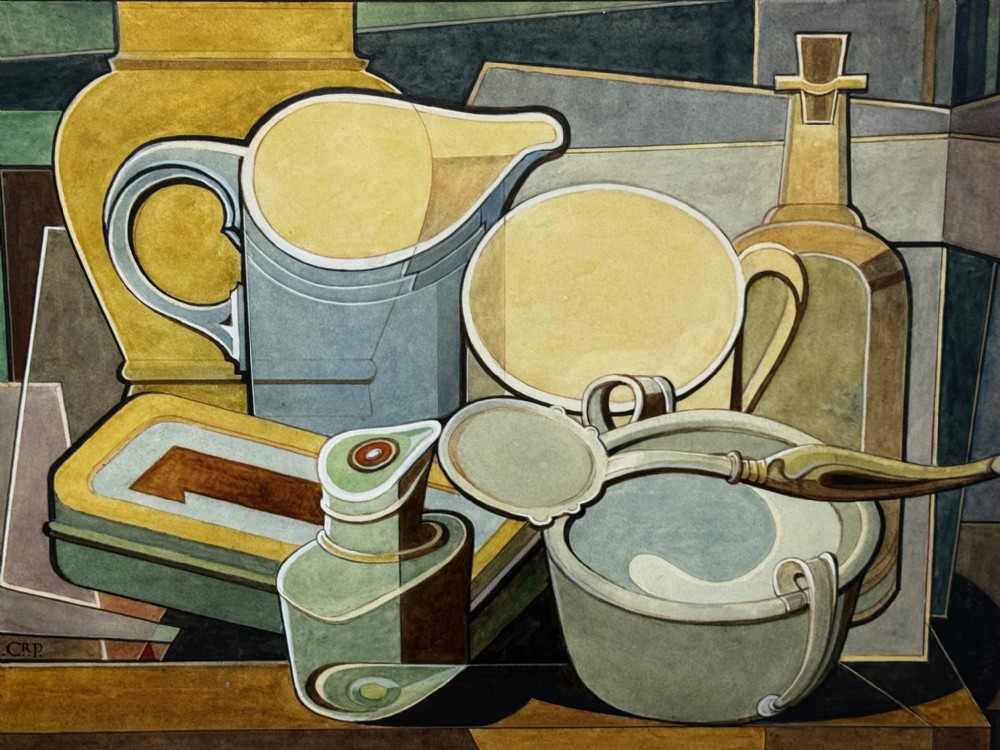
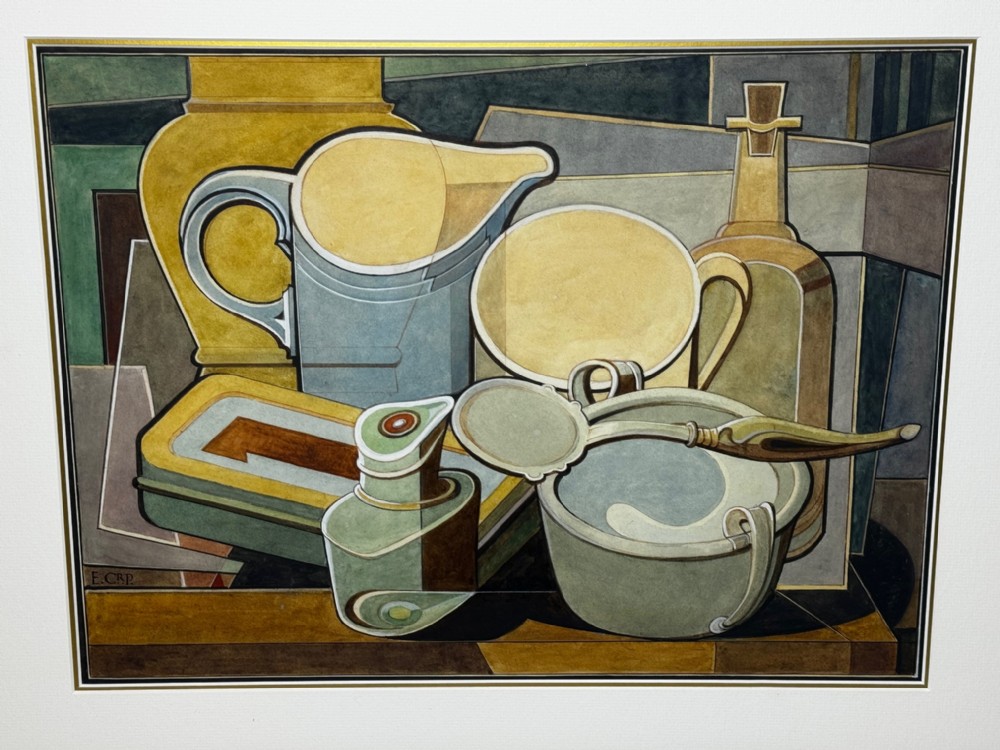
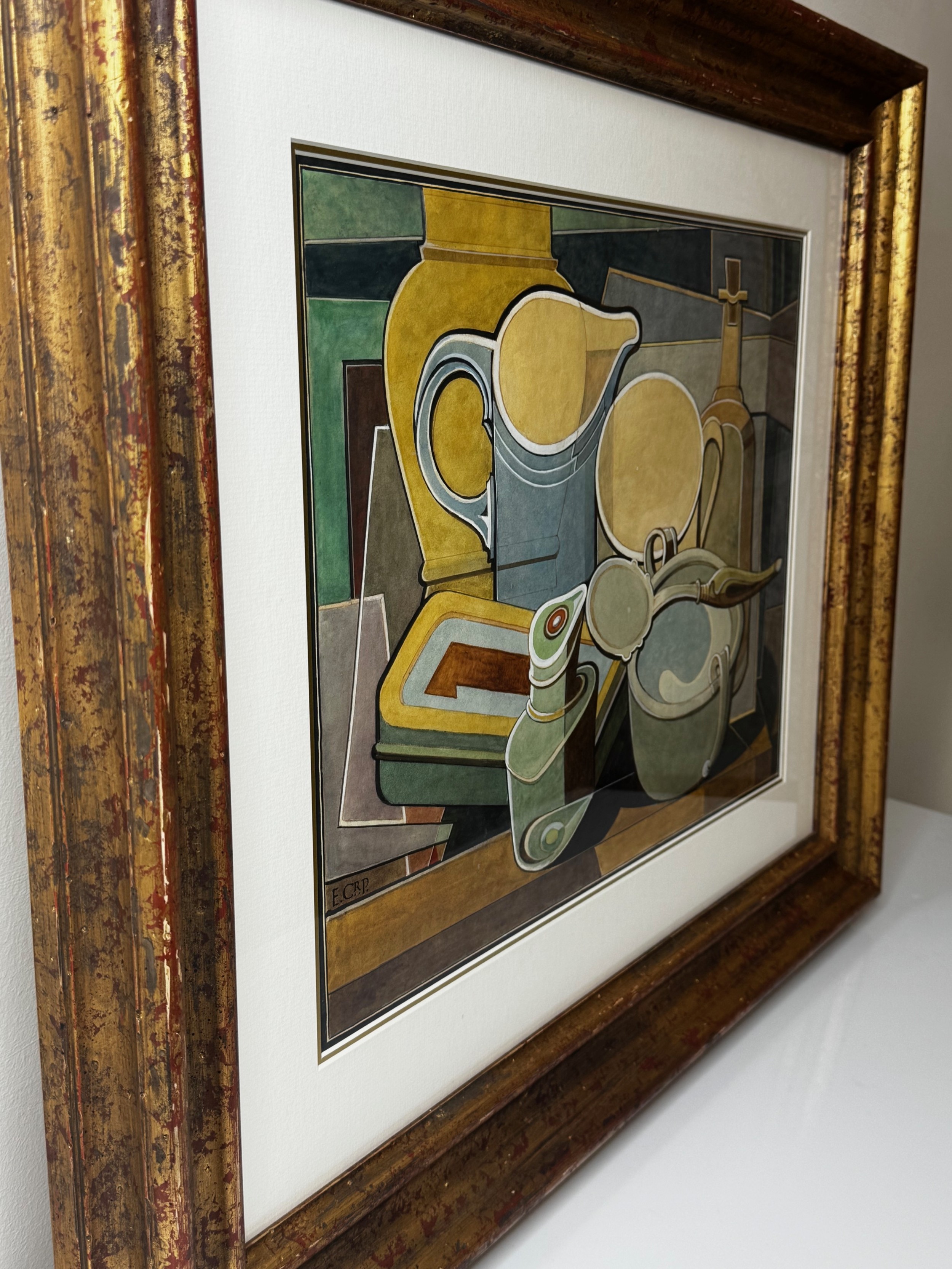
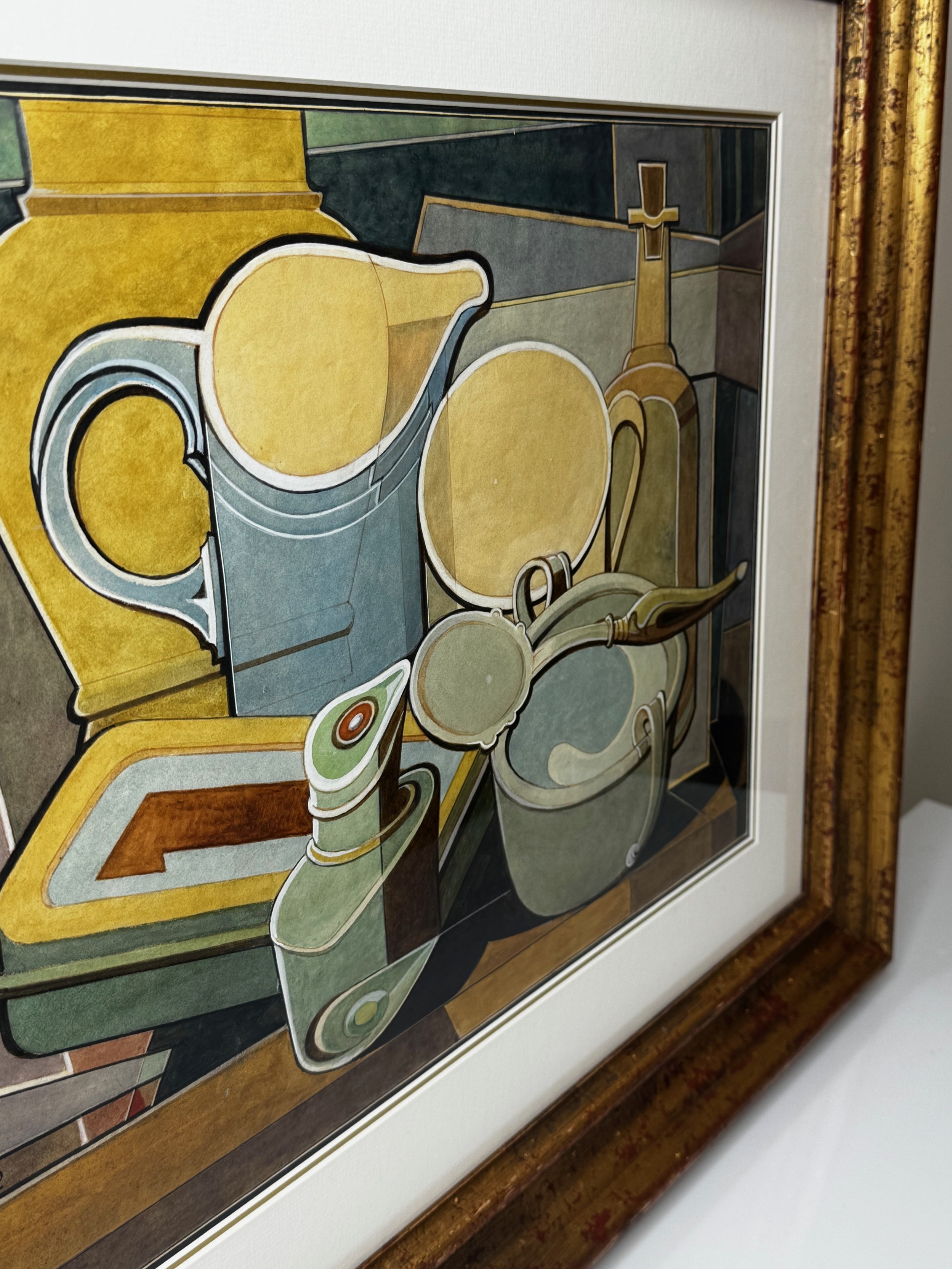
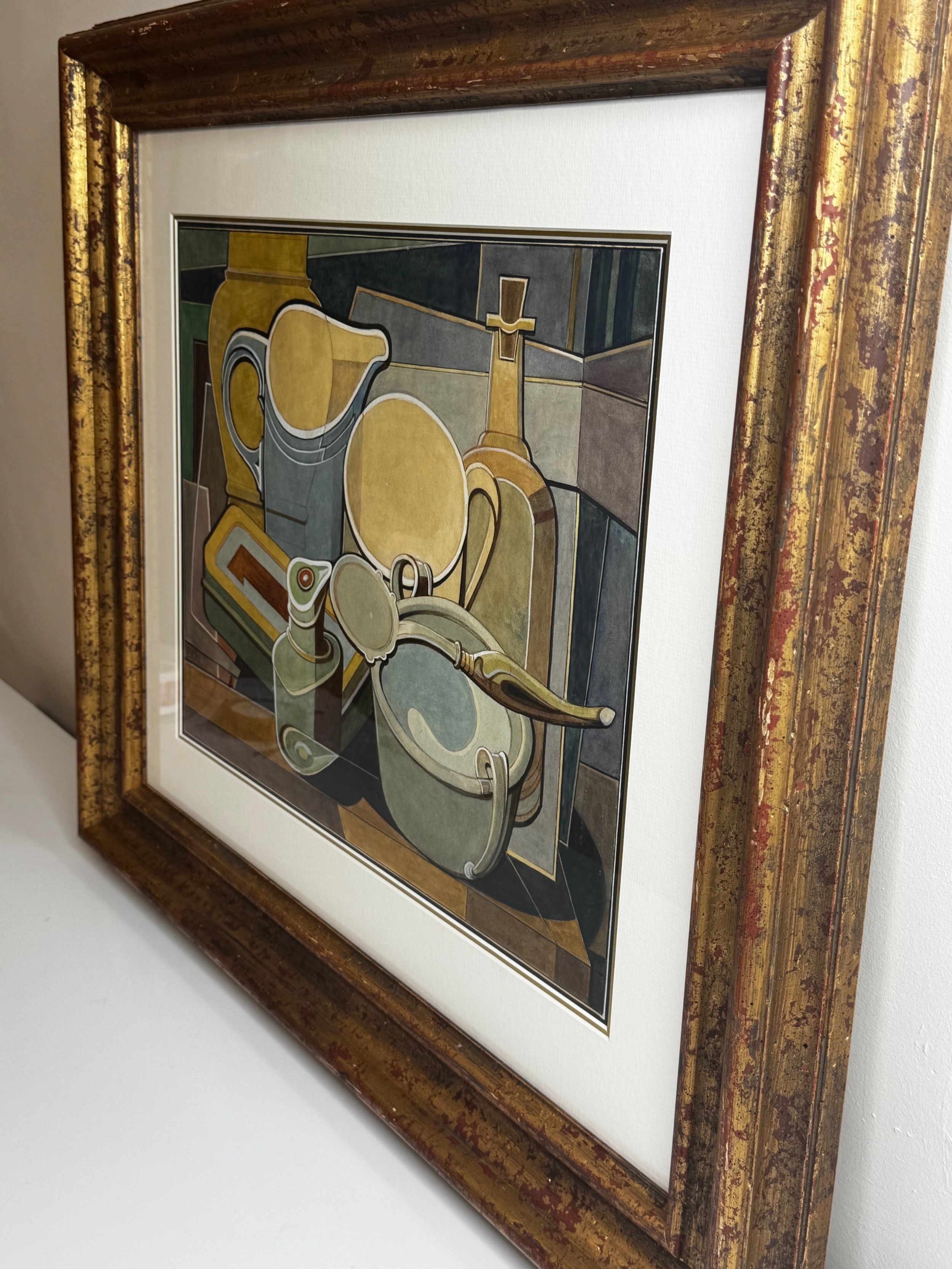
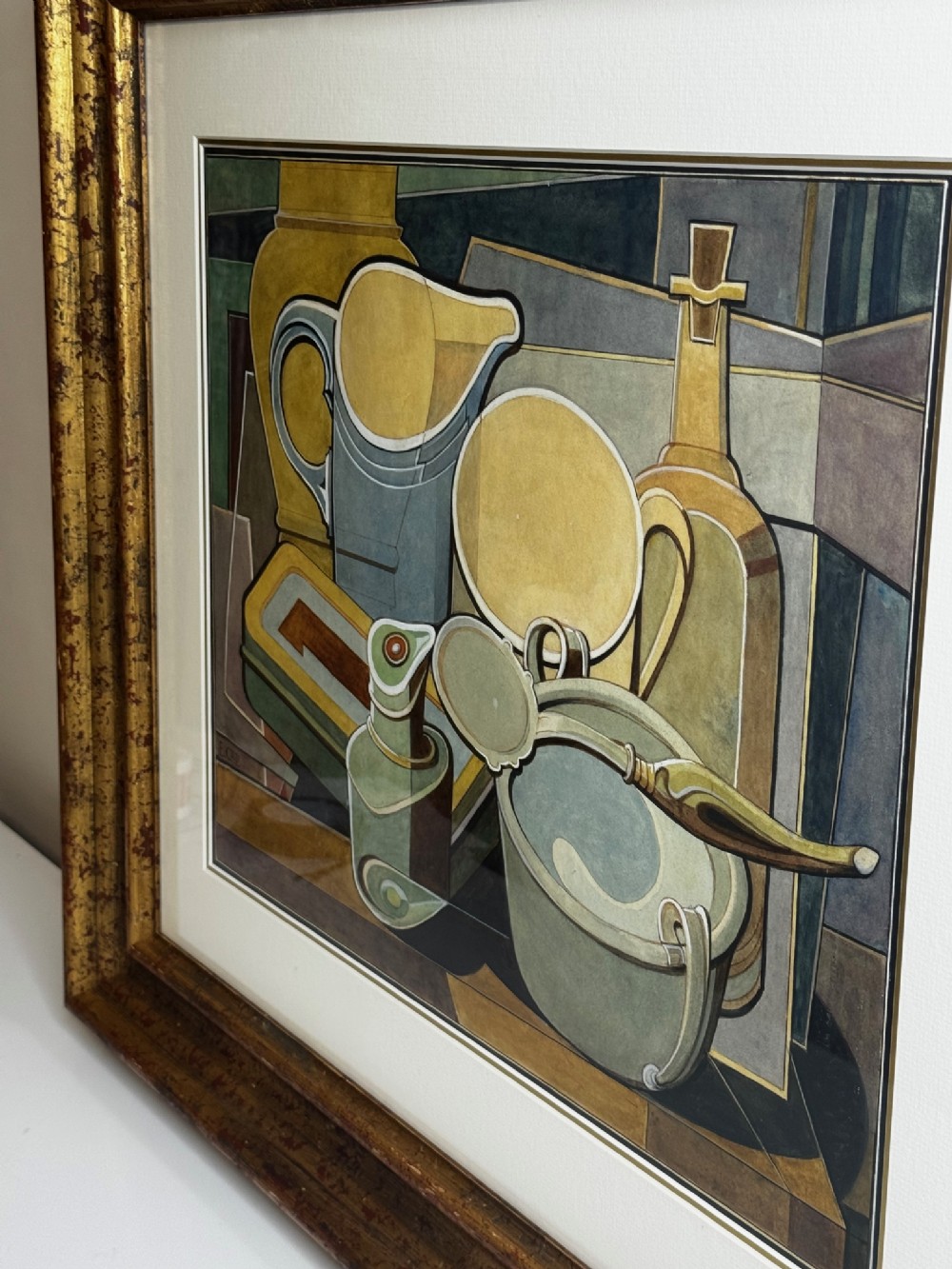
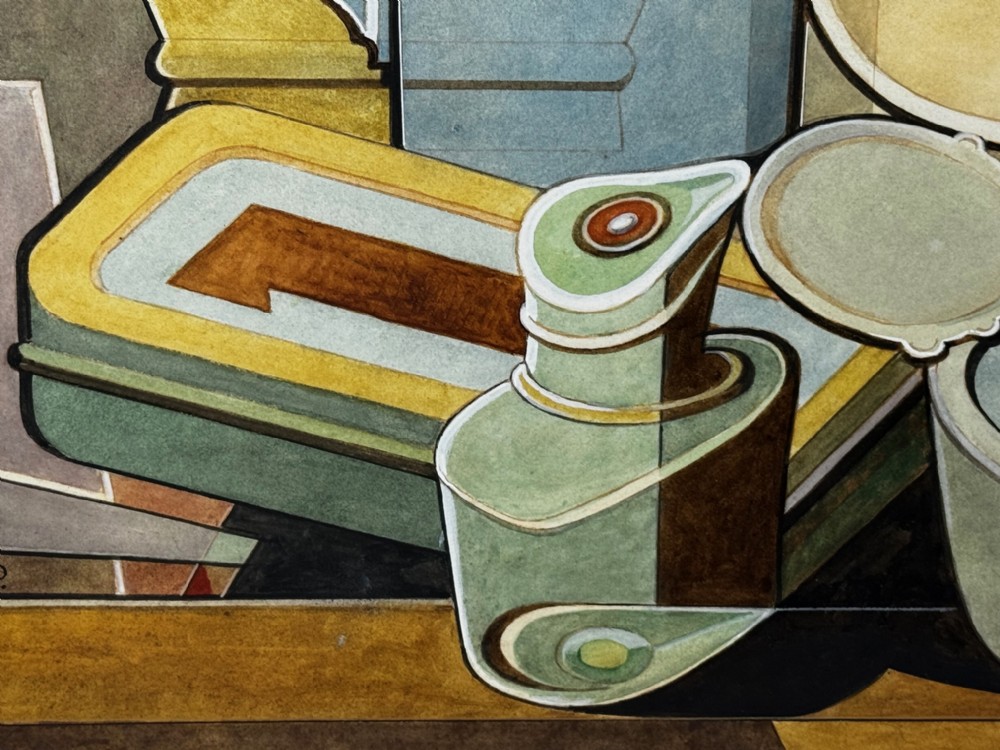
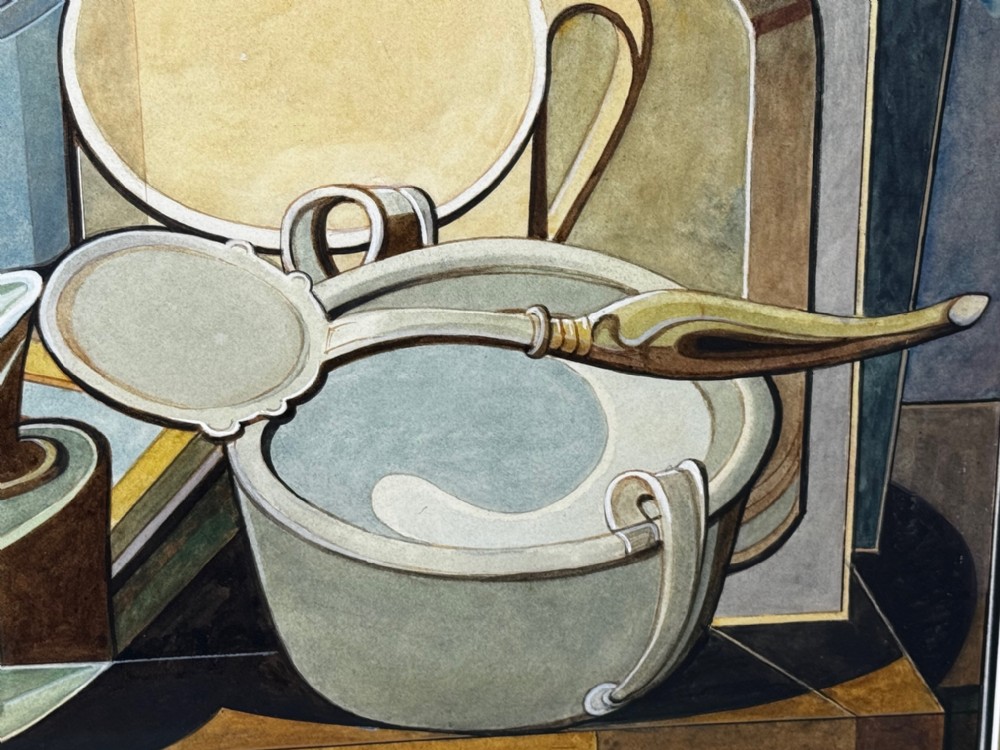
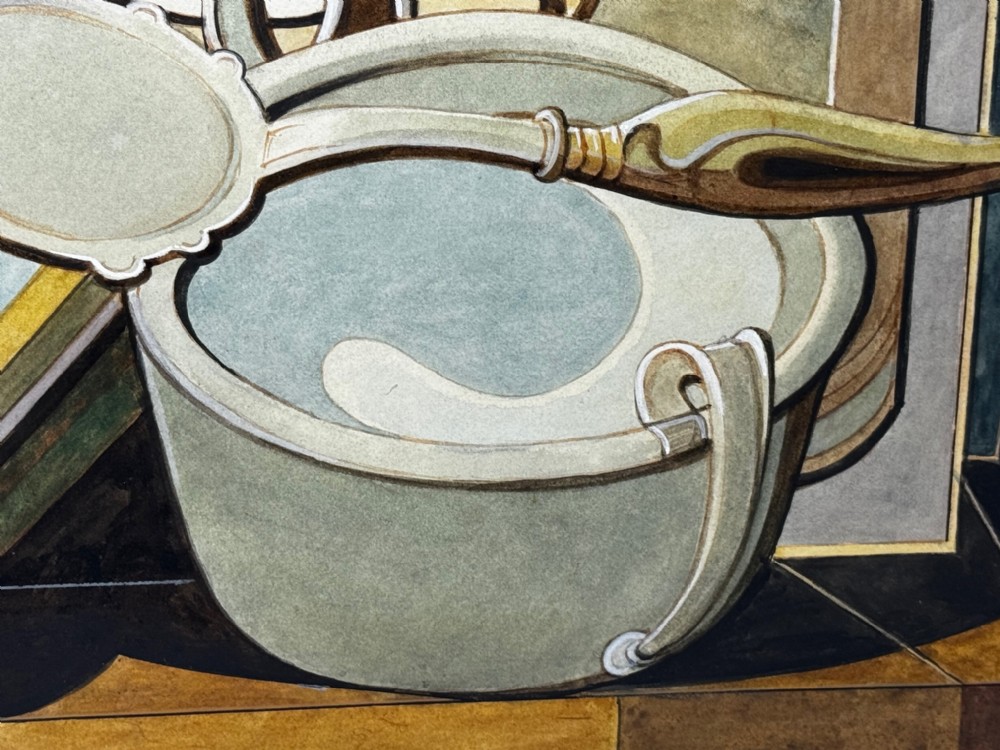
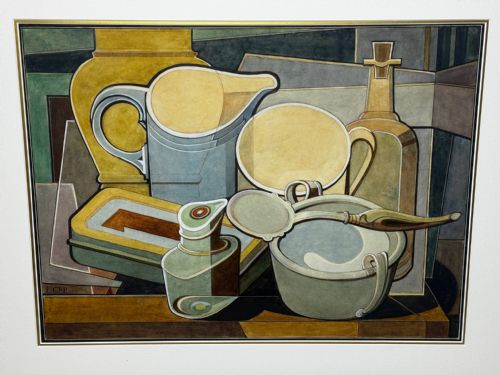
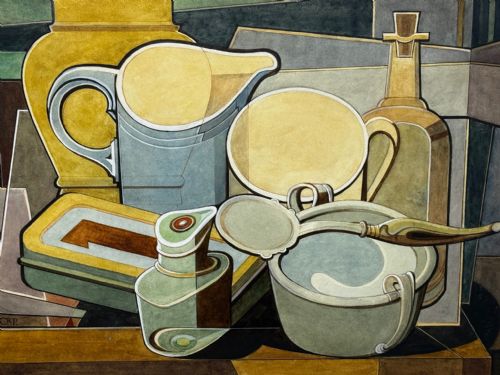
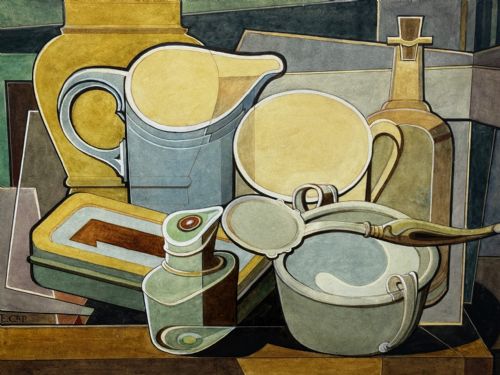
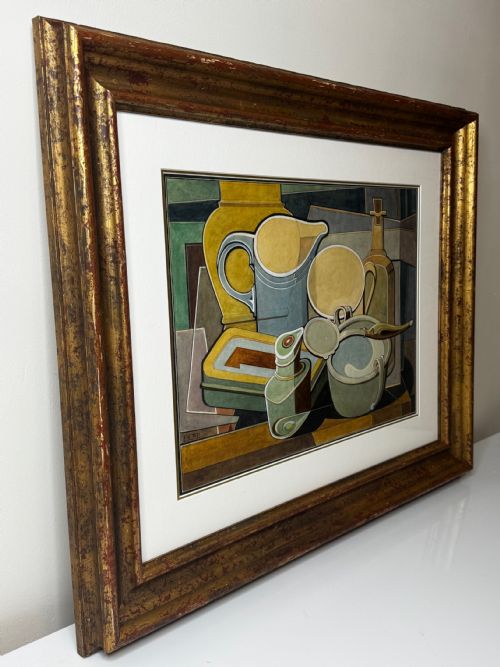
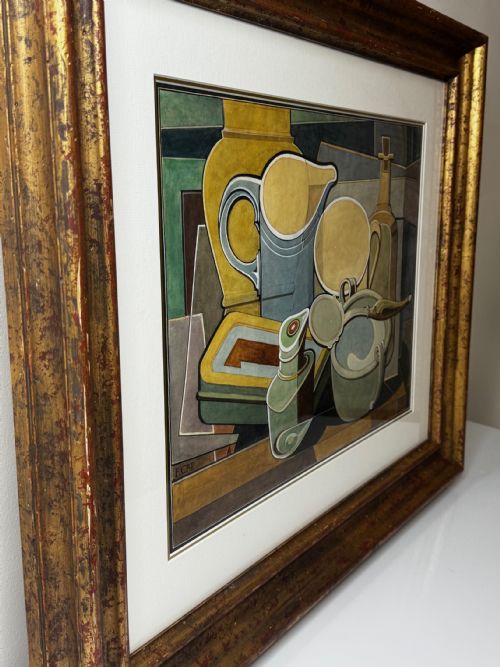
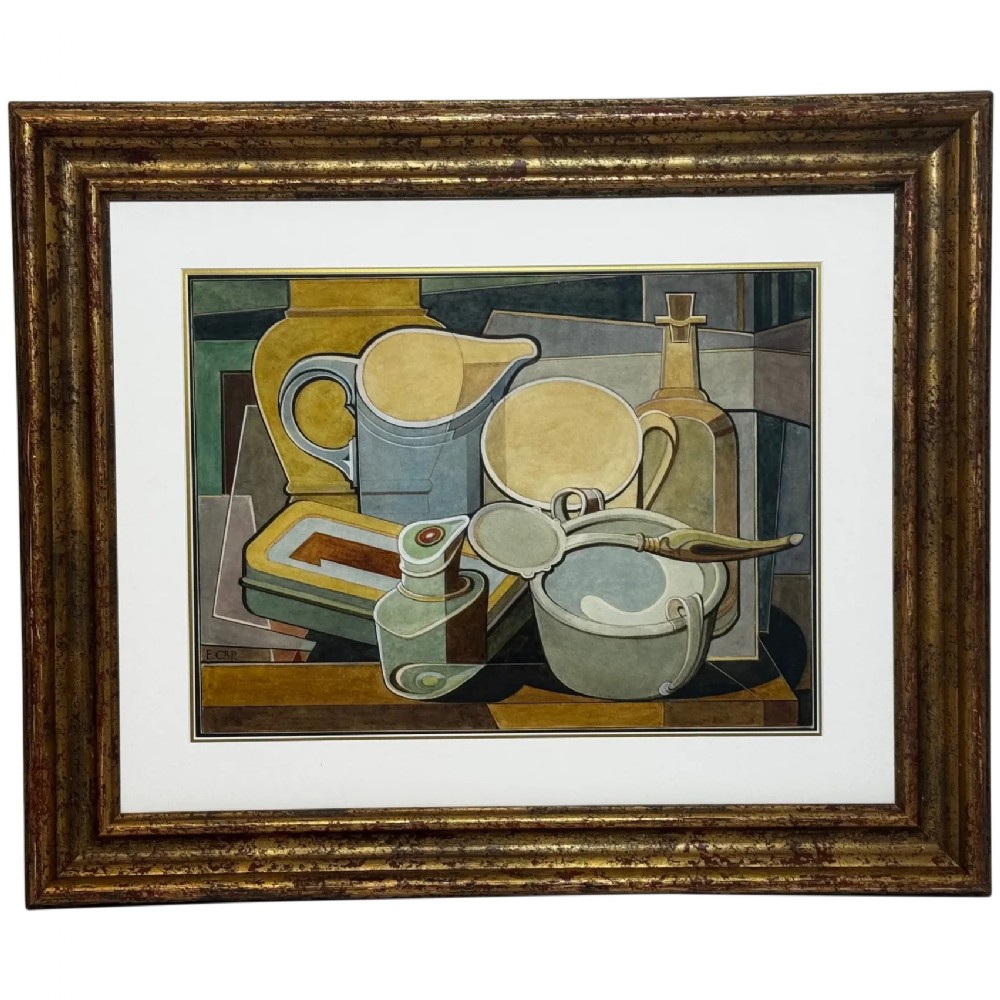
A jug, pot, spoon, and bottle — the most familiar of household forms — become part of a measured dialogue between light, line, and space.
Preston’s sculptural discipline infuses the composition: each shape is defined with precision yet softened by the translucency of watercolour. His technique balances architectural logic with emotional restraint, allowing the ordinary to feel profound.
This is not merely a study of objects — it is a meditation on proportion, calm, and design. Preston elevates the domestic still life into an art of quiet intelligence and enduring grace.
Composition & Technique
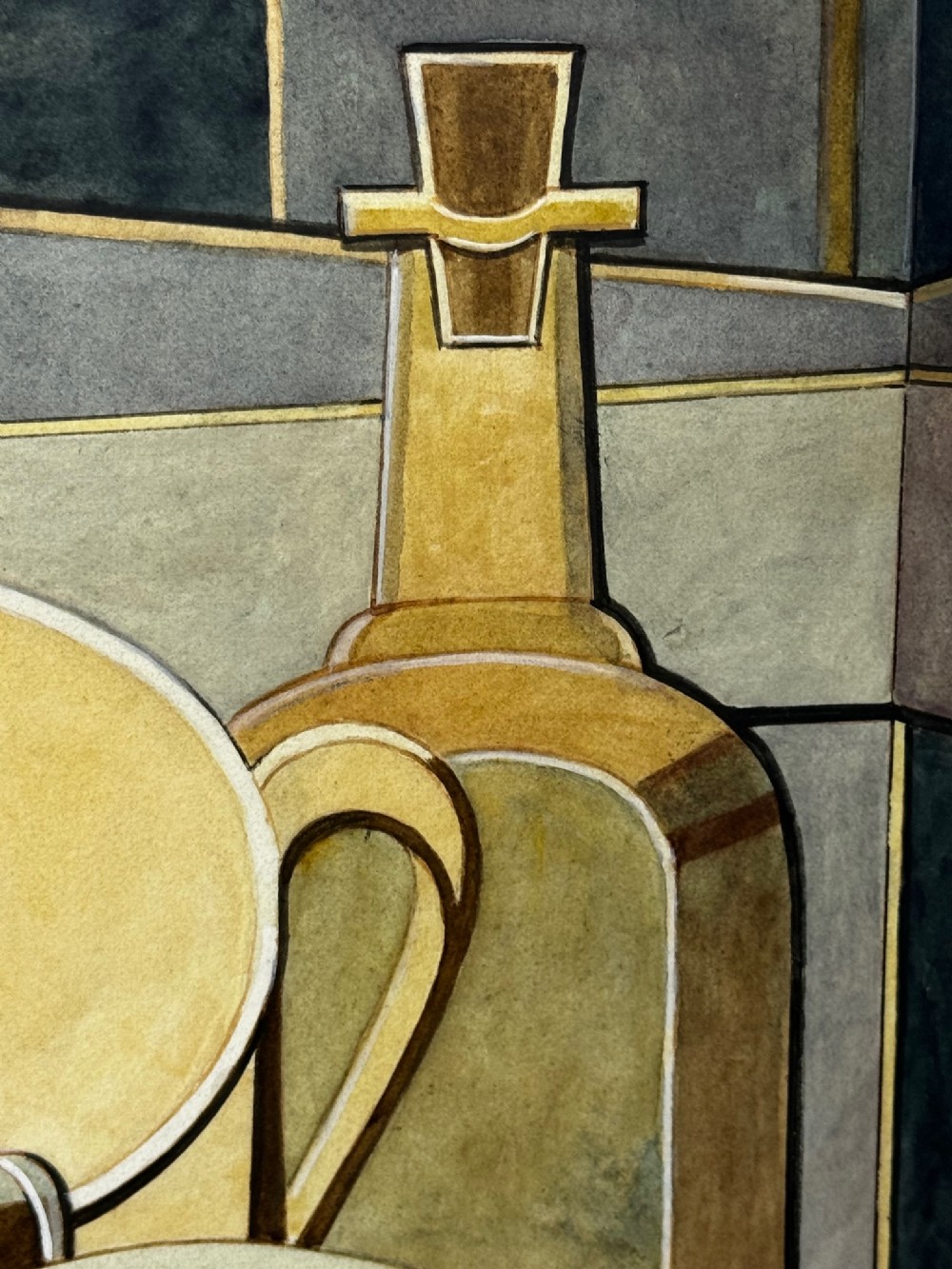
Preston composes with geometric discipline and lyrical control.
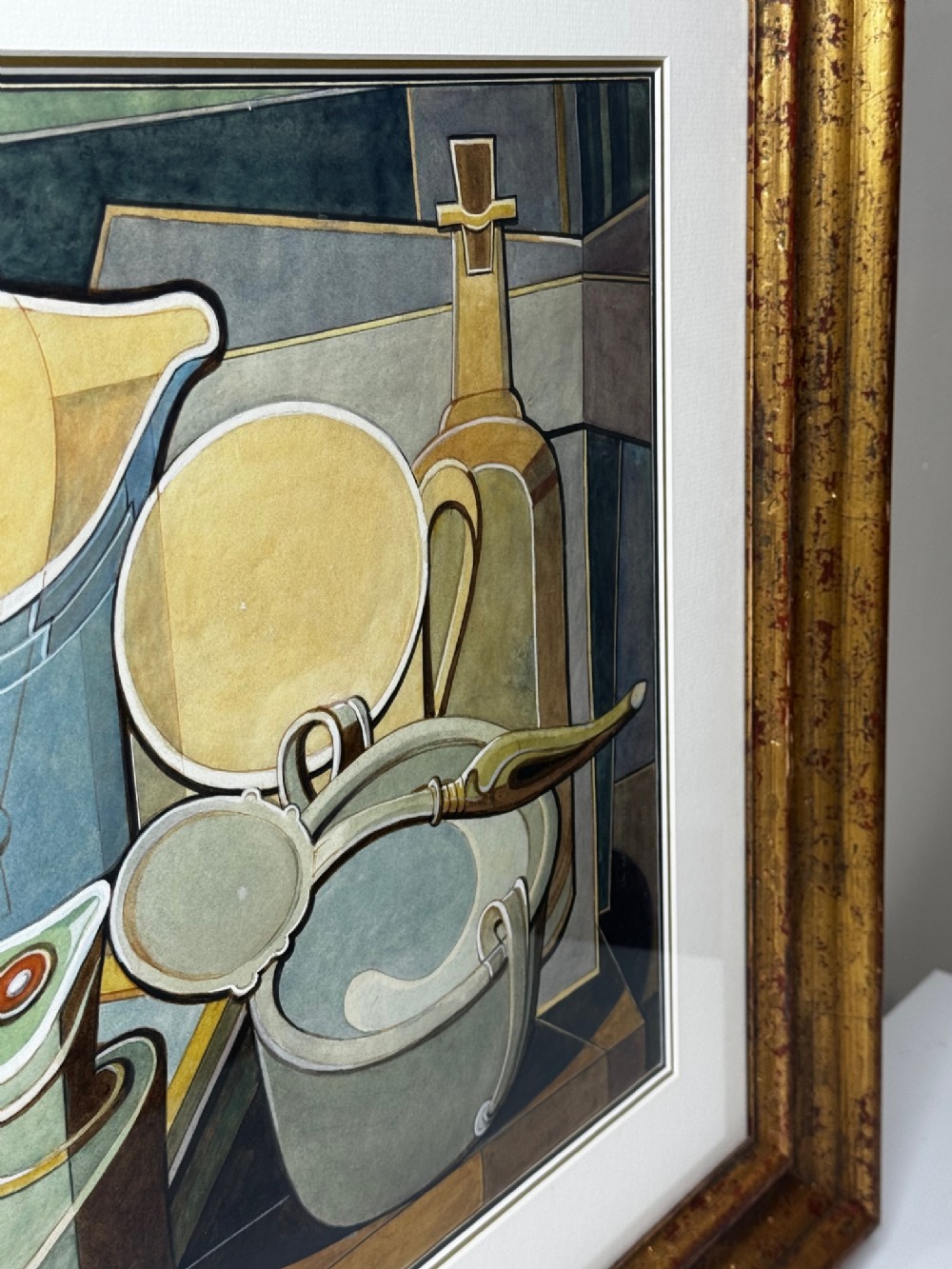
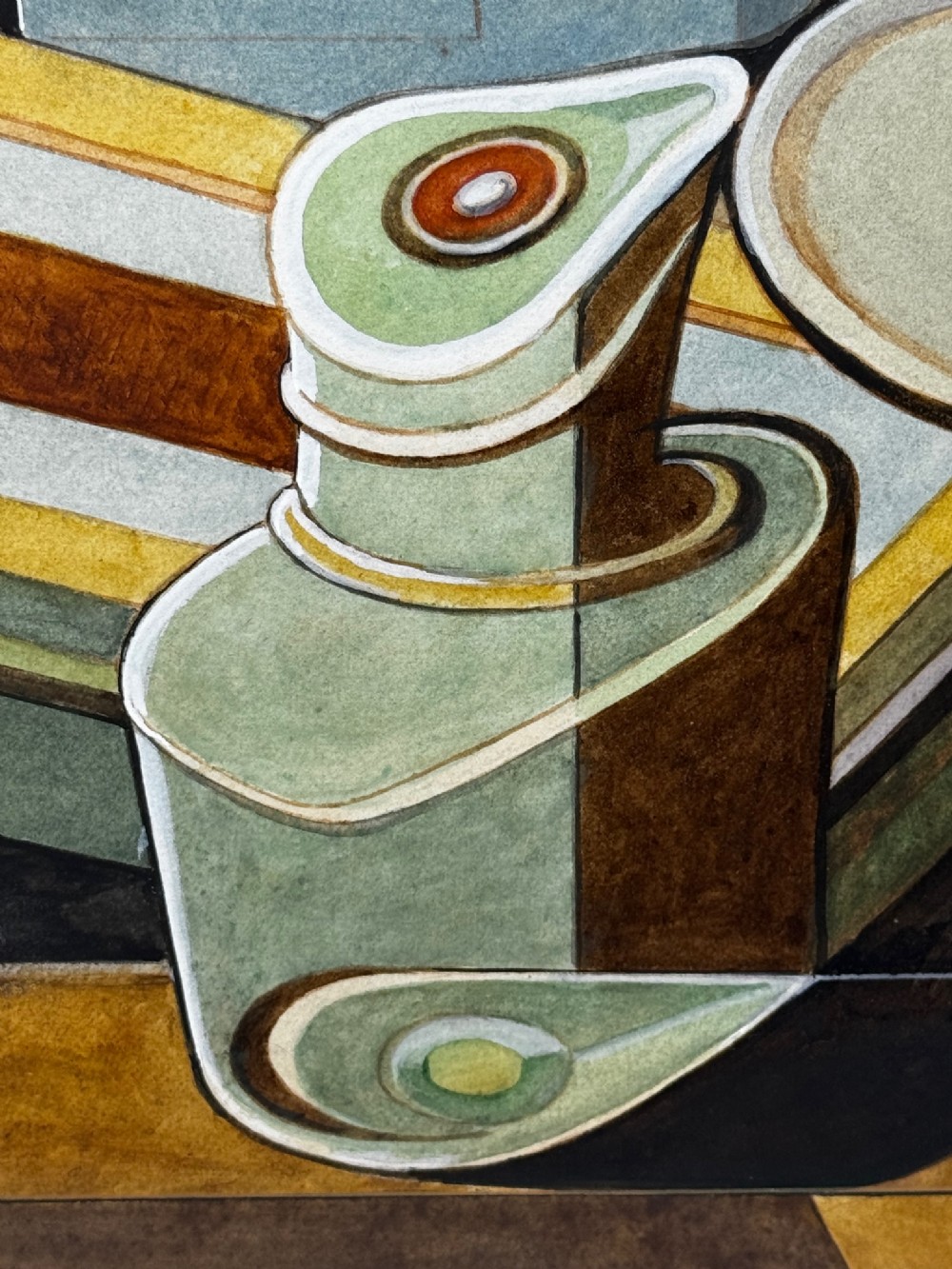
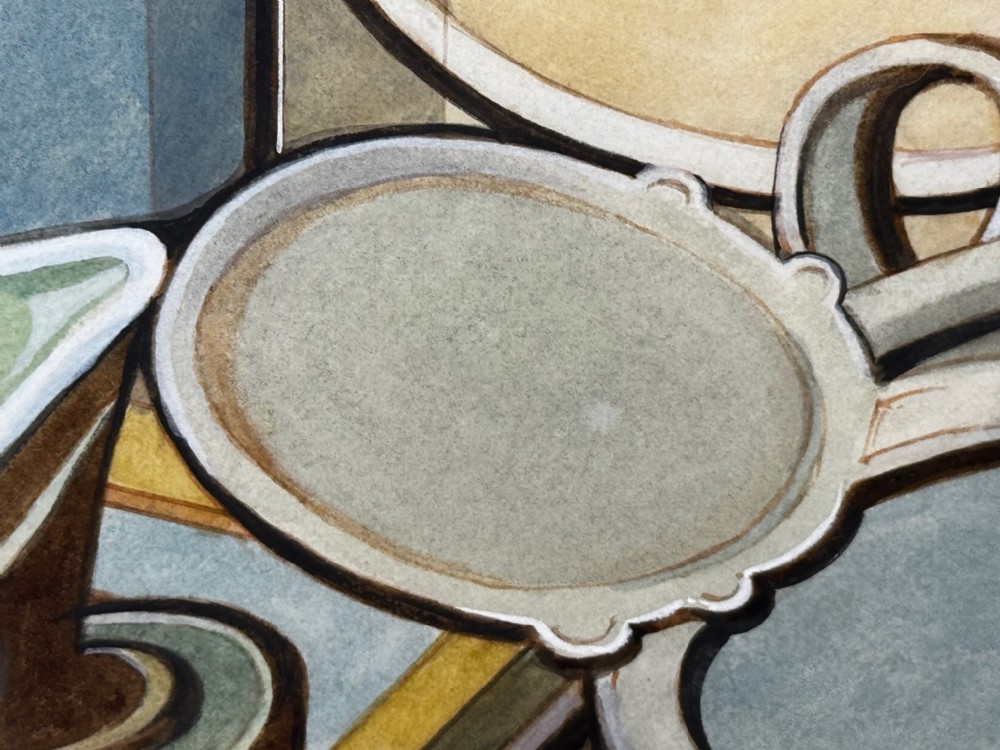
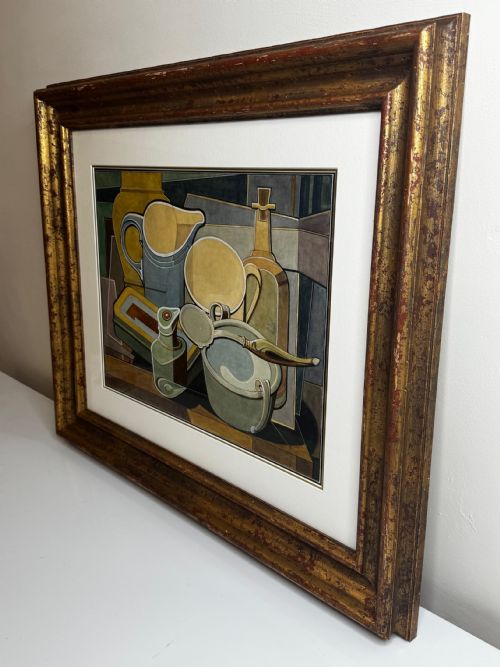
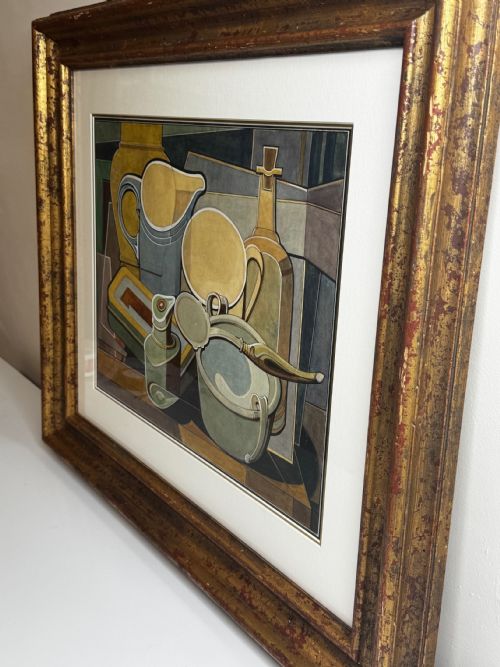
The objects unfold through overlapping ellipses, cylinders, and angular planes — their boundaries blending in gentle tension.
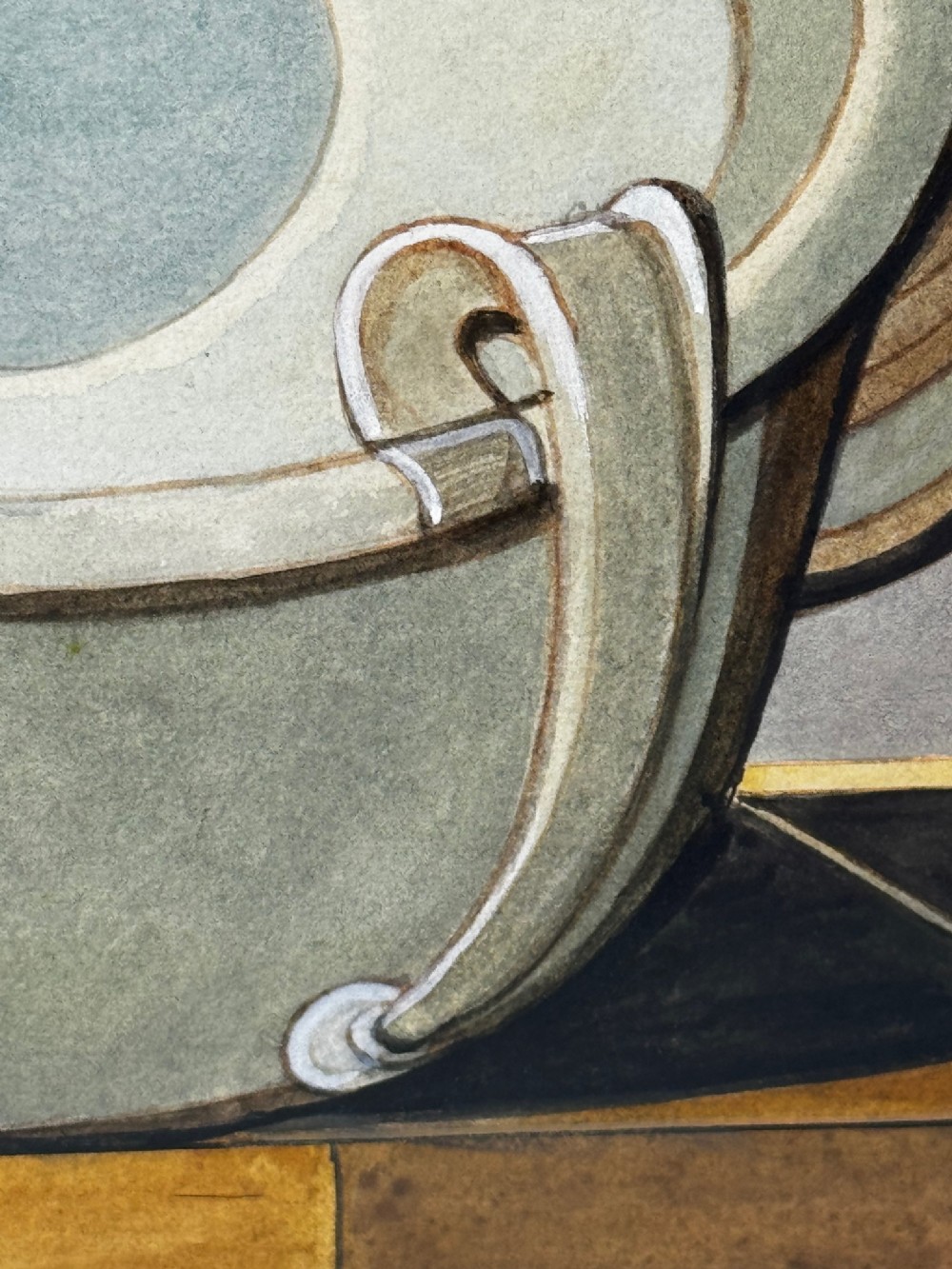
The jug and pot provide visual weight
The bottle anchors the vertical rhythm
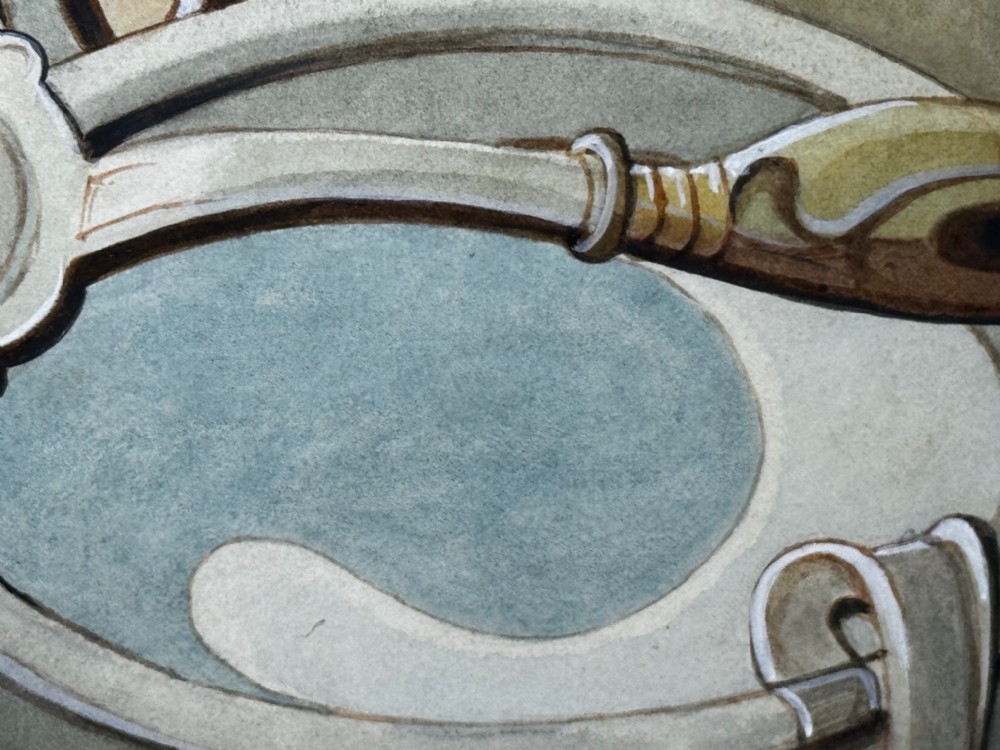
The spoon bridges foreground and form
His brushwork is both technical and expressive:
Layered transparent washes create the illusion of volume and atmosphere
Fine linear outlines define structure while maintaining softness
Gradual tonal modulation replaces heavy shadow, evoking natural light
Colour Palette:
Refined and harmonious — ochres and sand tones evoke earthenware warmth; celadon and pale teal add freshness; soft greys and muted blues bring composure and spatial depth.
These tonal harmonies reflect the measured serenity of modernism, yet the mood remains human — calm, balanced, contemplative. Preston’s geometry becomes a vessel for emotion: a visual hymn to simplicity, structure, and peace.
About the Artist
Edward Carter Preston (1886–1965) was one of Britain’s most gifted and multifaceted artists. Born in Liverpool and trained at the Liverpool School of Art, he became celebrated as a sculptor, painter, and medallist.
He achieved national recognition as the creator of the First World War memorial plaques (the “Dead Man’s Penny”) and for his monumental carvings and reliefs at Liverpool Cathedral, commissioned by Sir Giles Gilbert Scott.
Though known primarily for sculpture, his painting and design work reveal a lifelong fascination with form, proportion, and harmony. His 1920s watercolours, such as this, capture a quieter, more reflective side — balancing analytical structure with emotional warmth.
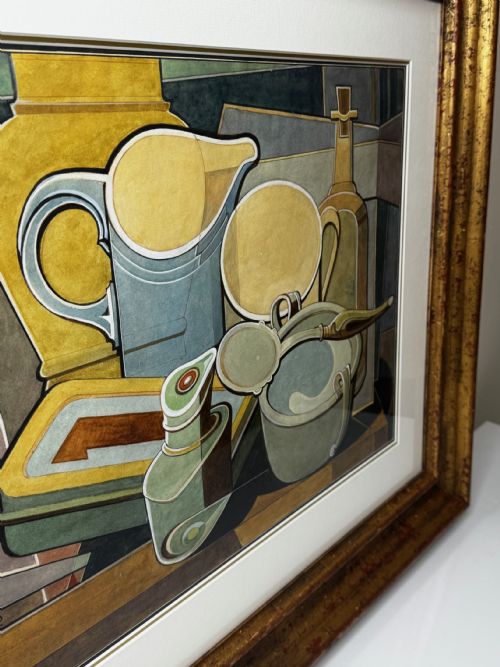
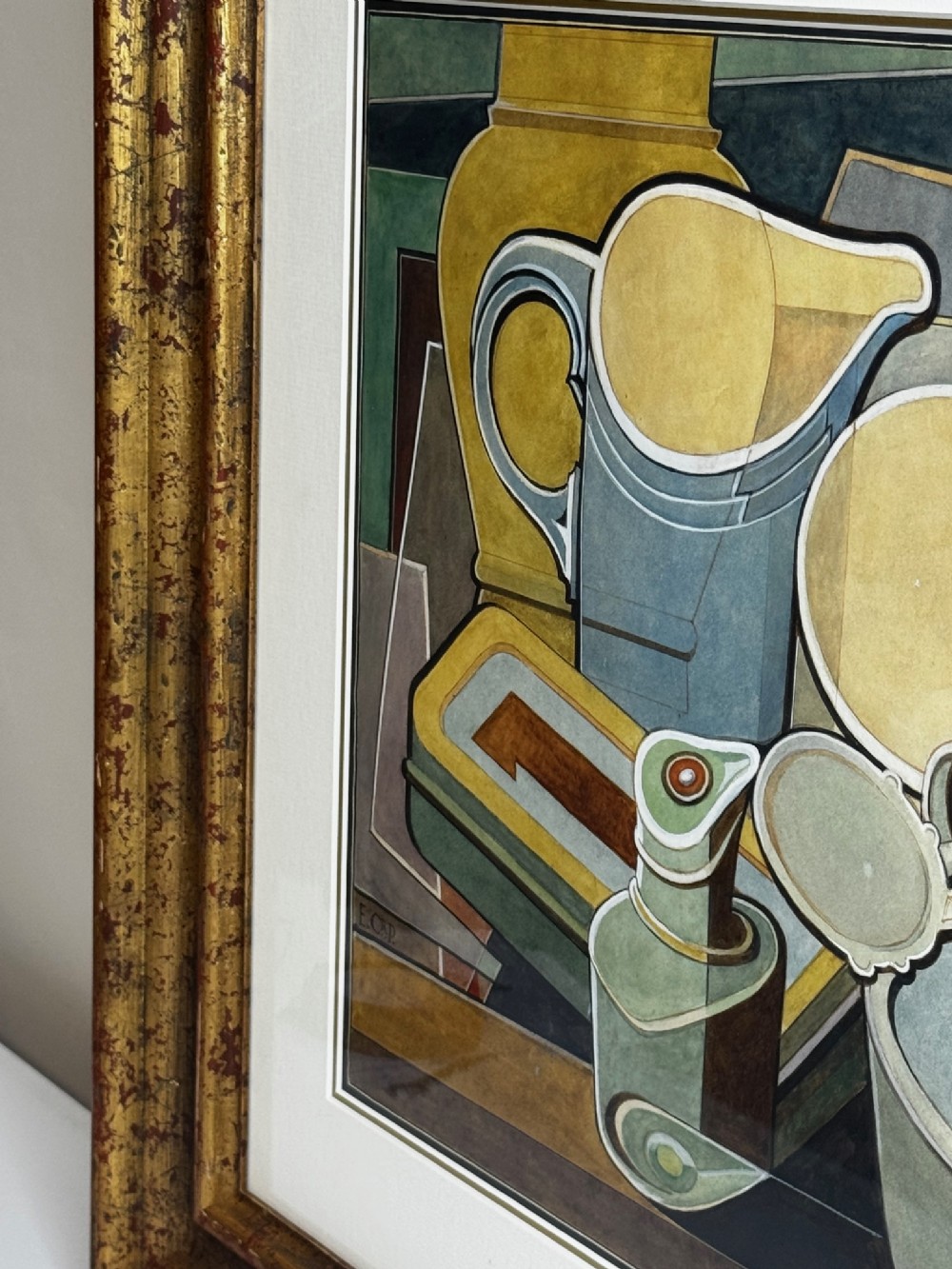
Signature
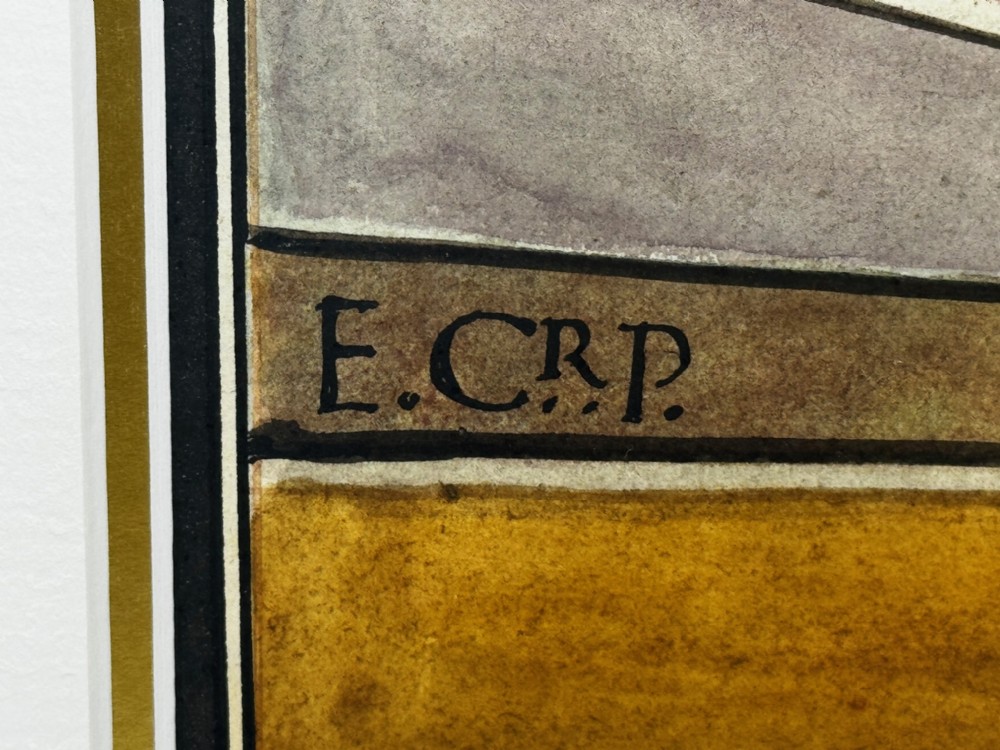
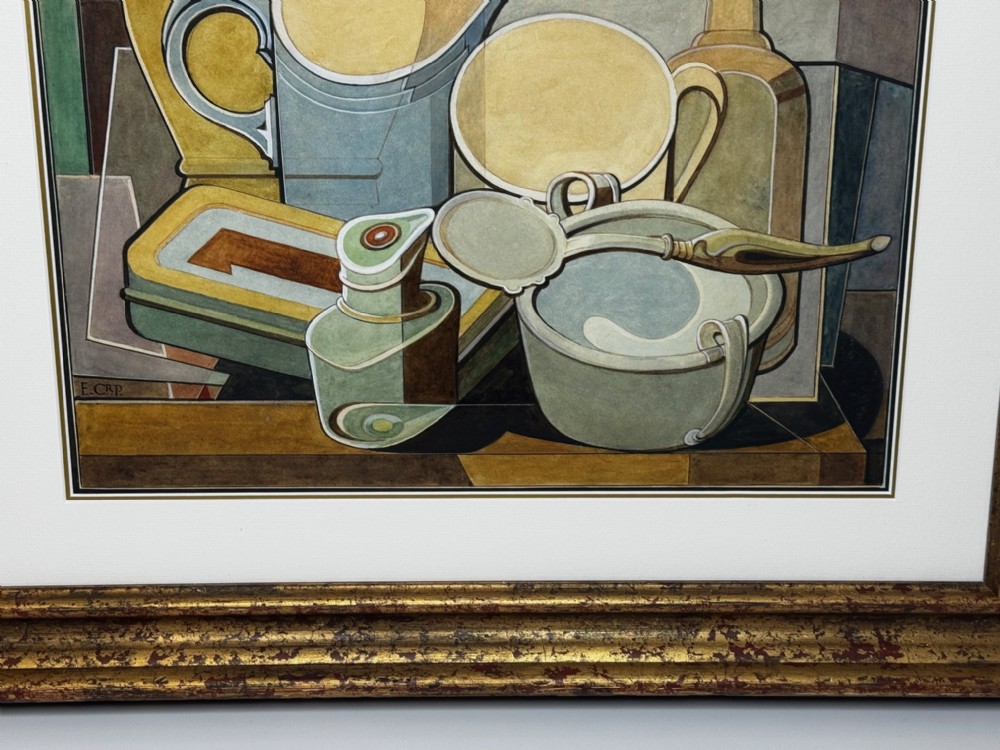
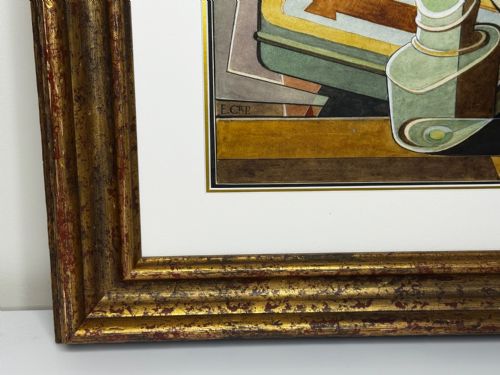
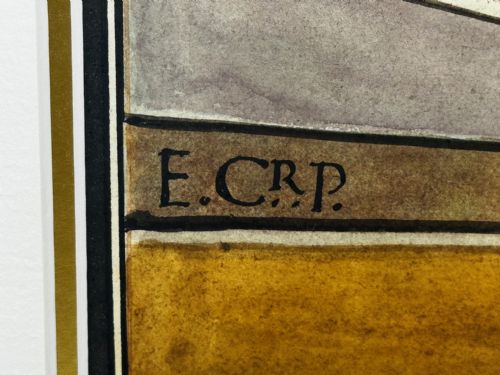
Initialled E.Cr.P. lower left — a discreet and deliberate mark, consistent with Preston’s elegant compositional discipline.
Framing
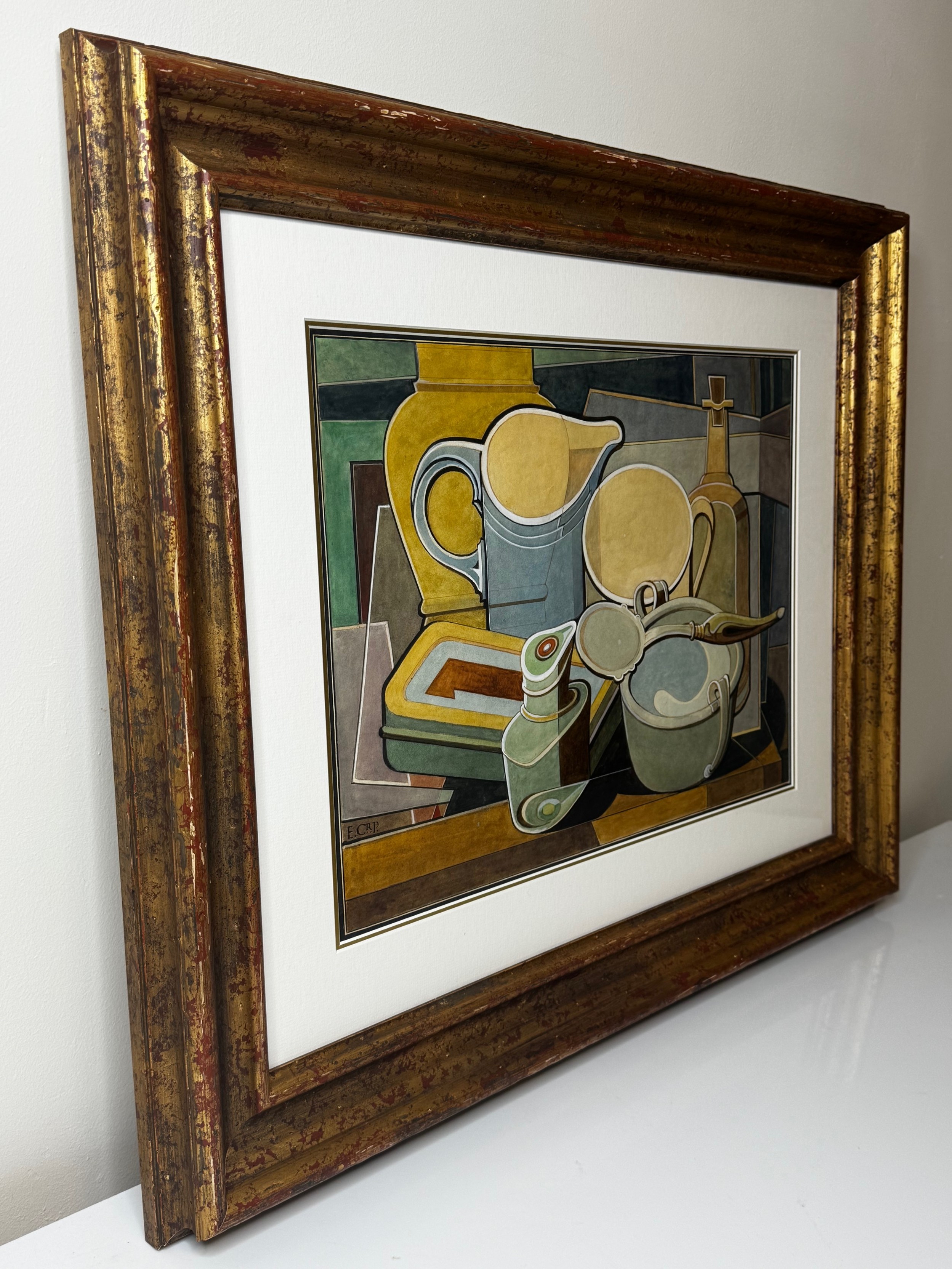
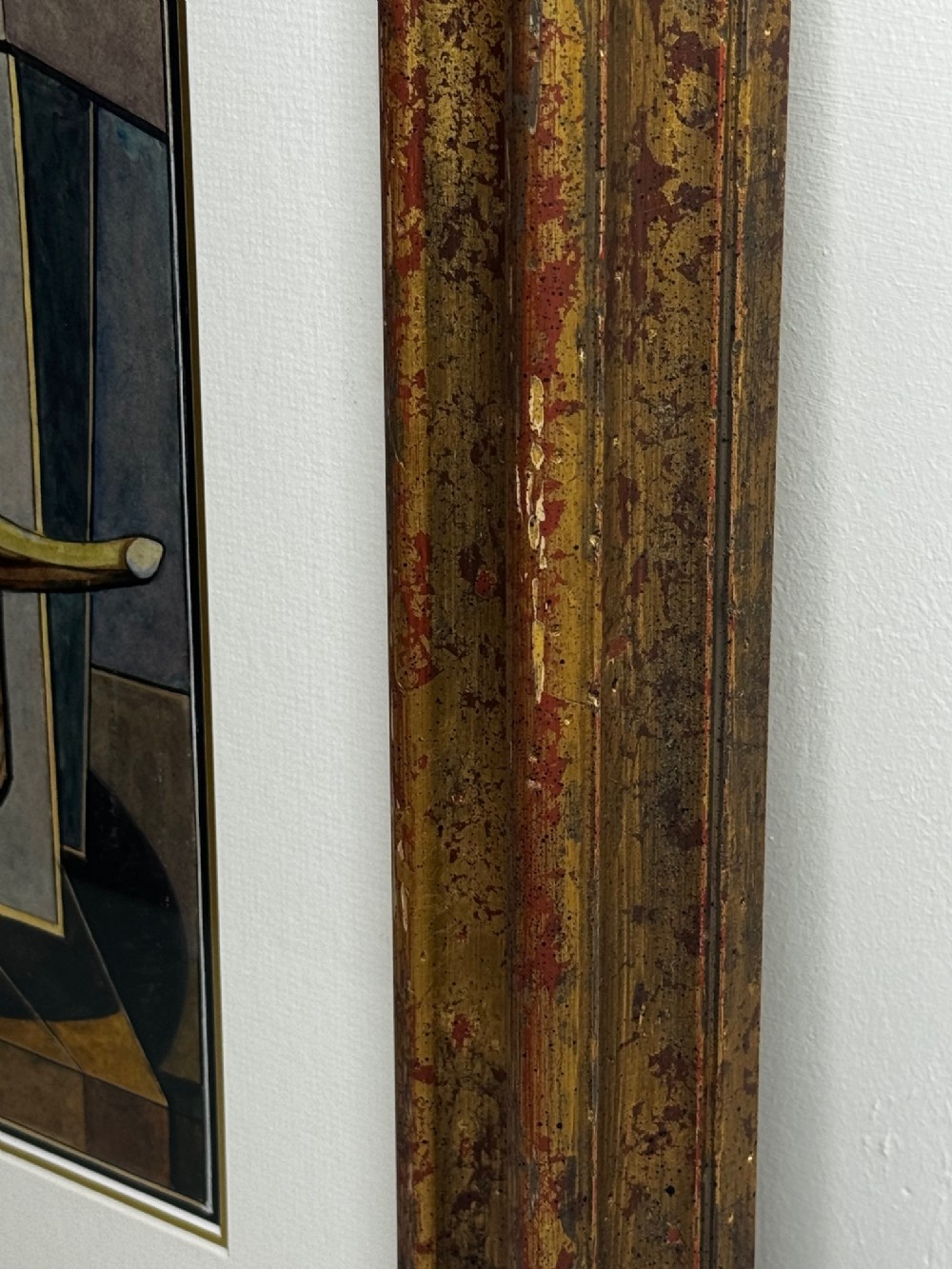
Frame Dimensions: 80.5 cm (W) × 66.5 cm (H) × 5 cm (D)
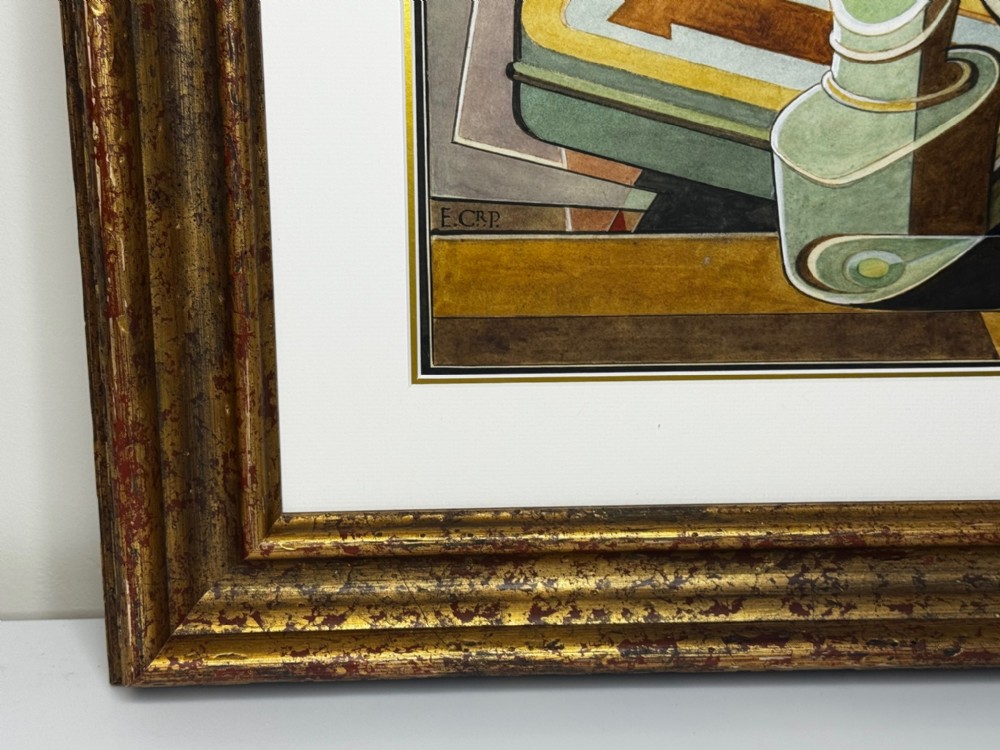
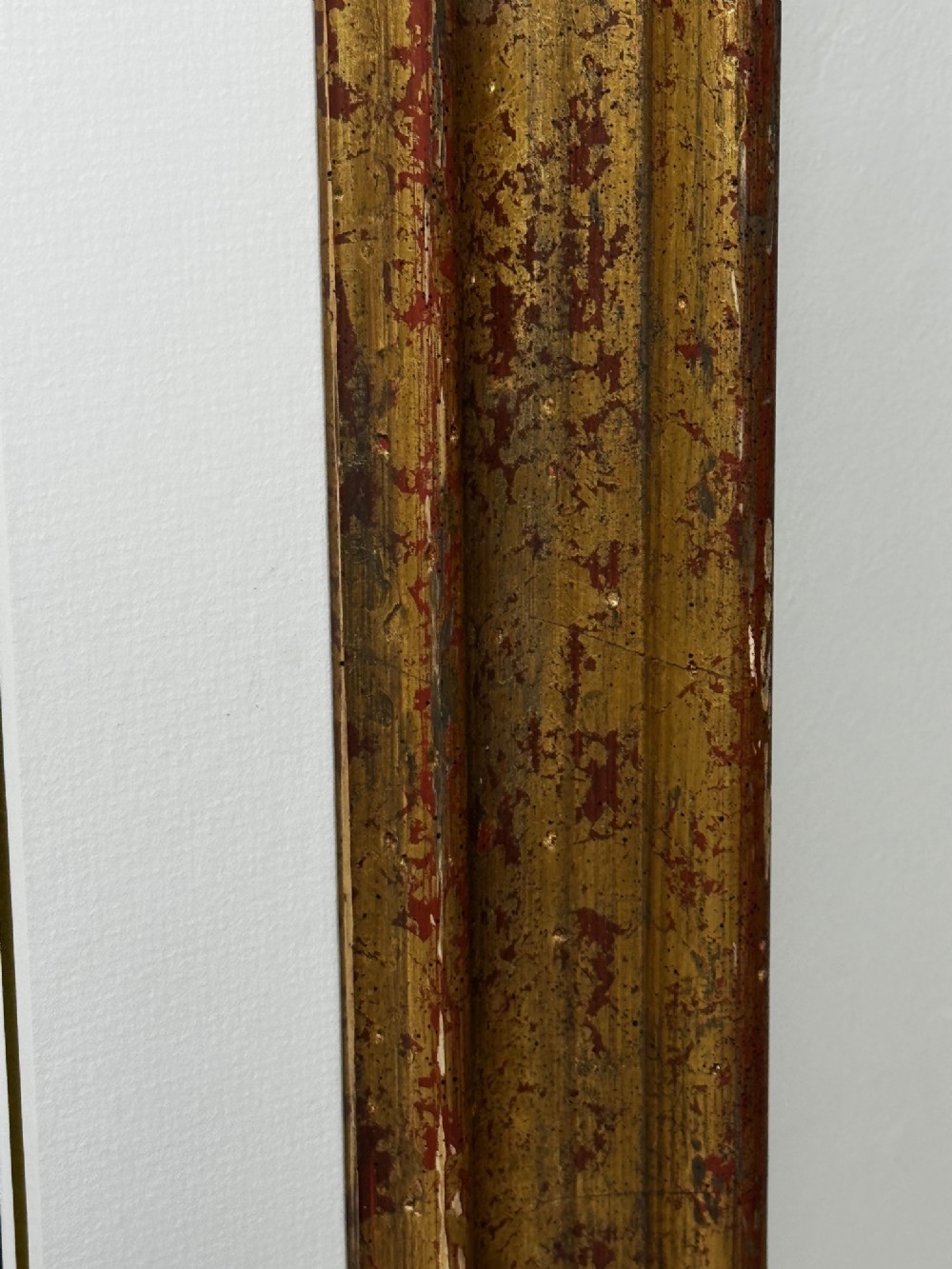
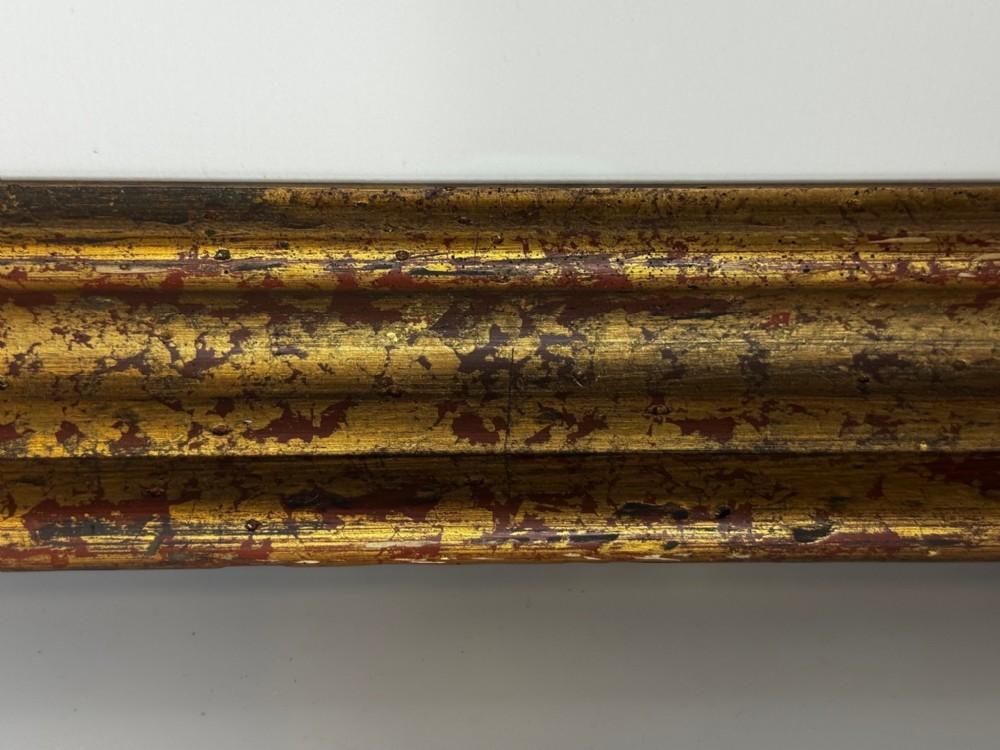
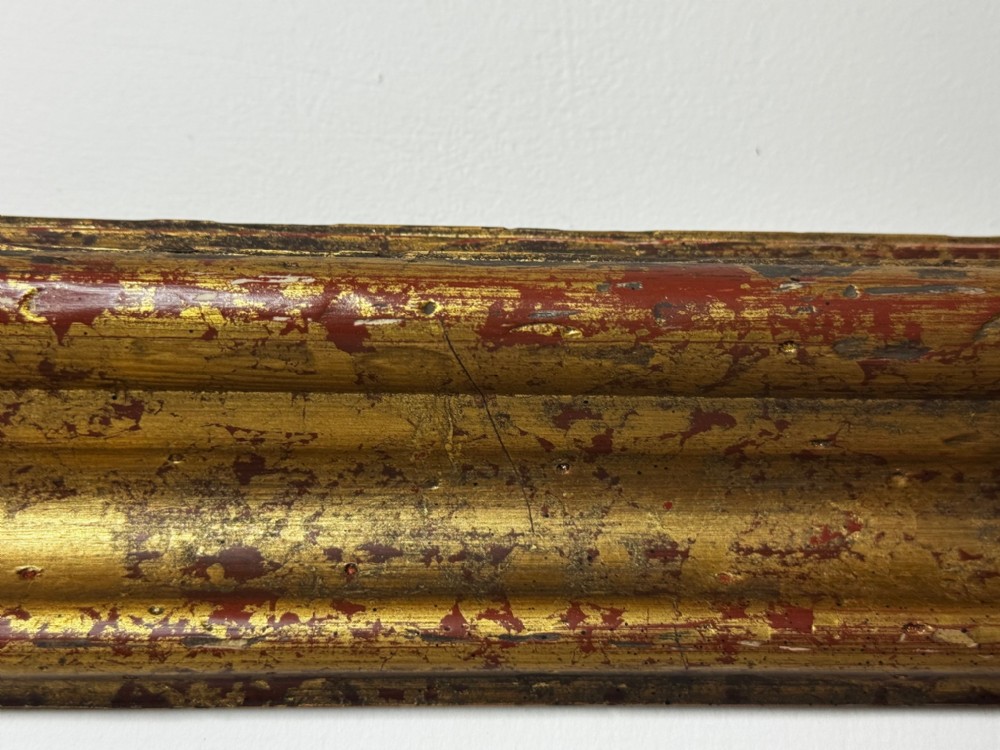
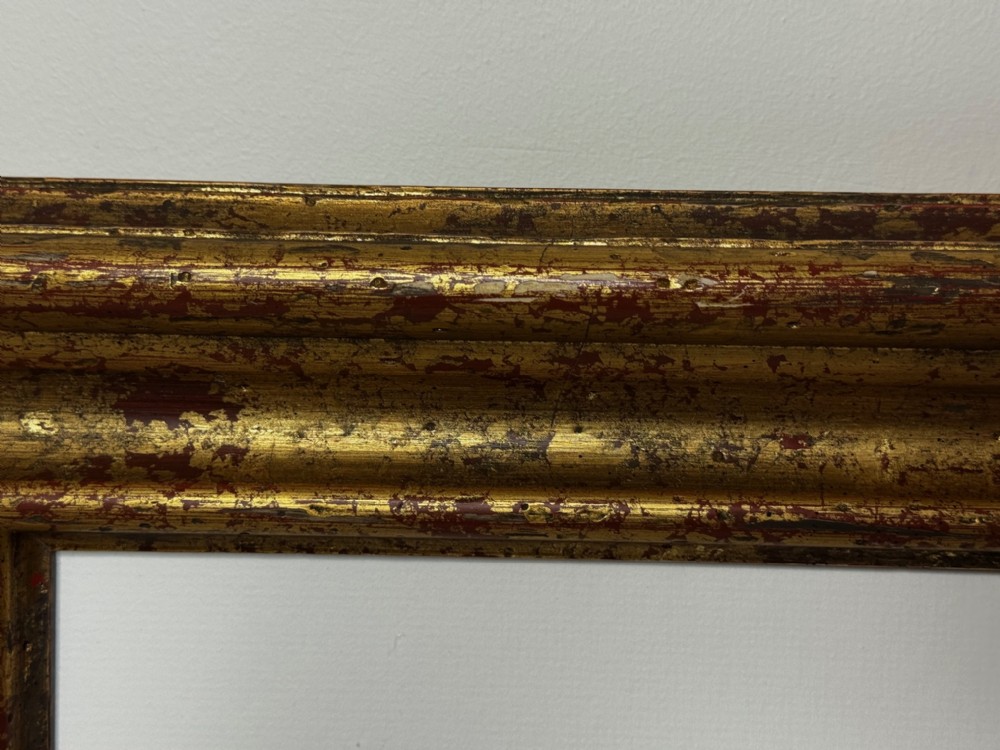
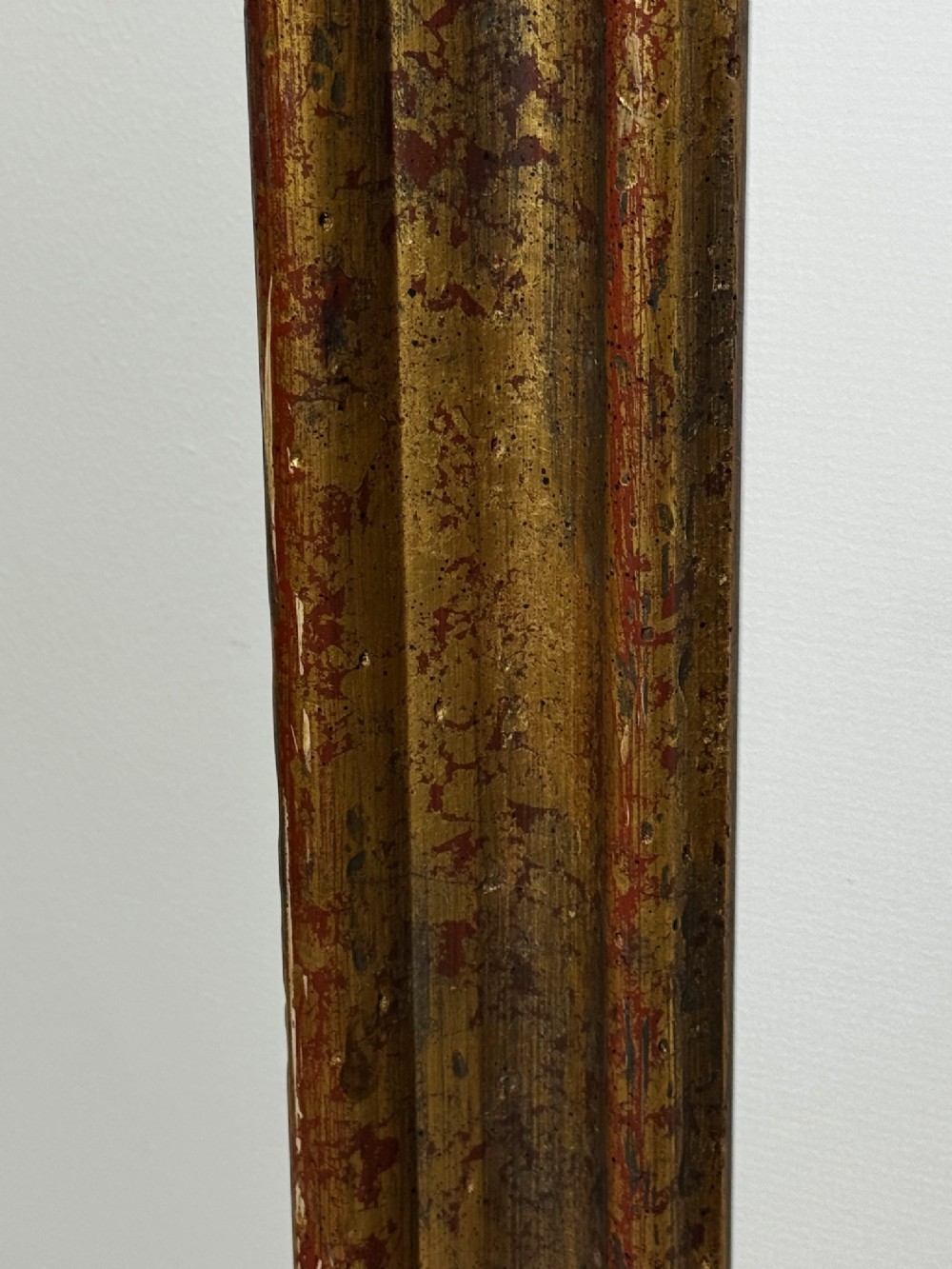
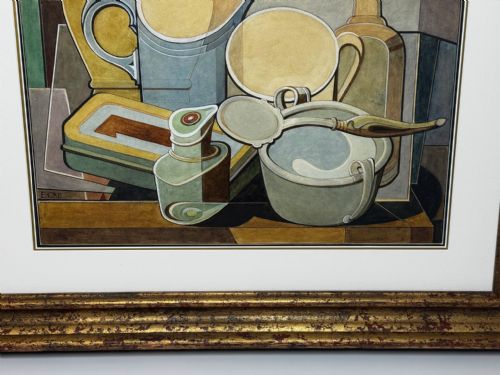
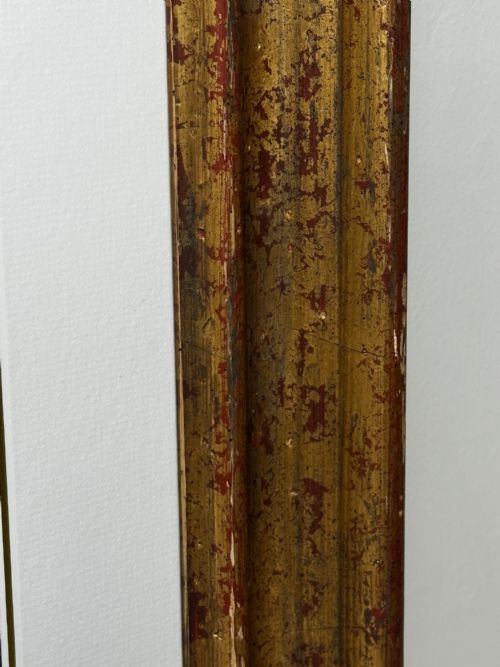
Presented in a Larson-Juhl distressed-finish rustic frame, chosen to echo the painting’s warm tonal palette and geometric design.
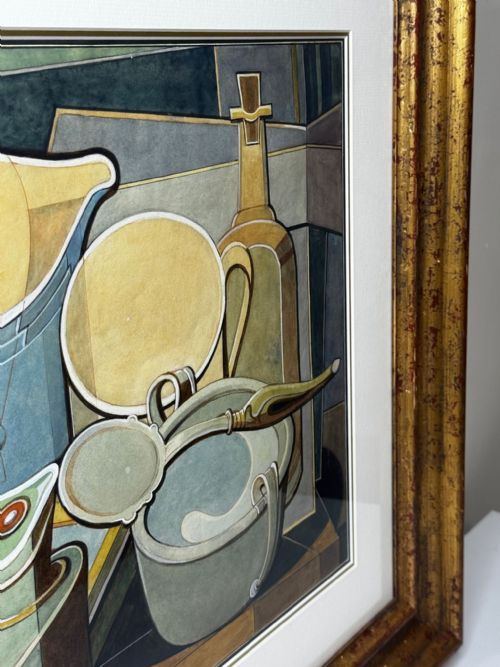
The frame features an applied distressed surface with deliberate chipped and cracked detailing, enhancing its antique aesthetic and complementing the painting’s timeless modernist warmth.
Fitted with AR70 museum-quality anti-reflective glass, providing:
99% UV protection
Brilliant clarity with minimal glare
Museum-grade preservation for longevity
The frame’s textured, timeworn finish harmonises beautifully with the artwork’s balance of structure, depth, and quiet humanity.
Provenance
From a relative of the artist
Direct family provenance — never previously offered for sale
Label verso from a notable North West auction house, confirming professional handling and documentation
Curated and catalogued by Cheshire Antiques Consultant Ltd
Exhibited at the Famous Lord Hill Museum, among British modernist and interwar works
This impeccable provenance provides both art-historical credibility and collecto
Cheshire Antiques Consultant Ltd has dated this Cubist Still Life Painting to the 1920s.
This is an independent date report produced by Sellingantiques using its own proprietary system. The process uses the photographs shown on this page. The system is never told the date the dealer has declared. This report shows that the two dates corroborate.
Source the historic in 17th, 18th, 19th & 20th century fine arts, painting, sculptures & collectibles
You can view the stock and full dealer information on the Cheshire Antiques Consultant Ltd Profile Page
Cubism Painting Domestic Kitchen Geometry Edward Carter Preston