
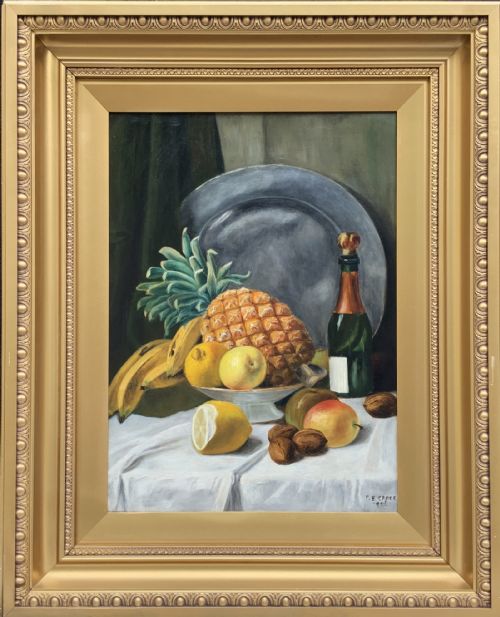


Kitchen Still Life Painting
A kitchen still life painting brings domestic provisions and vessels onto canvas, offering enduring beauty for the home.
Kitchen Still Life Painting
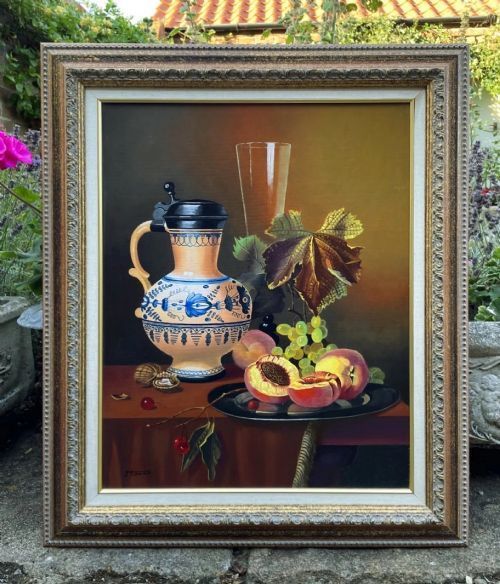
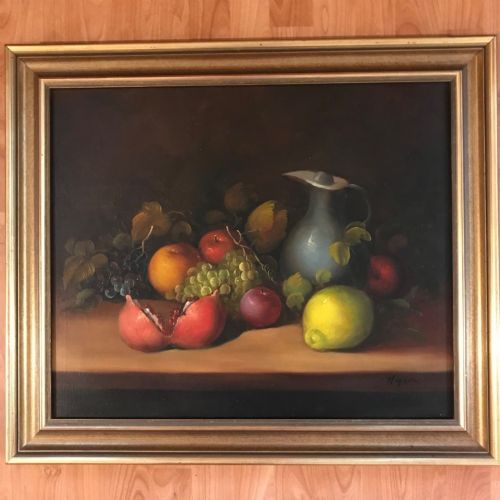
A kitchen still life painting focuses on everyday food, tableware, and domestic interiors. You encounter these works across multiple eras, from seventeenth-century Dutch Golden Age traditions through to mid-century European studies.
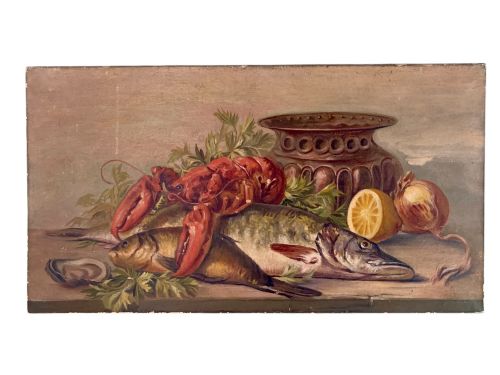
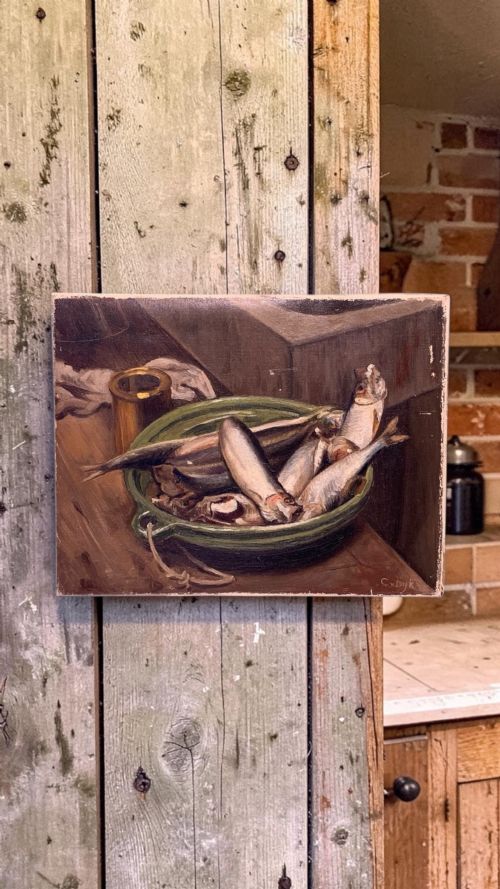
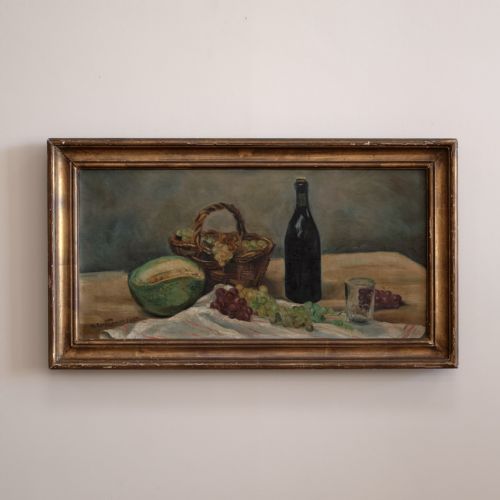
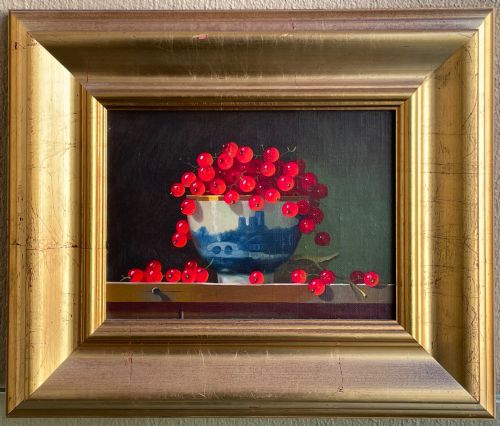
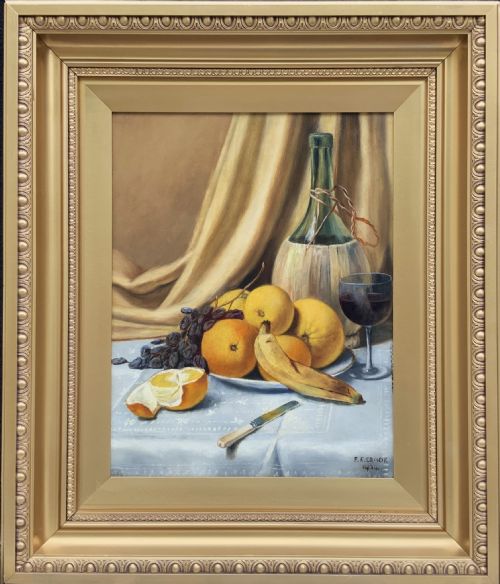
The selections on this page span oil paintings on canvas, wood panel, and board. Subjects range from simple arrangements of fruit and fish to elaborate larder scenes and interior domestic settings.
How They Were Made
Artists historically applied oil paint to prepared canvas, wood panels, or boards, building rich textures and deep tones. Many surviving examples retain their original frames, often formed from solid wood or gilded wood.
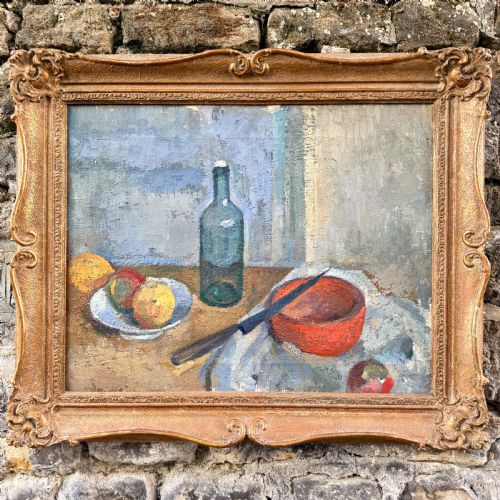
Techniques vary from classical realism and nineteenth-century realism to post-impressionism, art deco, and cubism. Painters used these varied methods to render the specific sheen of fruit, ceramics, and metal vessels.
Larder scenes occasionally sneak in playing cards, dice, and curious snails among the bread, lemons, and lamb.
What Varies in Quality
Quality rests in the handling of light, shadow, and spatial depth within the domestic setting. Superior works demonstrate confident brushwork and precise observation of textures, such as the skin of fruit or the glaze on earthenware.
The integrity of the physical support and the harmony of the framing contribute significantly to a piece's standing. Works tied to recognised schools or documented artists often display greater compositional ambition.
Ian Parker·Vladimir Aldoshin·Vincent Clare·Edward Carter Preston·Gustav Goemans·John Robertson Reid
The Kitchen Still Life Painting Glossary
- Oil on canvas
- Pigment mixed with drying oil applied to a woven fabric support. This remains the most common medium across the centuries represented here.
- Wood panel
- A rigid wooden support used by painters before and alongside stretched canvas. It provides a stable surface for detailed brushwork.
- Gilded wood
- Wood treated with a thin layer of gold leaf or metallic gilt. This finish frequently appears on period frames accompanying older canvases.
- Still life
- An artwork depicting inanimate subject matter, typically commonplace objects such as food, jugs, and tableware. These compositions emphasise arrangement and light.
- Post-Impressionism
- An art movement extending beyond impressionism that explores emotional and structural values through bold colour and form. It influences several twentieth-century works on view.
Kitchen Still Life Painting: Frequently Asked Questions
What periods do these paintings cover?
The available selection spans several centuries, including seventeenth-century works, nineteenth-century academic and realist pieces, and twentieth-century modernism up through mid-century European studies.
Buyers can find everything from Dutch Golden Age interpretations to art deco and Edwardian canvases.
How should I display a kitchen still life painting?
These works suit dining spaces, kitchens, and living areas where their domestic subject matter complements daily life. Proper placement avoids direct sunlight to protect oil pigments over time.
Matching the painting's original frame style to your interior enhances its visual impact.
What subjects typically appear in these works?
Common subjects include fruit such as grapes, apples, lemons, and red berries, alongside fish, lobsters, bread, and earthenware jugs. Some compositions expand into wider larder or interior kitchen scenes.
Artists often arranged these provisions to study light, shadow, and form.
How do I distinguish between different painting styles?
Styles range from classical and nineteenth-century realism, which prioritize accurate detail and texture, to cubism and mid-century abstraction that break objects into geometric planes. Examining brushwork and perspective reveals the artistic approach.
Twentieth-century pieces often embrace simplified forms compared to earlier academic traditions.