


Vintage Fruit Oil Painting
A vintage fruit oil painting brings the rich colours and tactile weight of traditional still life directly into a modern room.
Vintage Fruit Oil Painting
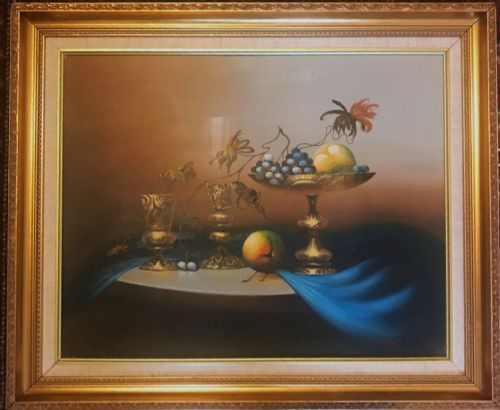
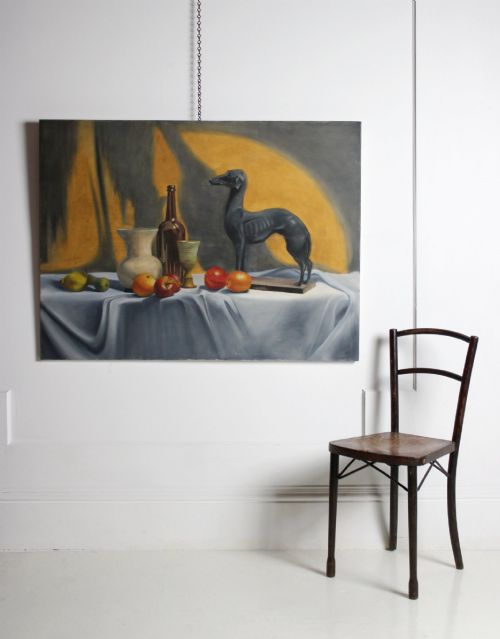
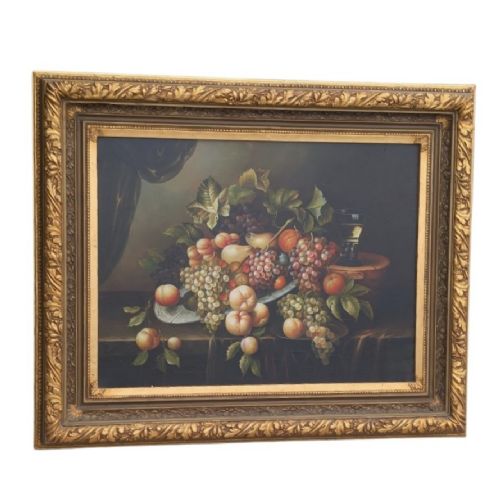
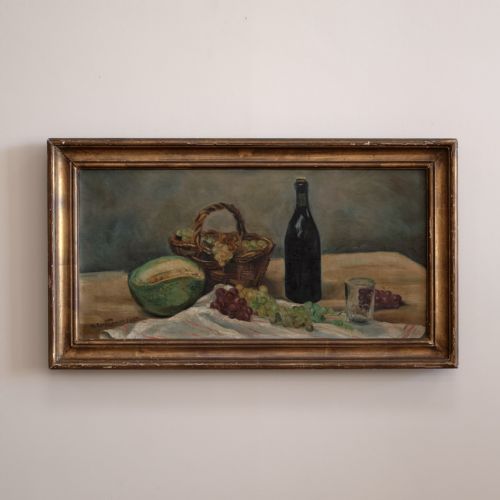
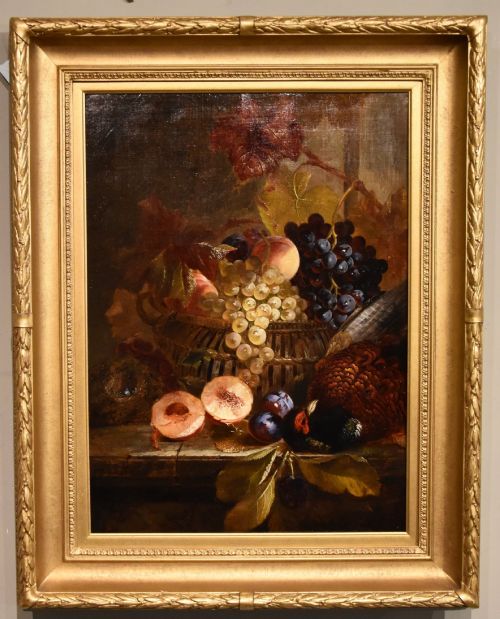
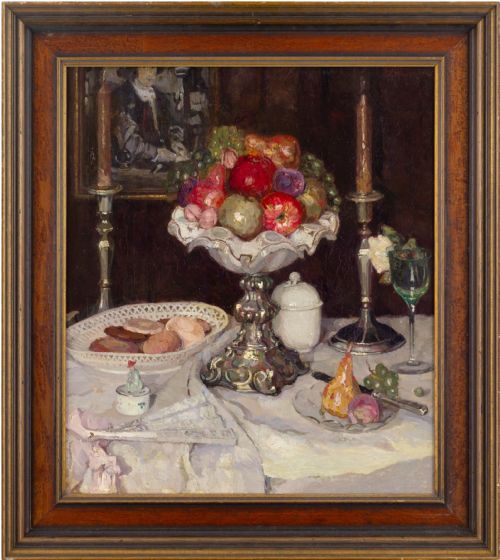
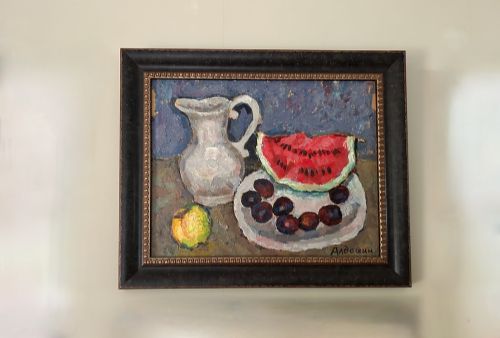
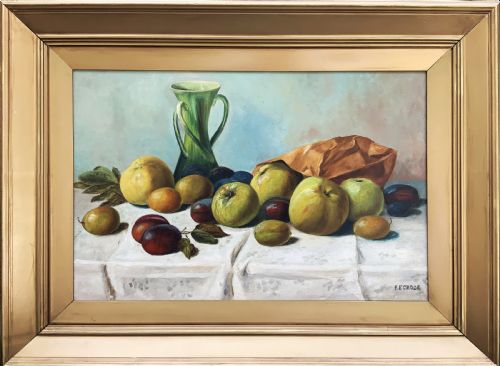
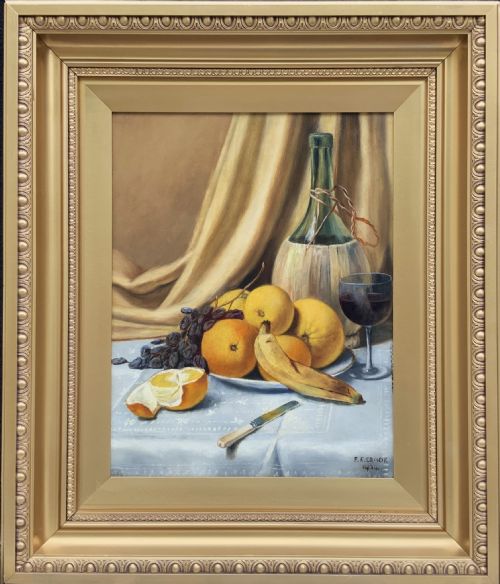
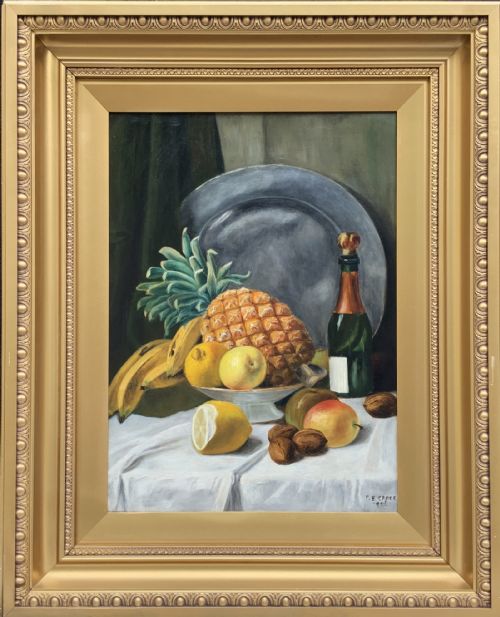
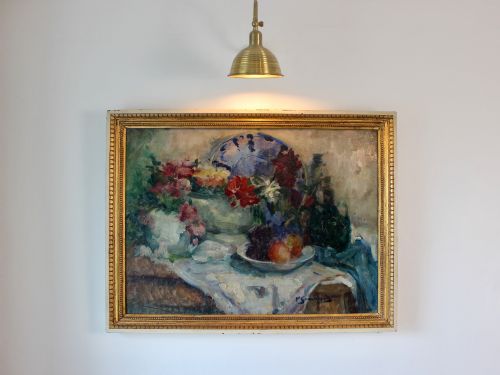
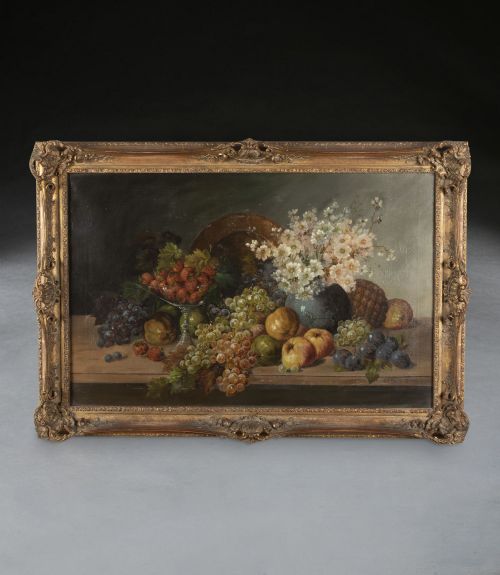
A vintage fruit oil painting captures arrangements of apples, grapes, melons and pomegranates, frequently grouped alongside jugs, pitchers and glassware on wooden tables or in larder settings. These works span periods from the Victorian era and Edwardian times through to mid-century modern and 1960s interpretations.
The most common formats met on this page are oil on canvas or wood panel, ranging from intimate studies to large banquet compositions created by British, European and international artists.
Buyers look for these pieces to anchor a dining space or kitchen with historical depth, texture and traditional subjects rendered in paint.
Materials and techniques
Artists built these compositions using oil paint on stretched canvas, wooden panels, or occasionally milk glass, applying layers of pigment to capture the bruised skin of peaches or the bloom upon grapes.
Several canvases manage to squeeze biscuits and candlesticks in alongside the apples.
Quality and execution
Quality rests in the handling of light across curved surfaces, the rendering of shadow within a jug, and the structural confidence of the brushwork rather than the subject matter alone.
Stronger pieces display a sophisticated control of tone and colour harmony, whereas simpler student studies rely on flat application and predictable arrangements.
Jozsef Molnar·William Henry Ward·Else Preubner·Vladimir Aldoshin·Victor Simonin·Henri Joseph Pauwels·Bela Balogh·John Gilbey Bowles·Maud Frances Eyston Sumner·William Jones of Bath
The Vintage Fruit Oil Painting Glossary
- Still life
- An artwork depicting inanimate subject matter, typically commonplace objects such as fruit, flowers, and tableware. This genre allows artists to focus entirely on colour, composition, and the play of light.
- Oil on canvas
- A painting medium where pigments are suspended in a drying oil and applied to a woven fabric support. This combination permits rich texture, blending, and longevity.
- Gilt wood
- Timber frames or decorative elements coated with a thin layer of gold leaf or metallic gilt paint. These frames add warmth and historical context to the completed artwork.
- Post-Impressionism
- An art movement extending roughly from the late nineteenth century to the early twentieth century. Artists rejected naturalistic depiction in favour of expressive colours and bolder forms.
Vintage Fruit Oil Painting: Frequently Asked Questions
How do I hang a heavy oil painting?
Ensure your wall fixings are anchored securely into brickwork or wall studs rather than relying solely on plasterboard.
Use heavy-duty picture wire or D-rings rated for the specific weight of the wooden frame.
What rooms suit a still life?
Dining rooms and kitchens provide a natural thematic context for compositions featuring fruit, pitchers, and larder goods.
Living spaces also benefit from the warm tones of gilt frames and rich oil colours against neutral walls.
How do I date a canvas?
Examine the stretcher bars, nails, and canvas weave at the back of the painting for clues regarding the period of manufacture.
Signatures, artist biographies, and framing styles further help narrow down the decade of creation.