

Vintage Kitchen Side Chairs
These vintage kitchen side chairs bring honest utilitarian charm to a room, offering sturdy seating grounded in decades of domestic history.
Vintage Kitchen Side Chairs
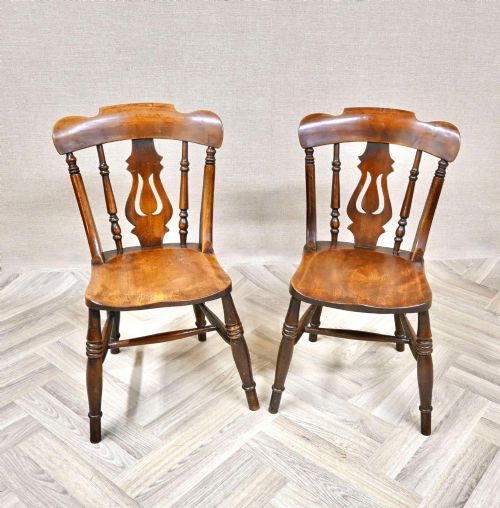
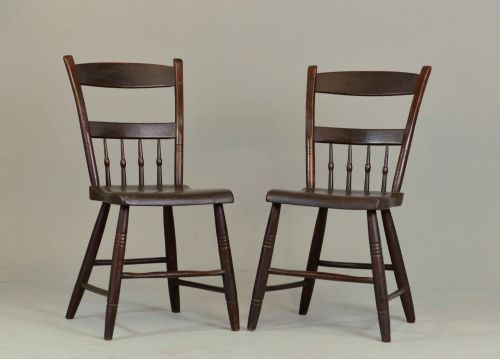
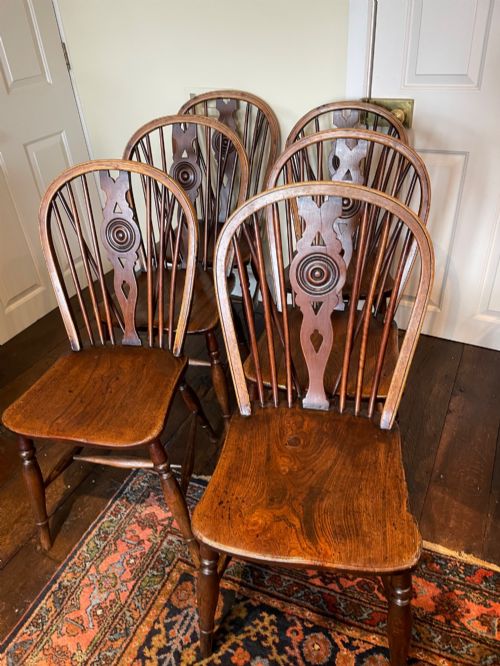
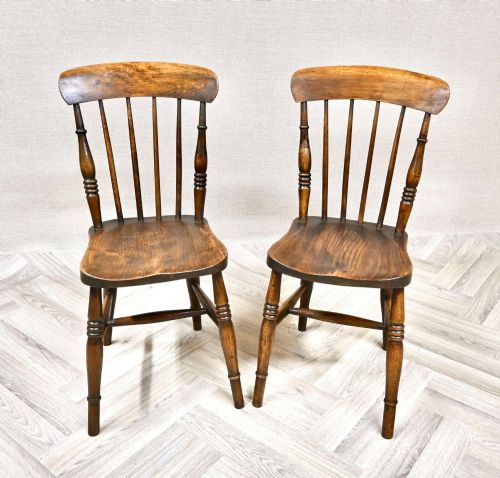
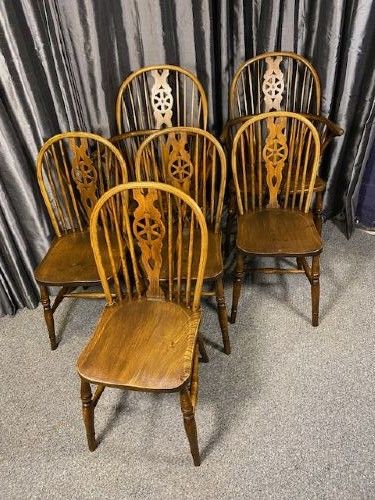
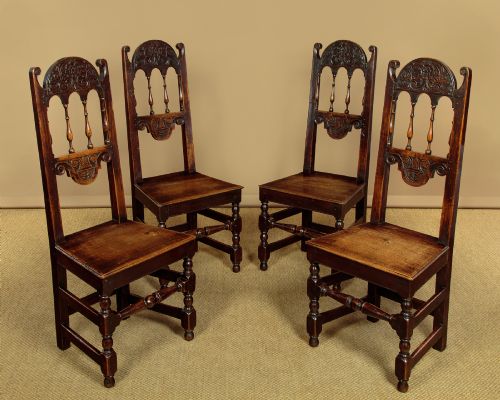
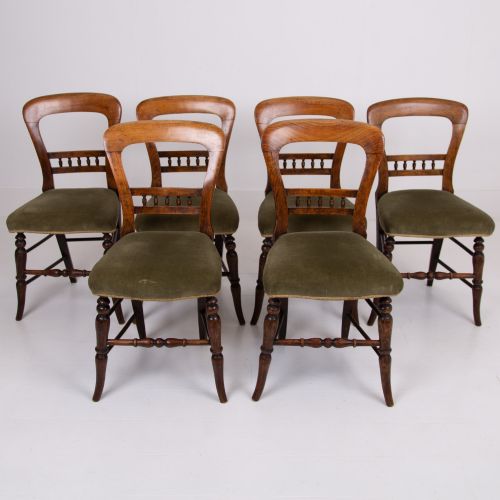
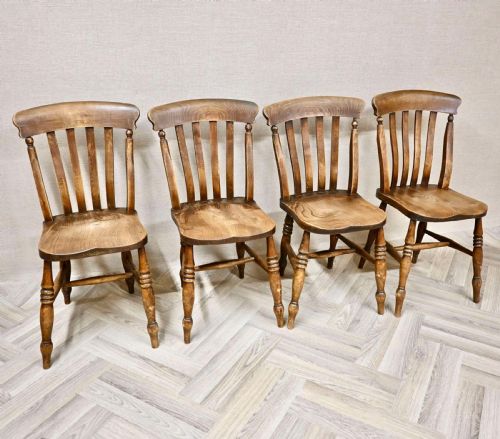
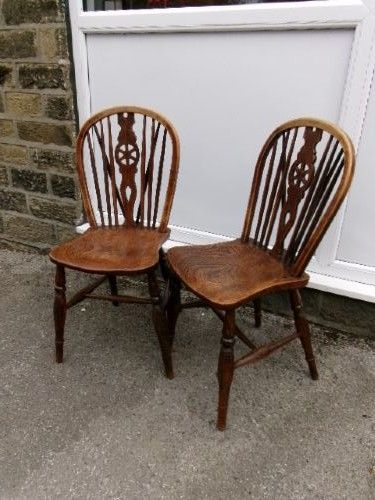
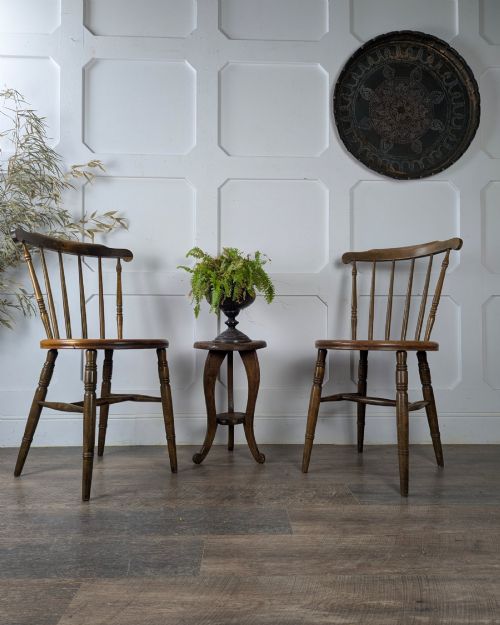
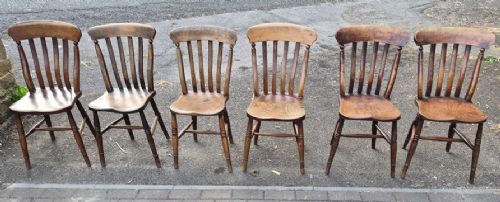
Vintage kitchen side chairs encompass robust domestic seating designed for daily utility, spanning periods from the Georgian era through the Victorian epoch and into the twentieth century. Buyers encounter diverse regional forms including Windsor stickbacks, wheelbacks, lathbacks, and plain farmhouse models.
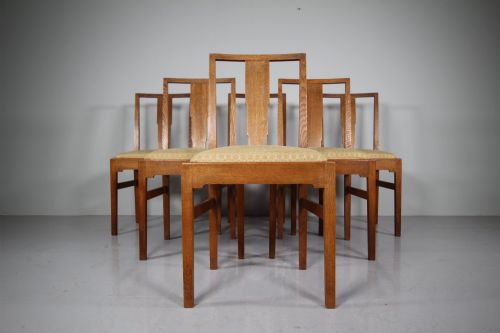
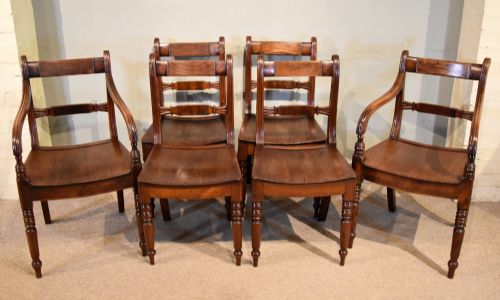
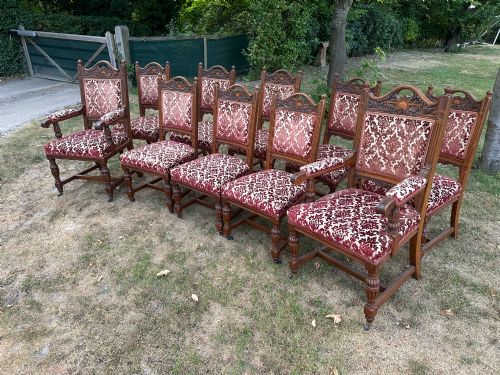
Most examples found here emerge from English country traditions, utilising vernacular timber frames intended for hardworking spaces. These chairs often appear in curated sets of four, six, or eight, alongside functional pairs.
Stylistic influences range from rustic farmhouse and Arts and Crafts to Gothic and French Provincial expressions. The selection prioritises practical timber construction over delicate parlour ornamentation.
How they were made
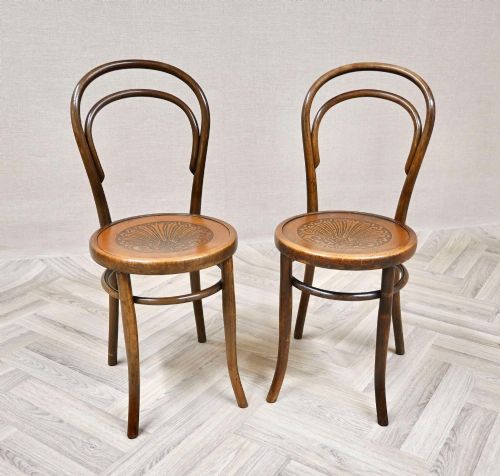
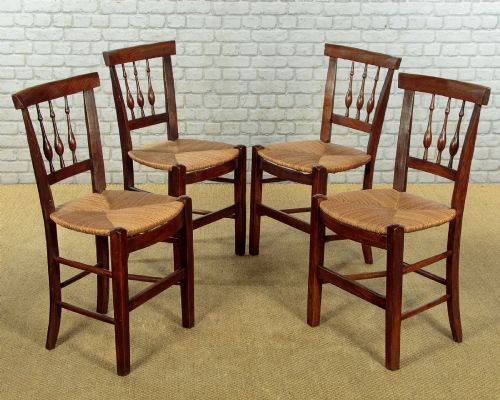
Craftsmen built these chairs using solid native timbers, most notably oak, elm, beech, and fruitwood, sometimes paired with rush for seating inserts. Turning lathes shaped spindles and legs, while steam bending formed curved backs and rails.
Joinery relied on traditional methods such as wedged mortise and tenon joints and turned components fitted securely into sculpted seats. Makers selected woods for specific structural properties, utilising resilient elm for saddle seats and flexible ash or beech for bent elements.
Vintage Kitchen Side Chairs Retail Price Guide 2026
Typical asking prices for vintage kitchen side chairs among the pieces listed under this phrase on Sellingantiques today, from the lower quarter to the upper quarter. They describe what is for sale here now, not the wider market.
Listings feature oak, elm, beech, fruitwood, and rush across nineteenth and twentieth-century periods.
What varies in quality
Quality rests upon the integrity of the timber selection and the retention of original structural components. Chairs fashioned from dense, figured oak or well-grained elm with deep saddle seats command greater appreciation than softer utility variants.
The degree of hand-craftsmanship in turned spindles, sculpted armrests, and well-fitted joints distinguishes finer regional work from standard production pieces. Consistency within a matched set elevates the overall standard significantly.
Gordon Russell·Thonet Yugoslavia
The Vintage Kitchen Side Chairs Glossary
- Windsor
- A chair built with a solid wooden saddle seat into which the legs and back spindles are directly inserted. This design developed deep regional variations across English counties.
- Wheelback
- A Windsor chair style featuring a pierced wooden splat shaped like a cartwheel. It remains a defining motif of nineteenth-century domestic seating.
- Harlequin set
- A collection of chairs assembled together that share similar periods, materials, or forms rather than originating from a single workshop batch. Such sets offer a collected aesthetic.
- Lathback
- A chair design incorporating horizontal wooden slats across the backrest rather than vertical spindles. This configuration provides distinct lumbar support.
- Rush seat
- A seating surface woven from dried marsh rushes, creating a textured, supportive platform. This technique appears frequently on traditional country dining chairs.
- Stickback
- A minimalist chair construction utilising plain, turned vertical spindles to form the backrest. These pieces rely on simple geometric balance for their visual appeal.
Vintage Kitchen Side Chairs: Frequently Asked Questions
What defines a kitchen side chair?
These chairs function primarily as practical, armless seating designed originally for domestic workspaces and dining areas. Their construction prioritises durability and straightforward daily use over formal ornamentation.
They appear in various vernacular styles, utilising local timbers and sturdy joinery to withstand generations of household activity.
What is a harlequin set?
A harlequin set is a group of chairs matched by style, era, or material rather than being carved from the exact same workshop batch. These groupings allow buyers to secure larger quantities of complementary seating.
Harlequin sets often combine subtly different turnings or heights while maintaining a cohesive visual theme around a dining table.
How should I care for antique timber chairs?
Protect antique wood by maintaining stable indoor humidity levels and keeping pieces away from direct heat sources. Regular dusting and occasional application of appropriate wax help preserve the surface finish.
Avoid harsh chemical cleaners that can strip patinated finishes accumulated over centuries of use.