
Vintage Kitchen Dining Chairs
When you want vintage kitchen dining chairs, you are looking for sturdy timber seating shaped by utility and time.
Vintage Kitchen Dining Chairs
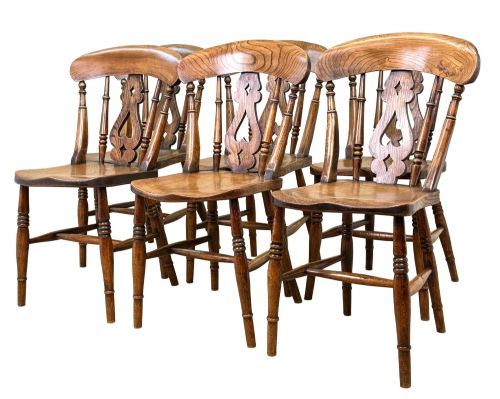
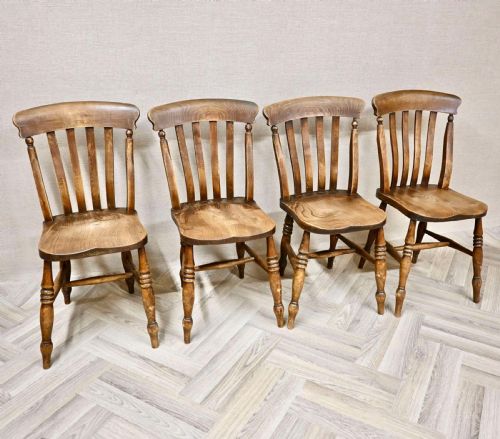
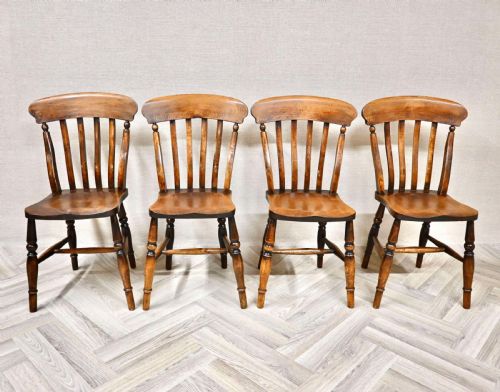
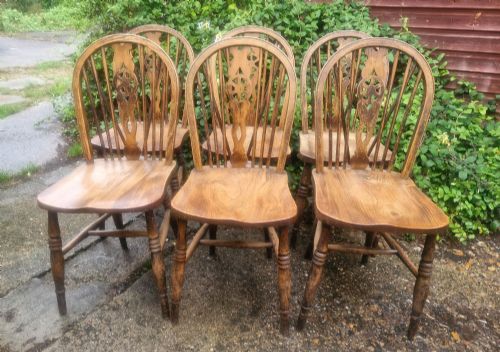
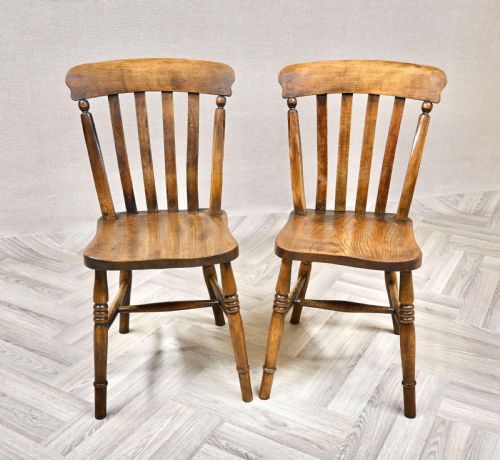
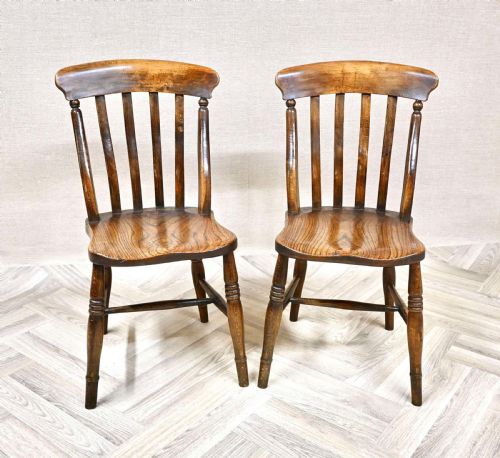
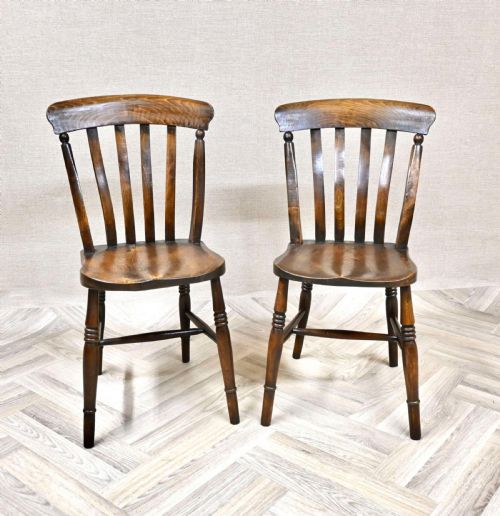
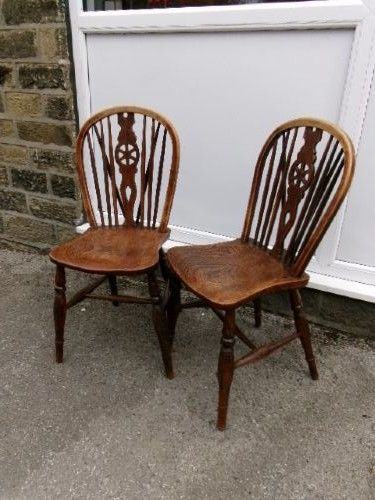
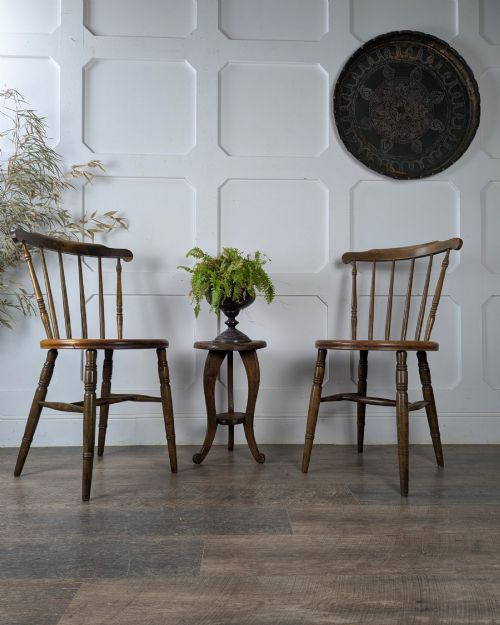
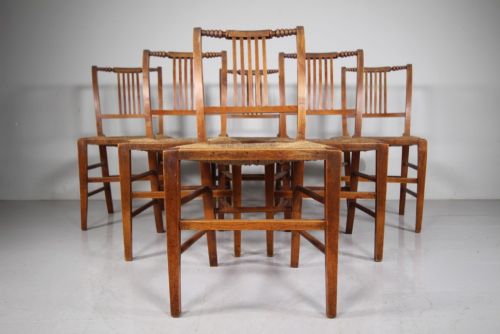
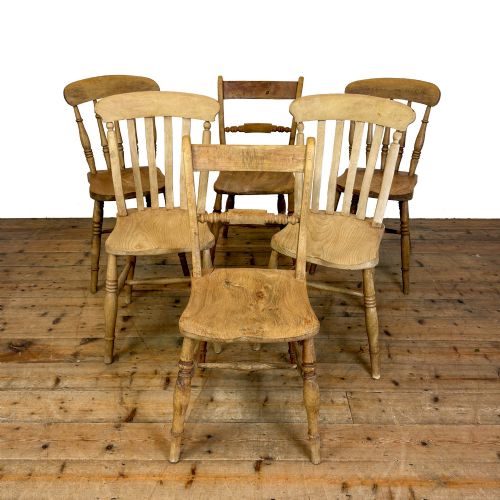
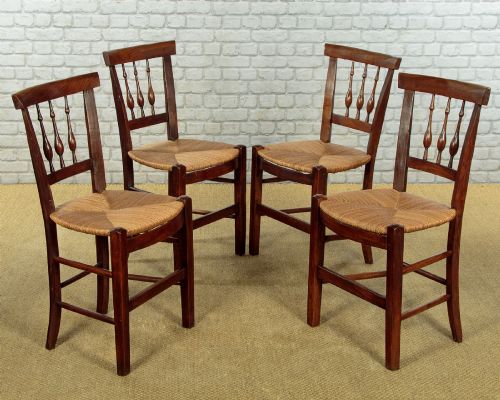
Vintage kitchen dining chairs encompass robust vernacular seating designed for daily domestic service in farmhouses, cottages and town houses across the nineteenth and early twentieth centuries. The selection here leans heavily towards Windsor variants in various formats, alongside ladder backs, rush seat designs and simpler regional styles.
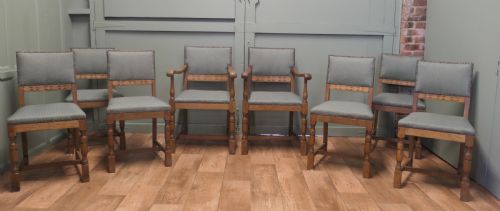
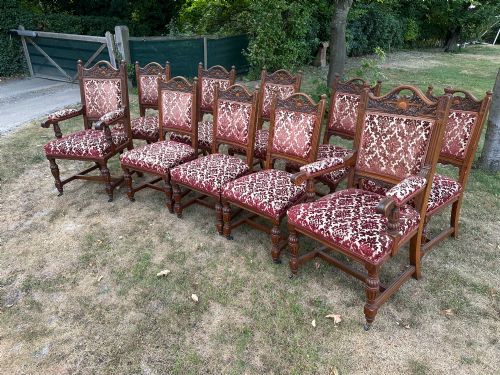
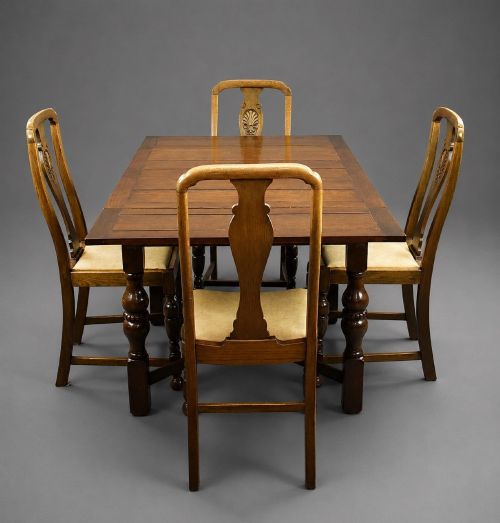
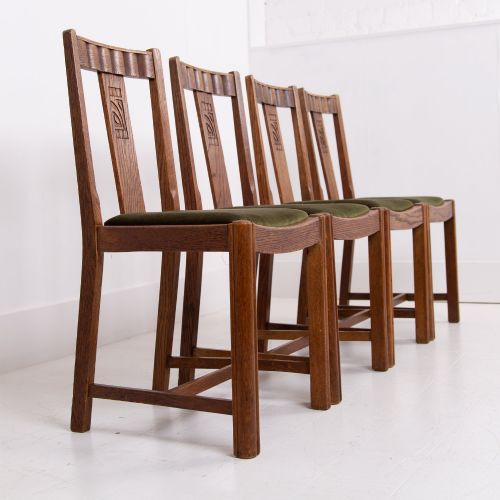
Buyers will encounter single chairs, matched sets and larger harlequin groupings assembled from multiple pieces sharing a common aesthetic or regional origin. Forms range from low side chairs to substantial carvers and benches, constructed to withstand decades of heavy use around the family table.
The prevailing origins are English, with specific regional types such as Thames Valley stick backs and Lancashire ladder backs appearing alongside continental European bentwood examples. These seats carry the marks of utilitarian design, where comfort and durability dictated every line of the construction.
Materials and Construction Methods
The construction relies on native hardwoods chosen for specific structural properties, predominantly combining elm seats with ash or beech spindles, legs and bent hoops. Elm provides a tough, interlocked grain that resists splitting when shaped into a solid saddle seat, while ash and beech offer high tensile strength for steam-bent components and slender turned uprights.
Joinery techniques balance rigidity and flexibility, utilising wedged through-tenons and pegging to lock components into solid wooden seats without relying on modern adhesives. Steam-bending allows timber to form continuous curves for hoop backs and lath backs, distributing stress evenly across the frame.
Surface finishes generally consist of natural wax, oil or accumulated layers of old polish that reveal the underlying grain structure rather than masking it. Where rush or cane is utilised for seating pads, tight hand-weaving creates a resilient platform supported by internal wooden stretchers.
The listings here feature oak, elm, ash, beech, rush and pine across styles ranging from Victorian country to Arts and Crafts.
Distinctions in Quality and Integrity
Quality rests upon the structural integrity of the frame, the preservation of original timber surfaces and the fidelity of the maker's shaping. Higher tier pieces retain deep, well-defined saddle carvings on solid elm seats and crisp turning on the legs and stretchers, whereas lesser examples show excessive wear, sanded-down details or replaced components.
The matching of harlequin sets alters the cohesion of a grouping, with unified sets commanding greater consistency in timber tone and proportion than assembled groups of similar but distinct chairs. Original patination, unmarred by aggressive stripping or modern varnishes, separates pieces that retain their historical character from those that have been over-restored.
Thonet·Mundus Kohn
The Vintage Kitchen Dining Chairs Glossary
- Windsor
- A chair built with a solid wooden saddle seat into which the legs, back spindles and bow are separately tenoned. This construction provides exceptional stability through triangulated legs and interlocking wooden members.
- Harlequin set
- A collection of dining chairs that share a general period, style or material but vary slightly in individual design, form or turning details. Such groups were commonly assembled over time.
- Stick back
- A regional Windsor variant featuring a straight crest rail connected to the seat by multiple simple vertical spindles without a bent bow. This form is frequently associated with Thames Valley workshops.
- Rush seat
- A seating platform woven from dried marsh rushes twisted into cords and hand-plaited around an internal frame. This technique yields a firm, slightly yielding surface found on traditional country chairs.
- Wheelback
- A Windsor chair style featuring a pierced wooden splat in the centre of the backrest shaped like the hub and spokes of a cartwheel. It became a popular ornament in nineteenth-century domestic seating.
Vintage Kitchen Dining Chairs: Frequently Asked Questions
How do I spot a true Windsor chair?
Look for a solid timber seat into which the legs and back components are inserted directly through bored holes rather than connected via a traditional underframe box.
The absence of a standard framed box stretcher marks the true Windsor structure, relying instead on splayed legs wedged firmly into the thick wooden seat slab.
Can I mix different styles around one table?
Mixing different styles is common, particularly when acquiring harlequin sets or pairing distinct regional chairs together for a casual dining arrangement.
Matching timber tones or sharing a common construction era helps unify disparate designs when placing them around a single dining table.
How should I care for rush seats?
Rush seats require a dry environment and regular gentle cleaning with a soft brush to remove dust from the woven interstices.
Avoid excessive moisture, as damp conditions will cause the dried plant fibres to rot and lose their structural tension over time.
What is a Thames Valley chair?
A Thames Valley chair refers to a distinctive regional style of Windsor seating produced along the river valleys of southern England during the nineteenth century.
These pieces typically combine elm seats with finely turned ash or beech components, often displaying characteristic comb backs or stick back configurations.