


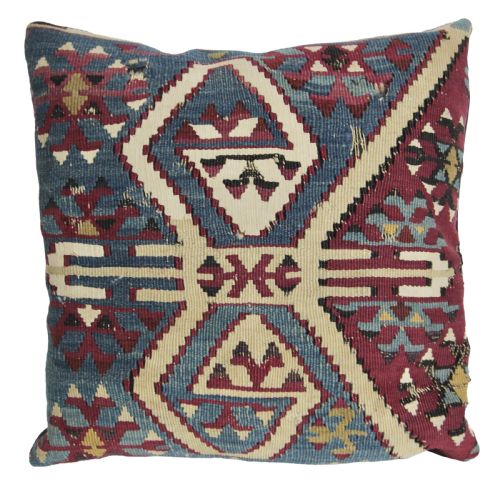

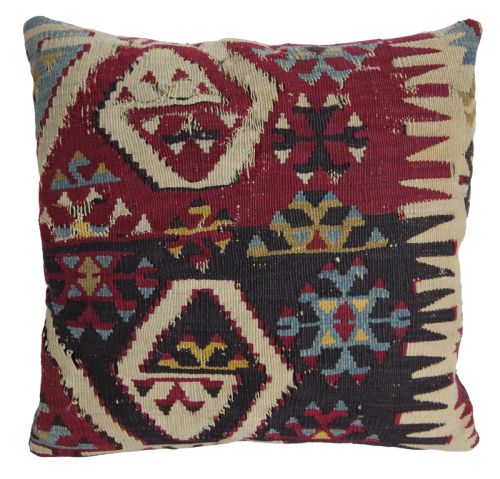


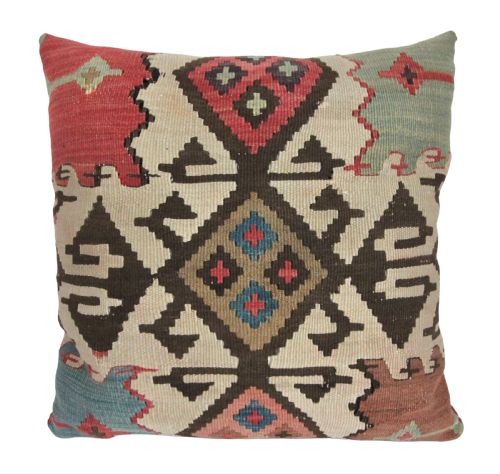
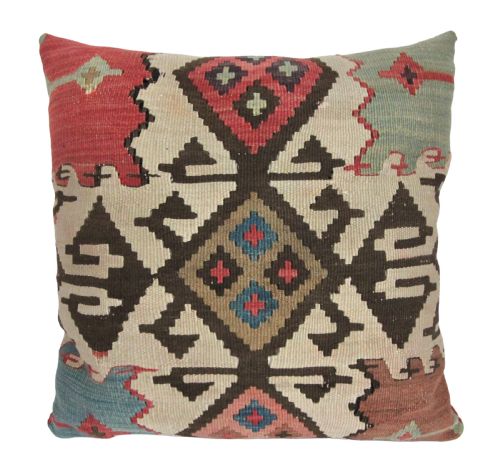


Vintage Kilim Scatter Pillow
These vintage kilim scatter pillow examples bring rich tribal patterns and warm textures straight from nomadic weaving traditions into modern rooms.
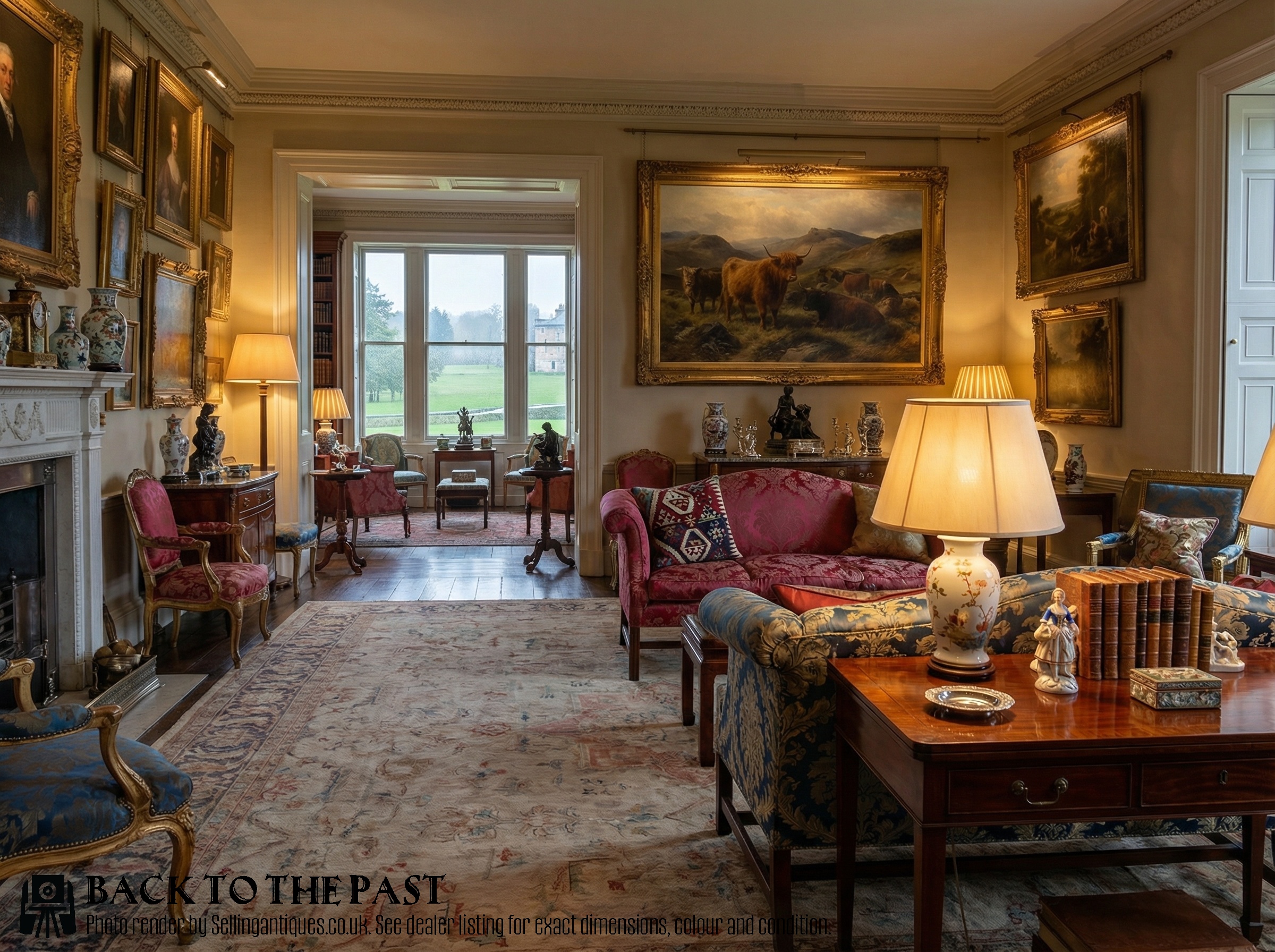
Vintage Kilim Scatter Pillow
When you search for a vintage kilim scatter pillow, you are looking at small soft furnishings fashioned from flat-woven tribal textiles and repurposed bag faces. These pieces span the nineteenth century and the early twentieth century, offering authentic nomadic designs for contemporary seating.
The version you are most likely to meet on this page is the antique kilim cushion originating from Anatolia. These items take traditional tribal motifs and adapt them into decorative throw cushions and cushions and soft furnishings.
Materials and construction
These textiles rely entirely on hand-woven wool for their decorative face, capturing traditional Anatolian tribal patterns through flat-weave techniques. The wool warps and wefts create durable surfaces that originally served as functional nomadic items before conversion into soft furnishings.
Makers often backed these flat-woven wool faces with cotton to provide stability and structure for modern domestic use. This combination of wool and cotton ensures the cushions hold their shape as scatter pillows while retaining their historical textile integrity.
Materials documented across the available selection are strictly limited to wool and cotton.
Judging quality in woven cushions
Quality rests in the tightness of the weave and the clarity of the tribal motifs preserved across the surface. Tighter hand-woven structures display sharper geometric designs and survive heavy daily use better than looser weaves.
The integrity of the original wool textile determines the overall standing of each piece. Finer examples retain vibrant natural hues and precise patterning from their nineteenth-century origins without losing the tactile character essential to nomadic work.
The Vintage Kilim Scatter Pillow Glossary
- Kilim
- A flat-woven carpet or rug produced in countries of the former Ottoman Empire, Persia and Central Asia. These textiles are woven without a pile, giving them a smooth surface texture.
- Bag face
- The decorative front panel of a nomadic utility bag, often repurposed into cushions. These panels display dense tribal weaving and concentrated regional motifs.
- Anatolian
- Pertaining to the geographical region of Asia Minor that forms the majority of modern Turkey. This area is renowned for distinct tribal weaving traditions.
- Scatter pillow
- A small, loose cushion used to add comfort and colour to seating arrangements. They appear in various sizes across traditional and tribal styles.
Vintage Kilim Scatter Pillow: Frequently Asked Questions
How old are these cushions?
The pieces span from the mid-nineteenth century through to the early twentieth century. This timeline covers various periods including specific dates from eighteen-fifty onwards.
Most items reflect nineteenth-century craftsmanship, utilising genuine antique fragments rather than modern reproductions. This age gives each cushion a distinct historical character.
What materials are used?
The face of each cushion consists of hand-woven wool created using traditional flat-weave techniques. This natural fibre provides the durable and tactile surface characteristic of tribal textiles.
Cotton often appears as a secondary material used for backing and internal structure. This combination supports the antique wool textile while making the piece suitable for daily use.
How do I care for antique wool cushions?
Gentle treatment preserves the antique wool fibres and handmade structure of the textile. Regular light vacuuming through a mesh guard helps remove dust without pulling the weave.
Professional specialist cleaning is recommended for any deeper maintenance to protect the historical materials. Keeping them out of direct sunlight prevents the wool colours from fading.