


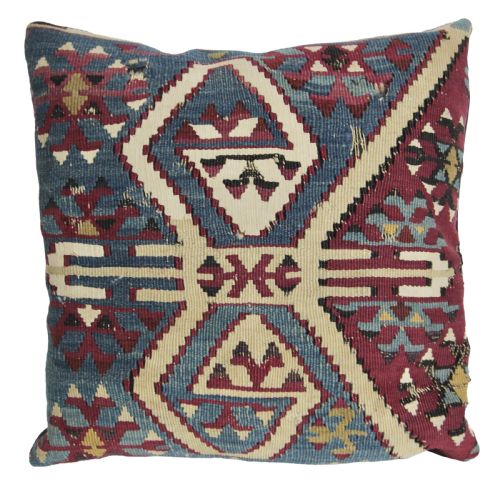
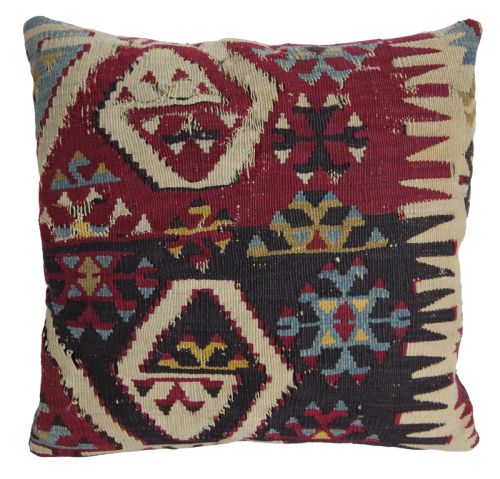


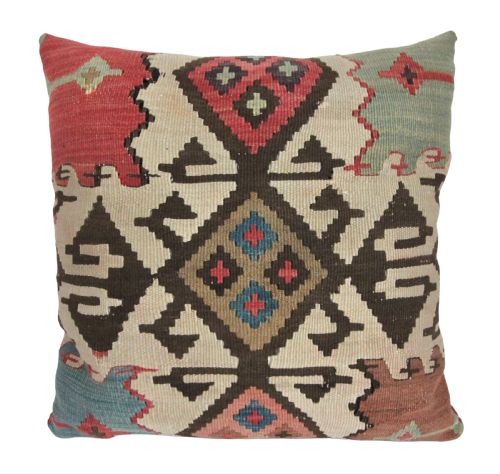


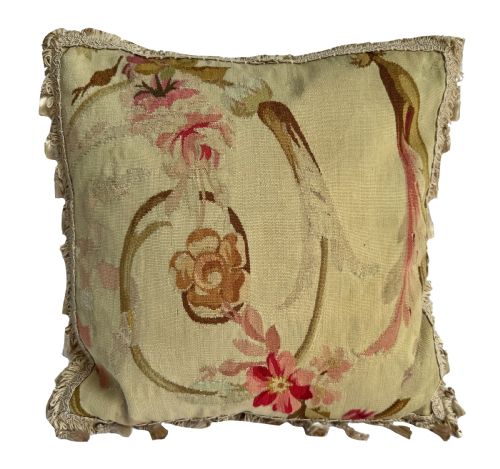


Handwoven Scatter Cushion
These handwoven scatter cushion examples bring rich texture and heritage pattern into a room through genuine antique textiles repurposed for modern seating.
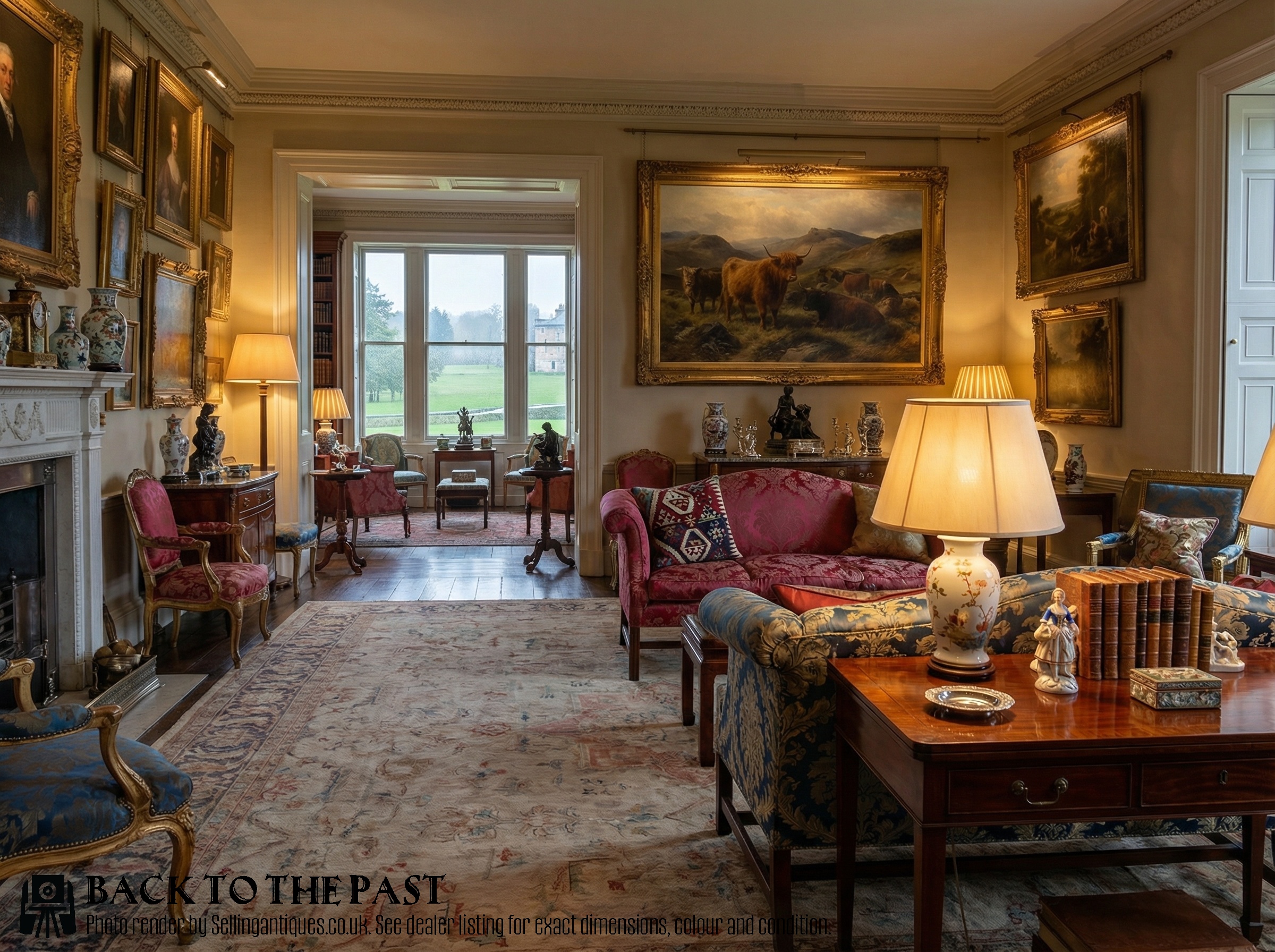
Handwoven Scatter Cushion
These items transform older nomadic and traditional fabrics into functional soft furnishings without losing their original character. Alongside kilims, you will find French Chateau examples utilising traditional Aubusson tapestry weaves.
The selection ranges across several decades of the nineteenth century and into the early twentieth century, taking the form of standard cushions and throw cushions. Each piece repurposes woven bag faces or carpet fragments into durable home accessories.
How they were made
The construction of a handwoven scatter cushion relies on durable natural fibres including wool, cotton, and silk. Artisans produced the original flatweaves and tapestries using traditional hand-loom techniques common to tribal and nomadic workshops.
Makers cut and backed these historical textile fragments, such as Anatolian tribal rugs and French Aubusson panels, to form serviceable cushion covers. The longevity of each piece depends on the tightness of the original wool or cotton weave and the stability of the backing materials.
Nomadic weavers occasionally hid small protective symbols within their geometric borders to guard the household against misfortune.
What varies in quality
Quality in a handwoven scatter cushion lies in the fineness of the original textile weave and the integrity of the fibre. Pieces with dense wool or silk knotting and intact structural edges stand apart from softer, more worn fragments.
The visual strength of the pattern and the authenticity of the tribal or traditional provenance also dictate the stature of the cushion. Finer execution in the historical flatweave translates directly to a more resolved decorative object.
The Handwoven Scatter Cushion Glossary
- Kilim
- A flatwoven carpet or rug produced in countries of the former Ottoman Empire, Persia, and Central Asia. These textiles form the primary source material for many vintage cushions on this page.
- Aubusson
- A style of tapestry woven in the French town of the same name, typically featuring floral or architectural designs. These panels provide a distinct European contrast to tribal flatweaves.
- Bag Face
- The decorated front panel of a nomadic storage sack, utilised in weaving to create smaller decorative items. These sections often display the most concentrated tribal motifs.
- Nomadic Tribal
- A design category originating from pastoral peoples who produce portable textiles with geometric symbols. These patterns reflect the cultural heritage of specific weaving groups.
Handwoven Scatter Cushion: Frequently Asked Questions
Are these antique cushions made from old carpets?
Yes, many of these scatter cushions are created by repurposing fragments of older flatwoven carpets, kilims, and tapestries.
Craftsmen cut down resilient sections of historical textiles to give worn or damaged floor coverings a second life as functional home accessories.
How do I care for a wool kilim cushion?
Wool and cotton textiles require gentle treatment to preserve the natural fibres and historical dyes. Professional dry cleaning is generally recommended to maintain the integrity of the handwoven structure.
Avoid placing antique cushions in direct sunlight for extended periods to prevent the natural dyes from fading.
What is the difference between an Anatolian and an Aubusson cushion?
Anatolian cushions derive from tribal flatweaves featuring geometric motifs and bold village designs. They utilise wool and cotton worked on traditional horizontal or vertical looms.
Aubusson cushions originate from French tapestry traditions and typically display floral or pastoral scenes woven in softer pastel palettes.
Can I use these cushions every day?
These decorative items are designed for light domestic use on armchairs, sofas, or beds. The underlying antique textiles benefit from gentle handling rather than heavy daily friction.
Rotating the cushions helps distribute wear evenly across the handwoven surface over time.