



Vintage Italian Statuette
A vintage italian statuette brings the sculpture and classical heritage of Italy straight into a room.
Vintage Italian Statuette
When someone searches for a vintage italian statuette, they are looking at small figures and sculptures originating from Italy across several centuries. The selection includes Grand Tour bronze studies, carved alabaster female figures, and marble busts, reflecting a deep engagement with classical history.
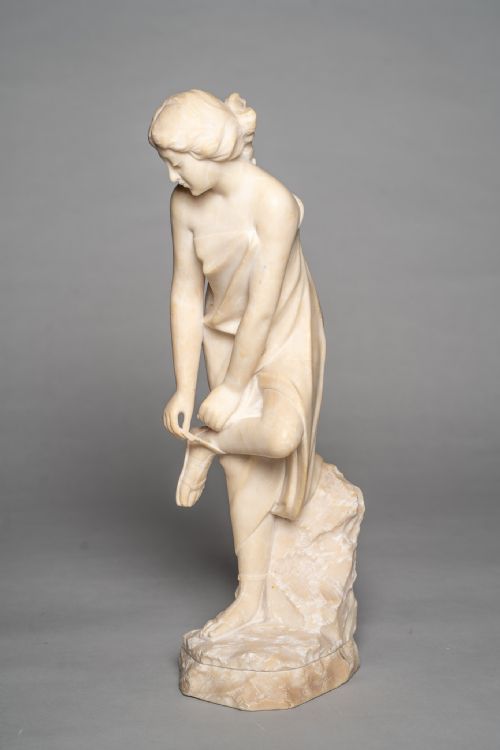
The versions most commonly met on this page span the nineteenth century, including Grand Tour souvenirs mounted on marble plinths, carved alabaster works, and nineteenth-century realism pieces. Makers such as A. Gamay and Luigi Secchi appear among these sculptural works.
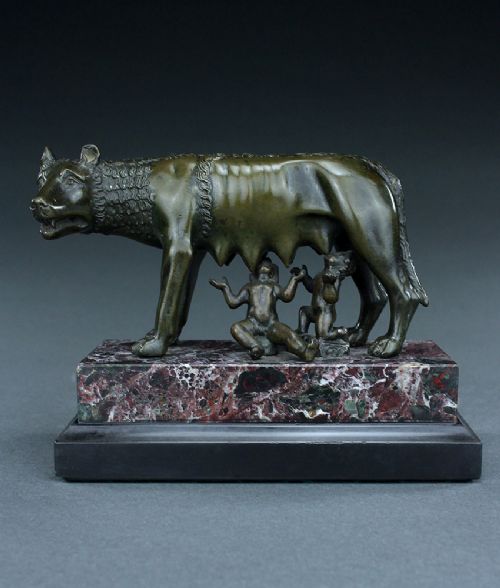
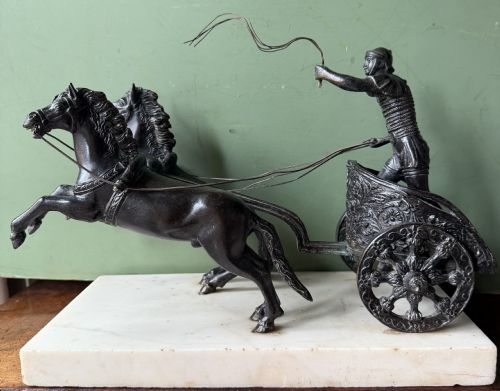
These items take various forms, from depictions of mythological figures like Bacchus and Dionysus to historical subjects such as the Capitoline Wolf and charioteers. Terracotta figures and porcelain figurines from factories like Royal Capodimonte also form part of the recorded range.
How they were made
Bronzes are cast using traditional foundry techniques, often finished with specific patinations such as green patination to accent the metal. These metal figures are frequently mounted upon heavy white marble plinth bases.
Alabaster, Carrara marble, and standard marble are carved by hand to shape busts and full-figure sculptures of ladies, young boys, and classical subjects. Terracotta and porcelain are moulded and fired, sometimes utilising enamel and gold leaf for surface decoration.
One listed bronze horse weighs seven kilograms, ensuring it stays firmly put on any desk.
What varies in quality
The standard of carving in stone pieces marks out the finer examples, particularly in the rendering of drapery, hair, and facial expression on alabaster and Carrara marble busts. Softer lines indicate hurried work, whilst sharp detail shows the hand of a more skilled sculptor.
In bronze casting, quality rests on the crispness of the chase work after casting and the depth of the patination. Signed pieces by recorded sculptors generally command greater attention from collectors than unsigned works.
A.Gamay·Luigi Secchi·Royal Capodimonte Factory
The Vintage Italian Statuette Glossary
- Grand Tour
- A traditional trip through Europe undertaken by upper-class Europeans, resulting in the acquisition of art souvenirs such as bronze figures. These souvenirs often replicated ancient classical sculptures.
- Patination
- The chemical or natural colour change on the surface of bronze over time or through treatment. A green patination is typical on certain classical-style bronzes.
- Carrara Marble
- A type of white or blue-grey marble from the city of Carrara in Tuscany, widely used for Italian sculpture. It provides a fine, uniform grain suited to detailed carving.
- Alabaster
- A fine-grained mineral commonly carved into smooth sculptures and vases. It has a translucent quality that lets light penetrate just beneath the surface.
- Terracotta
- Baked red-orange clay used for sculptural figures. It allows for direct modelling by the artist before firing.
Vintage Italian Statuette: Frequently Asked Questions
What is a Grand Tour bronze?
A Grand Tour bronze is a small metal sculpture purchased by travellers touring Italy and Europe during the eighteenth and nineteenth centuries. These pieces typically reproduced famous classical antiquities.
They served as portable reminders of classical history and culture, often mounted on marble bases to sit on desks or mantelpieces.
Why do some bronzes have green patination?
Green patination occurs naturally through oxidation or is applied intentionally by the foundry to mimic the appearance of ancient buried bronzes. This finish highlights the sculptural details and contours of the figure.
It forms an integral part of the surface aesthetic on nineteenth-century classical bronzes.
What subjects are common in these sculptures?
Common subjects include mythological figures like Bacchus, Dionysus, and the Capitoline Wolf, alongside portraits of ladies and young boys. Charioteers and horses also appear frequently in nineteenth-century studies.
These themes reflect a widespread nineteenth-century fascination with classical antiquity and Italian history.