


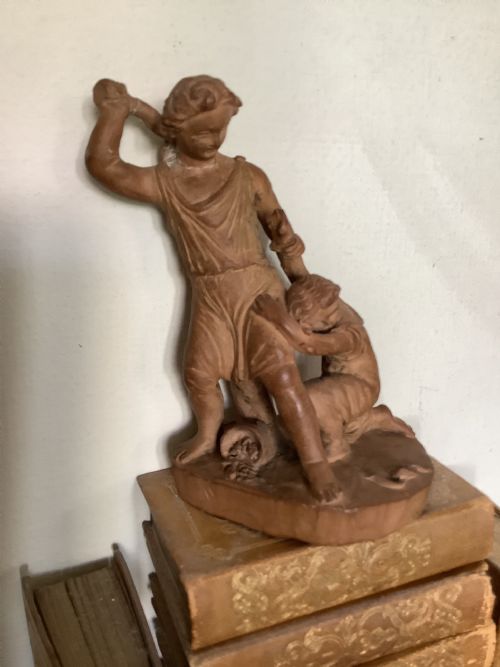

Neoclassical Terracotta Figure
A neoclassical terracotta figure brings classical antiquity into a room through moulded or modelled clay.
Neoclassical Terracotta Figure
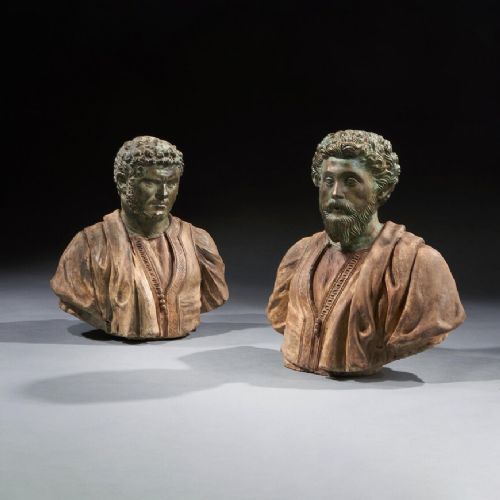
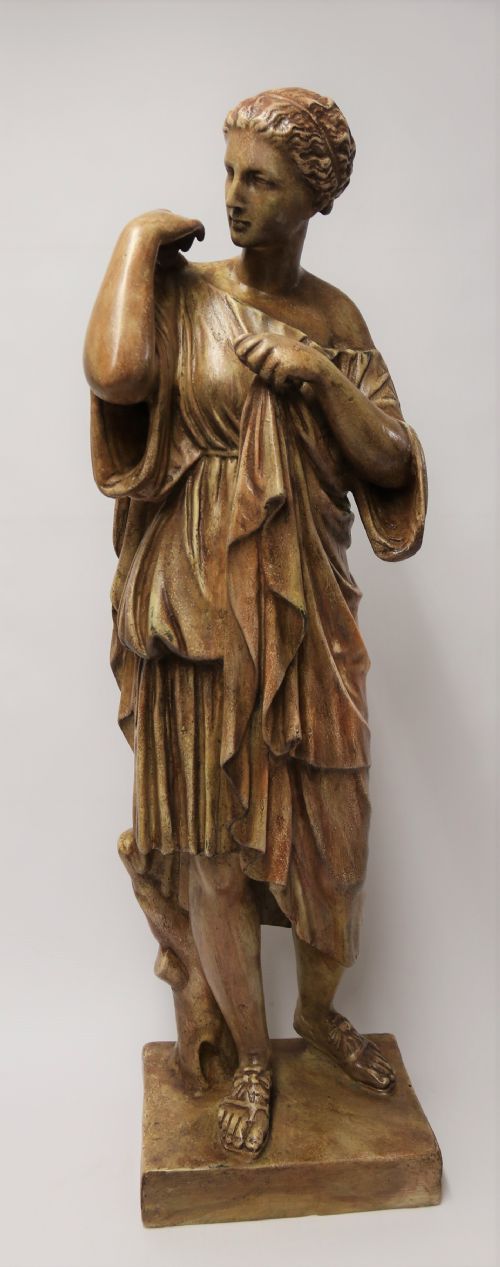
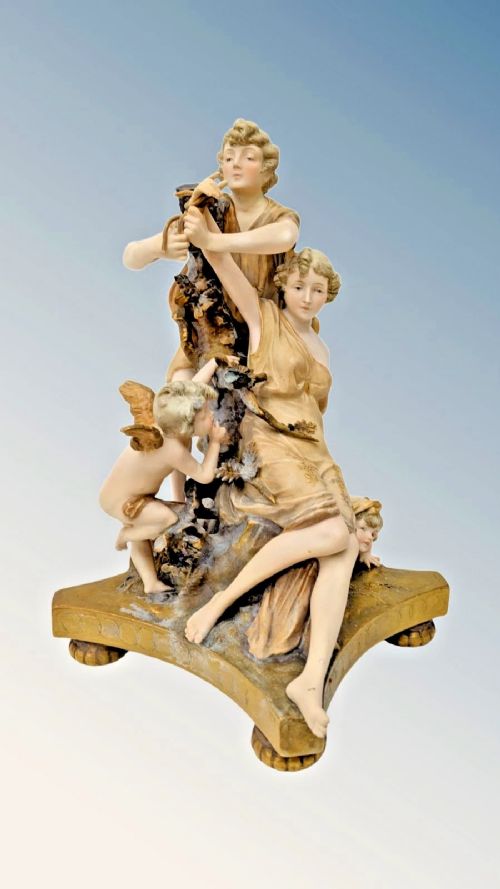
A neoclassical terracotta figure draws directly upon classical mythology and antiquity, translating ancient marble forms into fired earth. These pieces range from portrait busts of Roman emperors to mythological groups and single figures representing deities or literary subjects.
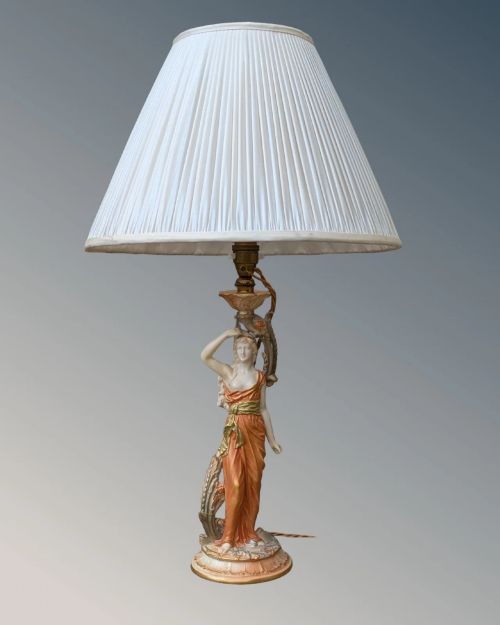
Most examples found here date from the nineteenth century, reflecting a broad European revival of classical taste often associated with the Grand Tour. Forms vary from small cabinet sculptures and portrait busts to vases and figural table lamps adapted for modern domestic use.
Materials and construction
The primary medium is terracotta, sometimes finished as bisque terracotta or enhanced with painted surface details, parcel-gilt highlights, and verdigris patina. Makers also utilised associated materials such as porcelain, brass, and fabric shades where figures were converted into lamps.
At least one nineteenth-century figure portrays a boy successfully extracting a stubborn thorn from his foot with admirable stoicism.
Assessing quality and execution
Quality in these figures rests on the sharpness of the modelling and the finesse with which facial expressions and drapery are rendered. Finer pieces capture anatomical detail and classical proportions with distinct clarity, whereas simpler versions show softer definition in the clay.
The sophistication of the surface finish further separates standard productions from exceptional works. Skilled patination, careful glazing on porcelain elements, and the inclusion of named subjects or known workshop marks elevate the standing of a piece.
Royal Worcester Porcelain·Ernst Wallace·P. Ipsens Enke·Joseph Gott
The Neoclassical Terracotta Figure Glossary
- Terracotta
- A porous, fired clay body ranging in colour from pale buff to deep reddish-brown. It serves as the primary medium for both modelled sculptures and architectural ornaments.
- Bisque
- Unglazed ceramic fired once to a porous matte state. This finish highlights fine modelling details without the distraction of a glossy surface.
- Grand Tour
- A traditional extended journey through Europe undertaken by upper-class young men in the eighteenth and nineteenth centuries. Travellers frequently acquired small sculptures and antiquities as souvenirs.
- Neoclassical
- A Western cultural movement drawing inspiration from the art and culture of classical antiquity. It manifests in clean lines, classical drapery, and mythological subject matter.
Neoclassical Terracotta Figure: Frequently Asked Questions
What is a neoclassical terracotta figure?
A neoclassical terracotta figure is a sculptural work modelled in clay that depicts classical subjects, mythological characters, or historical portraits. These pieces reflect the nineteenth-century revival of interest in ancient Greek and Roman art.
They appear in various forms, including freestanding statues, portrait busts, and figural groups designed for interior display.
How were nineteenth-century figures used?
During the nineteenth century, these terracotta works served primarily as interior ornaments for libraries, studies, and drawing rooms. They demonstrated the owner's classical education and refined taste.
Some later examples were adapted into functional items, such as table lamps, combining classical aesthetics with domestic utility.
How do I identify the period?
Dating typically relies on stylistic cues, surface patination, and any workshop stamps or signatures incised into the clay. Nineteenth-century versions often emulate earlier Italian models or classical sculpture.
Examining the base and the handling of the material provides further clues regarding the date of manufacture and the workshop origin.
How should I care for terracotta?
Terracotta is a relatively robust fired ceramic, but its porous nature requires gentle handling and protection from moisture. Dusting with a dry, soft brush is the safest way to maintain the surface.
Avoid using liquid cleaners or water, especially on unglazed bisque surfaces or pieces with applied patinas.