
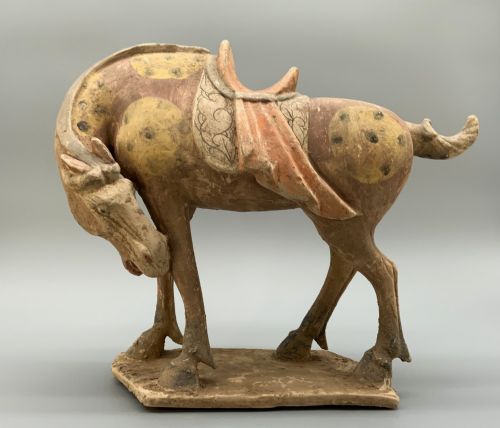
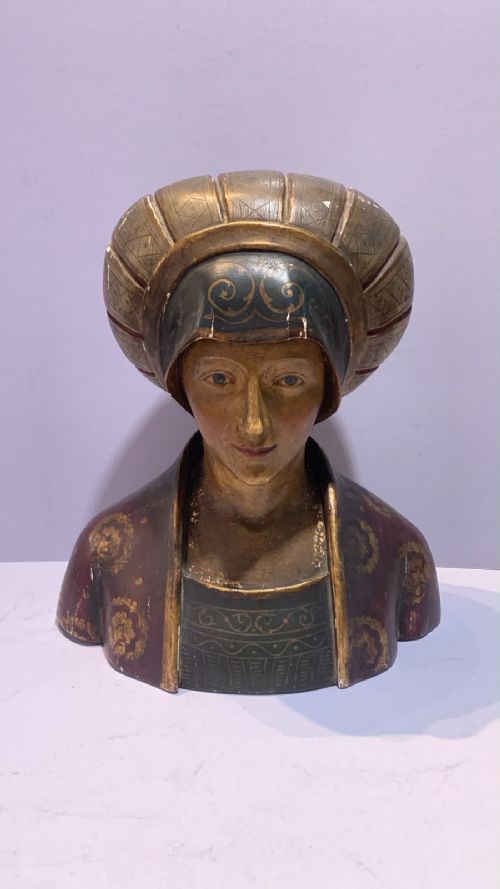


Polychrome Terracotta Statue
A polychrome terracotta statue brings earthy modelling and rich mineral pigment into a room, offering tactile warmth and historical character that flat paintings simply cannot match.
Polychrome Terracotta Statue
When you search for a polychrome terracotta statue, you are looking at figures, busts, and architectural ornaments modelled in fired clay and finished with paint, glaze, or pigment. These sculptures range from ancient Chinese pottery horses to nineteenth-century European portrait busts and figural planters.
The versions you are most likely to meet on this page lean heavily towards nineteenth-century European works, including Austrian terracotta sculptures, Grand Tour portrait busts, and Spanish figural planters. Alongside these, earlier or revival pieces such as Tang Dynasty style sancai glazed figures and pre-sixteenth century pottery appear in the selection.
How they were made
The foundation of every piece is clay or terracotta, shaped by hand or moulded before being fired in a kiln to harden the material. Artisans then applied surface decoration using paint, polychrome paint, pigment, or mineral pigment to bring realism and colour to the figures.
Some works incorporate glazed earthenware surfaces, utilising glossy ceramic finishes that seal the clay body and produce vibrant, reflective tones. This combination of fired earth and applied colour preserves the maker's brushwork and modelling over centuries.
Listings feature works spanning from pre-sixteenth century pottery up to early twentieth-century Austrian terracotta and Spanish figural planters.
What varies in quality
Quality in these sculptures rests primarily on the sensitivity of the modelling and the preservation of the original surface pigments. Finer pieces display crisp facial expressions, detailed drapery, and confident anatomical definition that mark the hand of a skilled sculptor.
The integrity of the polychrome surface also dictates the standing of a piece, with undisturbed original paint or glaze holding greater artistic merit. Maker attribution, evident in specific nineteenth-century Austrian or German works, further separates standard decorative items from distinguished sculptural art.
George Kemper·Bernard Bloch·Pietro Calvi·HL Blasche for Reps & Trinte·Goldscheider
The Polychrome Terracotta Statue Glossary
- Terracotta
- A porous, red-brown fired clay used extensively for sculptural figures and architectural ornaments. It provides a warm, matte base for applied pigments and glazes.
- Polychrome
- Decorated in multiple colours, typically applied as paint or pigment directly onto the fired clay surface. This technique adds life and depth to figurative sculptures.
- Sancai
- A traditional Chinese three-colour lead glaze used on pottery figures, producing amber, green, and creamy white tones that run across the ceramic body.
- Grand Tour
- A nineteenth-century cultural journey undertaken by Europeans visiting classical sites, prompting a demand for souvenir portrait busts and classical figures.
- Planter
- A functional vessel designed to hold plants, occasionally cast in figural terracotta forms that combine horticulture with sculptural decoration.
Polychrome Terracotta Statue: Frequently Asked Questions
How should I clean a painted terracotta statue?
Dust the surface gently with a soft, dry brush to prevent accumulation. Avoid water or liquid cleaners, as moisture can lift old paint, pigment, and delicate earthen materials.
Keep the sculpture away from damp environments and direct sunlight to preserve the stability of both the clay and the historical colour finish.
Are these statues suitable for outdoor display?
Most antique and historic terracotta pieces are porous and vulnerable to frost expansion. Freezing temperatures can cause the fired clay to crack or spall if left outside.
Protect your sculpture by keeping it indoors in a stable climate, reserving only specifically designated roof ornaments or durable garden wares for exterior placement.
How do I tell an older piece from a revival?
Examine the wear patterns, the ageing of the pigment, and the construction methods used on the underside or interior of the sculpture. Stylistic cues often point to whether a work originates from an ancient period or adopts historical aesthetics during the nineteenth-century revival movements.
Compare the quality of the clay body and the execution of the surface paint against established examples from known makers or specific dynasties.