


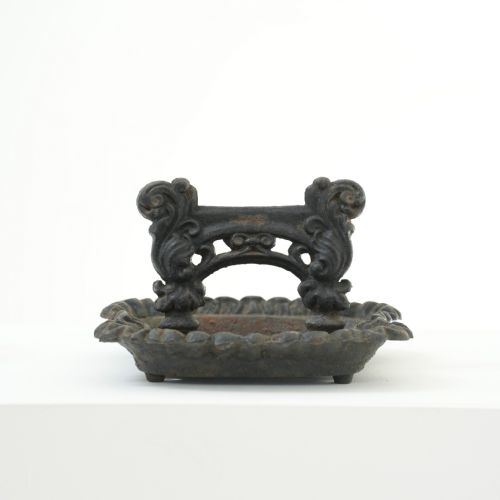


Vintage Iron Shoe Scraper
A vintage iron shoe scraper stands outside the threshold to clear mud from boots before anyone steps indoors.
Vintage Iron Shoe Scraper
When you search for a vintage iron shoe scraper, you find robust architectural ironwork designed to keep domestic interiors clean. These practical accessories date from the Georgian, Regency, and Victorian periods, reflecting the shift from muddy country lanes to paved town streets.
Country house and London townhouse pieces dominate the selection, showing how domestic requirements varied by location. Whether fitted beside a grand doorway or a modest cottage threshold, every vintage iron shoe scraper serves a distinct functional purpose.
How they were made
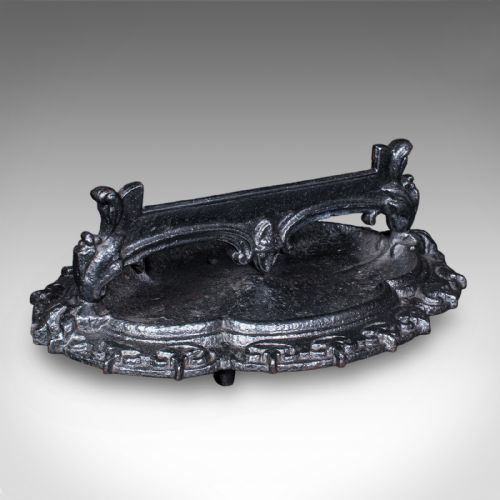
Foundry workers utilised traditional casting and forging techniques to shape molten or heated metal into durable scraper blades. Cast iron allowed for repeating decorative patterns, while wrought iron provided the tensile strength needed for slender, hand-hammered scrollwork and shoe pulls.
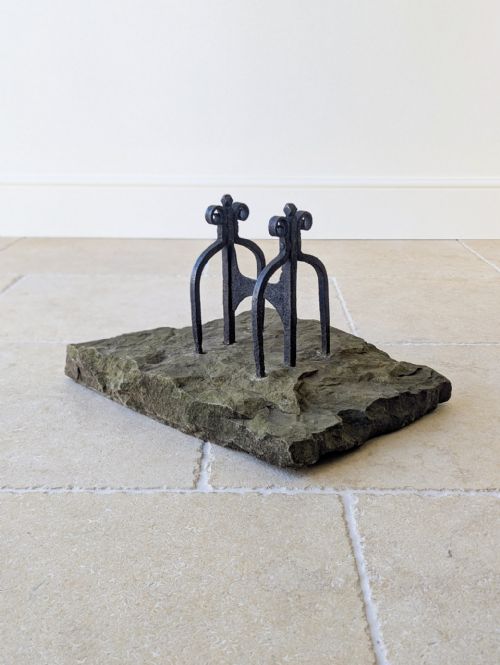
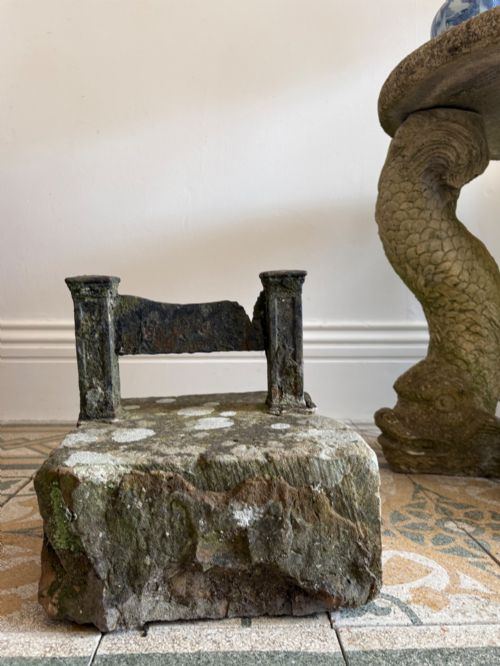
Many iron blades are securely inset into hewn stone blocks or Yorkstone bases to provide stability without permanent ground fixings. This combination of heavy stone and weather-resistant iron ensured the scraper remained firmly anchored beside the doorway through decades of daily use.
Listings feature both cast iron and wrought iron materials, frequently paired with natural stone and Yorkstone blocks.
What varies in quality
The architectural ambition of the design separates standard utilitarian pieces from more substantial town and country house examples. Foundry work of notable origin, such as Coalbrookdale production, displays sharper detail in the iron casting and more deliberate stylistic choices.
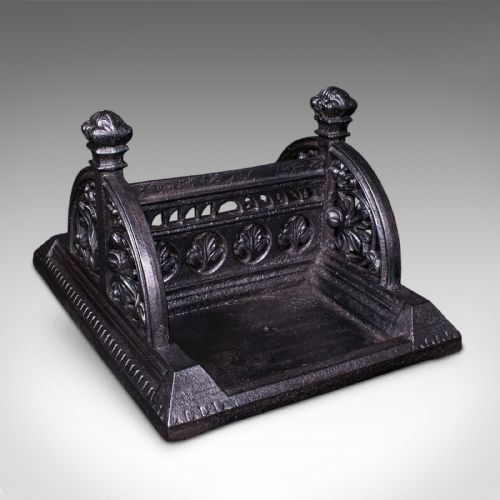
The quality of the mounting stone also defines the piece, with substantial hewn Yorkstone blocks offering greater presence than simple iron frames. Integrated shoe pulls and thoughtful Gothic Revival ornamentation indicate a higher grade of domestic hardware.
Coalbrookdale
The Vintage Iron Shoe Scraper Glossary
- Cast iron
- Iron poured into a mould to create solid forms and decorative patterns. This material forms the durable blade and body of most Victorian entrance scrapers.
- Wrought iron
- Iron heated and hammered into shape by hand. This tougher material is typically found in Georgian and Regency blades or structural supports.
- Yorkstone
- A tough sandstone quarried in Yorkshire, frequently used as a heavy mounting block. It provides a stable, weather-resistant foundation for heavy metal scrapers.
- Shoe pull
- An upright loop or handle attached to the scraper. It helps the user steady themselves while scraping mud from the sides of heavy footwear.
- Gothic Revival
- An architectural style popular during the nineteenth century, characterised by pointed arches and medieval motifs. Scrapers in this style incorporate ecclesiastical details into domestic ironwork.
Vintage Iron Shoe Scraper: Frequently Asked Questions
Where were vintage iron shoe scrapers placed?
These practical iron implements were positioned immediately outside front doors, carriage entrances, and threshold steps. Their primary location ensured visitors and residents could clean dirt from their footwear before entering the hallway.
Many examples were either secured directly into stone pathways or mounted upon heavy standalone Yorkstone blocks. This positioning kept the blade at a convenient height for daily use.
How do I maintain an iron shoe scraper outdoors?
Cast and wrought iron withstand external conditions well, but they benefit from periodic cleaning to remove accumulated dirt and moisture. Applying a protective wax or suitable metal treatment helps preserve the original surface texture.
Keeping the stone base clear of standing water prevents dampness from lingering around the iron insertion points. Regular gentle maintenance protects the metal from excessive corrosion over time.
What is the difference between cast and wrought iron?
Cast iron is poured as a liquid into a mould, allowing for uniform production and crisp decorative detailing. It is strong under compression but can be brittle under sharp impacts.
Wrought iron is worked by hand while hot, yielding a fibrous material that resists bending and breaking. This property made wrought iron ideal for slender blades and functional shoe pulls.
Can these scrapers be used in a modern garden?
These historical pieces function outdoors today just as they did in Georgian and Victorian times. Their sturdy construction makes them practical for scraping muddy boots near a garden entrance or patio.
Placing one outside a modern home adds authentic architectural character while retaining its original utility. The heavy stone bases keep them stable on grass, gravel, or paved surfaces.
How can I tell a Georgian scraper from a Victorian one?
Georgian and Regency examples tend to feature simpler, hand-forged wrought iron profiles or cleaner architectural lines. They often rely on the heft of the stone block and straightforward blacksmithing. Casted Victorian pieces frequently display more elaborate ornamentation, factory markings, or Gothic Revival motifs. The transition toward mass production during the nineteenth century introduced greater variety in decorative foundry designs.