
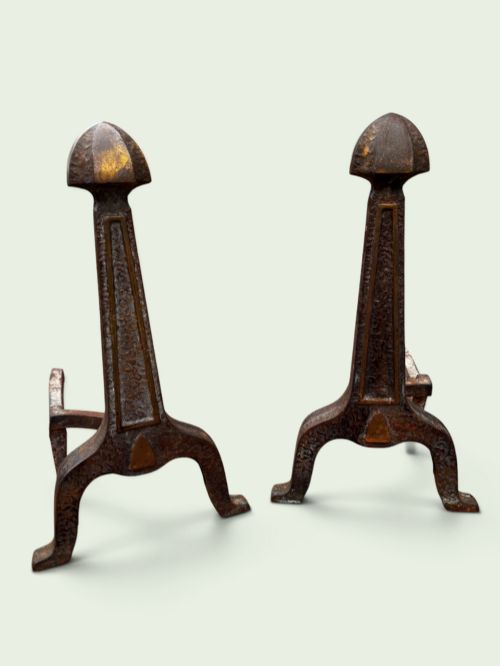
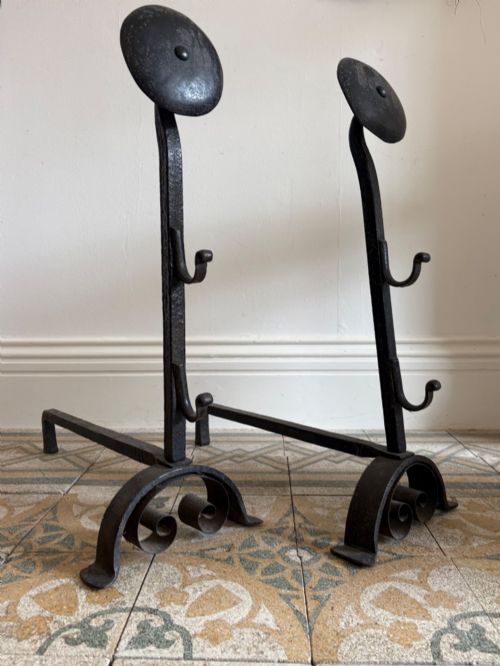
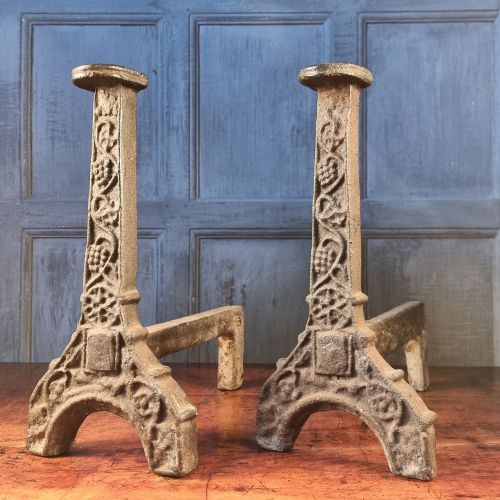
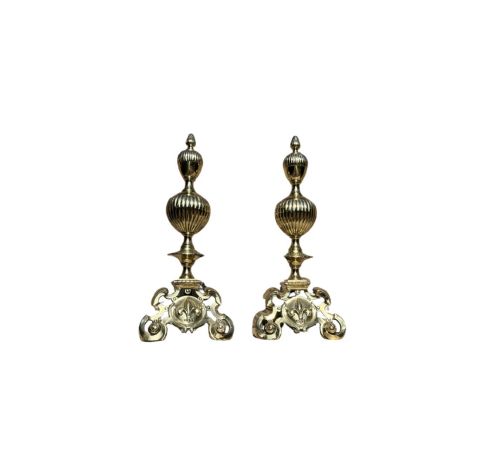


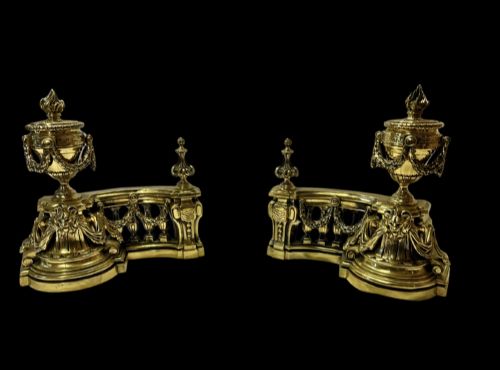

Vintage Iron Log Dogs
Vintage iron log dogs hold wood safely above the hearth floor to let air circulate beneath the burning logs.
Vintage Iron Log Dogs
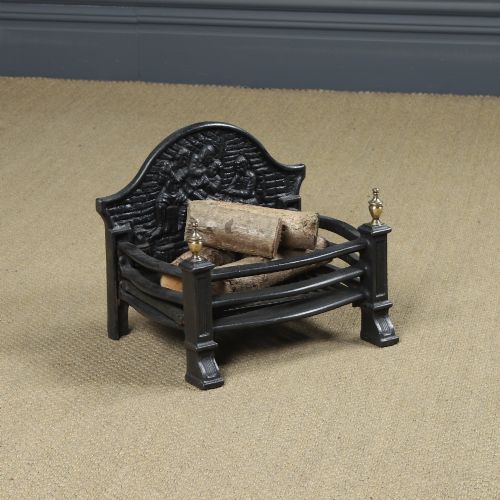
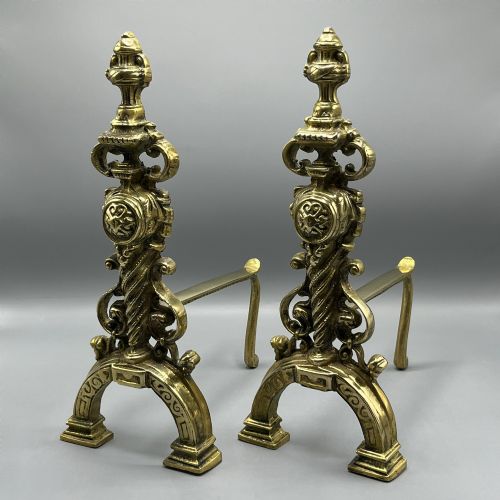
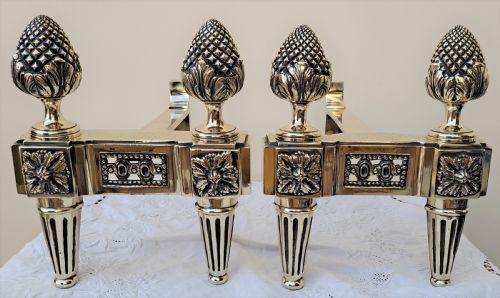
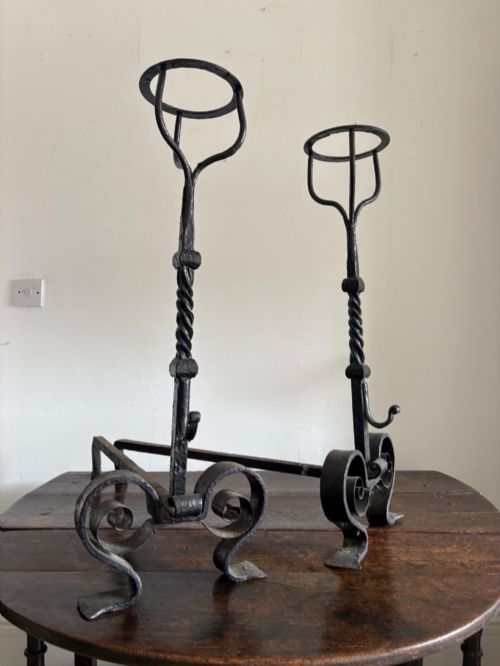
When you search for vintage iron log dogs, you find heavy hearth supports designed to hold fuel within an open fireplace. These items appear under various names including andirons, firedogs, and fire baskets across listings.
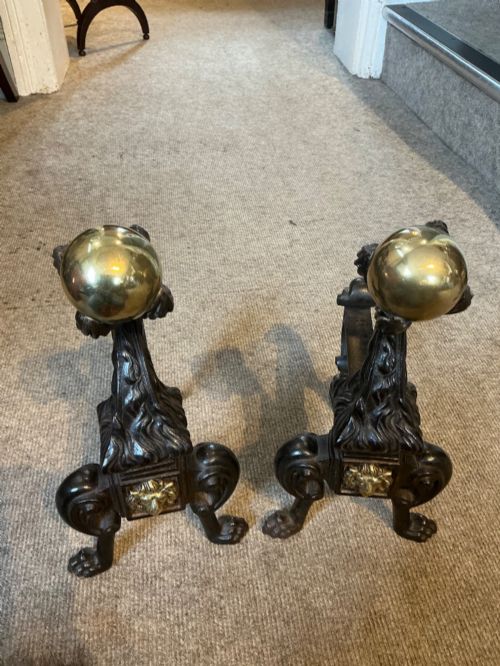
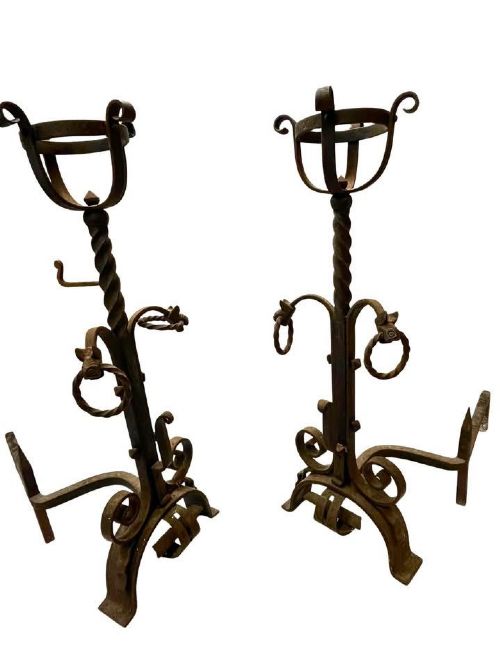
The pieces on this page span several centuries, reaching back to sixteenth-century examples alongside nineteenth-century productions and twentieth-century revivals. Wrought iron, cast iron, and forged iron dominate the selection, frequently paired with brass or copper elements.
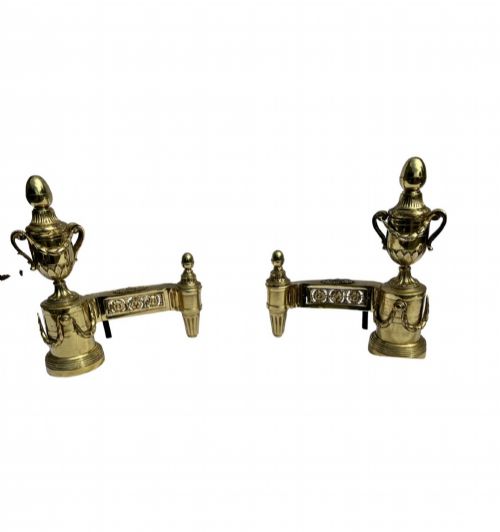
Styles range from austere Gothic and Renaissance forms to ornate French Baroque, Victorian Neoclassical, and linear Arts and Crafts designs. Most items function alongside fire grates, fenders, and companion tool sets within complete hearth layouts.
Distinctions in Quality
Heavier metal weight and substantial thickness separate superior iron log dogs from lighter decorative reproductions. Solid construction ensures stability under the heavy load of burning wood and intense hearth heat.
The refinement of the casting or forging determines the artistic merit of each piece, from sharp details on cast motifs to clean, balanced proportions in hand-wrought bars. Original matched pairs maintain greater harmony in height, stance, and decorative detail than assembled sets.
Listings feature items spanning from the 16th century through the Victorian and Edwardian eras, executed in cast iron, wrought iron, brass, and copper.
The Vintage Iron Log Dogs Glossary
- Andiron
- A vertical metal support placed in pairs on a hearth to hold logs above the floor. They often feature an ornamental front pillar and horizontal rear bars.
- Firedog
- An alternative term for an andiron used interchangeably in historical and modern fireplace descriptions. These items serve the same structural purpose in supporting fuel.
- Fire Basket
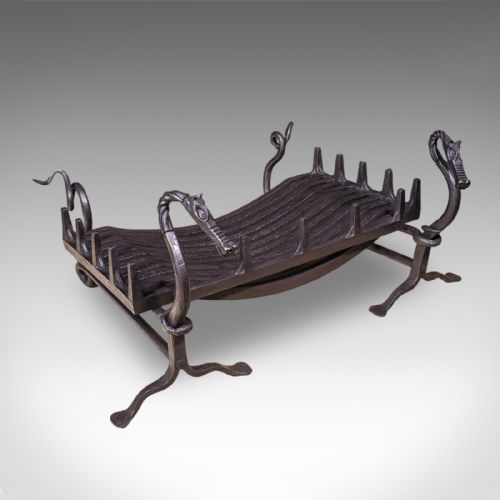
- A metal grate container that holds coal or wood inside a fireplace opening. Some examples incorporate integral log dogs or stand between them.
- Chenet
- The French term for a firedog or andiron. These pieces frequently exhibit decorative brass or bronze mounts influenced by continental design styles.
- Wrought Iron
- Iron that has been heated and hammered into shape by hand. This material resists snapping under stress and displays a distinctive fibrous texture.
Vintage Iron Log Dogs: Frequently Asked Questions
What are log dogs used for?
Log dogs elevate firewood off the hearth floor to allow oxygen to circulate underneath the burning wood. This airflow helps fuel burn more efficiently and keeps smoke to a minimum.
They also prevent logs from rolling forward out of the fireplace opening onto the floor. The decorative front pillars remain visible in the room even when the hearth is cold.
How do I clean iron log dogs?
Remove loose ash and soot with a soft dry brush before wiping the metal surfaces with a cloth. Avoid harsh chemical cleaners that strip historical patinas from the iron or brass.
Apply a light coat of natural wax or specialist grate polish to wrought and cast iron surfaces to protect against moisture. Buff polished steel and brass gently with appropriate metal creams only when necessary.
Can I use antique log dogs in a modern fireplace?
Most vintage iron log dogs fit standard open hearths provided the dimensions match your fireplace opening depth and width. Measure the hearth floor carefully before selecting a pair.
Ensure your chimney draws properly and that the iron supports sit securely on a level, heat-resistant surface. Heavy cast and wrought iron withstands regular fires when loaded sensibly with logs.
How do I date a pair of andirons?
Examine the manufacturing technique and material choices, as hand-forged wrought iron often points towards earlier centuries or Arts and Crafts revivals. Cast iron pieces with Gothic or Renaissance styling frequently date to the nineteenth century.
Look for tool marks, assembly methods like hand-peened rivets, and stylistic cues from periods like the Victorian era or Edwardian times. Comparing the design motifs to dated historical examples helps narrow down the decade of production.