


Brass and Cast Iron Andirons
Brass and cast iron andirons are hearth supports for logs, bringing period weight and polished metal to an open fire.
Brass and Cast Iron Andirons
Brass and cast iron andirons form the structural supports placed inside an open hearth to hold burning logs above the hearth floor. When searching for brass and cast iron andirons, a buyer encounters heavy fireplace furnishings primarily from the nineteenth century, including Victorian examples alongside earlier Georgian pieces.
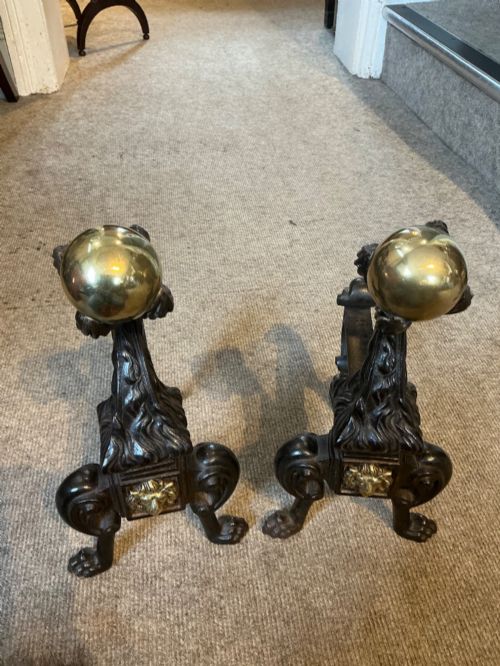
The objects frequently appear as pairs of fire dogs, sometimes accompanied by matching fire baskets, shovels, pokers, and tongs. The most common varieties met on this page combine cast iron bodies with bright brass finials and fronts.
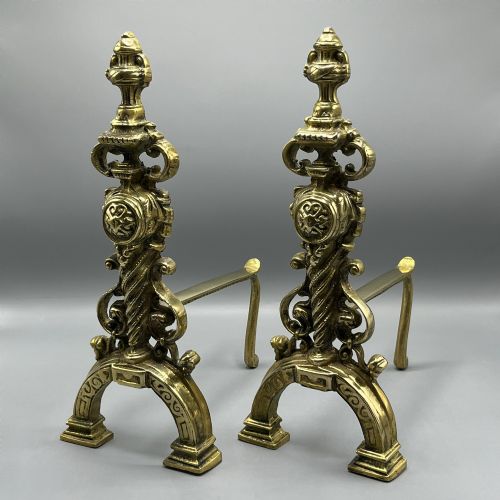
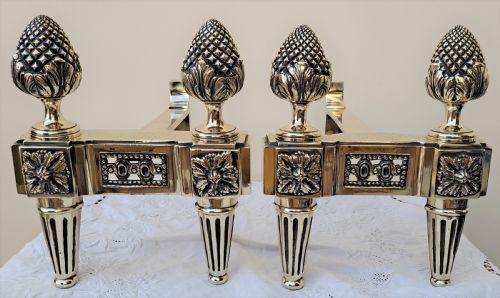
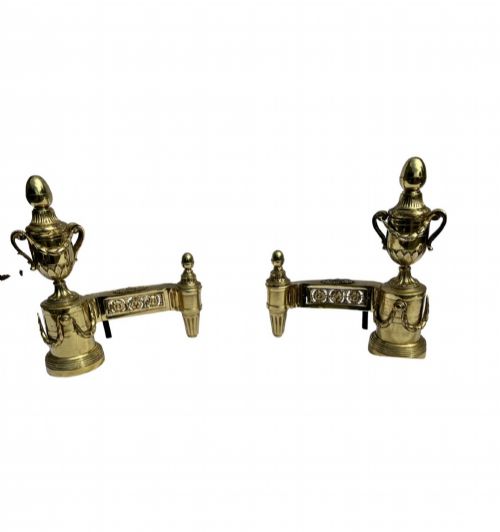
Originating from English and French workshops, these fireplace accessories span stylistic revivals from Neoclassical and Victorian Gothic Revival to Dutch Baroque and Regency designs. The forms range from plain functional iron bars with turned brass heads to heavily decorated architectural and figurative castings.
Materials and manufacture
The construction of brass and cast iron andirons relies on combining durable ferrous metal for the load-bearing billets with malleable non-ferrous components for the decorative elements. Cast iron forms the robust rear billets and uprights, chosen for its resistance to intense hearth heat.
Solid brass and sheet brass are utilised for the visible front feet, stems, and cast finials, providing a bright reflective surface against the dark iron. Steel elements occasionally appear in supporting fire baskets and accompanying tool suites.
Some nineteenth-century hearths kept watch through the smoke via brass Sphinx andirons.
Judging quality in hearth furniture
Quality in brass and cast iron andirons resides in the crispness of the metal casting and the thickness of the brass components used. Finer examples display deeply chased surface detail on the brass elements and heavy, solid iron weight without structural compromise.
The integrity of the assembly matters greatly, distinguishing workshop pieces where the vertical upright is securely joined to the horizontal billet. Superior sets maintain matching components across the pair and any associated fire irons or grates.
The Brass and Cast Iron Andirons Glossary
- Andirons
- Supports for burning logs in an open fireplace, consisting of a horizontal bar and a raised decorative front. They are also frequently called fire dogs.
- Billet
- The horizontal iron bar extending backward from the andiron upright to support the firewood. This structural part bears the direct weight of the logs.
- Fire basket
- A metal grate designed to hold coal or wood within a fireplace, often incorporating andirons or standing between them. These units combine the functions of a grate and log supports.
- Finial
- The decorative terminal ornament mounted on the top of the andiron upright. Common forms include brass spheres, urns, and figurative castings.
- Neoclassical
- A decorative style drawing inspiration from classical antiquity, visible in urn motifs and geometric lines on nineteenth-century hearth furnishings.
Brass and Cast Iron Andirons: Frequently Asked Questions
How do I use andirons?
Andirons sit inside the fireplace hearth with their horizontal bars pointing back toward the chimney wall. Logs are laid across these bars to allow air to circulate underneath for a better fire.
The decorative fronts remain visible outside the fireplace opening while the iron billets take the weight of the burning wood.
Are andirons and fire dogs different?
The terms are generally used interchangeably to describe the same pair of hearth supports. Historically, fire dogs sometimes referred specifically to designs with animal or figurative motifs.
Most listings group them together as matching pairs intended to flank the hearth.
How do I clean brass and cast iron?
Brass components respond well to gentle cleaning with a dedicated metal polish applied sparingly to avoid the dark iron parts. Cast iron requires a light wipe with a dry cloth or specialised grate polish to maintain the dark finish.
Avoid harsh abrasives that can strip the historic surface patination from nineteenth-century metalwork.
Do andirons fit all fireplaces?
Andirons require adequate depth within the fireplace recess to accommodate the horizontal billets safely. Measuring the internal hearth depth ensures the uprights and logs sit comfortably inside the opening.
They function best in open masonry hearths rather than modern shallow fireboxes.