


Vintage Inlaid Writing Table
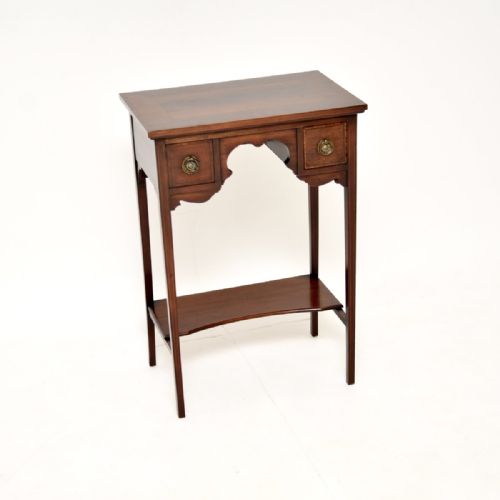
A vintage inlaid writing table brings refined craftsmanship and detailed woodwork to a study, offering a practical surface set with contrasting veneers.
Vintage Inlaid Writing Table
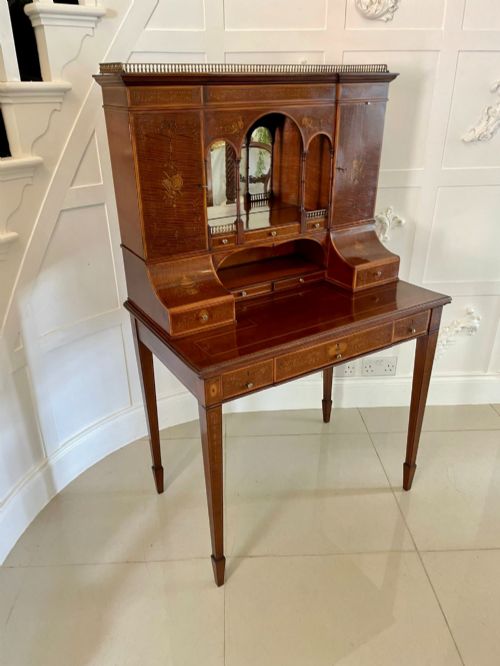
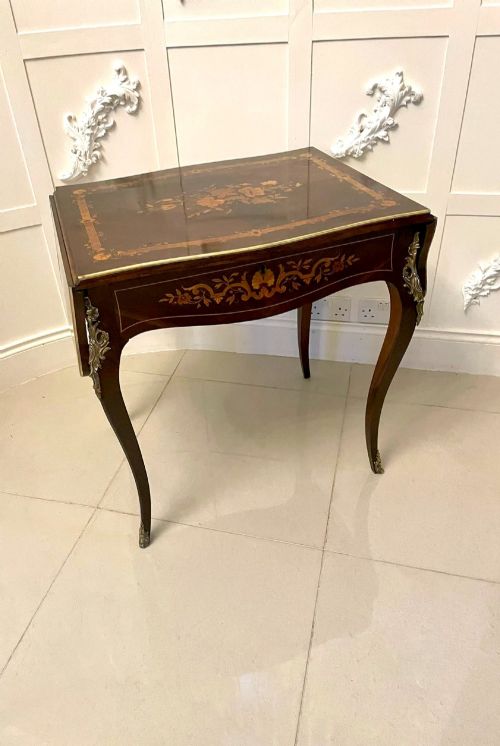
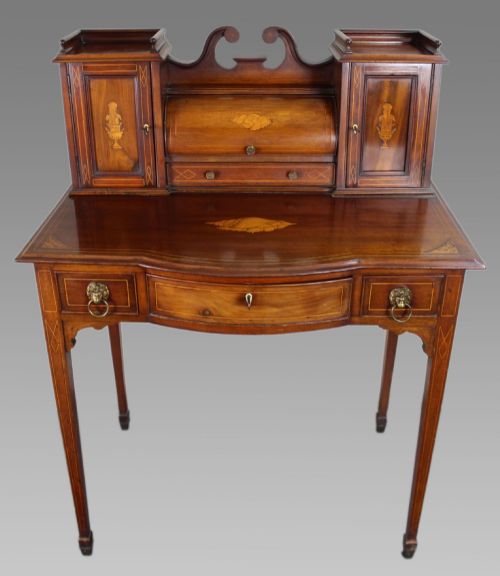
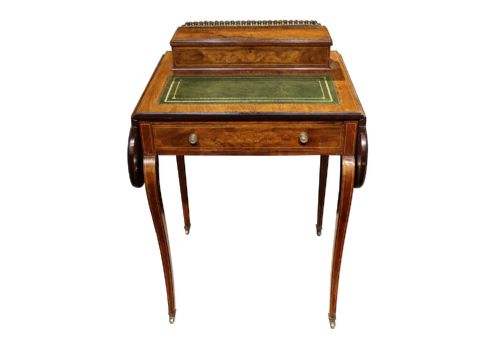
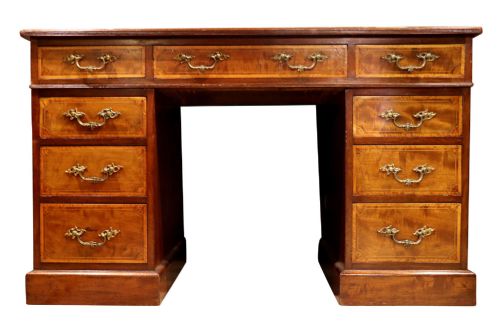
A vintage inlaid writing table covers a wide selection of freestanding desks, side tables, and specialised writing forms originating predominantly from the Victorian and Edwardian eras. Pieces span the late nineteenth century through to the early decades of the twentieth century, incorporating revival aesthetics such as Sheraton and Louis influences.
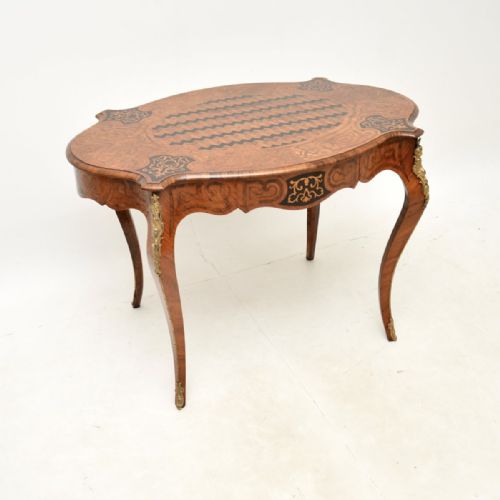
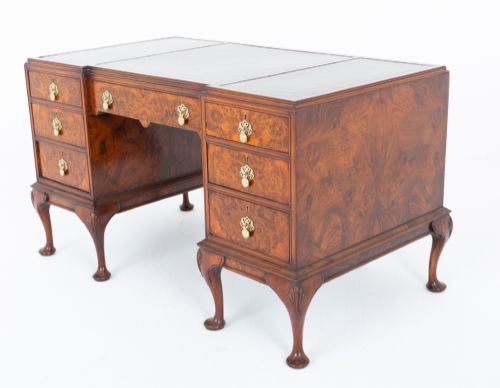
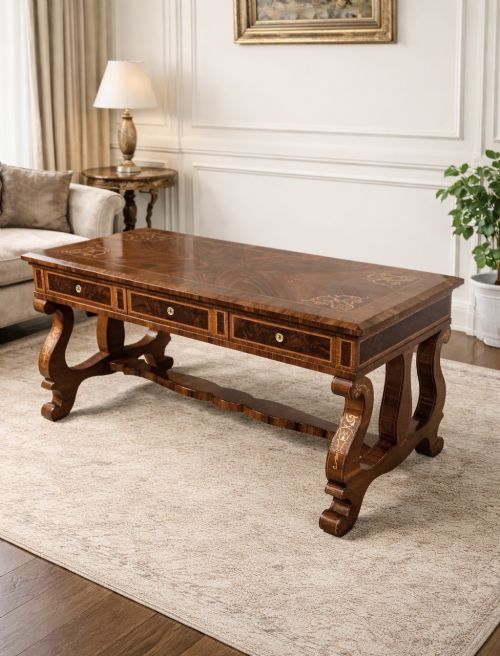
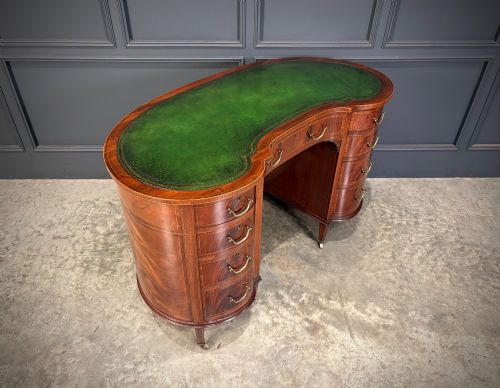
The Edwardian examples dominate the selection, often taking lighter forms such as kidney-shaped desks, lady's writing tables, and satinwood pieces with fitted interiors. Alongside these, sturdier Victorian pedestals and French bureau plat models appear with rich marquetry and freestanding capabilities suited for central room placement.
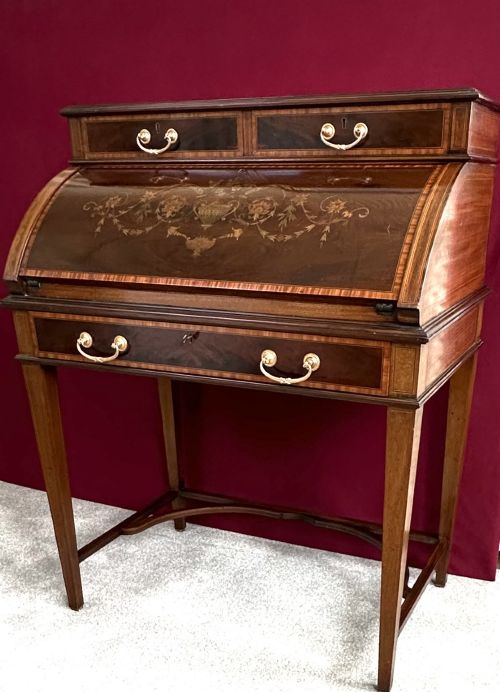
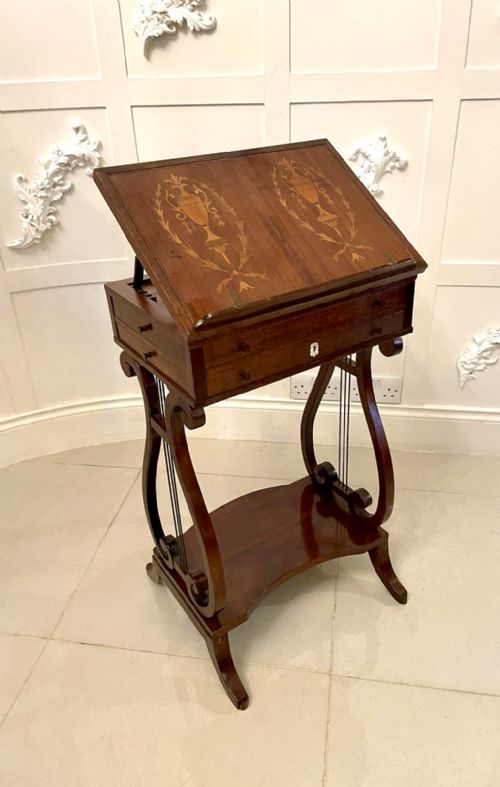
The variety extends to specialised reading tables, cylinder tops, and compact bonheur du jour desks designed for residential correspondence. Mahogany, walnut, and rosewood form the foundational structures, frequently accented by contrasting borders and detailed panel work.
Materials and construction
Makers utilised solid timbers such as mahogany, walnut, and oak for structural stability, applying fine veneers of satinwood and rosewood to the primary display surfaces. These woods provide natural colour variation and grain contrast, forming the background for intricate decorative schemes.
Inlay and marquetry techniques define the ornamentation, incorporating botanical or geometric motifs into the timber surfaces using contrasting woods. Ormolu mounts and brass hardware frequently accent the French and late nineteenth-century pieces, complementing the inlaid borders.
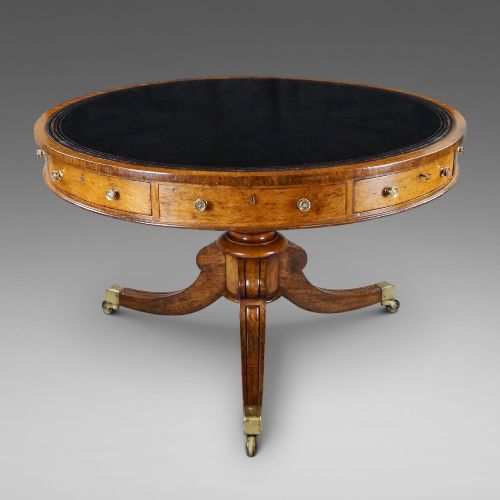
Working surfaces often integrate inset leather writing panels, bordered by delicate stringing or crossbanding. Structural joints rely on traditional cabinet-making methods, ensuring durability across pedestal desks, kidney shapes, and lighter occasional writing tables.
Listings feature items spanning the Victorian, Edwardian, and Georgian periods, constructed from mahogany, satinwood, walnut, and rosewood.
Evaluating craftsmanship
Quality separates through the precision of the timber matching and the crispness of the inlaid details across the writing surface and drawers. Superior pieces display seamless integration between the primary wood and the contrasting veneer borders.
The selection of original hardware, such as brass handles and fitted interior components, distinguishes high-grade workshop production from standard output. Cabinetry executed by known makers exhibits tighter joinery and more ambitious silhouettes like curved barrel fronts and kidney shapes.
Edwards & Roberts·Wolfe & Hollander·Gill & Reigate
The Vintage Inlaid Writing Table Glossary
- Marquetry
- Decorative veneer work arranged in pictorial or geometric patterns using various coloured woods. This technique creates complex surface designs across tabletops and drawer fronts.
- Satinwood
- A light, durable timber prized for its reflective golden sheen and smooth texture. It serves as a primary veneer or contrasting inlay material on Edwardian furniture.
- Bureau Plat
- A freestanding French writing table featuring a flat top and one or more drawers in the frieze. These pieces typically display detailed ormolu mounts and leather writing inserts.
- Ormolu
- Gilded bronze ornamentation applied to furniture mounts, feet, and key escutcheons. This metalwork adds metallic contrast to dark woods like rosewood and walnut.
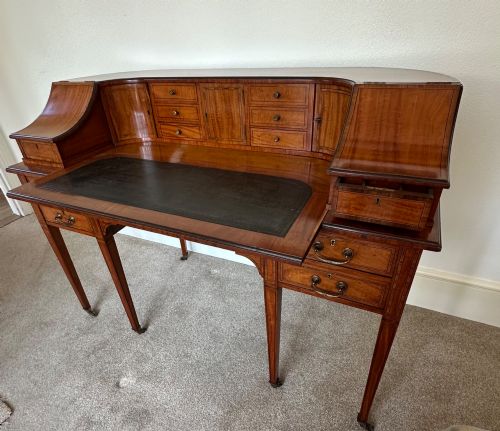
- Carlton House Desk
- A distinctive writing desk featuring a raised superstructure of small drawers and compartments arranged in a curved tier. The design offers partitioned storage surrounding the central writing surface.
Vintage Inlaid Writing Table: Frequently Asked Questions
Where should I place a freestanding writing table?
A freestanding vintage inlaid writing table functions effectively in the centre of a room rather than pushed against a wall. Because the back and sides receive the same veneer and inlay work as the front, the piece looks complete from every angle.
Positioning the table away from direct sunlight protects the polished wood and preserves the original leather insert from fading or drying out over time.
How do I care for the leather writing surface?
The inset leather panel requires gentle treatment to maintain its supple texture and colour. Dust the surface regularly with a dry cloth and avoid applying modern chemical cleaning sprays that can strip the natural finish.
Applying a specialist leather balsam occasionally helps prevent cracking, while keeping hot mugs and liquids away prevents permanent ring marks on the antique hide.
How do I distinguish Edwardian pieces from Victorian ones?
Edwardian writing tables generally display lighter proportions, brighter satinwood finishes, and delicate floral marquetry. They favour graceful shapes like the kidney desk or compact lady's writing table.
Victorian examples tend to use heavier timbers such as dark mahogany and burr walnut, often featuring robust pedestals and deeper moulding profiles designed for formal studies.