





Edwardian Carved Inlaid Bureau
These edwardian carved inlaid bureau options combine fine timbers and delicate marquetry into practical writing furniture that adds period character to any room.
Edwardian Carved Inlaid Bureau
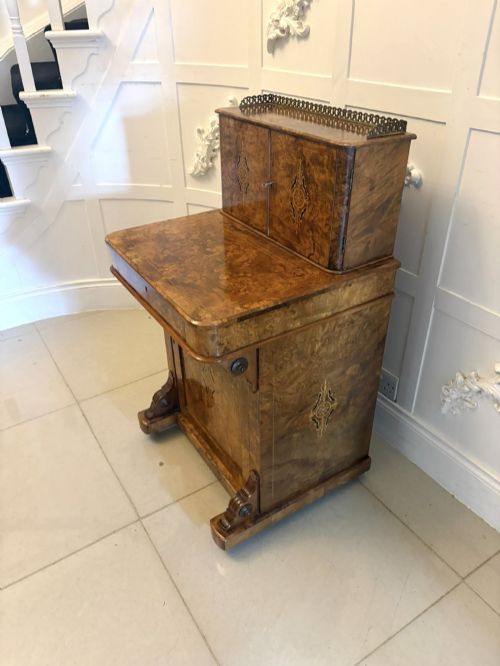
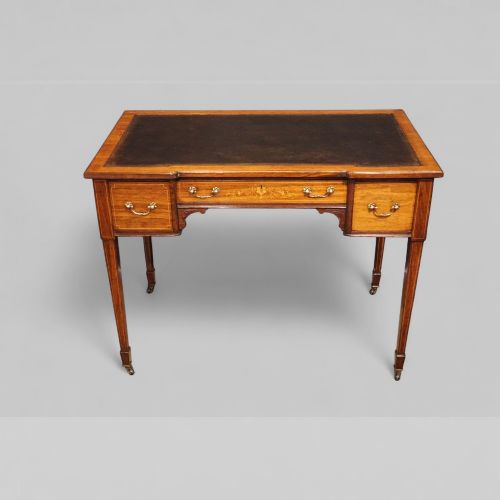
When you search for an edwardian carved inlaid bureau, you are looking at writing furniture that spans several related stylistic periods including Edwardian, Victorian, and early twentieth century examples. The selection includes writing desks, kidney shaped desks, and writing tables.
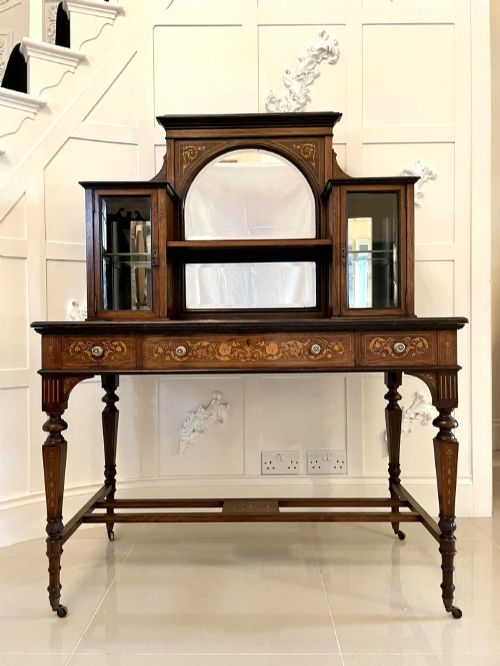
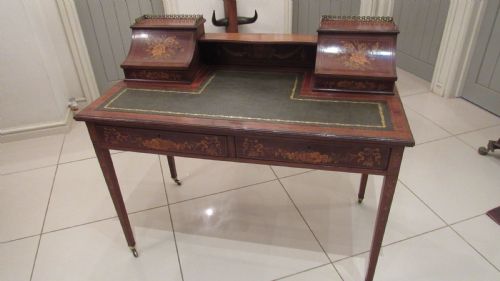
While the search specifies a bureau, the actual pieces available range across various forms of writing furniture, from kneehole desks to bonheur du jour cabinets and ladies desks. Many of these pieces incorporate Sheraton Revival influences alongside traditional cabinet forms.
The dominant timbers appearing across these listings include mahogany, rosewood, burr walnut, and standard walnut, frequently enriched with contrasting stringing and marquetry details.
How They Were Made
Cabinet makers constructed these pieces using dense hardwoods like mahogany and rosewood as a sturdy structural base, often applying finer veneers such as burr walnut to prominent surfaces. The timber was selected for grain movement and colour before any decorative work began.
Inlay and marquetry form a central part of the construction technique, using lighter woods like satinwood or boxwood set into darker grounds to create floral or geometric motifs. Brass fittings and leather writing inserts were then added to complete the functional aspects of the desk.
Listings feature pieces from the Victorian and Edwardian periods, utilising mahogany, rosewood, burr walnut, and brass.
What Varies in Quality
Quality rests heavily on the crispness and complexity of the marquetry work, where finely cut botanical or classical motifs demand high skill from the maker. Simpler stringing sits at one end of the scale, while elaborate pictorial marquetry occupies the other.
The choice of primary and secondary timbers also dictates the standing of a piece, with figured burr walnut and rich rosewood commanding attention over standard plain hardwoods. Original brass hardware and well-preserved leather inserts further distinguish the finer examples from simpler work.
Edwards and Roberts
The Edwardian Carved Inlaid Bureau Glossary
- Marquetry
- Decorative patterns formed by inserting pieces of contrasting wood, shell, or ivory into a veneer background. This technique creates detailed pictorial designs on desk lids and cabinet doors.
- Sheraton Revival
- A late nineteenth and early twentieth century design movement that reinterprets the lighter, neoclassical furniture styles of the late eighteenth century. Pieces in this style typically feature tapered legs and delicate stringing.
- Bonheur du Jour
- A small, light ladies writing desk featuring a cabinet or super-structure with shelves and drawers above the main writing surface. It became popular during the eighteenth century and saw a revival in the Victorian and Edwardian periods.
- Kidney Shaped
- Describing a curved desk or table top shaped like a kidney, allowing the user to sit closer to the centre of the writing surface. This form requires precise curved joinery.
- Stringing
- Thin lines of contrasting wood inlay used to outline the edges of drawers, tabletops, and panels. It provides a neat, linear border that frames the main timber.
Edwardian Carved Inlaid Bureau: Frequently Asked Questions
What is an edwardian carved inlaid bureau?
An edwardian carved inlaid bureau is a piece of writing furniture from the early twentieth century featuring decorative wood marquetry and carved details. These items were designed for correspondence and home administration.
They combine practical storage with ornamental woodwork, reflecting the refined domestic tastes of the period.
How do I identify Edwardian period furniture?
Edwardian furniture often displays lighter proportions than heavy Victorian pieces, drawing inspiration from earlier eighteenth-century designs. Look for Sheraton Revival influences, satinwood banding, and fine mahogany construction.
Makers of this era frequently utilised machine assistance alongside hand craftsmanship, resulting in precise joints and clean decorative inlays.
What timbers were commonly used?
Makers relied heavily on mahogany as a stable primary wood, often pairing it with rosewood, walnut, and burr walnut veneers. Lighter woods like satinwood were chosen for contrasting inlay work.
These materials were selected both for their structural durability and their ability to take a high polished finish.
How should I care for inlaid wooden desks?
Keep wooden desks away from direct sunlight and heat sources to prevent the veneers and delicate stringing from lifting. Regular dusting with a soft, dry cloth maintains the surface sheen without building up residue.
Condition the wood periodically with appropriate furniture wax to nourish the grain and protect the antique finish.