
Vintage Inlaid Storage Chest
A vintage inlaid storage chest brings rich wood, contrasting stringing, and functional depth into a room, spanning periods from the eighteenth century onward.
Vintage Inlaid Storage Chest
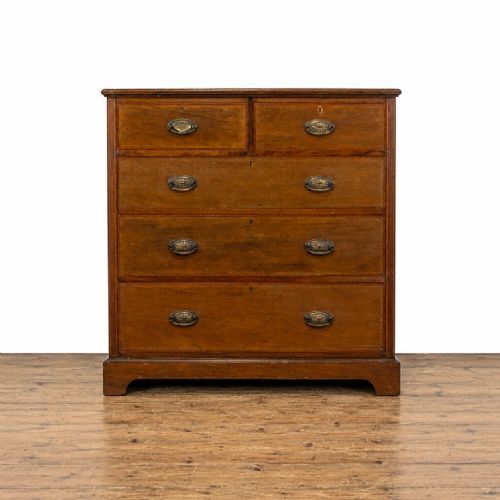
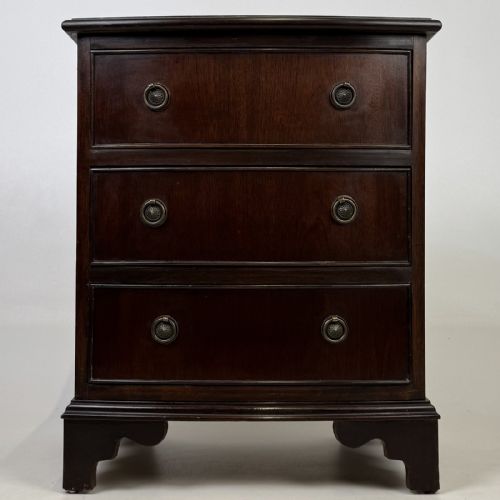
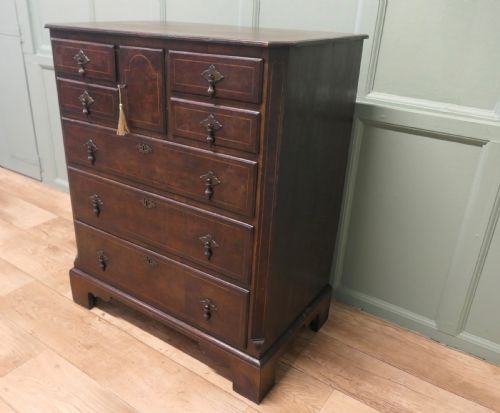
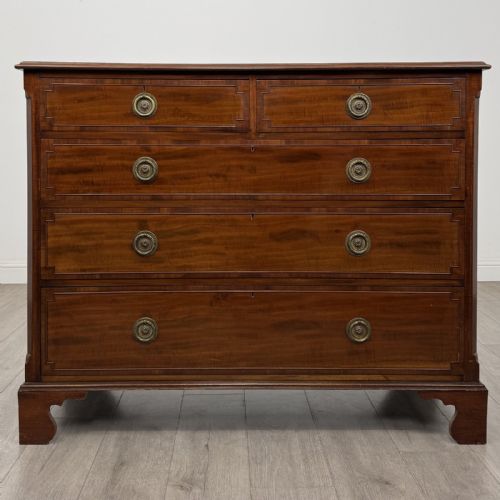
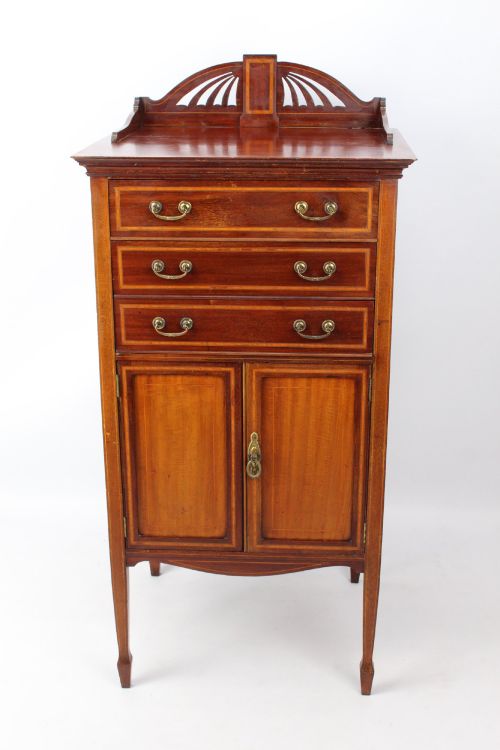
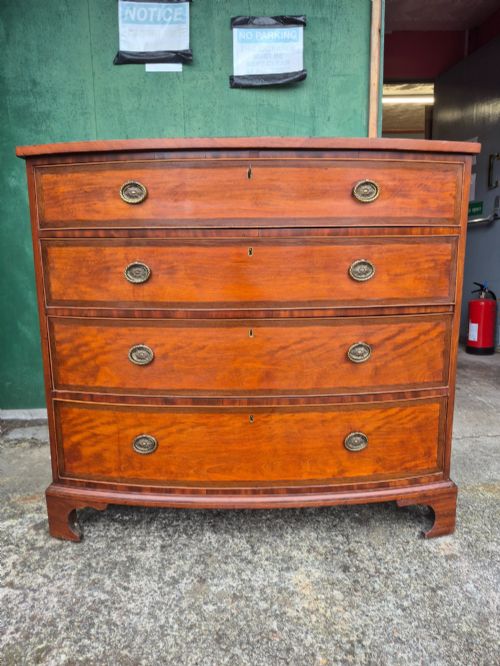
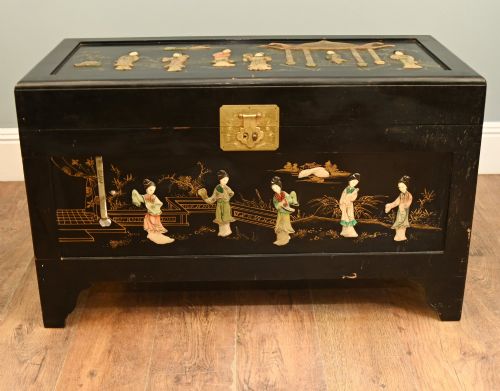
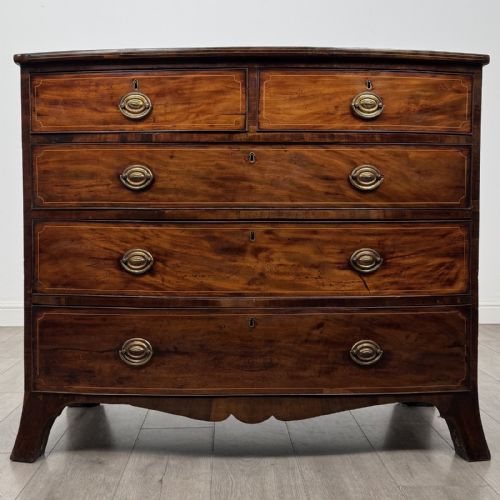
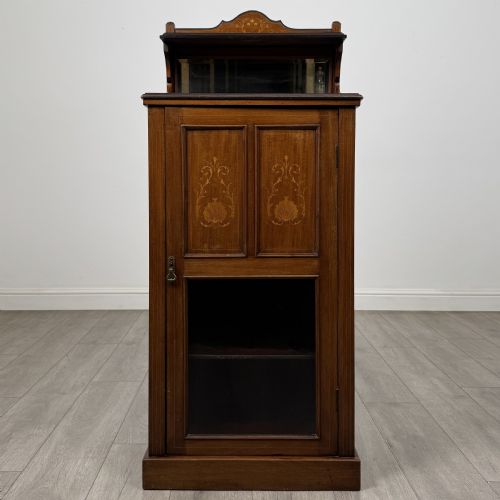
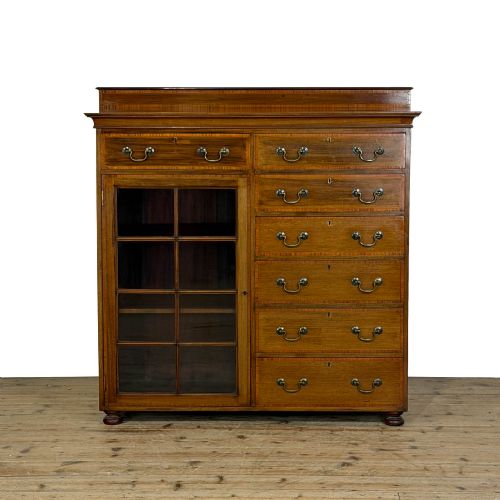
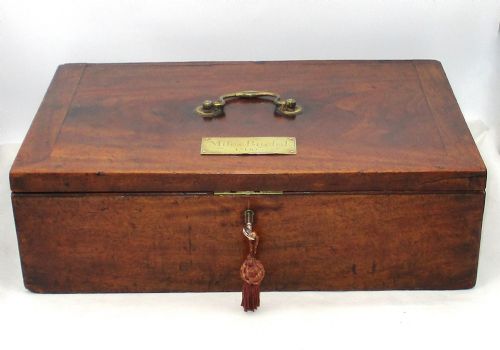
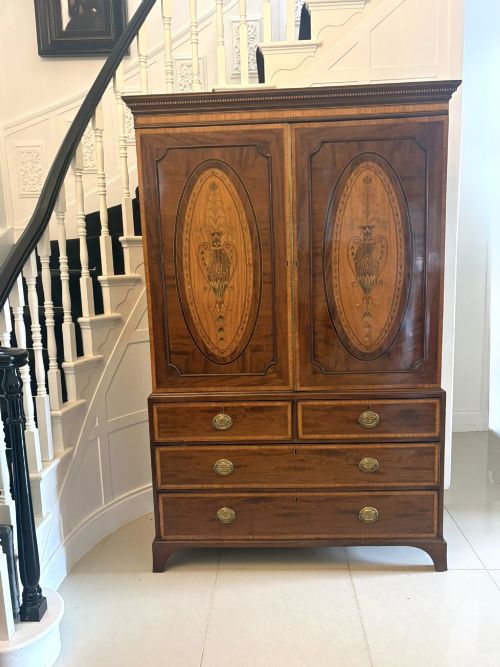
A vintage inlaid storage chest encompasses domestic storage forms ranging from large linen presses and tallboys to bedroom chests of drawers, document boxes, and tea caddies. Pieces stretch across the eighteenth, nineteenth, and early twentieth centuries, covering Georgian, Victorian, Edwardian, and Regency eras.
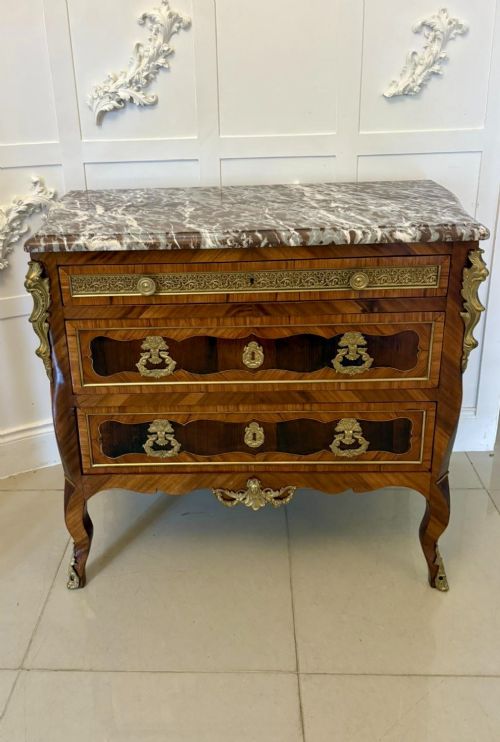
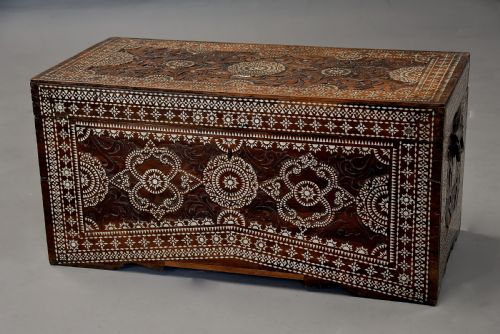
The version most commonly met on this page is the mahogany chest of drawers or linen press, frequently inlaid with satinwood or boxwood lines. Alongside British domestic furniture, the selection includes French commodes with marble tops, Middle Eastern trunks, and Indian dowry chests.
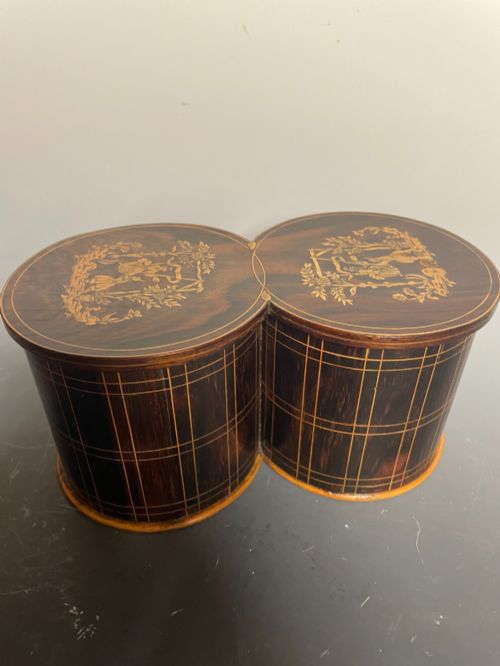
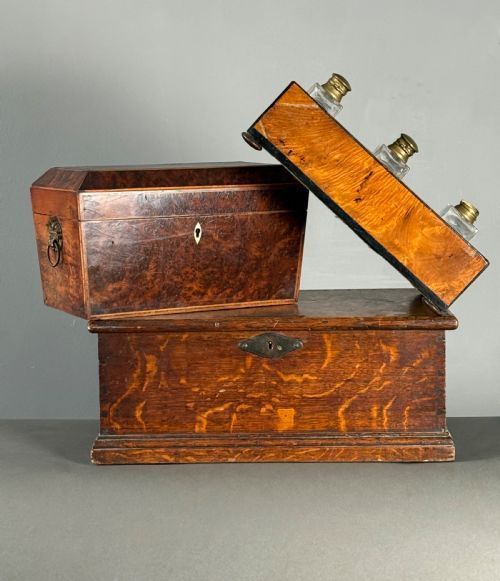
Smaller lidded storage forms appear alongside the larger case furniture, including mother-of-pearl inlaid tea caddies and jewellery boxes. Buyers encounter various scales and woods, reflecting the diverse utility of storage vessels across distinct periods.
Materials and Technique
Cabinet makers constructed these pieces primarily in mahogany, walnut, and oak, applying contrasting veneers of satinwood, boxwood, and ebony for linear stringing and geometric details. Marquetry techniques combine various fine wood timbers to create pictorial or floral motifs across drawer fronts and tops.
Hardware elements such as brass handles, escutcheons, and occasional ormolu mounts punctuate the timber surfaces. Specialised variants incorporate marble tops on French commodes or mother-of-pearl inlay within papier-mâché and hardwood structures.
Joinery methods rely on traditional drawer construction, often featuring secret drawers, cockbeading, and precise dovetailing. Surface finishing utilises polished timbers that highlight the natural grain alongside delicate contrasting inlay work.
Certain nineteenth-century chests conceal secret drawers hidden behind the main moulding, rewarding owners who discover the secret release mechanism.
Assessing Quality
Quality rests upon the crispness of the inlay work and the selection of figured timber veneers. Pieces exhibiting finely executed boxwood and satinwood stringing alongside well-matched mahogany or walnut grains stand apart from simpler iterations.
Structural integrity and original hardware define the standard of execution. The survival of original brass handles, functional locks, and smooth-running drawers distinguishes superior cabinet work from later alterations.
The refinement of proportion and stylistic execution marks the upper tier of pieces. Items retaining authentic period surfaces and careful attention to secondary timbers demonstrate the skill of the original workshop.
Druce & Co·Holtzapffel and Co
The Vintage Inlaid Storage Chest Glossary
- Linen Press
- A large storage cabinet featuring upper sliding trays or shelves enclosed by doors, positioned above a base of lower drawers. This form originated for storing household textiles flat.
- Tallboy
- A tall chest of drawers constructed in two stacked sections, raising storage capacity while occupying a compact floor footprint. They frequently appear in eighteenth and nineteenth-century formats.
- Marquetry
- The decorative technique of applying thin veneers of various wood types, and occasionally other materials like mother-of-pearl, to form patterns and pictures on a furniture surface.
- Stringing
- Thin inlay lines of contrasting wood, such as boxwood or ebony, recessed into the primary timber to outline drawer fronts and panels. It defines much of the linear decoration on Georgian and Edwardian furniture.
- Commode
- A low French storage chest or cabinet fitted with drawers or doors, commonly topped with marble. They frequently display decorative marquetry or bombe curved profiles.
Vintage Inlaid Storage Chest: Frequently Asked Questions
What is a linen press?
A linen press is a tall storage cabinet designed originally to store household linens flat on interior sliding trays or shelves. The upper doors conceal these compartments, while the lower section provides traditional drawer storage.
These pieces typically date from the Georgian and Victorian periods, constructed in solid mahogany with decorative inlay. They functioned as primary bedroom storage before fitted wardrobes became standard.
How do I date an inlaid chest?
Dating relies on examining the secondary timbers, construction methods, hardware, and the style of inlay work. Georgian pieces often display hand-cut dovetails and subtle stringing, while Edwardian examples show lighter satinwood banding and standardised fixings.
Regional variations and specific revival styles, such as Sheraton or Louis XVI, provide further chronological markers. Cabinet construction details inside the drawers reveal the manufacturing period most reliably.
Where should I place a document box?
Document boxes suit placement on desks, side tables, or sturdy chest surfaces where their compact form remains visible. Their lidded compartments provide practical storage for letters, stationery, and small personal items.
Because these boxes feature detailed mahogany and satinwood construction, positioning them away from direct sunlight preserves the timber and inlay work. They function as both decorative objects and secure desktop storage.