
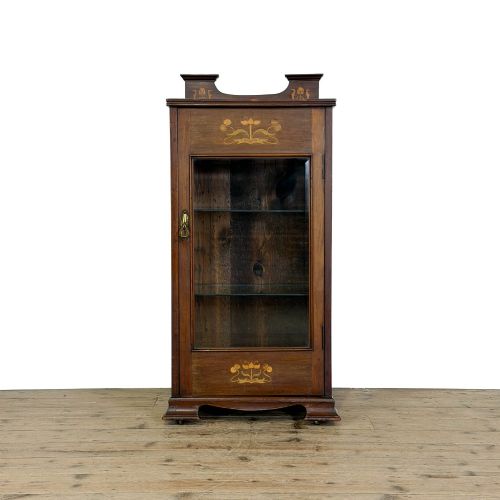
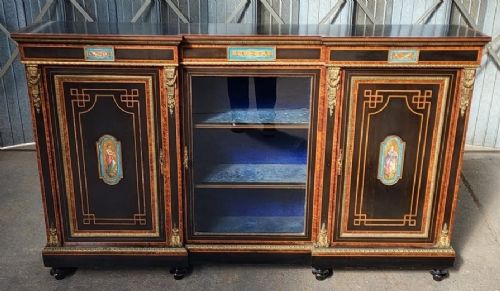
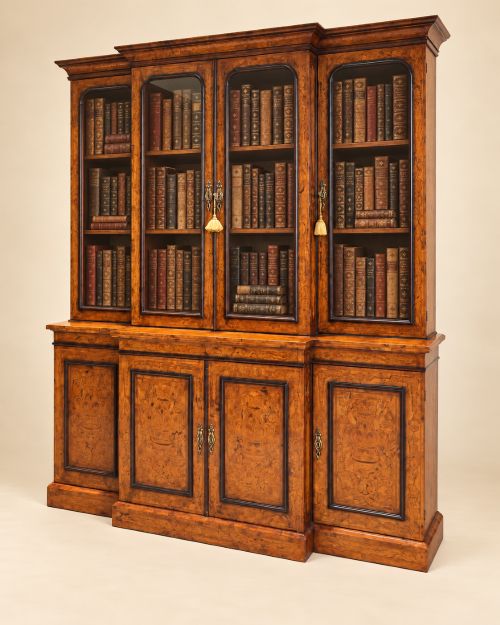
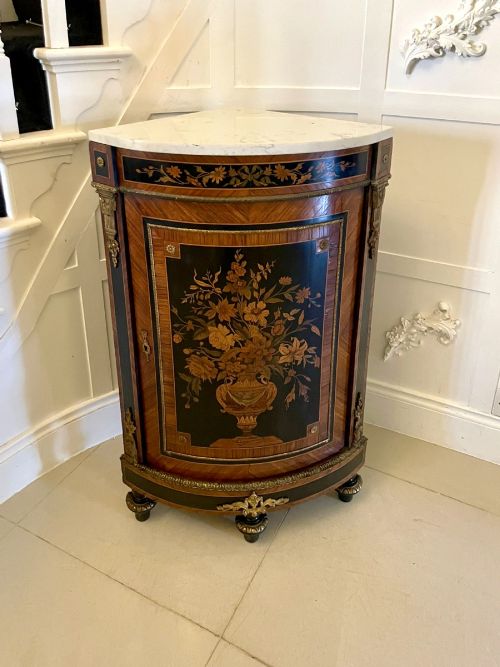
Marquetry Door Cabinet
These marquetry door cabinets combine figured timbers and precise wood-inlay work across Victorian, Edwardian, and continental forms.
Marquetry Door Cabinet
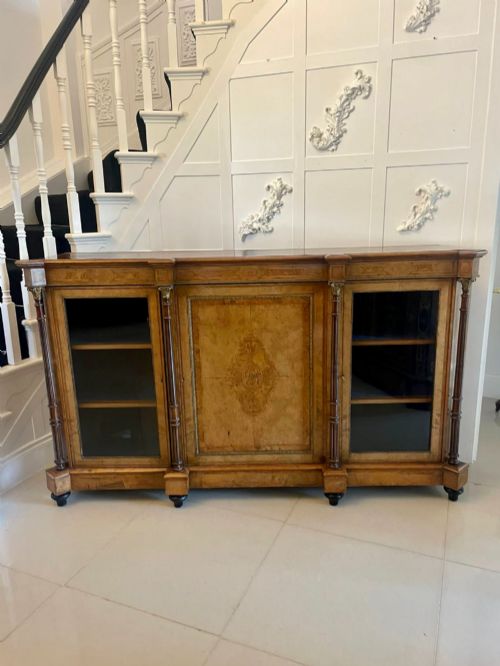
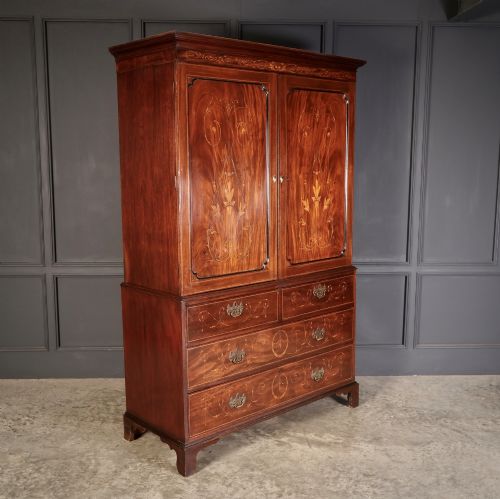
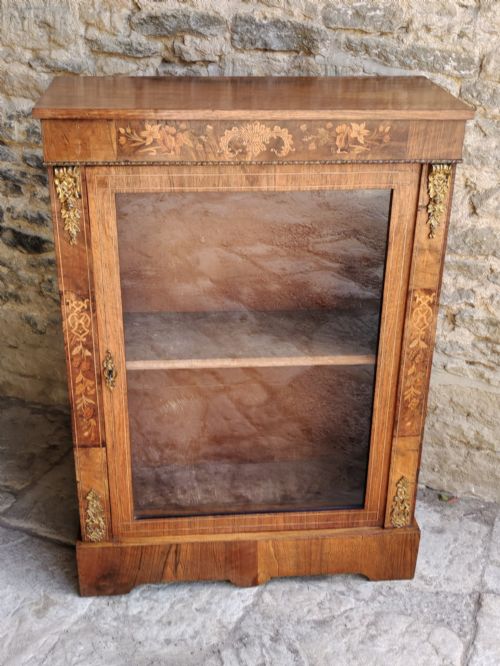
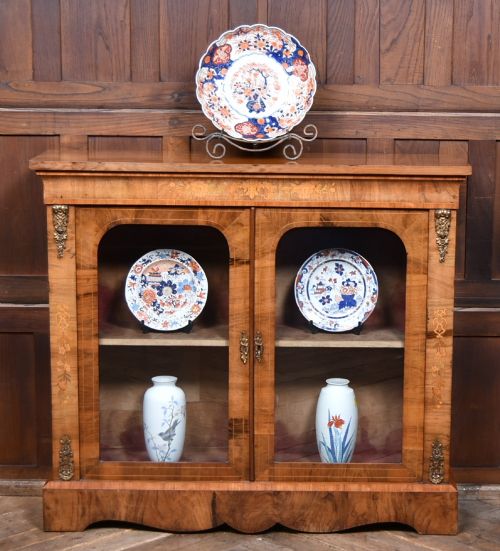
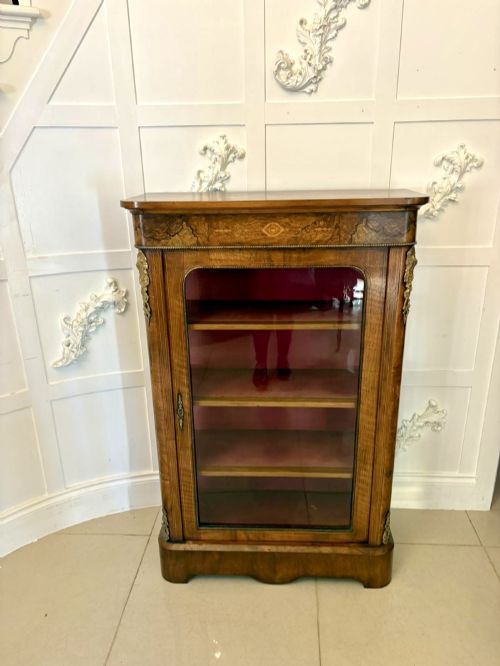
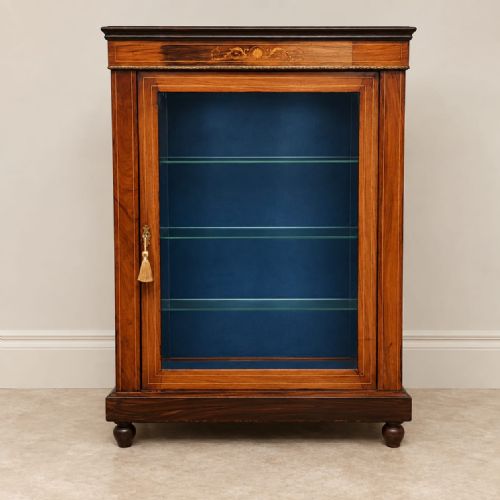
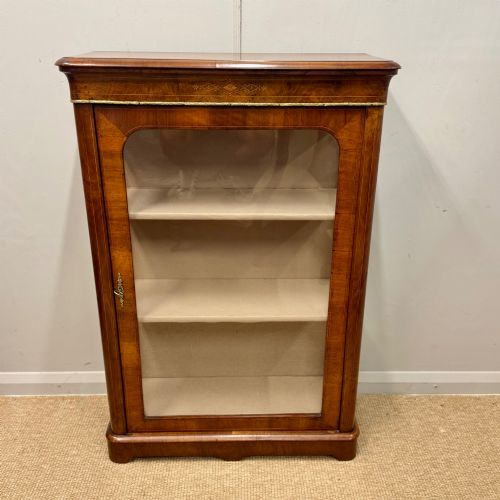
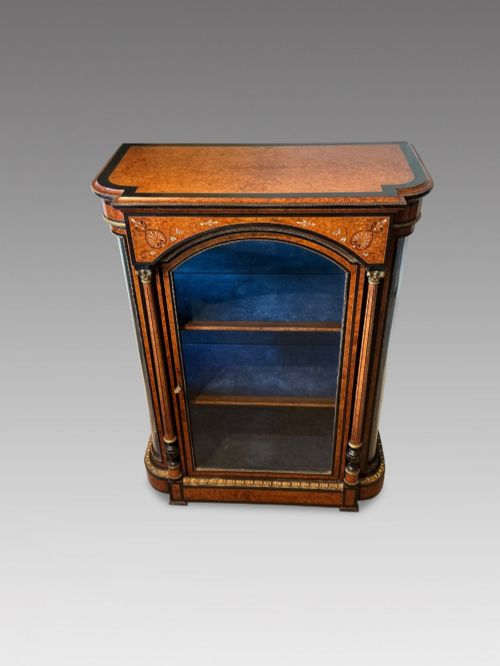
A marquetry door cabinet is a storage or display piece featuring patterned wood veneers arranged on its front panels, spanning periods from the eighteenth century through the Edwardian era. You will most frequently encounter nineteenth-century walnut pier cabinets, side cabinets, and glazed display pieces built in Victorian and continental workshops.
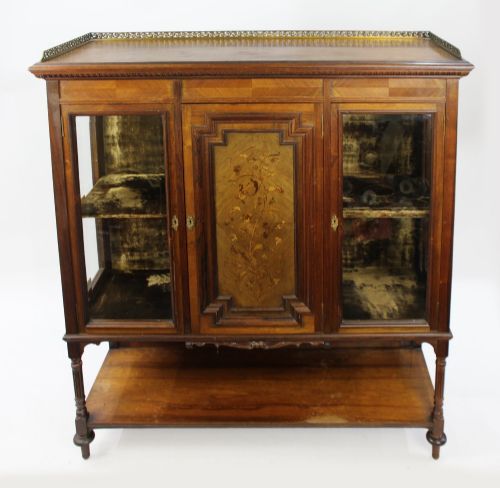
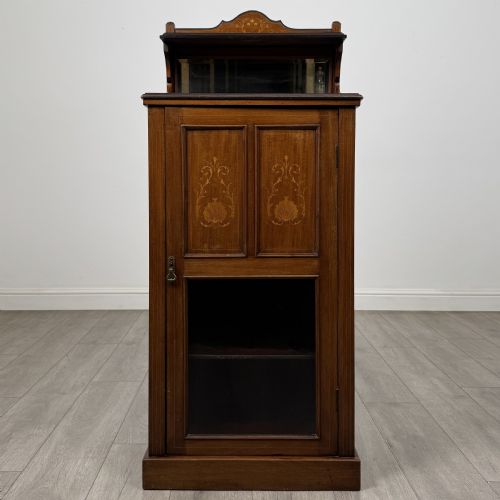
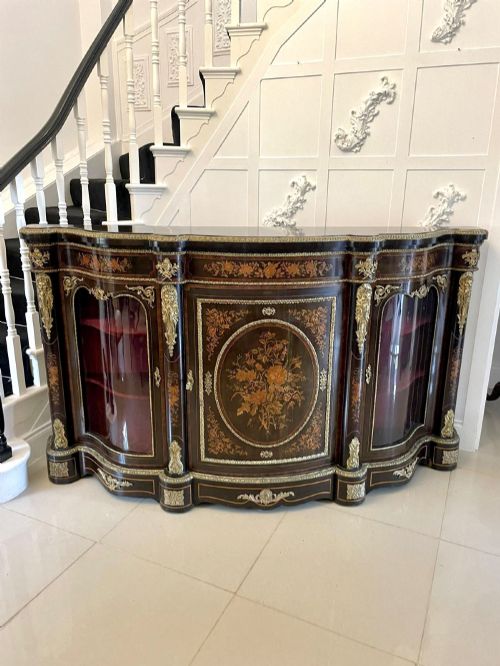
The forms range from compact corner cupboards and music cabinets to large breakfront bookcases, credenzas, and serpentine sideboards. Many examples incorporate glass doors for display, while others provide enclosed shelving behind timber doors framed by brass mounts or ormolu details.
Materials and construction
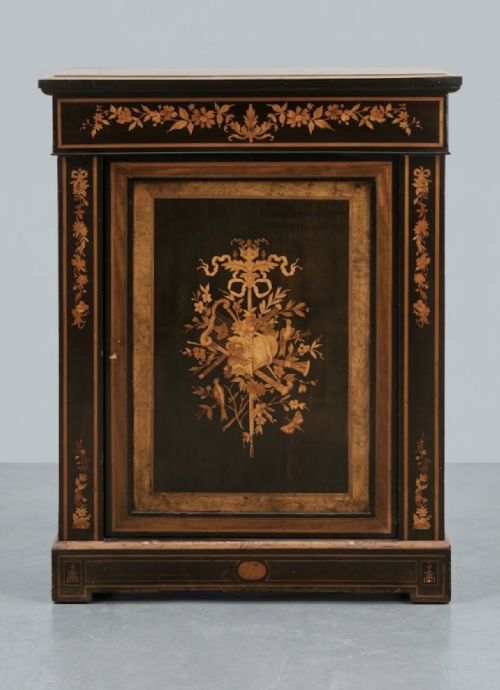
Cabinet makers utilised dense, richly figured woods such as walnut, burr walnut, mahogany, satinwood, and rosewood as a foundation for decorative veneer work. Fine contrasting timbers, including tulipwood, amboyna, and ebony, were carefully cut and fitted into precise pictorial or geometric patterns across the door surfaces.
Many high-grade examples feature cast ormolu mounts, brass stringing, and glazed panels that frame the inlaid woodwork. Carcasses were constructed using traditional joinery, applying the marquetry veneers onto stable primary timbers to prevent warping over time.
Distinctions in craftsmanship
The distinction between standard production and exhibition-grade pieces lies in the complexity of the veneer cutting and the crispness of the floral or geometric motifs. Finer cabinets demonstrate seamless matching of symmetrical wood grains and tight joints where contrasting inlay meets the background timber.
Secondary materials and hardware further separate the tiers of quality, with superior pieces utilising heavy gilt bronze or ormolu mounts, select figured burr veneers, and refined interior fittings rather than plain secondary timbers.
Edwards and Roberts·Gillows·Maple and Co
The Marquetry Door Cabinet Glossary
- Marquetry
- The art of applying small pieces of wood veneer to a structure to form decorative patterns or pictures. This technique defines the visual character of the door panels.
- Pier cabinet
- A narrow cabinet designed to stand against the wall space between windows. These pieces are frequently glazed and decorated with intricate veneer work.
- Ormolu
- Gilded bronze mounts applied to furniture for decorative effect. They are commonly found framing the doors and corners of nineteenth-century exhibition pieces.
- Burr walnut
- Wood taken from the abnormal growth of a walnut tree, yielding a swirling, highly figured grain. It serves as a primary background veneer for inlaid designs.
- Credenza
- A low, formal sideboard or cabinet often fitted with multiple doors and elaborate mounts. They provide substantial surface and interior storage space.
Marquetry Door Cabinet: Frequently Asked Questions
How do I identify a Victorian pier cabinet?
Victorian pier cabinets are typically narrow, upright display or storage pieces designed for placement against a wall between windows. They frequently feature burr walnut veneers, glass doors, and gilt bronze mounts.
Look for nineteenth-century construction methods, such as hand-cut dovetails in the interior drawers and traditional timber framing beneath the exterior veneers.
What is the difference between marquetry and inlay?
Inlay involves inserting pieces of wood, metal, or stone into a recess carved directly into a solid wood surface. Marquetry covers the entire surface of the carcass in a veneer puzzle composed of various wood types.
Marquetry door cabinets display pictorial or geometric designs assembled across the entire front panels rather than isolated insertions.
Where should I place a marquetry cabinet?
These cabinets suit reception rooms, libraries, or hallways where their decorative wood veneers can be appreciated without direct, harsh sunlight. Stable indoor humidity is essential to protect delicate veneers and prevent cracking.
Keep them away from direct heat sources like radiators to preserve the stability of the timber and the underlying glue.
How do I care for antique veneer?
Maintain the timber by dusting gently with a dry, soft cloth and applying appropriate beeswax sparingly when the wood appears dry. Avoid commercial liquid polishes that can degrade historical finishes.
Protect the surface from moisture and extreme temperature fluctuations to ensure the veneer remains firmly adhered to the cabinet carcass.