


Vintage Inlaid Server
A vintage inlaid server brings classical proportion and fine cabinet work to a dining room, offering both display space and practical storage.
Vintage Inlaid Server
When you search for a vintage inlaid server, you are looking at formal dining furniture designed for serving food and storing tableware. These pieces range from Georgian originals to later Edwardian and revival interpretations that imitate earlier eighteenth-century designs.
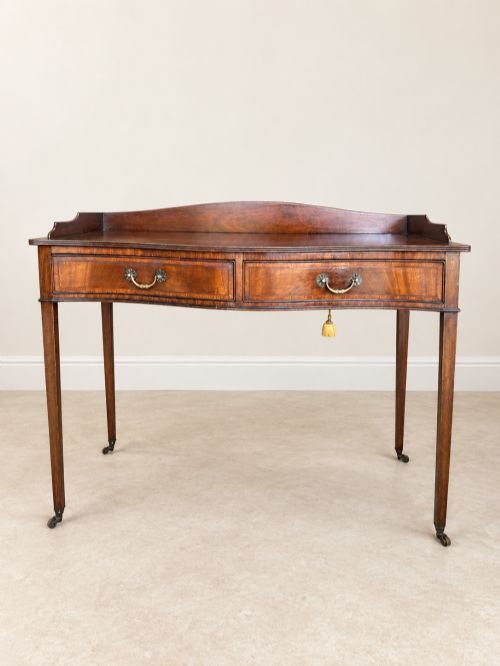
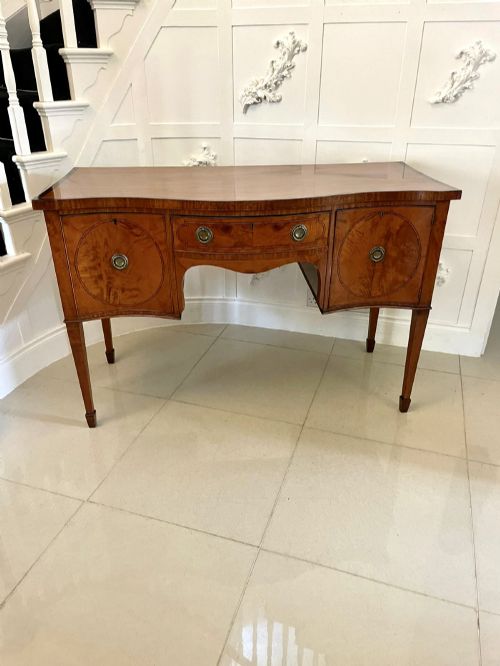
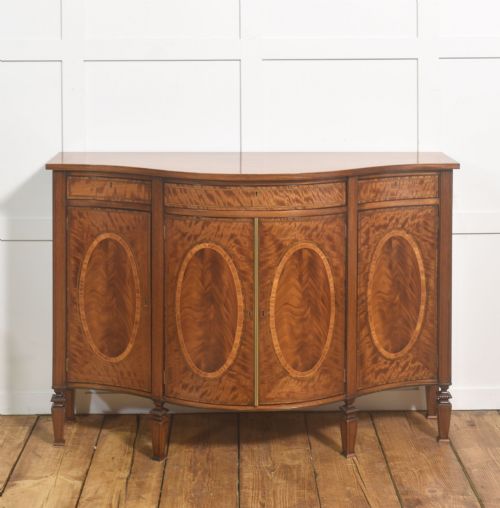
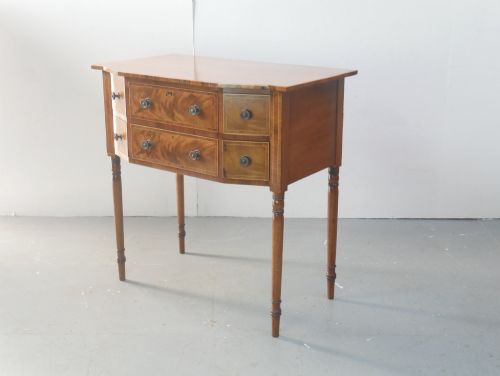
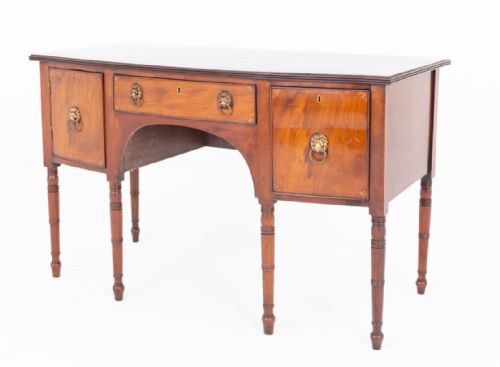
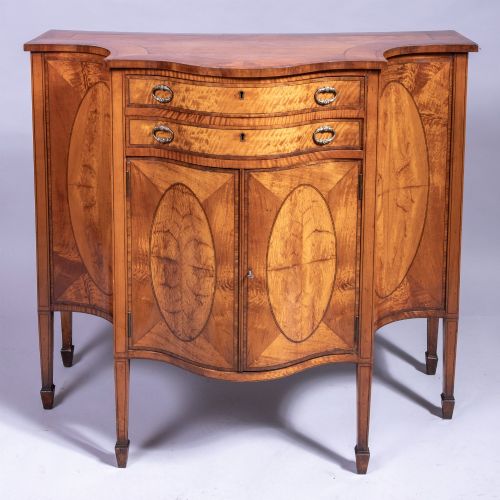
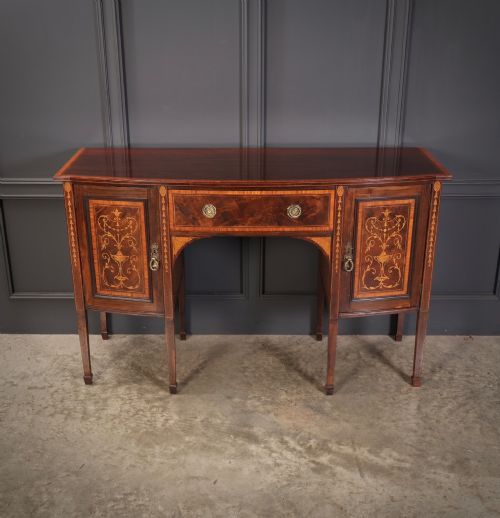
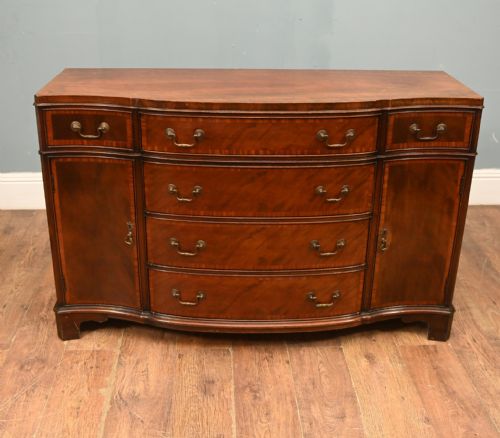
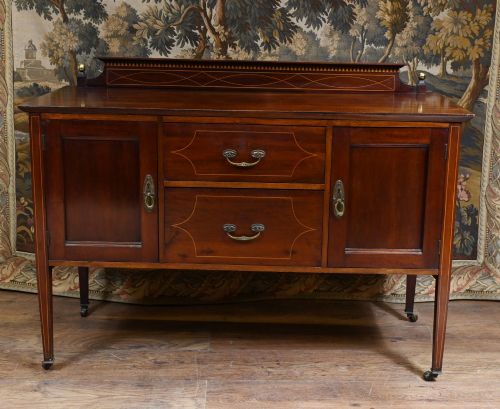
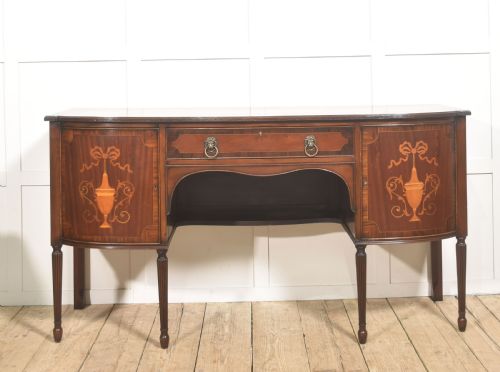
The most common form on this page is the mahogany sideboard or server, often featuring a bow-front or serpentine shape. Many of these pieces incorporate contrasting timber stringing and delicate marquetry motifs on their drawer fronts and doors.
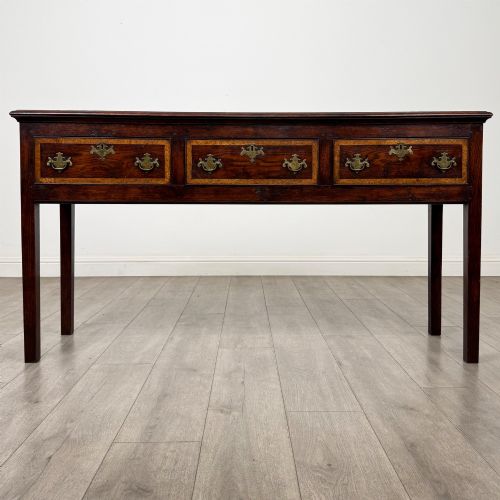
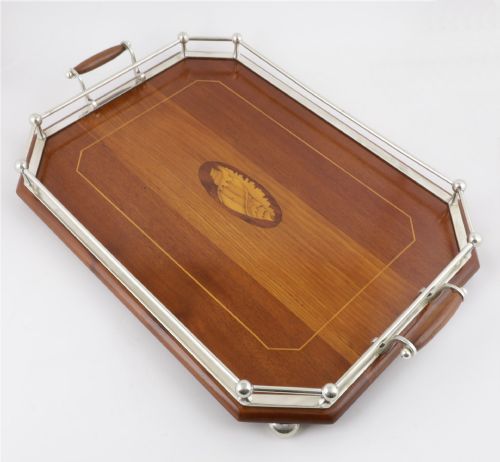
Origins span across nineteenth and early twentieth-century workshops, drawing heavily on Sheraton and Regency design vocabularies. Alongside traditional sideboards, you will encounter side cabinets and serving trays sharing the same decorative vocabulary.
Markers of quality
The distinction between standard production and top-tier pieces rests on the choice of timber figures and the crispness of the inlay work. Finer examples display carefully matched flame mahogany veneers and tightly fitted boxwood and satinwood stringing that follows complex curves without gaps.
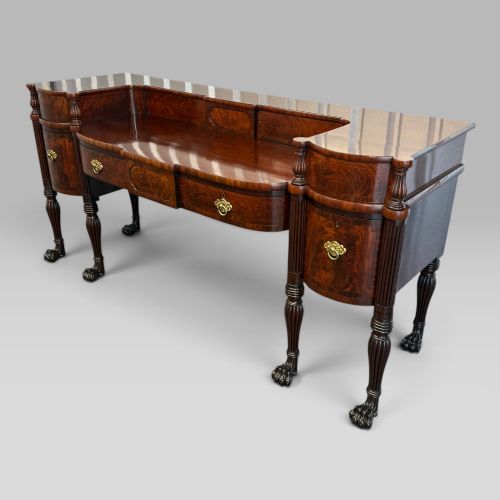
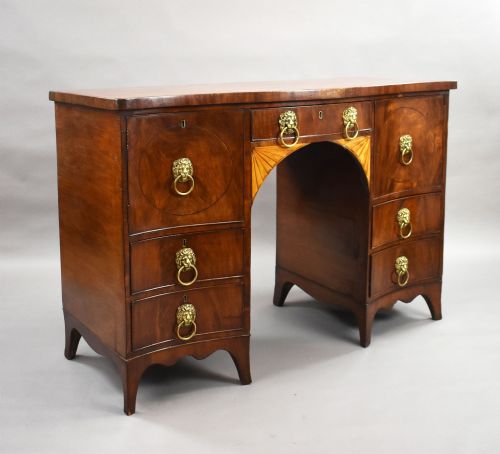
Structural integrity and secondary woods also define the upper tier, seen in solid drawer linings and substantial brass or lion paw feet. The subtlety of the marquetry and the grace of the serpentine or bow-front profile separate ambitious cabinet work from simpler utility items.
One exceptional piece rests upon six carved lion paw feet, giving a stately beast-like stance to the dining room.
The Vintage Inlaid Server Glossary
- Bow-front
- A convex front curved in a gentle arc, common in dining room servers of the Georgian and revival periods. This shape softens the corners of a room while maximising internal storage capacity.
- Serpentine
- A furniture front characterised by a double-concave central section flanked by convex ends, requiring advanced woodworking skill to execute cleanly.
- Marquetry
- Decorative patterns formed by fitting contrasting veneers into a prepared background wood. It often depicts floral motifs, urns, or classical scrolls on cabinet doors and tabletops.
- Stringing
- Narrow strips of contrasting timber inlaid into shallow channels on drawer fronts and table edges. This technique creates delicate geometric borders that frame the main wood grain.
- Flame mahogany
- A highly figured wood veneer cut from the branch junction of the mahogany tree, displaying a characteristic flame-like pattern. It was widely utilised by cabinet makers seeking dramatic optical depth.
Vintage Inlaid Server: Frequently Asked Questions
How do I date a sideboard?
Dating relies on timber choice, construction methods, and stylistic cues such as hardware and leg shape. Georgian originals typically feature hand-cut dovetails and native secondary woods, whereas Edwardian revivals often show mechanical uniformity in their internal joints.
Matching the decorative motifs to known periods like Sheraton Revival or Regency helps narrow down the decade of manufacture. Examining the backboards and drawer linings provides further clues regarding the workshop era.
Where should I place a server?
These pieces suit dining rooms, large hallways, or drawing rooms where surface area and low-profile storage are required. Their shallow depth compared to full-size cupboards makes them practical for circulation spaces.
Keep them away from direct sunlight and strong heat sources to protect the delicate mahogany veneers and boxwood stringing from drying and cracking over time.
How do I care for inlaid wood?
Maintain the finish by dusting with a dry, soft cloth and applying a quality beeswax sparingly to nourish the timber. Avoid silicone-based polishes that can degrade nineteenth-century French polish over time.
Protect the top surface from moisture by using coasters and mats under serving dishes to prevent water rings from penetrating the veneer.