



Vintage Imari Style Dish
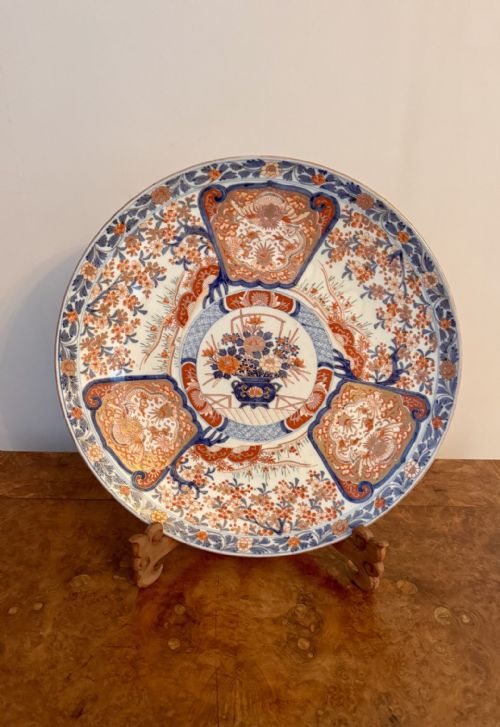
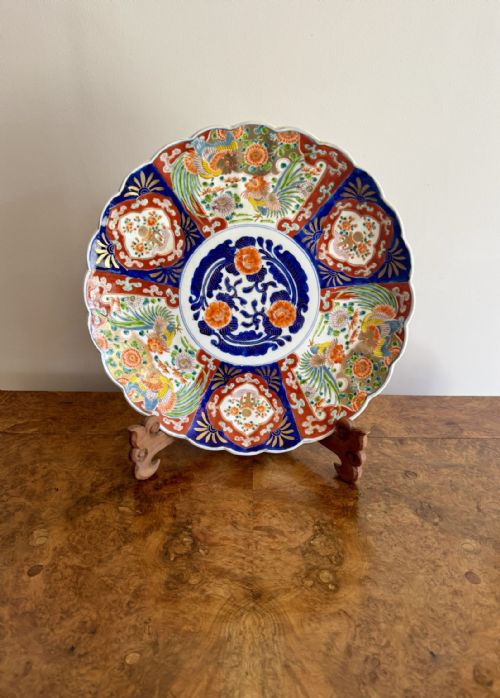
A vintage imari style dish brings vibrant palette and pattern to a room, drawing on centuries of ceramic tradition.
Vintage Imari Style Dish
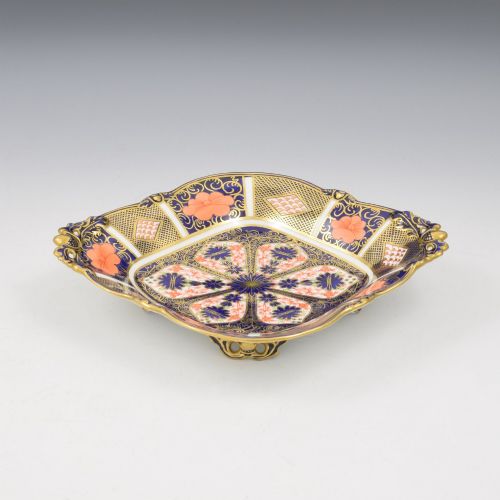
A vintage imari style dish comprises plates, chargers, bowls, and serving trays produced in periods such as the 19th Century, 1900, 1920, and the Victorian era. These pieces reflect the enduring influence of Japanese Imari aesthetics alongside English interpretations like English Imari and Chinese Export styles.
Buyers encounter variations ranging from large scalloped bowls and chargers to fan-shaped plates and serving trays. The forms incorporate traditional motifs and shapes that bridge Asian origins with European decorative preferences of the Victorian and later periods.

Materials and methods of construction
The pieces on this page are formed from porcelain, ceramic, and ironstone china, providing a sturdy and varied foundation for decoration. Potters shaped these materials into plates, bowls, chargers, and tureens using established forming techniques.
Makers applied enamel, glaze, and gold leaf to the surfaces to achieve the characteristic rich visual depth of the imari style. Gilt accents and detailed enamel work define the finished appearance of these decorative vessels.
The documented items span the 19th Century, Victorian period, and the early decades of the twentieth century.
Distinctions in quality and finish
Quality rests in the precision of the hand-applied enamel and the crispness of the porcelain or ironstone body. Finer examples display deliberate brushwork and well-preserved gilding that enhance the patterned surface.
The weight and balance of the dish, alongside the uniformity of the glaze, set apart superior items. Pieces with clean execution in their decorative patterns demonstrate higher grade manufacture.
Royal Crown Derby·Masons
The Vintage Imari Style Dish Glossary
- Imari
- A style of ceramic decoration originating in Japan, known for a palette typically featuring underglaze blue and iron red, often augmented with gold. It heavily influenced subsequent English and European wares.
- Ironstone
- A type of heavy, durable earthenware patented in the 19th Century, frequently used for sturdy plates, tureens, and chargers. It provides a robust alternative to standard porcelain.
- Charger
- A large decorative plate or platter used primarily for display or as a base setting for other dishes. These items often showcase the most elaborate patterns in a collection.
- Glaze
- A glassy coating fused to ceramic wares by firing, designed to seal the porous body and impart a smooth finish. It protects the underlying colours and painted details.
- Enamel
- Opaque vitreous material applied over the glaze and fired at a lower temperature to add raised colour and detail. This technique allows for the bright secondary hues seen on imari pieces.
Vintage Imari Style Dish: Frequently Asked Questions
What is an imari style dish?
An imari style dish is a decorative ceramic plate, bowl, or charger that adopts the distinctive palette and pattern traditions associated with Japanese imari ware. These pieces often feature contrasting iron red and blue tones, sometimes highlighted with gold.
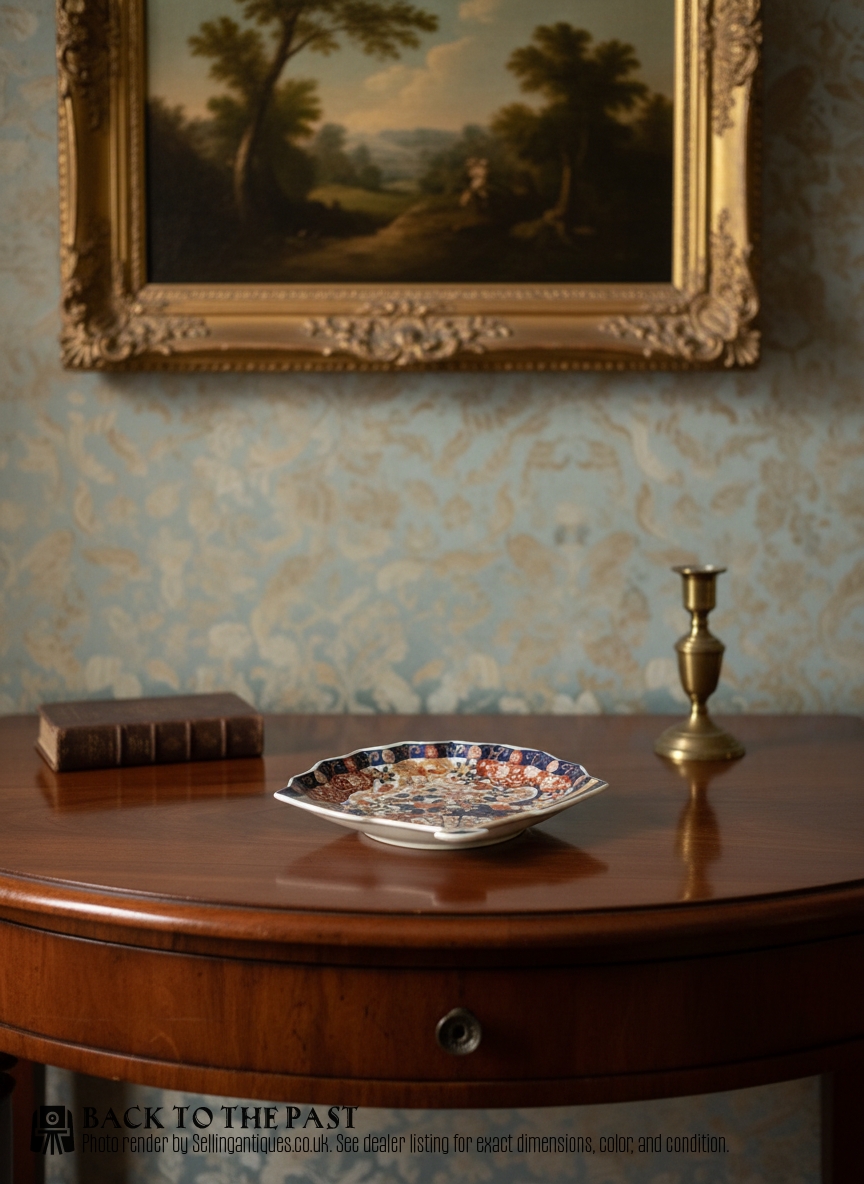
Such items serve primarily as decorative accents in a home, whether displayed on walls, mounted on stands, or set upon tables for visual impact.
How do I clean my vintage dish?
Cleaning these decorative items requires gentle handling to protect the enamel work and gold leaf applications. Dusting with a soft, dry cloth is usually sufficient for regular maintenance.
Avoid submerging pieces in water for extended periods or using abrasive cleaners, as harsh scrubbing can wear away the surface decoration over time.
How do I date a piece?
Dating relies on observing the material composition, such as ironstone versus porcelain, and the style of the decoration. Reference points include the 19th Century, Victorian era, and early twentieth century production periods.
Maker marks stamped or painted on the underside also provide specific clues regarding the workshop of origin and the era of manufacture.
Where should I display it?
These dishes suit placement in dining rooms, living spaces, or hallways where their patterns can catch the light. Chargers and large plates work well on plate racks or wall mounts.
Smaller bowls and trays can sit on sideboards or coffee tables to hold small decorative objects or simply stand alone as focal points.