
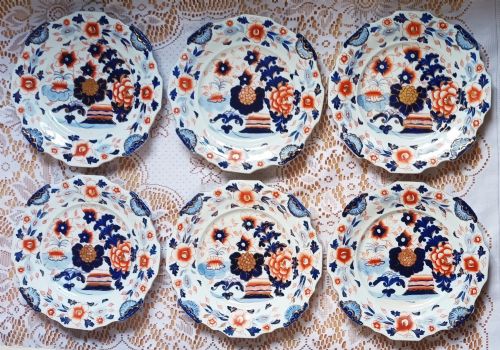


Vintage Imari Ironstone China
Vintage imari ironstone china brings heavy earthenware body and rich enamel decoration together into durable plates, jugs, and tureens.
Vintage Imari Ironstone China
When you search for vintage imari ironstone china, you encounter robust ceramic wares designed for service and display across the nineteenth century. These objects combine the sturdy weight of ironstone with the striking palettes associated with Japanese Imari porcelain.
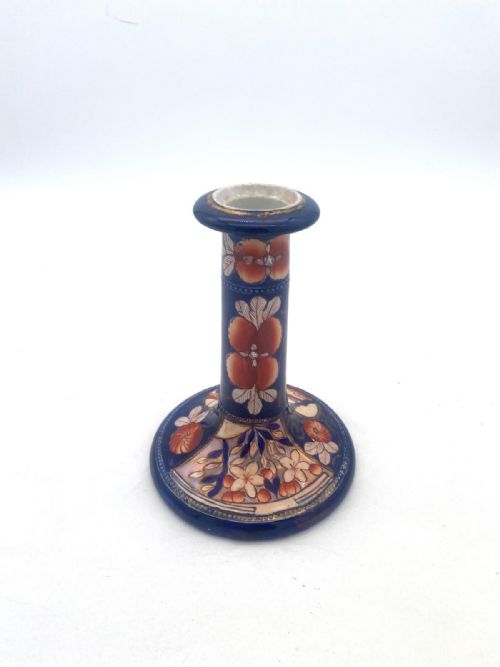
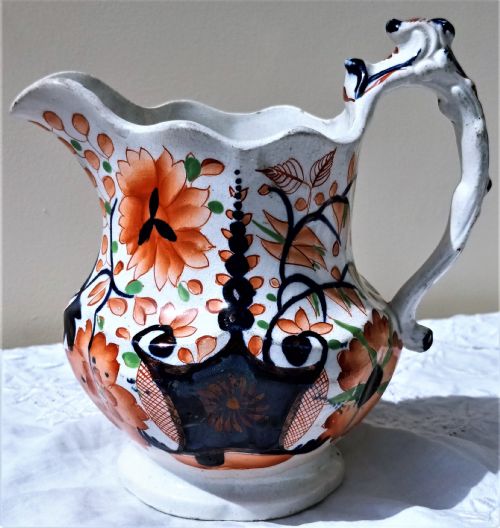
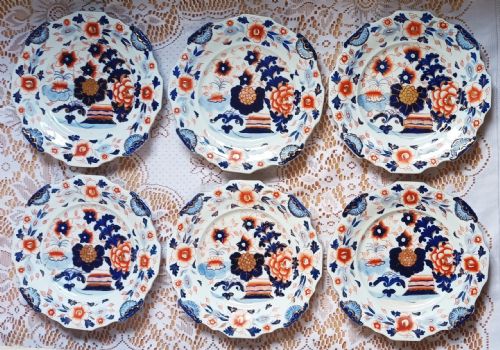
Plates, jugs, candlesticks, and tureens form the core of the selection on this page, spanning Georgian, Victorian, and Regency periods. You will frequently meet Mason's pieces alongside Davenport productions, decorated in patterns such as Japan, Schoolhouse, and Pagoda.
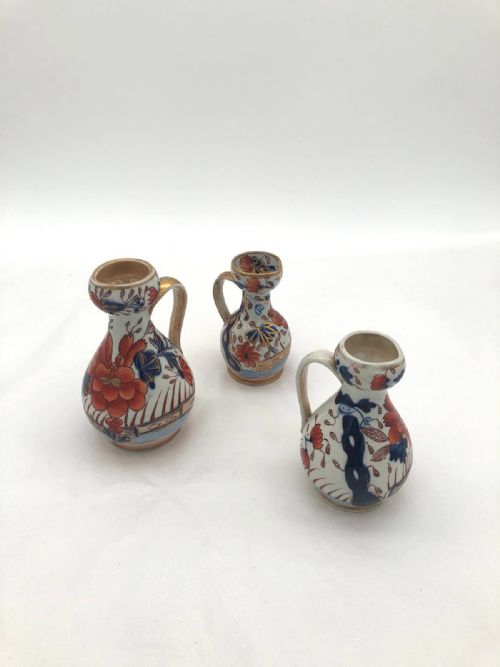
The service wares range from small miniature hydra jugs and salt cellars to large dinner services and jug and basin sets. Each piece demonstrates how nineteenth-century potteries adapted Eastern design principles for British dining tables.
How they were made
Potters built these pieces using ironstone and earthenware bodies, shaping them into plates, octagonal jugs, and covered tureens. This dense ceramic mixture provided the durability needed for heavy everyday use in nineteenth-century households.
The surfaces received hand-applied enamel colours, often supplemented with gold leaf and gilt highlights over a clear glaze. Artisans painted intricate motifs like fences, doves, bamboo, and pagoda patterns directly onto the fired clay.
Many items underwent multiple firings to fix the underglaze details and the overglaze enamels. Skilled hands added final touches in gold leaf, binding the British ironstone body to the traditions of Imari decoration.
Object forms on this page span plates, candlesticks, jugs, tureens, pot pourri covers, salts, bowls, and complete dinner services.
What varies in quality
Quality in these ceramics rests on the crispness of the moulding and the clarity of the ironstone body. Sharply defined facets on octagonal jugs and well-preserved relief details indicate superior manufacturing standards.
The precision and complexity of the enamel work dictate the visual success of each piece. Richly saturated colours and carefully aligned gold leaf demonstrate the skill of the decorator, whereas rushed brushwork produces a flatter appearance.
Mason·Davenport
The Vintage Imari Ironstone China Glossary
- Ironstone
- A dense, heavy ceramic paste patented in the nineteenth century to imitate Chinese porcelain while offering greater strength. It forms the durable body of most plates and jugs here.
- Imari
- A style of ceramic decoration featuring iron-red, cobalt blue, and gold, originating in Japan and adapted by British potteries. It gives these nineteenth-century pieces their characteristic palette.
- Ashet
- A large oval platter or dish used for serving meat at the dinner table. These items appear within nineteenth-century dinner services.
- Pot Pourri
- A decorative vessel with a pierced cover designed to hold dried scented plant material. Examples in this ceramic body often feature Imari patterns.
- Hydra
- A specific jug shape featuring a serpent-form handle and a flared rim. This classical silhouette appears on miniature vessels from the Georgian period.
Vintage Imari Ironstone China: Frequently Asked Questions
What is ironstone china?
Ironstone china is a heavy, durable ceramic material patented in the nineteenth century to provide a strong alternative to porcelain. It resists chipping and forms a dependable body for plates and jugs.
Pottieries used this dense earthenware to create service pieces that could withstand daily use while accepting colourful enamel and gilt decoration.
How do I date these pieces?
Dating relies on stylistic markers, impressed factory marks, and the specific patterns used across the Georgian and Victorian eras. Pieces from the early nineteenth century often feature robust potting and distinct transitional styles.
Examining the base for maker's marks or registration details provides further clues to the exact decade of manufacture.
Were these wares used daily?
Many of these items served practical functions in nineteenth-century dining rooms and bedrooms, from large dinner services to washstand jug and basin sets. Their heavy ironstone construction made them suitable for frequent handling.
Over time, many service pieces transitioned from active dining use to display and decorative placement in homes.
What is the Japan pattern?
The Japan pattern refers to British interpretations of Japanese decorative motifs, combining cobalt blue, iron red, and gilt highlights. It became a staple design for nineteenth-century ironstone manufacturers.
This aesthetic brought exotic floral and architectural elements, such as fences and pagodas, onto everyday British ceramic forms.