


Vintage Imari China Plates
These vintage imari china plates bring together rich Japanese designs and English ironstone traditions, offering bold colour and striking patterns for the table.
Vintage Imari China Plates
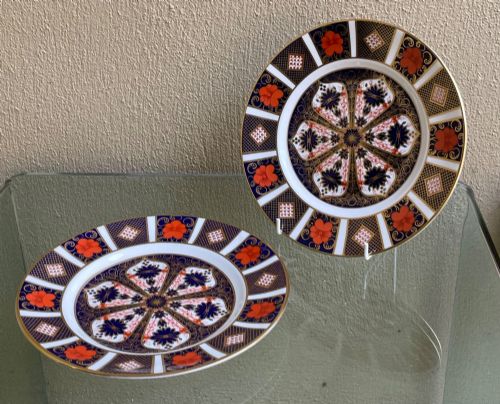
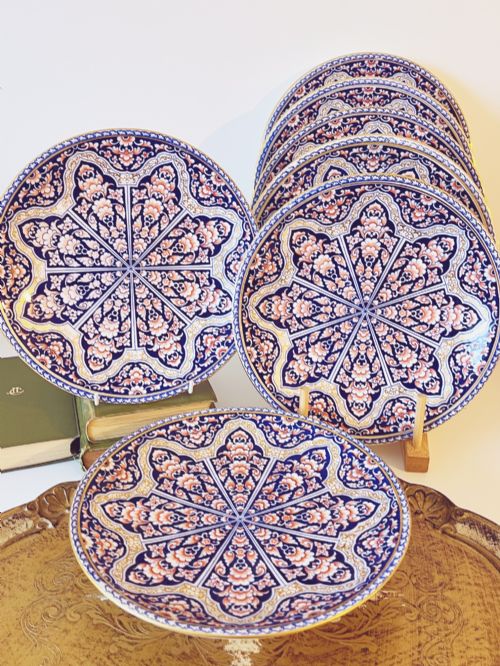
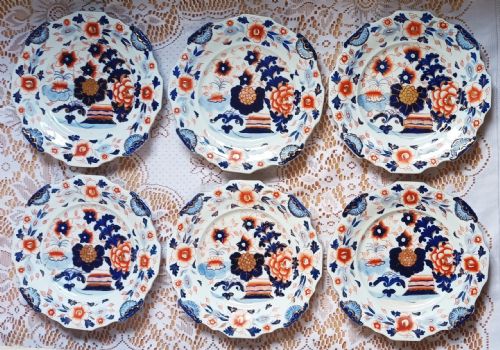
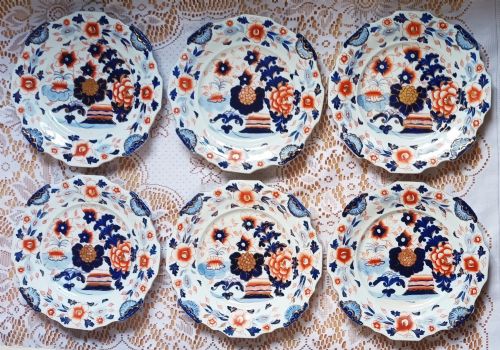
Vintage imari china plates comprise decorative plates, chargers and serving dishes spanning Japanese origins and English interpretations like the Georgian Japan pattern. You will frequently meet 19th-century English ironstone alongside Japanese examples from around 1900.
The selection ranges from individual decorative dishes to dessert services and large dinnerware sets. These pieces include specific regional styles such as Japanese Edo and Meiji period works and Victorian English variations.
How they were made
Potters shaped these pieces from ceramic, porcelain, ironstone and bone china before applying glaze and firing the base body. Skilled hands then built up complex surface designs utilising enamel colours and gold leaf highlights.
Gilt accents and rich glazes define the decorative surface, particularly on items bearing the traditional Imari style. Ironstone versions relied on durable clay bodies suited to robust daily service.
The listings feature ceramics spanning the Georgian period, the 19th century, and the year 1900, utilising both porcelain and ironstone.
What varies in quality
Quality reveals itself in the precision of the enamel work and the brilliance of the gold leaf applied across the surface. Finer examples display crisp detail in the painted motifs and superior glaze retention over the ceramic or ironstone body.
The sophistication of the pattern organisation and the depth of the palette separate standard wares from exceptional artistic output. Complete dessert services and matched pairs demonstrate greater coherence than dispersed individual items.
Royal Crown Derby·Masons Patent Ironstone
The Vintage Imari China Plates Glossary
- Charger plate
- A large decorative plate placed underneath other dinnerware or utilised as a centrepiece on the table. These expansive dishes often showcase the most elaborate Imari patterns.
- Ironstone china
- A patented type of heavy ceramic developed in England as a durable alternative to porcelain. It readily accepts enamel decoration and glaze.
- Dessert service
- A matched set of plates and serving pieces dedicated to the final course of a meal. They often include specialised dishes alongside standard dessert plates.
- Gold leaf
- Extremely thin sheets of beaten gold applied to the surface of ceramics for decorative embellishment. It provides the metallic highlights characteristic of traditional Imari aesthetics.
Vintage Imari China Plates: Frequently Asked Questions
What is the difference between Japanese and English Imari?
Japanese examples originate from traditional kilns during the Edo and Meiji periods, focusing on distinct hand-painted oriental motifs. English makers adapted these visual themes onto ironstone and bone china bodies.
English interpretations often reflect Georgian or Victorian tastes while retaining the signature palette of the style.
How were these plates used historically?
Many plates served practical functions in dining rooms, ranging from individual dessert portions to grand dinner services. Larger chargers and ashets acted as central serving platters for communal dishes.
Decorative versions also hung on walls or stood on display cabinets to showcase household wealth.
Can I use these vintage plates for dining?
Ironstone and porcelain plates from the 19th century are generally robust enough for careful modern dining. However, pieces featuring extensive gold leaf or delicate enamel work warrant gentler handling.
Hand washing preserves the historic glaze and metallic details far better than mechanical dishwashers.
How do I identify a Meiji period piece?
Meiji period Japanese pieces date from the late 19th into the early 20th century, typically displaying vibrant enamel painting. They often arrive as individual decorative plates or matched collections.
The iron content and weight of the ceramic body help distinguish them from later reproductions.