

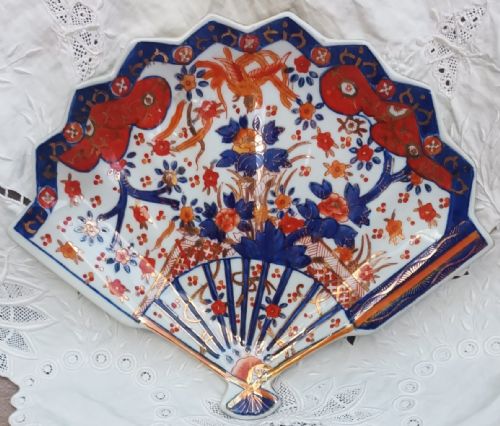


Vintage Imari Charger Bowl
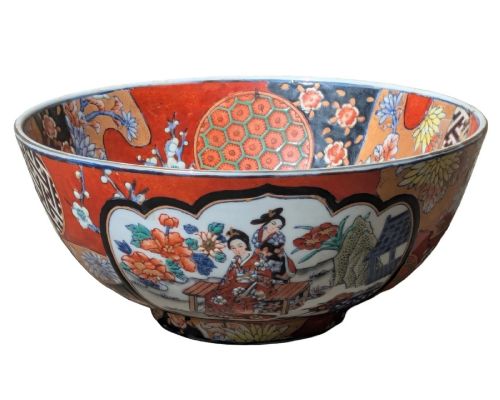
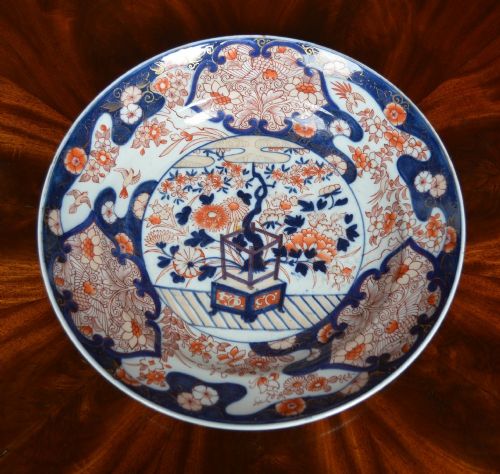
These vintage imari charger bowl examples bring rich iron-red, cobalt, and gilt decoration to a room, offering striking decorative presence on a wall or table.
Vintage Imari Charger Bowl
A vintage imari charger bowl encompasses large decorative porcelain plates, dishes, and bowls created in traditional Japanese aesthetics. Buyers seeking this category encounter pieces originating from the 17th century through the 19th century, as well as the Meiji, Edwardian, and Showa periods.
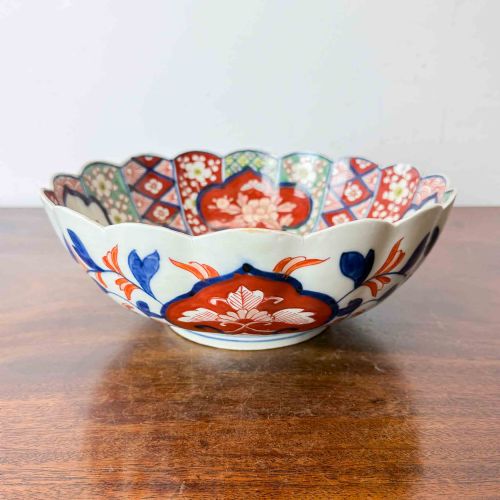
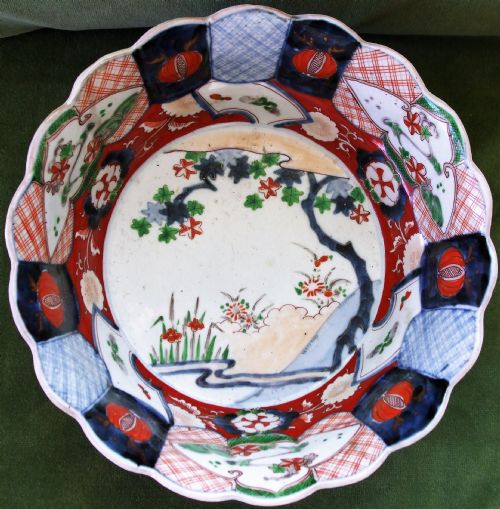
The inventory on this page most frequently presents 19th-century and 1900s pieces, including large scallop-edge bowls, fluted vessels, and shallow dishes. Forms range from standard decorative bowls to substantial chargers designed for prominent display.
Originating predominantly from Japanese kilns such as Arita, these ceramics capture centuries of design tradition. Collectors acquire them for their bold palette and historical depth.
Materials and construction methods
These pieces are constructed from ceramic and porcelain, finished with cobalt glaze and detailed enamel work. Artisans applied cobalt blue underglaze before the initial firing to form the foundational blue motifs.
Gold leaf, gilt, and gilding provide the characteristic metallic highlights seen across the surface designs. Overglaze enamels in iron-red and complementary colours were added in subsequent firings to achieve the layered palette.
Scallop-edged vessels ensure that even a stationary dish manages to look like it is caught mid-ripple.
Distinctions in quality
Quality in these ceramics rests upon the crispness of the underglaze cobalt painting and the precision of the overglaze enamel work. Superior examples display carefully controlled pigment application without blurring or running.
The complexity of the form also dictates the tier of the piece, with scalloped edges, fluted walls, and large charger dimensions demanding greater skill from the potter. Preservation of the applied gold leaf and surface gilding further separates standard domestic wares from finer display items.
The Vintage Imari Charger Bowl Glossary
- Imari
- A style of Japanese porcelain originating from the port of Arita, traditionally characterised by a palette of cobalt blue, iron-red, and gold. This aesthetic gained immense popularity in Europe during the export trade.
- Charger
- A large decorative plate or shallow bowl traditionally used for ceremonial display rather than dining. These substantial pieces anchor a tabletop or sideboard arrangement.
- Meiji Period
- The era in Japanese history spanning from 1868 to 1912, known for intense artistic production and increased export to Western markets. Pieces from this time often exhibit intricate detailing.
- Edo Period
- The period lasting from 1603 to 1867, encompassing the earlier foundations of classic Japanese porcelain manufacture. Surviving examples from this epoch represent significant historical age.
- Underglaze
- Pigment applied to the ceramic body before the application of a clear glaze and subsequent firing. This technique protects the blue cobalt decoration beneath a glossy vitrified layer.
Vintage Imari Charger Bowl: Frequently Asked Questions
What is an imari charger bowl?
An imari charger bowl is a large Japanese porcelain vessel decorated in traditional cobalt blue, iron-red, and gold. These pieces function primarily as decorative items for display.
They represent centuries of ceramic artistry originating from Japanese production centres like Arita.
How were these bowls used historically?
Historically, large chargers and decorative bowls served as prominent display items in wealthy households rather than utilitarian tableware. Their bold colour schemes were intended to catch the eye from across a room.
Today, they continue to function as striking decorative focal points on walls, tables, and cabinets.
How do I date a vintage imari piece?
Dating relies on stylistic markers, historical periods such as the Meiji or Edo eras, and manufacturing characteristics. Examining the base, glaze composition, and enamel application provides clues to the era of production.
Many pieces span from the 17th century through the early 20th century, reflecting evolving export styles.
How do I care for antique porcelain?
Care for antique porcelain involves gentle dusting with a soft, dry cloth and avoiding harsh chemical cleaners. Because these items often feature delicate overglaze enamels and gold leaf, they should be kept away from direct moisture and abrasive surfaces.
Secure placement prevents accidental slips, preserving the structural integrity of scalloped and fluted edges.