







Large Japanese Porcelain Dish
A large Japanese porcelain dish brings bold colour and intricate hand-painted detail to any room.
Large Japanese Porcelain Dish
A large japanese porcelain dish is a substantial decorative vessel designed primarily for display rather than dining. The examples met most frequently on this page belong to the nineteenth century, spanning the Meiji period and Victorian eras, taking the form of wide chargers, broad plates, and deep bowls.
Makers shaped these pieces in various profiles, including scalloped edges, square formats, and traditional round platters. They served as significant decorative focal points in interiors, often produced for export to Western markets during periods of burgeoning global trade.
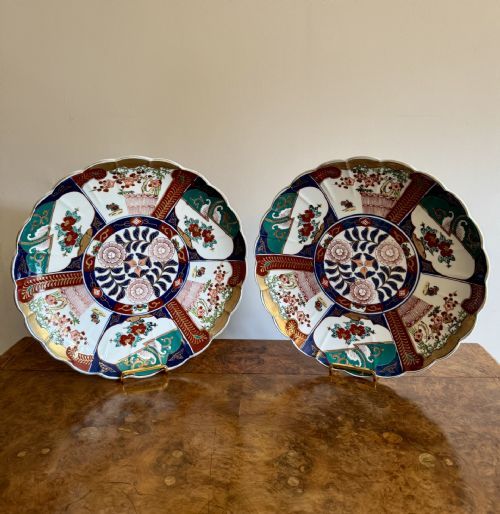
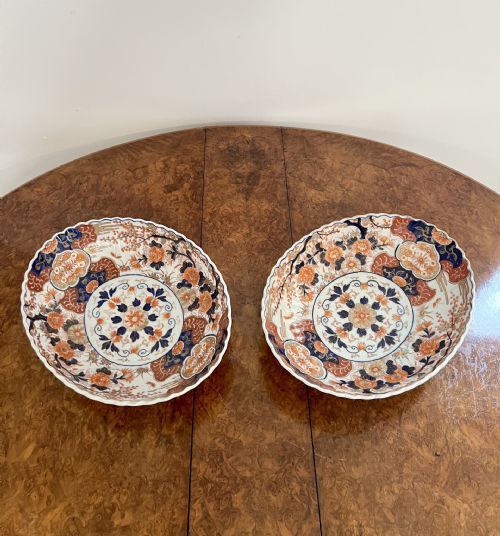
The visual vocabulary relies heavily on traditional Japanese aesthetics adapted for international taste. Collectors encounter distinctive blue and white porcelain alongside the rich palette of Imari wares, often featuring panels of flora, fauna, and narrative scenes.
How they were made
Potters utilised fine ceramic clay to form the substantial body of each vessel before applying cobalt underglaze for blue and white designs. Kiln firing vitrified the porcelain, creating a hard, resonant base ready for further ornamentation.
Artisans layered enamel colours, gold leaf, and gilt over the fired glaze to achieve the dense, polychrome patterns seen on Imari and Satsuma wares. Certain specialised pieces incorporate cloisonne enamel techniques, fusing vitreous pastes within wire compartments onto the ceramic surface.
The selection here spans production from the Edo period through the Meiji era and into early twentieth-century Edwardian export variations.
What varies in quality
Quality rests in the crispness of the hand-painted brushwork and the precision of the cobalt underglaze. Superior examples display confident, fluid lines and deliberate composition rather than hasty, repetitive brush strokes.
The richness and stability of the applied enamel and gold gilt differentiate standard production from finer work. Plates that retain their vibrant gilding and show careful registration of multiple colour layers command greater attention from discerning collectors.
The Large Japanese Porcelain Dish Glossary
- Imari
- A style of Japanese porcelain decorated in underglaze blue, iron red, and gold, named after the port from which it was shipped. This aesthetic dominated export wares during the Meiji period.
- Charger
- A large decorative plate or platter used primarily for display on walls or furniture. These substantial pieces provide a wide canvas for intricate painted scenes.
- Meiji
- The period of Japanese history spanning from 1868 to 1912, characterised by the opening of trade with the West. Porcelain from this era often combines traditional motifs with ambitious scale.
- Satsuma
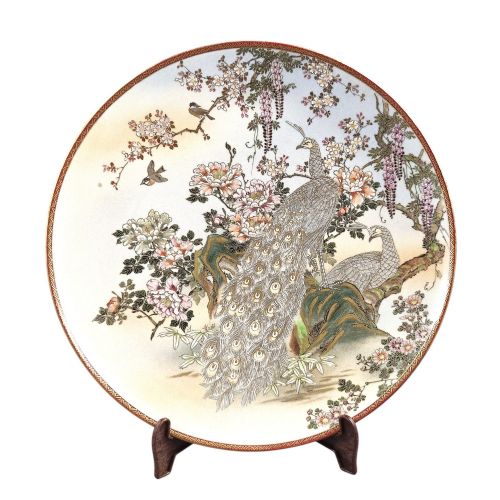
- Earthenware or porcelain decorated with fine enamel and gilt over a crackle-glaze finish. It frequently depicts complex figurative and natural scenes.
- Arita
- The historic centre of Japanese porcelain production in Hizen province. Kilns here supplied the foundational white clay and blue-and-white wares for export.
Large Japanese Porcelain Dish: Frequently Asked Questions
How were large japanese porcelain dishes displayed?
These chargers and deep plates were typically mounted on walls using specialised wire hangers or displayed upright on sideboards and cabinets. Their substantial scale and vibrant palettes made them ideal centerpieces for nineteenth-century reception rooms.
Today, they suit similar placement in domestic interiors, though modern display stands or sturdy wall fixings remain essential due to their significant weight.
What is the difference between Imari and Satsuma wares?
Imari pieces consist of hard-paste porcelain decorated in deep cobalt blue, iron red, and frequent applications of gold leaf. They present a glossy, robust surface suited to decorative chargers and large bowls.
Satsuma pieces often feature a distinctive cream-coloured crackle glaze painted with intricate enamel figures and detailed botanical motifs, requiring a different visual appreciation.
How do I date an antique Japanese charger?
Dating relies upon stylistic markers, material composition, and any associated kiln marks or signatures on the reverse. Pieces from the Meiji period often display a confidence in export-oriented design that separates them from earlier Edo period examples.
Examining the foot ring, the characteristics of the glaze, and the wear on the pigments provides further clues to the manufacturing era.
Can these plates be used for serving food?
While technically ceramic vessels, antique chargers and large display plates are generally intended for decorative use rather than culinary service. The delicate nature of the overglaze enamels and gold gilt makes them susceptible to wear from cutlery and washing.
Preserving the surface requires keeping these pieces strictly to visual display and avoiding immersion in water.