


Vintage Hunting Print
A vintage hunting print captures the drama of the chase, bringing historic equestrian scenes and sporting dogs directly to the wall.
Vintage Hunting Print
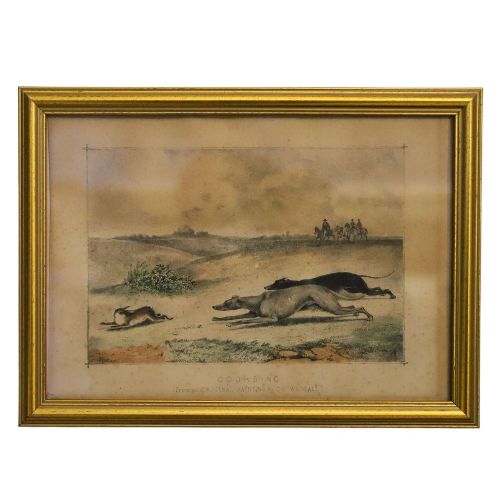
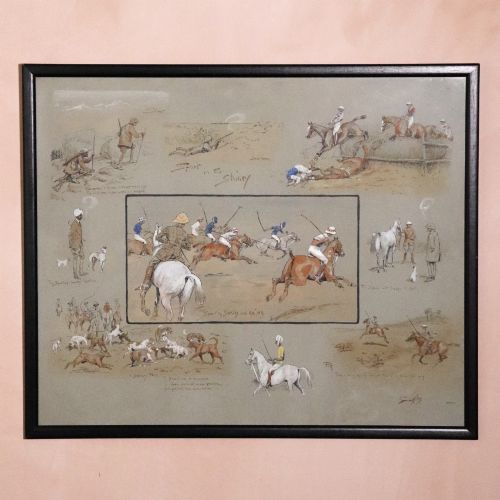
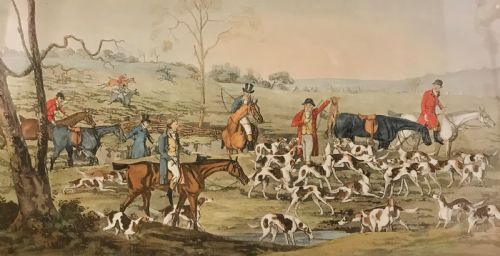
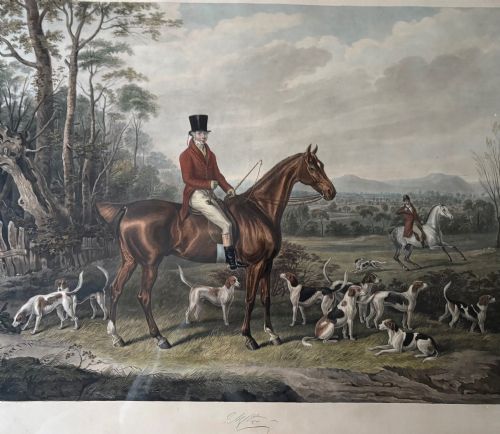
A vintage hunting print depicts traditional equestrian pursuits, mounted hunts, and sporting dogs across framed works from the nineteenth and early twentieth centuries. These pieces record historical field sports through detailed depictions of hounds, riders, and rural landscapes.
Buyers frequently encounter hand-coloured engravings, lithographs, and chromolithographs representing British sporting art traditions. Common subjects range from individual huntsmen and specific packs to complete sets of sequential action scenes.
The selections span periods from the Georgian era through to mid-century modern interpretations, housed in period frames of wood and giltwood. Such works reflect the changing tastes in rural sports documentation over two centuries of printing.
How they were made
Printmakers employed engraving, lithography, and watercolour techniques on paper supports, often adding hand-colouring to heighten the visual detail of the jackets and hounds. Many published works originated from copper plates or stone blocks before mounting behind protective glass.
Framing materials rely heavily on wood, gilt wood, and gold leaf mouldings that complement the domestic display of nineteenth-century and Edwardian interiors. These protective surrounds secure the delicate paper and watercolour mediums against environmental wear.
Listings feature paper, glass, wood, watercolour, ink, and gold leaf across Victorian, Edwardian, Regency, and Georgian periods.
What varies in quality
The distinction between tiers rests upon the clarity of the impression, the precision of the hand-applied pigments, and the historical significance of the publisher or artist. Early strikes from plates exhibit sharper lines than later reprints or worn impressions.
The integrity of the original paper, the absence of excessive foxing, and the presence of period-appropriate framing contribute significantly to the standing of an individual piece within the field of British sporting art.
C. H. Weigall·Snaffles·H. Alken·Charles Hunt·Francis Calcroft Turner·J F Herring·Frank Algernon Stewart·Cecil Charles Windsor Aldin
The Vintage Hunting Print Glossary
- Lithograph
- A print made by drawing on limestone or a metal plate with a greasy medium so that ink adheres only to the drawn areas. This technique allowed for faithful reproductions of detailed watercolours and drawings.
- Engraving
- A print pulled from a metal plate into which the design has been incised with a sharp tool called a burin. The resulting lines hold ink to produce crisp, fine details.
- Hand-coloured
- A monochrome print enhanced with watercolour applied by hand after the printing process. This method adds realistic hues to clothing, horses, and foliage.
- Chromolithograph
- A colour lithographic print produced using multiple stones, one for each colour applied. This technique yields rich, layered multi-colour images without subsequent hand-painting.
Vintage Hunting Print: Frequently Asked Questions
What is a vintage hunting print?
A vintage hunting print is an authentic framed artwork depicting historical equestrian scenes, hounds, and rural field sports, typically originating from the nineteenth or early twentieth century.
These pieces use traditional printing methods such as engraving, lithography, and hand-coloured techniques to record the heritage of British sporting art.
How do I date a hunting print?
Dating involves examining the paper quality, printing technique, publication lines, and any associated signatures or artist inscriptions within the margin.
Style indicators from Victorian and Edwardian periods also help establish the chronological context of the artwork and its frame.
Where should I hang these prints?
These works suit studies, hallways, and living rooms, traditionally paired with wood furniture, leather seating, and equestrian collectables.
Keeping them away from direct sunlight protects the paper supports and delicate hand-colouring pigments from fading over time.
Are these prints original?
The selection includes period originals, nineteenth-century engravings, and vintage lithographs produced during the active eras of the listed artists and publishers.
Each listing records the specific medium, period, and artistic attribution to verify its historical origin.