




Vintage Hound Figurine
A vintage hound figurine brings nineteenth-century animalier movement and art deco energy directly into a room.
Vintage Hound Figurine
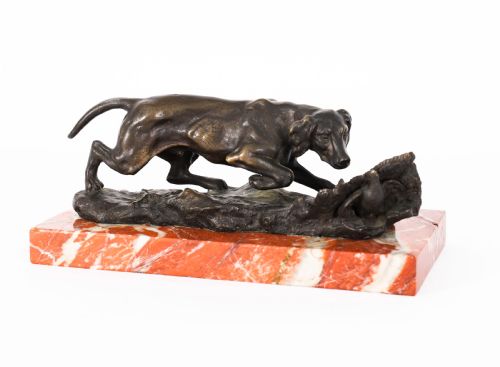
A vintage hound figurine encompasses bronze sculptures, porcelain figures, and spelter decorative objects spanning the nineteenth century through the art deco era. Buyers inspecting these selections encounter Victorian porcelain pairs, Grand Tour marbles, and French animalier bronzes depicting hunting dogs, greyhounds, and bassets.
The objects take the form of table lamps, night lights, fireside statues, and freestanding sculptures depicting hounds at rest, in pursuit, or paired with human figures. Pieces originate from diverse European traditions including German porcelain factories and French bronze foundries.
Materials and casting methods
Foundries utilised lost-wax and sand-casting methods to shape bronze into detailed muscular animal forms, often mounted onto marble plinths. Spelter served as an alternative metal base for larger art deco figures, receiving patination to resemble bronze.
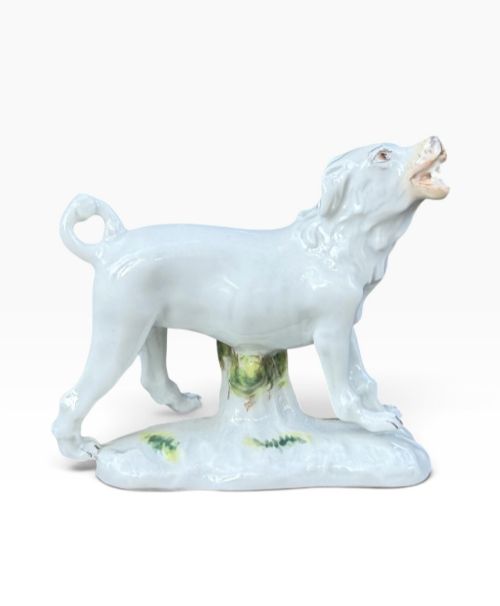
Ceramic works combine porcelain, bisque, biscuit porcelain, and parian ware with hand-applied glazes to capture the texture of canine coats. Sculptors applied patinas ranging from deep brown bronze tones to crisp white ceramic finishes.
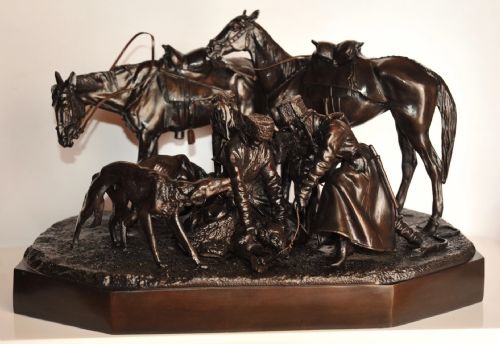
The evidence spans French animalier bronzes, German porcelain, and Russian hunting groups.
Quality variations in sculpture and porcelain
The standard of a casting is visible in the crispness of muscle definition, facial expression, and the clean removal of casting seams. Superior bronzes retain fine chasing work on the fur and retain their original patination without surface pitting.
Ceramic examples depend upon the precision of the moulding and the subtlety of the glaze application. Stronger porcelain and parian pieces preserve sharp anatomical details without softening around the paws or muzzle.
Carl Kauba·Meissen·C Masson·Arthur Waagen·Geo Maxim·Antoine Louis Barye·Christophe Fratin·Dubucand·Nikolai Lieberich·Barbedienne·Royal Dux
The Vintage Hound Figurine Glossary
- Animalier
- A nineteenth-century artistic movement dedicated to the realistic portrayal of animals, particularly predators and hounds. Practitioners utilised bronze to capture intense anatomical motion.
- Spelter
- A zinc alloy used as a less costly substitute for bronze in decorative sculptures and figures. It frequently supports patinated finishes intended to mimic older metalwork.
- Parian ware
- A fine-grained unglazed biscuit porcelain resembling white marble, named after Parian marble from Greece. It gained popularity in the nineteenth century for classical and animal figures.
- Patina
- The surface coloration and sheen acquired by bronze over time or applied chemically by a foundry. It defines the visual depth of metal sculptures.
- Grand Tour
- The nineteenth-century tradition where travellers collected classical antiquities and marbles in Europe. This practice produced miniature copies of famous hounds and sculptures.
Vintage Hound Figurine: Frequently Asked Questions
How do I identify a bronze hound from spelter?
Check the underside of the sculpture for metal colour and weight, as bronze is heavier and shows a warm golden or reddish undertone beneath scratches. Spelter is lighter, softer, and reveals a greyish-white metal where the surface finish has worn away.
Examine the sharpness of the casting details around the paws and collar, since bronze holds crisper lines than the softer zinc alloy.
What distinguishes nineteenth-century animalier bronzes?
Nineteenth-century animalier bronzes focus on strict anatomical accuracy and dramatic tension, often depicting hounds mid-stride or tracking game. These works carry signatures of known sculptors and foundry marks from European workshops.
The casting technique prioritised naturalism over stylisation, setting them apart from later decorative interpretations.
Where should I place a heavy marble-based sculpture?
Position these heavy pieces on stable, level surfaces such as sideboards, mantels, or sturdy desks where the weight of the marble base is fully supported. Avoid areas exposed to direct sunlight or moisture to protect the metal patina and stone polish.
Ensure the display height allows a clear view of the hound's profile and surface texture.
How do art deco hound figures differ from Victorian ones?
Art deco hound figures embrace streamlined geometries, leaping postures, and pairings with human figures on contrasting marble bases. Victorian pieces lean towards realistic poses, such as recumbent greyhounds or seated bassets, executed in traditional bronze or porcelain.
The earlier works emphasise natural domestic or hunting scenes, while the later items highlight dynamic movement.