
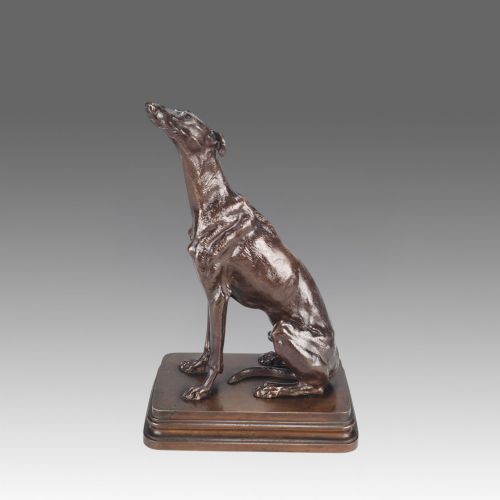
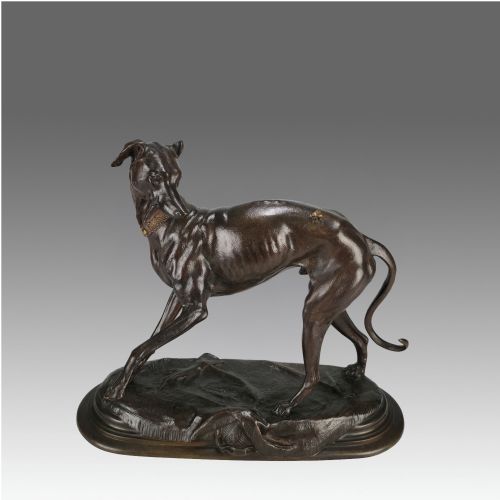
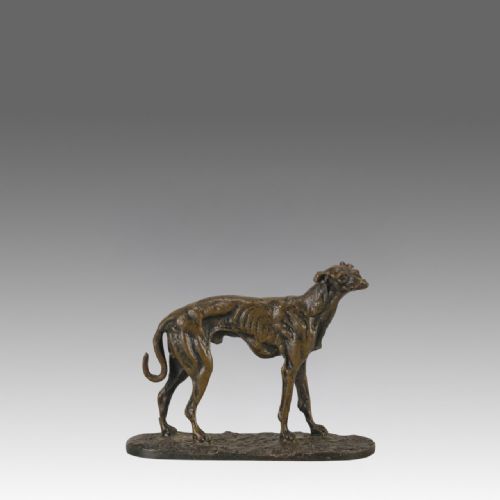


Dark Bronze Greyhound
A dark bronze greyhound is a sculptural study in speed and muscle, prized by collectors for its striking silhouette and fine cast detail.
Dark Bronze Greyhound
A dark bronze greyhound brings the refined lines of the sighthound into domestic spaces, capturing the breed's distinct tension and elegance. These sculptures span the nineteenth century and the art deco period, recording the animal in seated, recumbent, and racing poses.
Most examples originate from French animalier workshops, where founders focused closely on the anatomy of the hound. The pieces on this page include both nineteenth century animalier works and later twentieth century interpretations.
Forms range from small desk ornaments and paperweights to larger sculptural figures mounted on marble bases. Buyers encounter French animalier bronze pieces alongside distinct art deco racing greyhound sculptures.
Materials and construction
Many nineteenth century and art deco examples utilise marble for their integral bases, providing weight and a contrasting pale or mottled surface to the dark bronze figure. Some simpler Victorian pieces incorporate wooden or solid bronze plinths.
Object types include standalone sculptures, statues, and functional paperweights.
Assessing quality and craftsmanship
The distinction between tiers rests upon the crispness of the chasing and the subtlety of the dark patina applied to the bronze surface. Superior casts retain sharp muscle tension and fine facial detailing without softness in the paws or collar.
The integration of the figure with its base also marks the tier of a piece, with finer sculptures showing seamless attachment to shaped marble plinths. Stronger examples display the signature or mark of a recognised animalier sculptor clearly on the bronze casting.
Alfred Dubucand·Alfred Barye·P J Mêne·Joseph Francois Victor Chemin·Christophe Fratin
The Dark Bronze Greyhound Glossary
- Animalier
- A nineteenth century artistic movement focused on the realistic depiction of animals, particularly in bronze. Sculptors in this tradition studied live specimens in menageries.
- Patina
- The surface coloration and finish achieved through chemical treatment or natural ageing on bronze. This dark layer protects the metal and defines the contours of the sculpture.
- Lost wax casting
- A traditional method of metal casting where a wax model is melted out and replaced with molten bronze. This technique allows for intricate detail and undercut forms.
- Sighthound
- A type of dog that hunts by sight and speed rather than scent, including greyhounds and whippets. Their slender frames made them favoured subjects for sculptors.
- Chasing
- The manual finishing of a raw bronze casting using punches and chisels. Skilled metalworkers use this process to refine textures and sharpen details.
Dark Bronze Greyhound: Frequently Asked Questions
What periods do these bronzes come from?
The listings span the nineteenth century through to the early twentieth century, encompassing Victorian and art deco eras.
Nineteenth century pieces often reflect the French animalier school, while later examples embrace streamlined twentieth century aesthetics.
How were these greyhound sculptures used?
These pieces served primarily as decorative ornaments for desks, mantelpieces, and display cabinets in period homes.
Some smaller examples functioned specifically as heavy paperweights, combining practical utility with sculptural display.
How do I distinguish animalier bronzes?
Animalier bronzes are identified by their acute focus on naturalistic animal anatomy, posture, and muscular tension.
They frequently feature dark patination and bear the signature of the sculptor directly on the bronze base.
What bases do these figures feature?
Many figures are mounted on heavy polished marble bases, which provide stability and a classic display platform.
Other sculptures stand independently on integral bronze plinths or feature wooden foundations.