

Vintage Horse Wall Art
These vintage horse wall art pieces capture equine subjects in oil paint on canvas, offering buyers classic sporting heritage and distinguished interior character.
What vintage horse wall art is
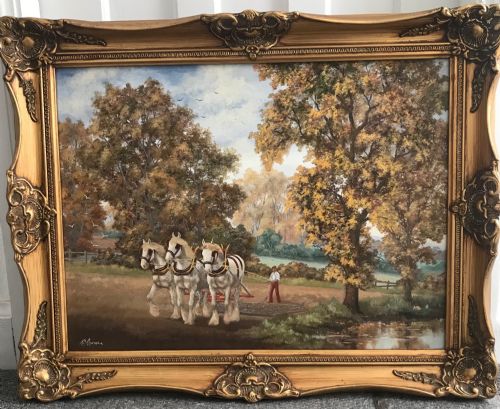
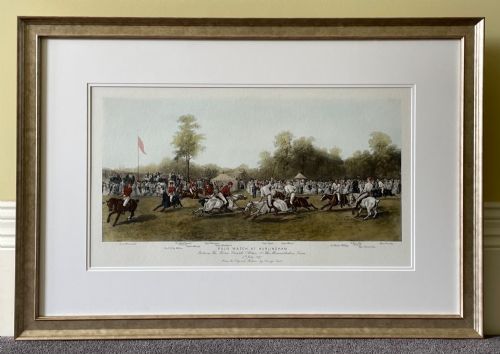
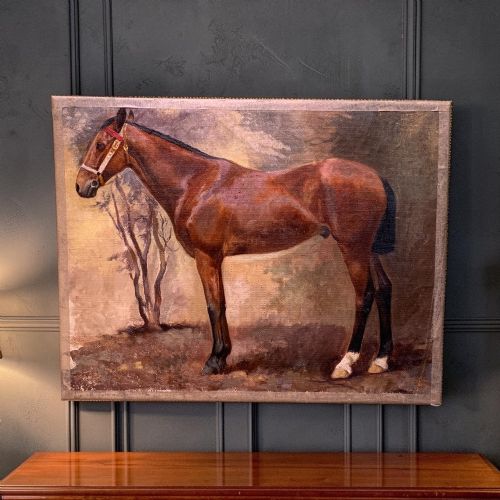
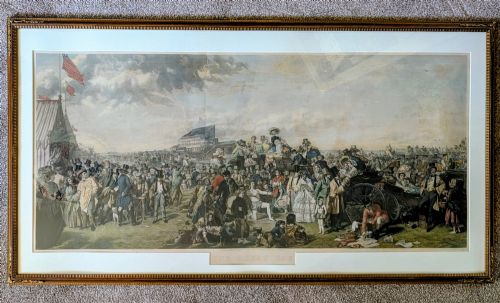
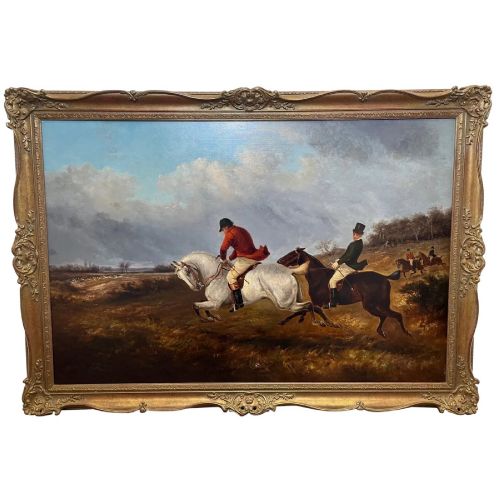
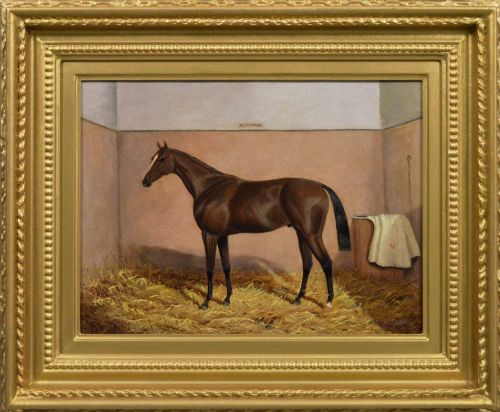
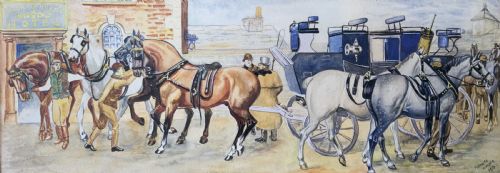
Vintage horse wall art comprises oil paintings on canvas depicting equines, hunters, and racehorses within framed presentations. These works span the nineteenth century, the Victorian era, and early decades including nineteen ten and nineteen twenty.
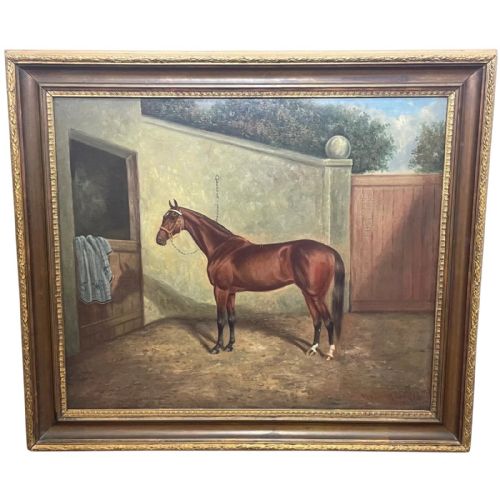
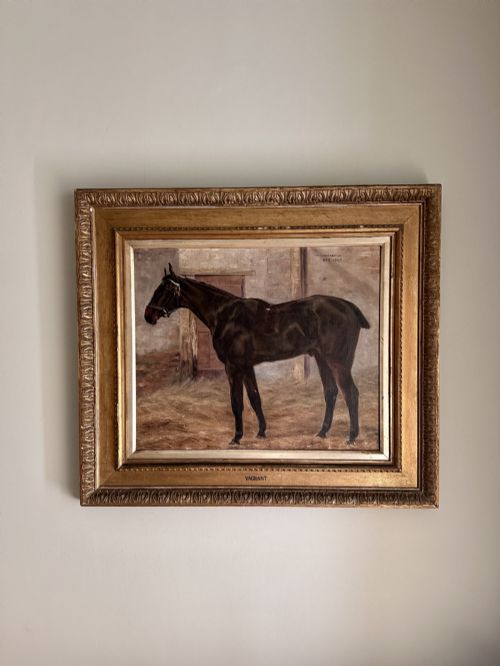
Most examples originate from British sporting art traditions, capturing specific subjects such as the purebred Arabian horse at Bombay stables or named hunters from regional hunts. Canvases appear within gilt wood, composition, and giltwood frames that complement the painted composition.
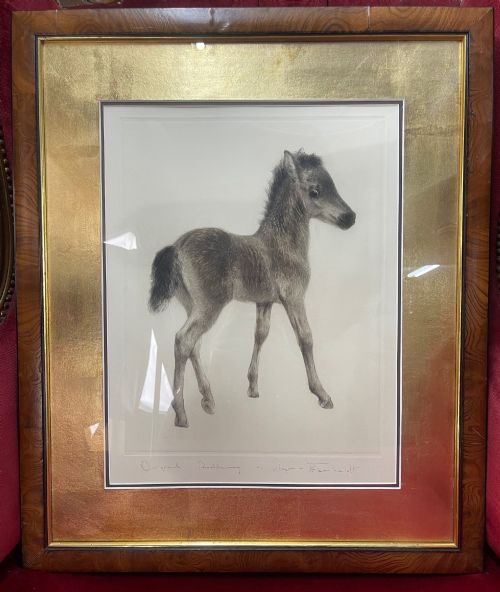
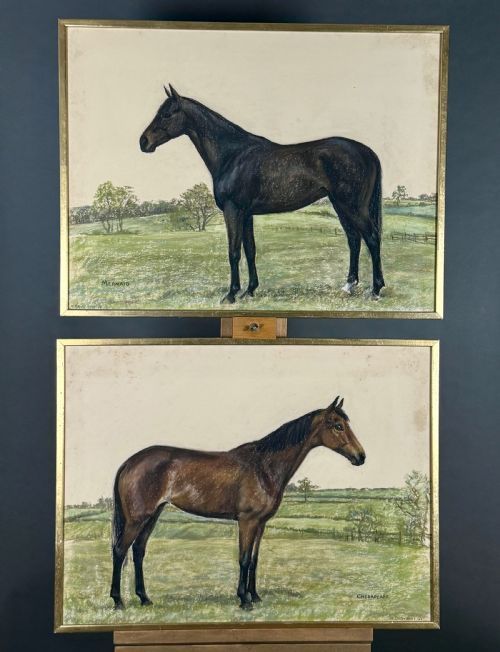
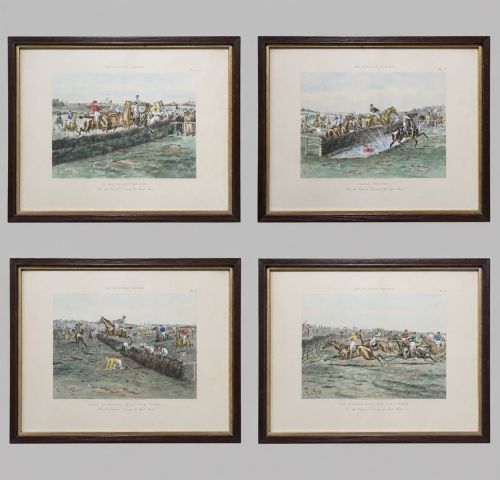
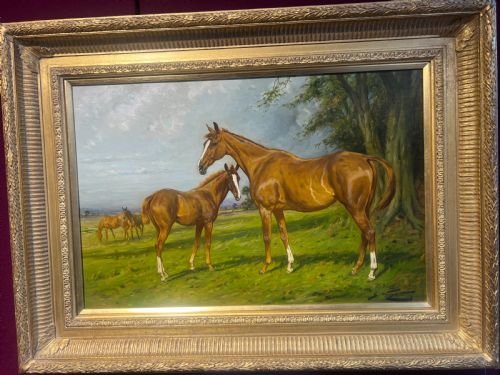
Subjects range from individual portraits of bay hunters and mares to racing scenes featuring named horses and jockeys. The visual focus centres on anatomical realism and equine character developed across the nineteenth century and Edwardian periods.
How they were made
These works employ oil paint applied directly onto stretched canvas surfaces using traditional brushwork techniques. Artists build up layers of pigment to render the musculature, coats, and distinct markings of horses alongside stable interiors and outdoor landscapes.
Framing utilises gilt wood, composition materials, and wood frame construction to house and protect the canvas. Gilding and moulded composition ornament the borders, providing structural support and visual definition to each painting.
Retail Price Guide 2026
Typical UK retail prices for vintage horse wall art, calculated from the Sellingantiques database of over a million retail prices indexed since 2003. This retail price guide relies exclusively on Sellingantiques data; no external sources or auction records are used, so the figures do not describe the wider market.
Canvas horses occasionally outlive their jockeys, retaining permanent stable status on the living room wall.
What varies in quality
Quality rests upon the precision of anatomical rendering and the artist's ability to convey the distinct personality and conformation of the subject. Finer works display accomplished handling of light across the coat and realistic integration of the horse within its stable or landscape setting.
The sophistication of the framing contributes significantly to the overall standing of the piece, with detailed gilt wood and composition mouldings elevating the presentation. Provenance naming specific horses, historical stables, or documented artists adds historical weight to the individual painting.
Henry Barraud·Alfred Wheeler
The Vintage Horse Wall Art Glossary
- Canvas
- Woven fabric stretched across a wooden frame to serve as the foundation for oil paintings. This durable substrate receives primed coats before the artist applies oil pigments.
- Gilt wood
- Wood coated with a thin layer of gold leaf or metallic gilt powder. This material provides traditional decorative framing for nineteenth century and Victorian paintings.
- Sporting art
- Genre of painting dedicated to depicting bloodstock, equestrian portraits, and hunt scenes. These works document specific animals, notable races, and regional sporting traditions.
- Composition
- Moulded material made from whiting, resin, and glue used to create decorative frame ornament. Artisans press this compound into relief designs before applying gilt finishes.
Frequently Asked Questions
What subjects appear in vintage horse wall art?
Paintings depict individual equine portraits, named hunters, racehorses with jockeys, and groups of mares at watering troughs.
Many works record specific animals associated with historical stables, hunts, and notable racing events.
How are the canvases framed?
Works utilise gilt wood, composition mouldings, and traditional wood frames designed to complement the period of the painting.
These frames often feature decorative gilt finishes that enhance the visual impact of the canvas.
Which periods do these paintings represent?
Examples span the nineteenth century and Victorian eras, extending into early twentieth century dates such as nineteen ten and nineteen twenty.
Styles encompass Victorian sporting art, nineteenth century realism, and Edwardian portraiture.
How should I display horse oil paintings?
Position paintings away from direct sunlight and fluctuating moisture sources to protect the canvas and oil pigments.
Ensure wall fixings adequately support the combined weight of the stretched canvas and heavy gilt wood frame.