


Vintage Hat Form
These vintage hat form examples are authentic millinery blocks and stretchers shaped for shaping headwear, bringing genuine workshop character to a modern interior.
Vintage Hat Form
A vintage hat form encompasses utilitarian millinery equipment used by hatters to shape and size headwear across the Victorian era, the nineteenth century, and the early decades of the twentieth century. When searching for a vintage hat form, collectors encounter wooden blocks, adjustable stretchers, and aluminium moulds originating from workshops and traditional haberdashery environments.
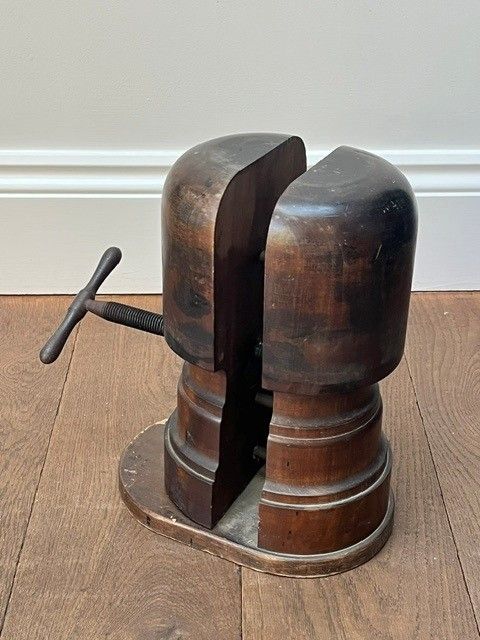
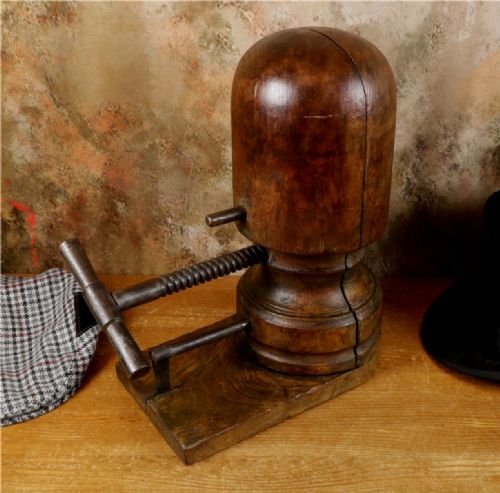
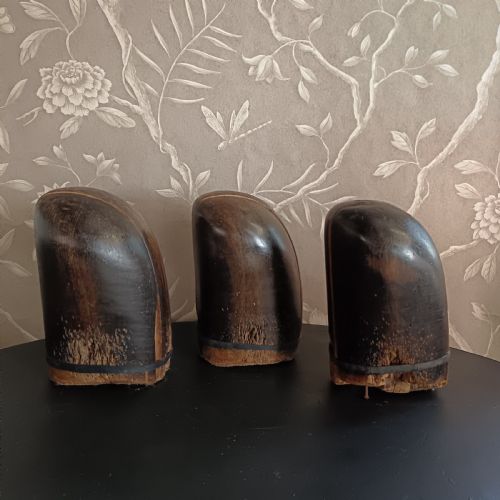
The objects take various functional shapes, including carved wooden heads, sectional blocks for military caps, and fruitwood display stands alongside specialised stretching tools. Many pieces reflect simple industrial utility or folk art carving traditions, while French provincial examples demonstrate fine turnery in hardwoods like beech, oak, and walnut.
Materials and construction
Traditional hat forms rely heavily on dense timbers such as fruitwood, beech, oak, and walnut, chosen for their ability to withstand repeated pressure and moisture during the millinery process. Skilled turners shaped these hardwoods on lathes or carved them by hand to create smooth, symmetrical contours required for hat construction.
Later twentieth-century examples introduce cast aluminum and tinned steel, shifting the manufacturing process towards industrial metal moulding. These metallic blocks and stretchers often feature mechanical components or numbered markers for precise sizing.
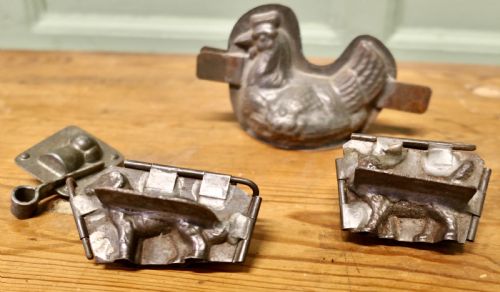
Among the serious wooden blocks and metal stretchers hides a silver tea caddy shaped precisely like a jockey cap.
Judging quality and character
Quality in a hat form rests upon the integrity of the material, the depth of the original tool marks, and the beauty of the aged patina acquired through workshop use. Hand-carved wooden heads and finely turned fruitwood display stands show superior craftsmanship compared to standard production items.
The complexity of the form also dictates the visual appeal, with specialised military blocks, hinged stretchers, and folk art carvings offering greater sculptural presence than plain utilitarian shapes.
The Vintage Hat Form Glossary
- Hat block
- A solid wooden or metal form used by milliners to shape and dry hats. These pieces carry the distinct dents and pinholes of active workshop use.
- Hat stretcher
- A mechanical tool designed to enlarge or adjust the circumference of hats. They typically feature expanding wooden segments operated by a central screw mechanism.
- Millinery mould
- A hollow metal or wooden cavity used to press materials into specific crown or brim profiles. Aluminium versions appear frequently in twentieth-century production.
- Folk art
- Handmade objects created by self-taught artisans outside formal academic traditions. Carved wooden millinery heads often display this individualistic regional style.
Vintage Hat Form: Frequently Asked Questions
What is a vintage hat form?
A vintage hat form is a functional tool used by milliners and hatters to construct, size, or display headwear. These items include solid wooden blocks, mechanical stretchers, and aluminium moulds.
Most examples originate from nineteenth-century and early twentieth-century workshops, carrying genuine traces of industrial and traditional haberdashery use.
How were wooden hat blocks used?
Milliners stretched damp felt or straw tightly over the wooden form to shape the crown of a hat as it dried. Pins were frequently driven directly into the wood to hold the material in place.
Over decades of use, this process accumulated numerous small holes and surface patinas that define the character of antique pieces today.
How do I style a hat form at home?
Hat forms serve as sculptural objects for interior display, often placed on shelves, tables, or sideboards. Their architectural shapes complement both modern minimalist spaces and traditional rustic interiors.
Wooden display stands can also function practically to hold hats, scarves, or wigs in a hallway or bedroom.
How do I tell wooden blocks from metal moulds?
Wooden pieces are generally turned from hardwoods like beech or fruitwood, showing natural grain and the marks of hand-carving or lathe work. Metal versions are typically cast in aluminium or iron for heavy industrial production.
Earlier nineteenth-century pieces tend to be carved wood, while aluminium blocks commonly date to the 1920s.