


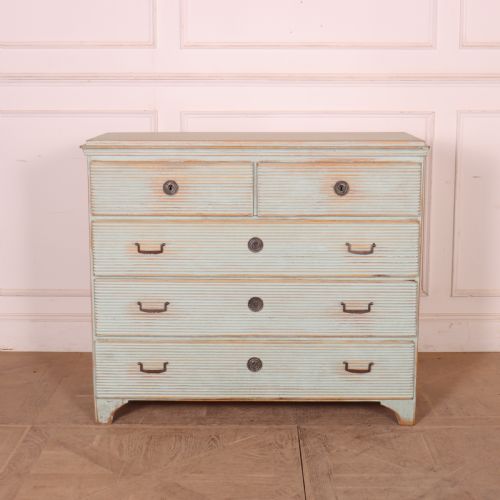


Vintage Green Dressers
Vintage green dressers bring colour and utility to a room, offering practical storage with the charm of aged paint.
Vintage Green Dressers
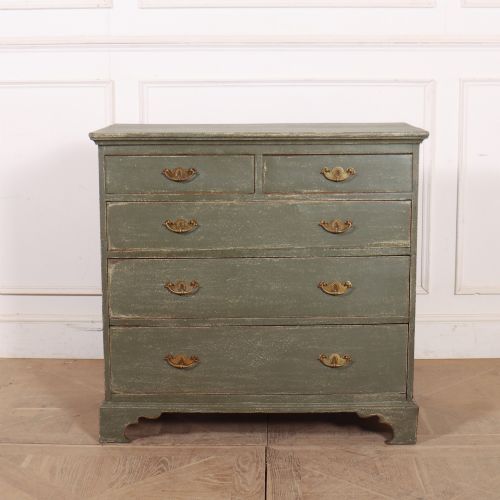
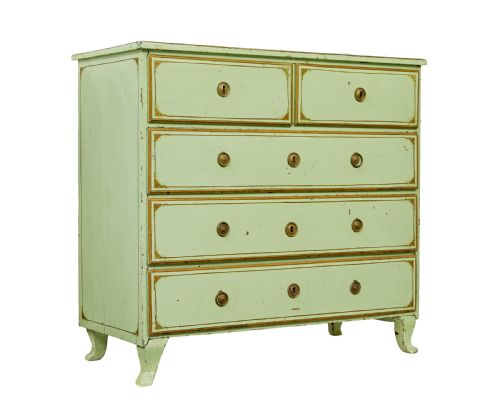
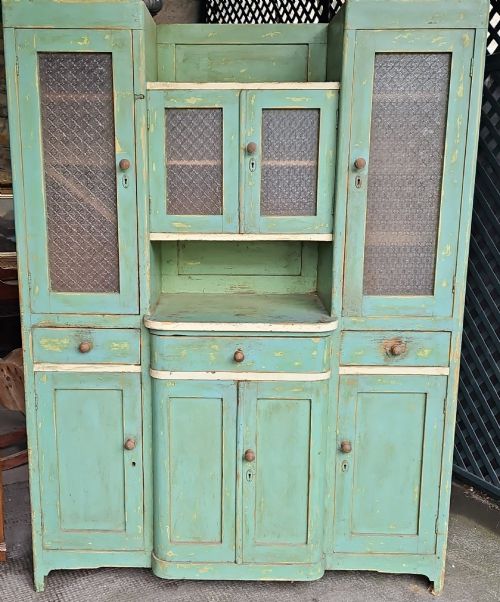
Vintage green dressers encompass a variety of large storage furniture, including kitchen dressers, dresser bases, cupboards, and chests of drawers finished in green paint or scumble. These pieces originate from domestic and rural settings in England, Scotland, Scandinavia, and France, dating across the eighteenth, nineteenth, and early twentieth centuries.
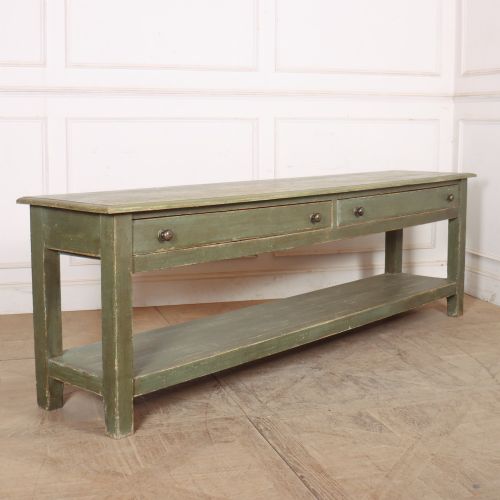
The most common forms met here are English and Swedish country pieces built from pine or oak, often retaining original or historic painted surfaces. Buyers find everything from low dresser bases and potboard serving tables to towering kitchen cabinets and linen cupboards.
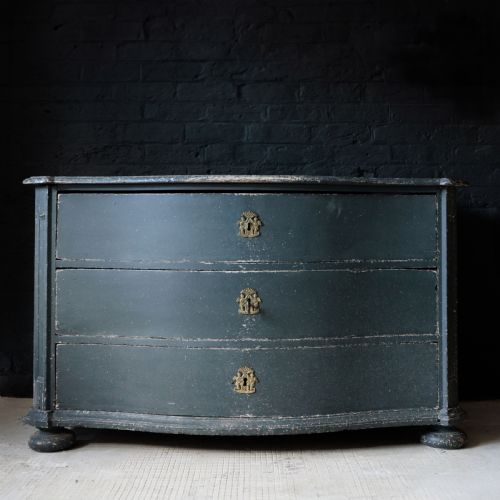
Alongside large dining and kitchen furniture, the selection includes smaller items like commodes and painted chests of drawers that share the characteristic green palette. Each piece reflects regional vernacular traditions rather than uniform factory production.
How they were made
Constructed primarily from solid pine and oak, these pieces rely on traditional timber framing, dovetail joinery for drawers, and panelled doors built to withstand heavy daily use. Master joiners utilised local timbers, applying iron and brass hardware such as drop handles, hinges, and escutcheons to secure doors and drawers.
Surface finishes define the appearance of these pieces, featuring layered oil-based paints, scumble glazes, and distressed patinas accumulated over decades of domestic service. Paint was applied to protect softwood and hardwood alike, often over older layers, creating depth and varied texture across drawer fronts and cornices.
Pine and oak form the primary timbers of these dressers, finished in historic green paint, scumble glaze, and natural wax.
What varies in quality
Quality rests in the integrity of the timber construction, the retention of original surface paint, and the balance of regional proportions. Pieces with untouched scumble paint or early historic green surfaces command greater interest than those stripped down or heavily repainted in modern times.
Joinery detail and hardware also set pieces apart, distinguishing robust country workshop builds from finer vernacular examples with fluted drawer fronts, serpentine shapes, or integral potboards. The proportion of cornice work, drawer arrangement, and leg design determines the visual weight of each dresser.
Christopher Dresser·Fasold & Stuach·Fleetwood Varley·J R Mally & Co
The Vintage Green Dressers Glossary
- Scumble paint
- A decorative glazing technique involving translucent layers of darker pigment manipulated over a lighter base coat to imitate grain or create mottled texture. It appears frequently on nineteenth-century pine furniture.
- Dresser base
- The lower section of a traditional kitchen dresser, functioning as a standalone sideboard or serving table with cupboards and drawers. These pieces often feature potboards or open lower shelves.
- Potboard
- A lower open shelf built between the legs of a dresser or serving table, traditionally used for storing heavy pots and earthenware. It provides structural stability to the base frame.
- Commode
- A low cabinet or chest of drawers, often with serpentine or bow fronts, originating in domestic bedchambers. European examples frequently display painted finishes.
- Housekeeper cupboard
- A large tall storage cupboard used in country houses for linen, provisions, and household stores. They feature deep panelled doors and robust interior shelving.
Vintage Green Dressers: Frequently Asked Questions
What is a dresser base?
A dresser base is the solid lower portion of a traditional kitchen dresser that functions as a sideboard, featuring a flat top surface above rows of drawers and cupboards.
These pieces were used for food preparation and storage in country houses and dairies, offering robust daily utility without the upper plate rack.
How do I care for antique painted wood?
Antique painted surfaces require gentle cleaning with a soft, dry cloth and protection from direct sunlight and excessive humidity to prevent paint flaking.
Avoid modern chemical polishes or abrasive cleaners, as these can strip historic scumble glazes and original layers of green paint.
Are these pieces made of solid wood?
Yes, these items are constructed from solid timbers like pine, oak, and other regional hardwoods, built by hand using traditional joinery methods.
Makers utilised solid planks for table tops, drawer sides, and structural frames, ensuring durability across centuries of domestic service.