

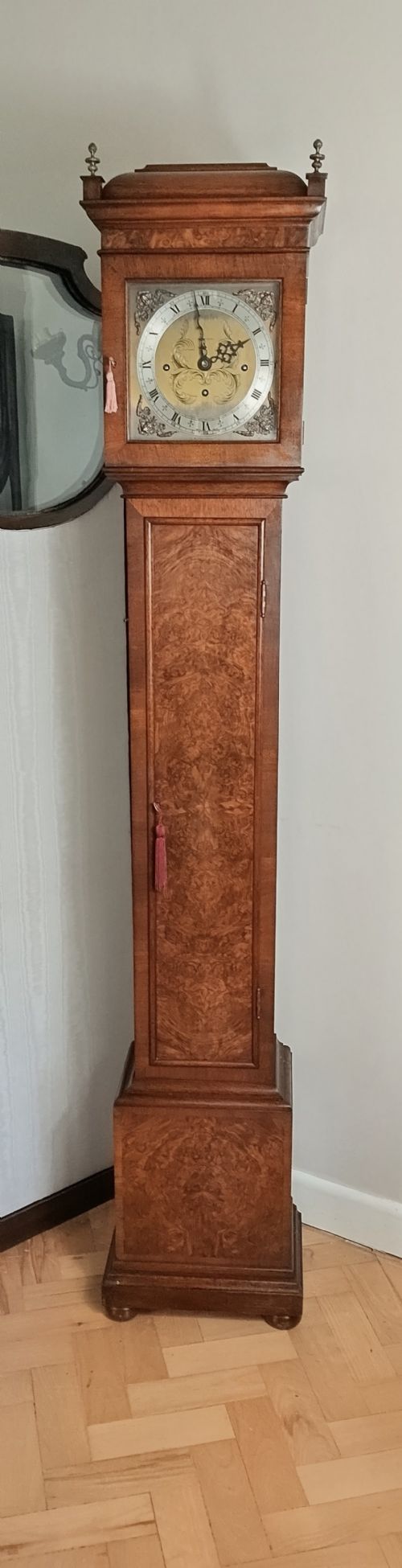
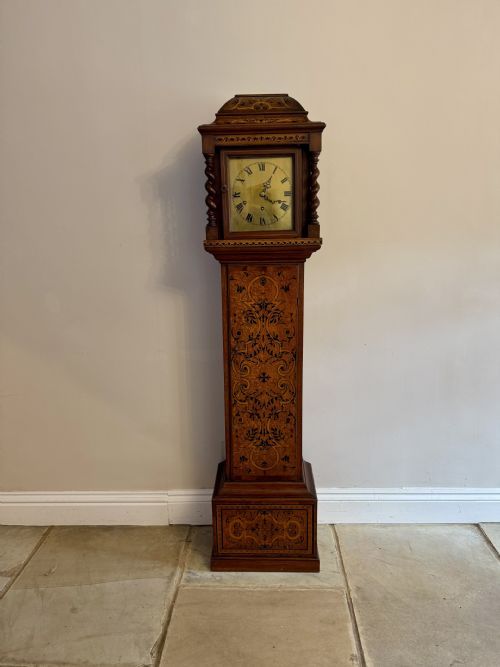


Vintage Grandmother Clock
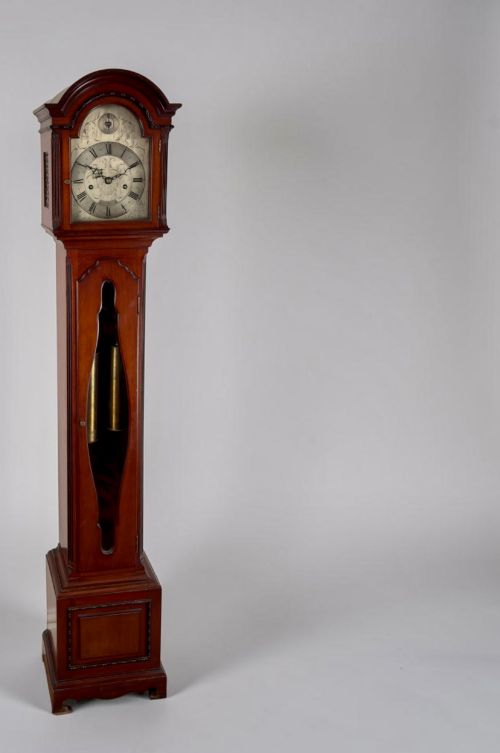
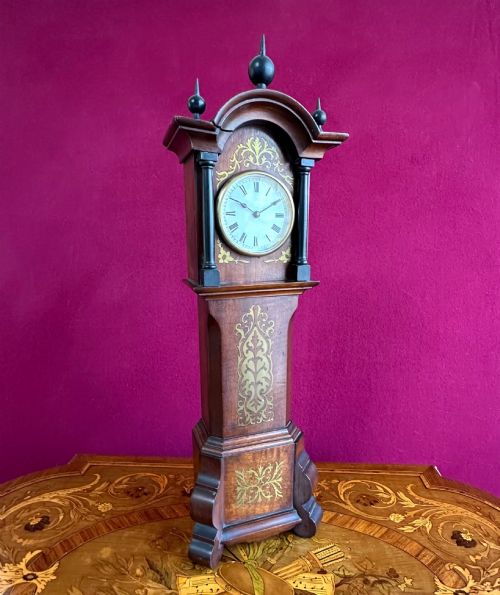
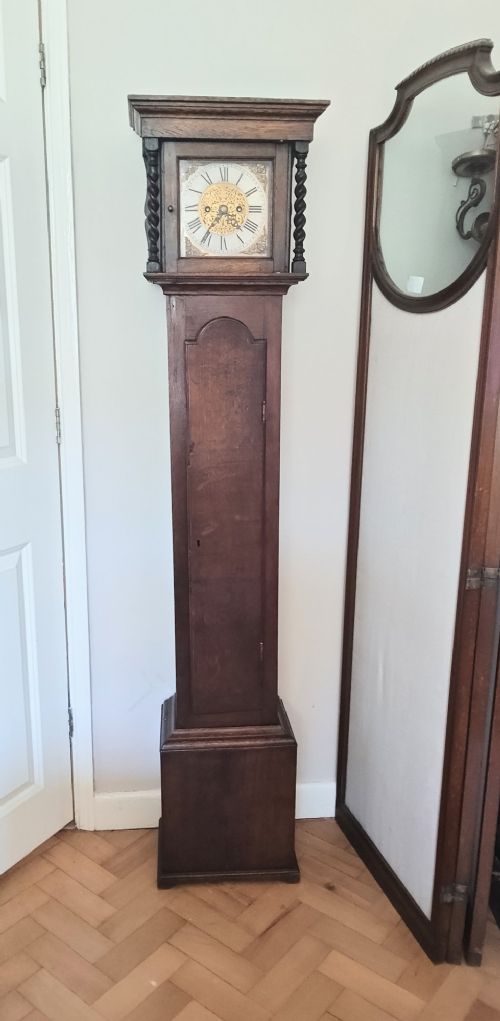
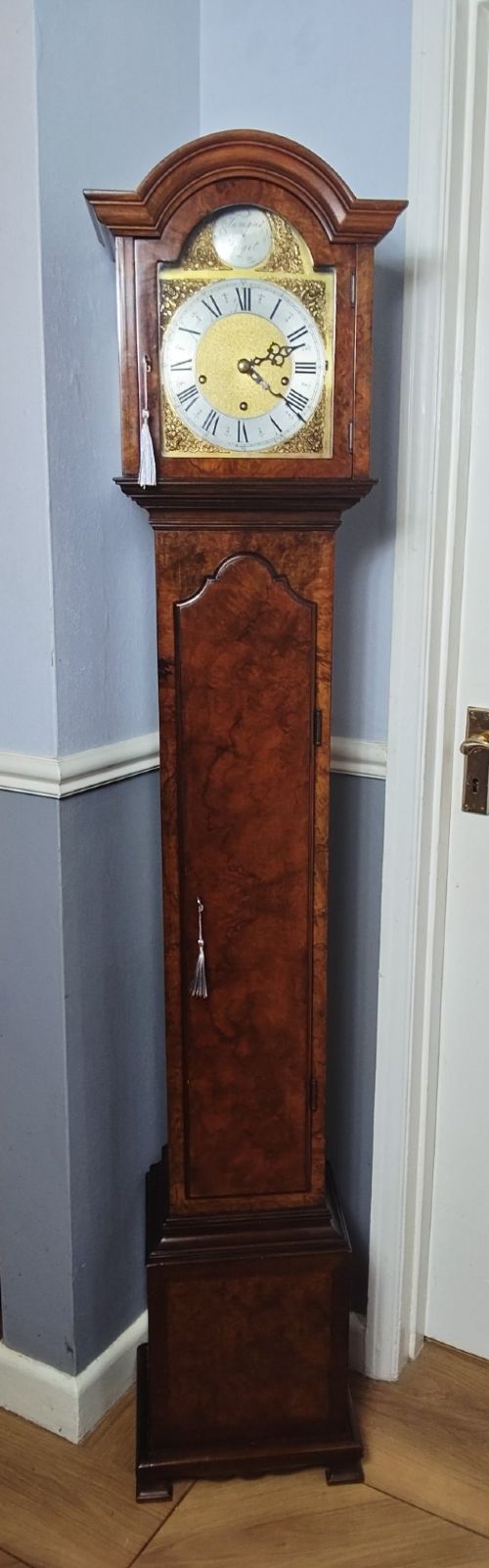
A vintage grandmother clock offers the presence of a traditional longcase in a scale suited to modern rooms.
Vintage Grandmother Clock
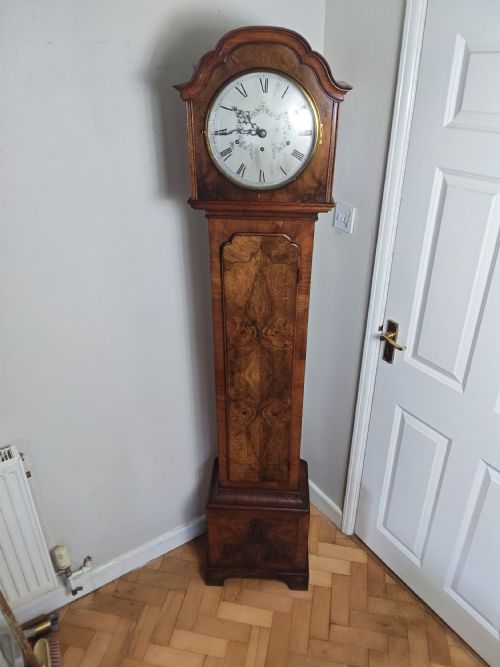
A vintage grandmother clock is a smaller version of the traditional tall case clock, designed to fit rooms with lower ceilings while retaining the pendulum and weight-driven movement of its larger counterpart. These scaled-down timepieces appear frequently in Edwardian formats and twentieth-century interpretations, drawing on earlier Georgian and Victorian design idioms.
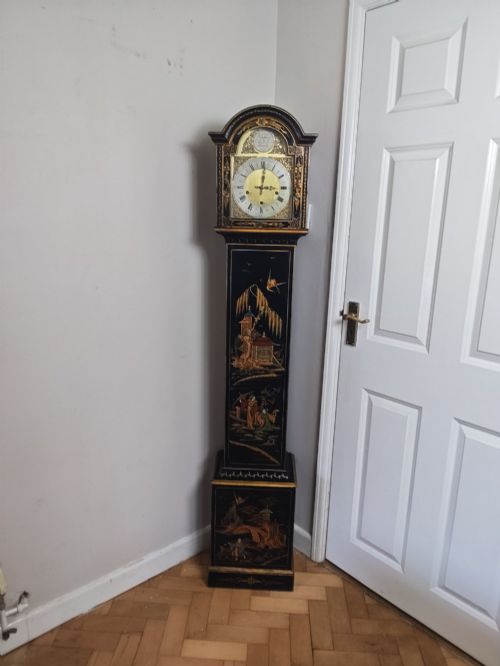
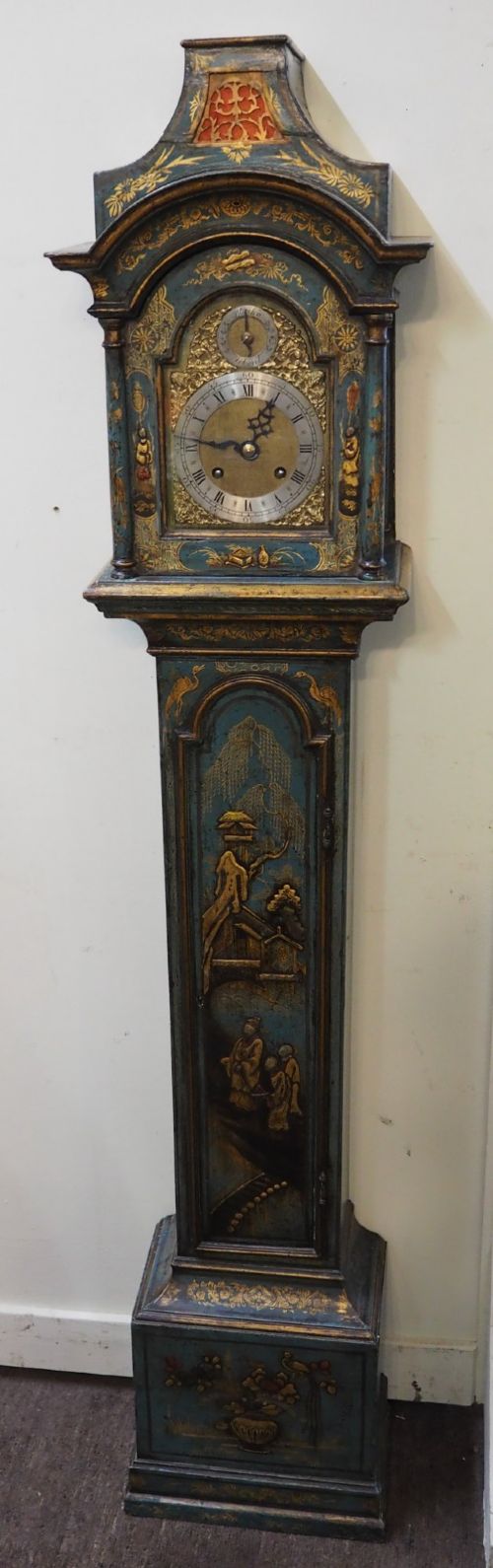
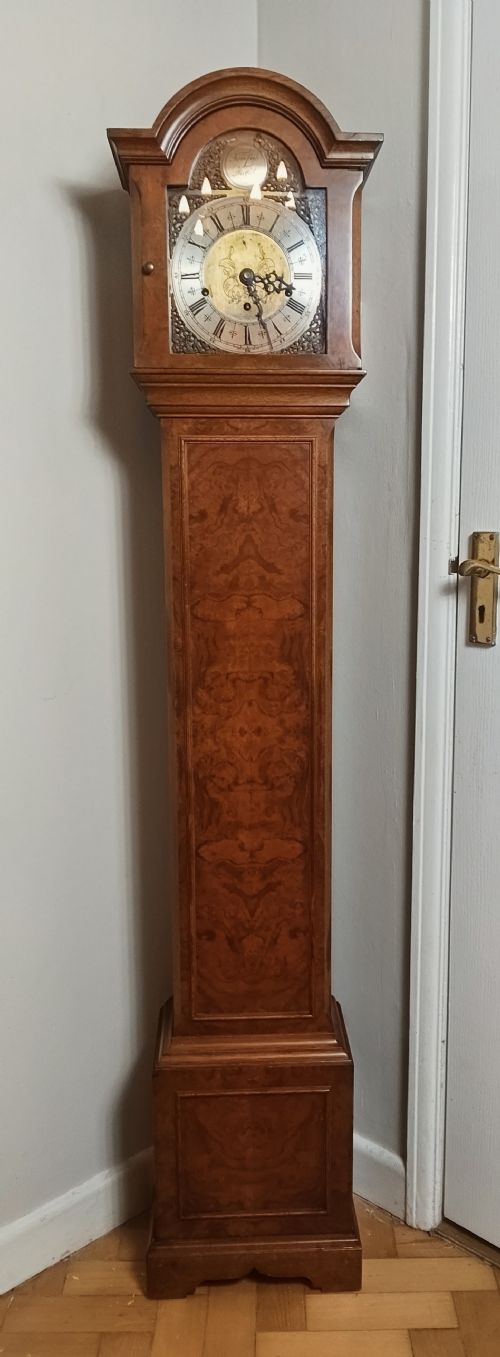
The selections available here span diverse woods and decorative schemes, ranging from simple oak and mahogany cases to more elaborate burr walnut and lacquered surfaces. Makers housed these movements in slender proportions, creating floor-standing timepieces that measure significantly shorter than standard grandfather clocks.
How They Were Made
Cabinetmakers constructed the tall wooden cases using traditional joinery and veneers over solid foundations of oak, mahogany, or walnut. Finer examples display figured walnut, burr walnut, or decorative lacquer finishes, sometimes enriched with marquetry inlay or brass dial fittings.
The mechanical movements inside these cases rely on brass gears, escapements, and weights or springs to drive timekeeping and chime sequences. Many incorporate musical functions, playing Westminster chimes or quarter-chiming melodies through multiple weights or tubular bells.
Materials span mahogany, oak, walnut, burr walnut, and glass, alongside lacquered finishes.
What Varies in Quality
The refinement of the cabinetwork and the complexity of the internal movement determine the standing of an individual piece. Highly regarded examples showcase carefully matched wood grains, intricate marquetry, or specialised chimes by notable makers rather than standard production movements.
Proportion and execution distinguish finer items from simpler utilitarian versions. Cases with balanced architectural details, clean glass panels, and well-cast brass dials reflect a higher standard of craftsmanship during their period of production.
Gillett & Johnston·Elliott·JJ Elliot·Dent Of London
The Vintage Grandmother Clock Glossary
- Longcase Clock
- A tall, weight-driven pendulum clock enclosed in a wooden case that stands directly on the floor. These serve as the larger architectural parent to the grandmother clock.
- Westminster Chime
- A melody played by the clock movement on four or eight bells or rods before the hour strike. This sequence became standard in many twentieth-century musical models.
- Burr Walnut
- A specialised wood veneer taken from the wart-like growths on walnut trees, prized for its swirling, highly figured grain patterns on clock doors and hoods.
- Marquetry
- The art of applying pieces of veneer to a structure to form decorative patterns or pictures. Craftsmen utilised contrasting woods to adorn the front panels of select Edwardian cases.
- Fusee
- A conical pulley used in spring-driven clocks to maintain equal power as the mainspring unwinds. This mechanism helps ensure steady timekeeping accuracy.
Vintage Grandmother Clock: Frequently Asked Questions
How tall is a vintage grandmother clock?
These smaller longcase clocks typically measure noticeably shorter than standard grandfather clocks, often sitting under six feet in height. This reduced scale allows them to fit comfortably in rooms with standard ceiling heights.
Cabinetmakers specifically proportioned these slender cases to deliver the acoustic presence and visual dignity of a tall clock without dominating a domestic interior.
What is the difference between a grandfather and grandmother clock?
The primary distinction lies in overall height and proportion. Grandfather clocks generally stand over six feet tall, whereas grandmother clocks offer a more compact, slender profile.
Despite the reduction in case size, both types utilise similar weight-driven or spring-driven pendulum mechanisms to track time and sound the hours.
How do musical movements work in these clocks?
Musical movements use an internal pinned cylinder or a set of hammers striking gongs, bells, or tubular rods to play chime melodies. These sequences usually sound every quarter of an hour.
Heavier models require three weights to power the timekeeping, the hour strike, and the musical chime train independently.
Where should I place a longcase clock in my home?
These floor-standing clocks require a stable, level surface against an interior wall to ensure the pendulum swings evenly. Avoid placing them in areas subject to dampness or direct sunlight.
Because the case rests directly on the floor, securing the upper section to the wall with a discreet bracket can prevent accidental tipping.