

Vintage Glass Oil Lamp
These vintage glass oil lamps bring a warm period glow to a room through coloured fonts, etched shades and brass columns.
Vintage Glass Oil Lamp
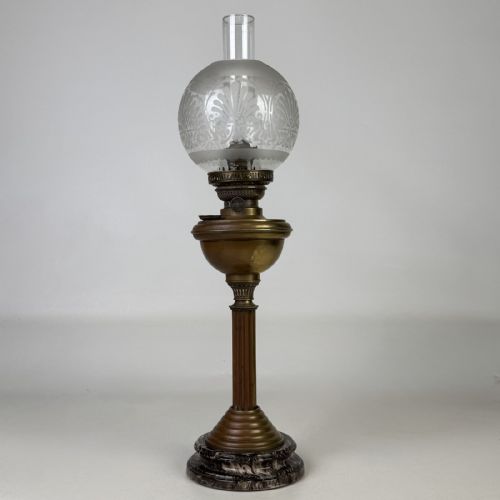
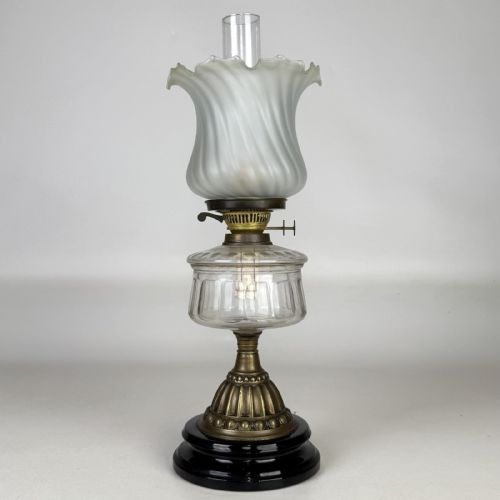
A vintage glass oil lamp combines a decorative glass font or shade with a metal column and burner mechanism. These pieces date principally from the Victorian and Edwardian eras, spanning the nineteenth and early twentieth centuries.
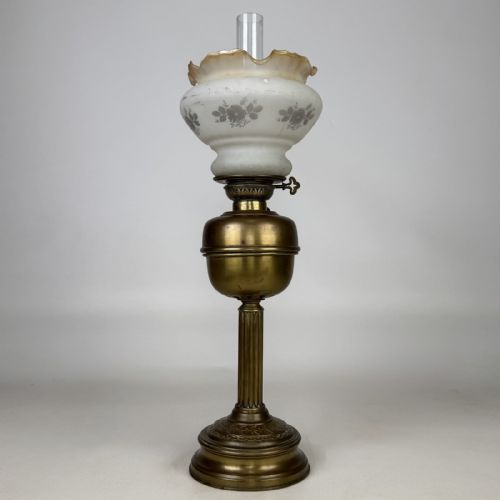
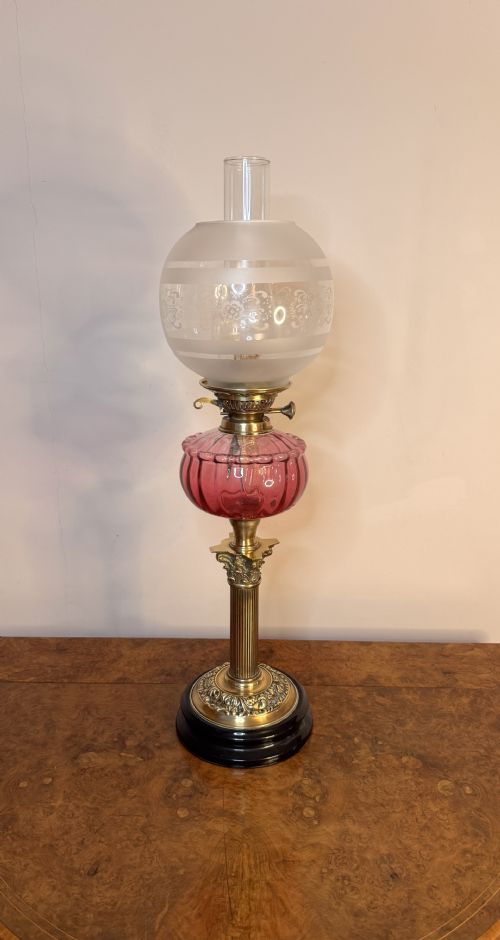
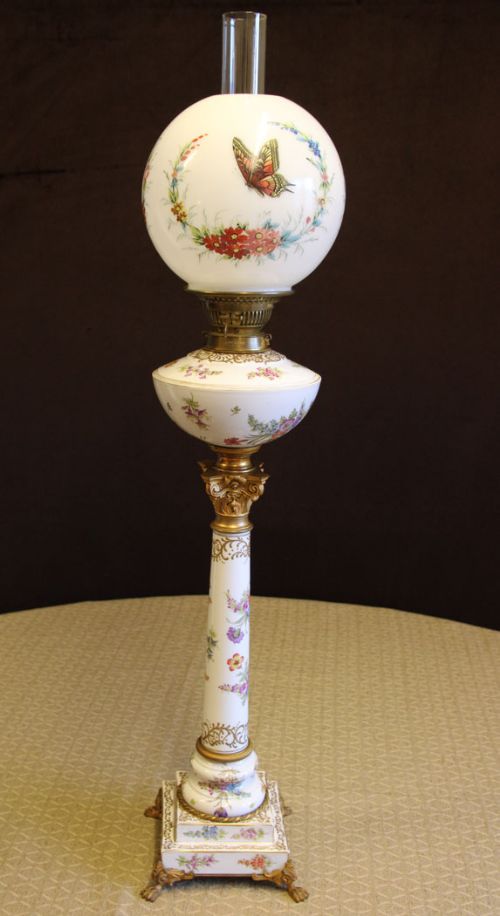
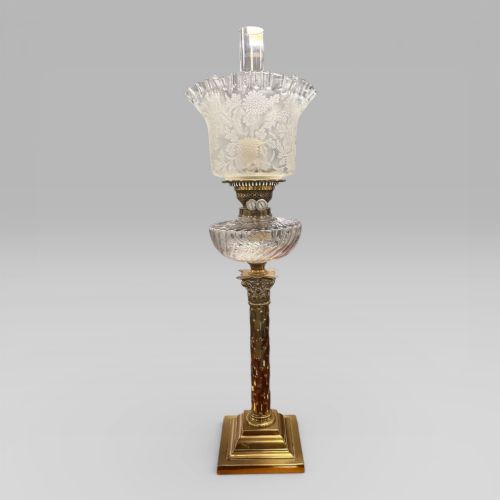
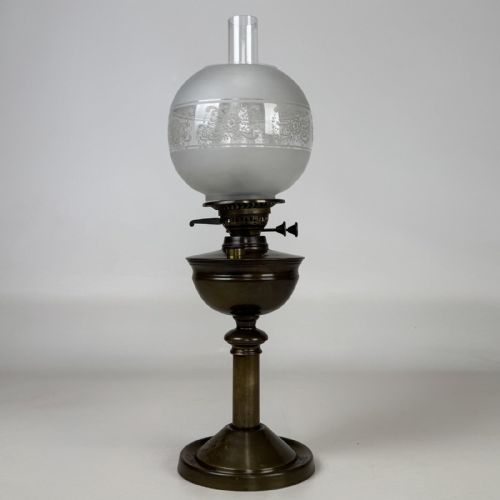
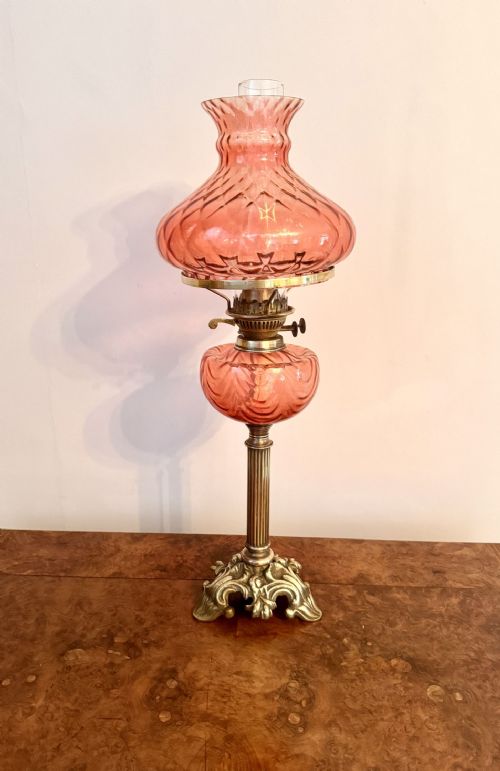
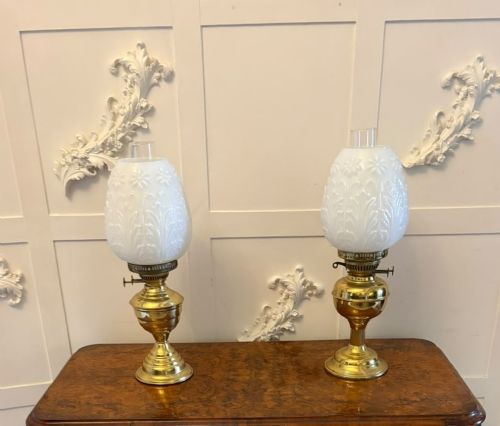
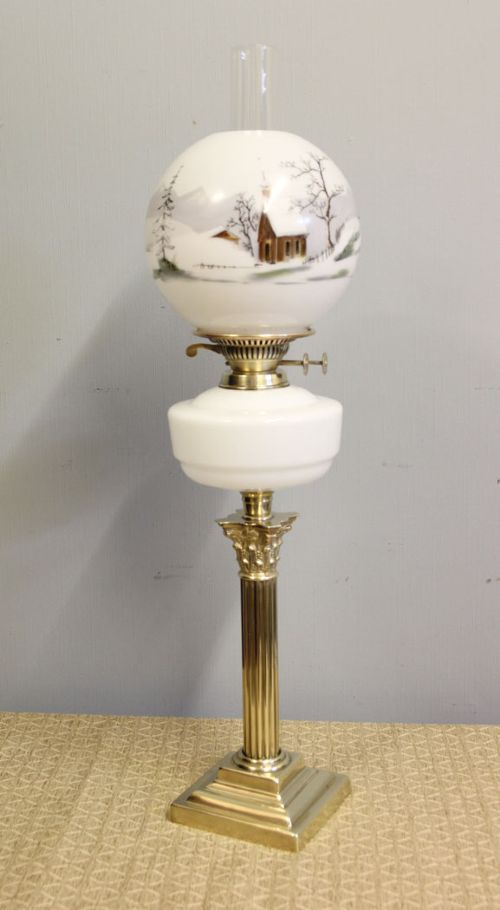
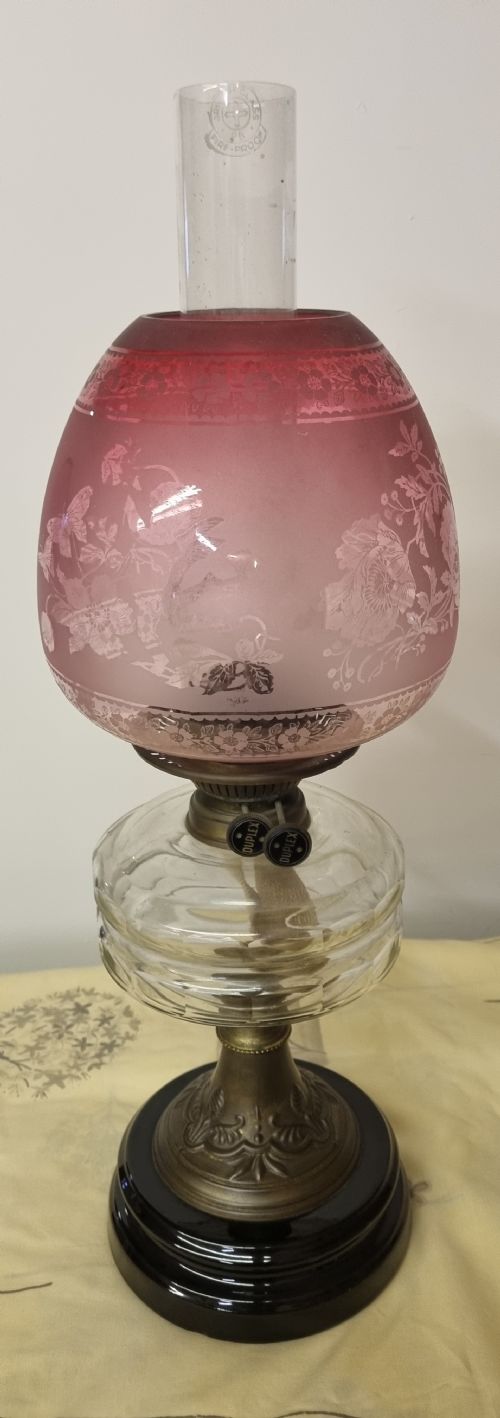
The most common version on this page pairs a brass or ceramic base with a coloured glass font and a matching glass shade. Many examples feature cranberry, opaline or clear glass, often decorated with hand-painted floral motifs or winter scenes.
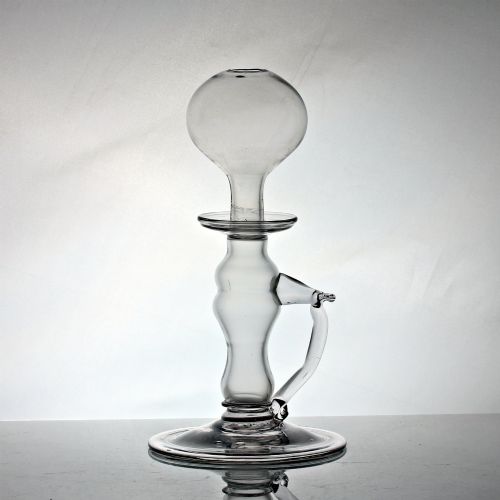
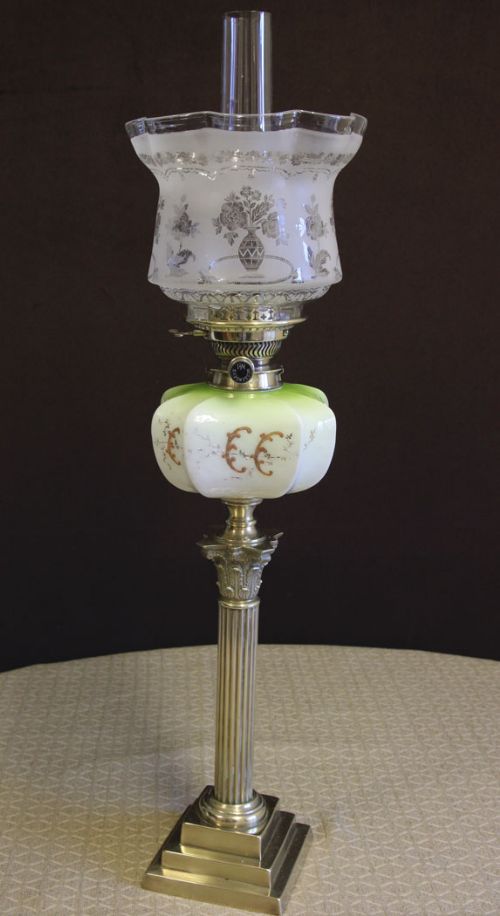
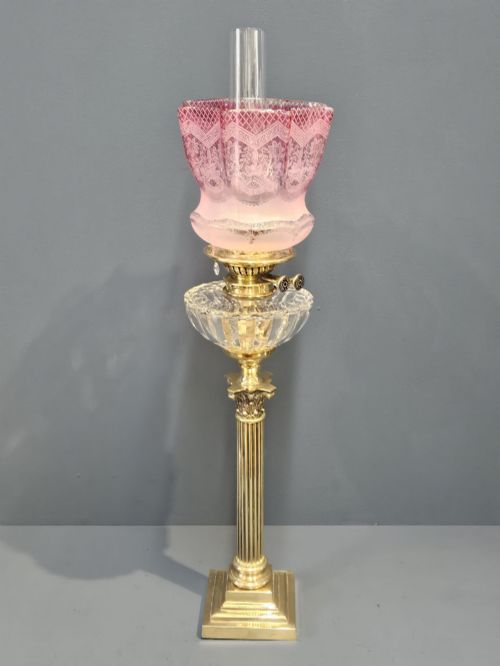
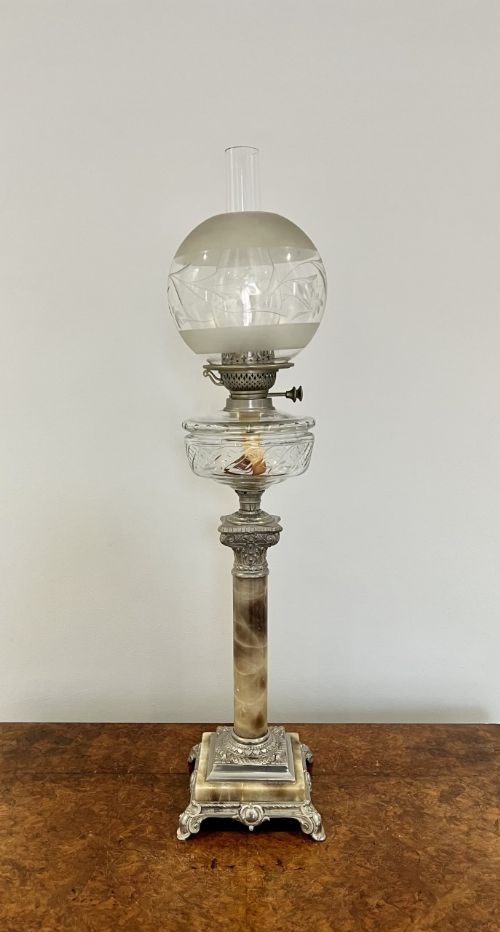
Makers designed these lighting pieces for domestic tabletop or hanging use, utilising twin burners or duplex systems for brighter illumination. Surviving specimens range from simple chamber lamps to tall Corinthian column designs.
How they were made
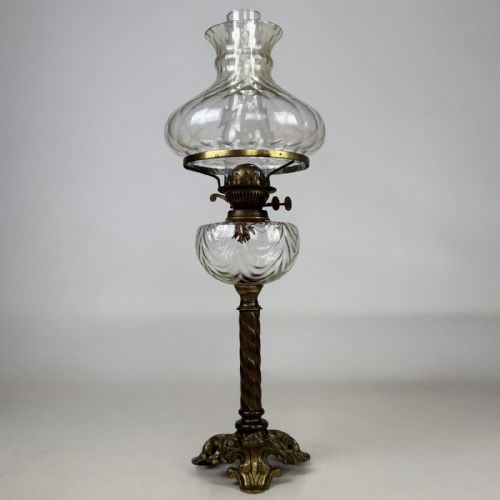
Glassmakers blew and moulded cranberry, opaline and clear glass to form the fonts and shades, frequently applying hand-painted details or etched patterns to the surface. These glass components sit atop cast brass, copper or ceramic columns that provide stability.
Metalworkers cast and turned brass and copper to build the structural columns and burner assemblies, incorporating patented mechanisms from makers like Hinks. Ceramic and porcelain elements were moulded and fired separately before being mounted to the metal bases.
Vintage Glass Oil Lamp Retail Price Guide 2026
Typical asking prices for vintage glass oil lamp among the pieces listed under this phrase on Sellingantiques today, from the lower quarter to the upper quarter. They describe what is for sale here now, not the wider market.
Materials documented across the available pieces include cranberry glass, opaline glass, cut glass, brass, copper, onyx and porcelain.
What varies in quality
The sophistication of the glasswork largely dictates the distinction between standard and finer examples. Deeply saturated cranberry glass, crisp hand-painted botanical details and complex etched patterns elevate the visual appeal of a piece.
The integrity and weight of the mounting hardware also define the standard. Heavy cast brass columns, detailed Corinthian capitals and original signed burner mechanisms distinguish the superior domestic lighting fixtures from simpler variants.
Hinks·Sitzendorf·Gustave Serrurier Bovy
The Vintage Glass Oil Lamp Glossary
- Duplex burner
- A double-wick burner system designed to produce a significantly brighter flame than single-wick variants. These twin mechanisms often appear on larger nineteenth-century table lamps.
- Opaline glass
- An opaque, milky-white glass that diffuses light softly. It was frequently painted with floral designs for Edwardian lamp shades.
- Corinthian column
- A classical architectural column style featuring ornate acanthus leaves on the capital. Lamp makers adopted this motif for the brass stems of formal nineteenth-century lighting.
Vintage Glass Oil Lamp: Frequently Asked Questions
How do I operate a vintage oil lamp?
Fill the glass reservoir with standard lamp oil and allow the cotton wick to absorb the liquid thoroughly before lighting. Adjust the wick height using the brass thumbwheel to control the size of the flame and prevent smoking.
Keep the glass chimney clean and dry to ensure a steady draft while burning. Extinguish the flame by turning the wick down completely or using an attached snuffer cap.
Can these lamps still be used for lighting?
Many vintage oil lamps remain fully functional for burning paraffin or lamp oil if the burner mechanism and wick are in good working order. Inspect the glass font carefully for internal cracks before adding fuel to prevent leaks.
Alternatively, many buyers choose to convert them for electricity by running a cord through the central column. This modification provides ambient room lighting while preserving the historic appearance of the glass and brass.
How do I identify Victorian glass oil lamps?
Victorian models frequently combine heavy brass columns, such as Corinthian or ionic orders, with vibrantly coloured glass fonts in shades like cranberry or blue. Burners often bear patent stamps from period manufacturers like Hinks.
Edwardian and later twentieth-century examples tend to introduce softer opaline shades, art nouveau lines or simpler ceramic bodies. Checking the construction methods and patent marks helps narrow down the production decade.