


Clear Glass Kerosene Lamp
These clear glass kerosene lamps offer bright traditional illumination, bringing honest Victorian utility and heavy brass engineering into the modern room.
Clear Glass Kerosene Lamp
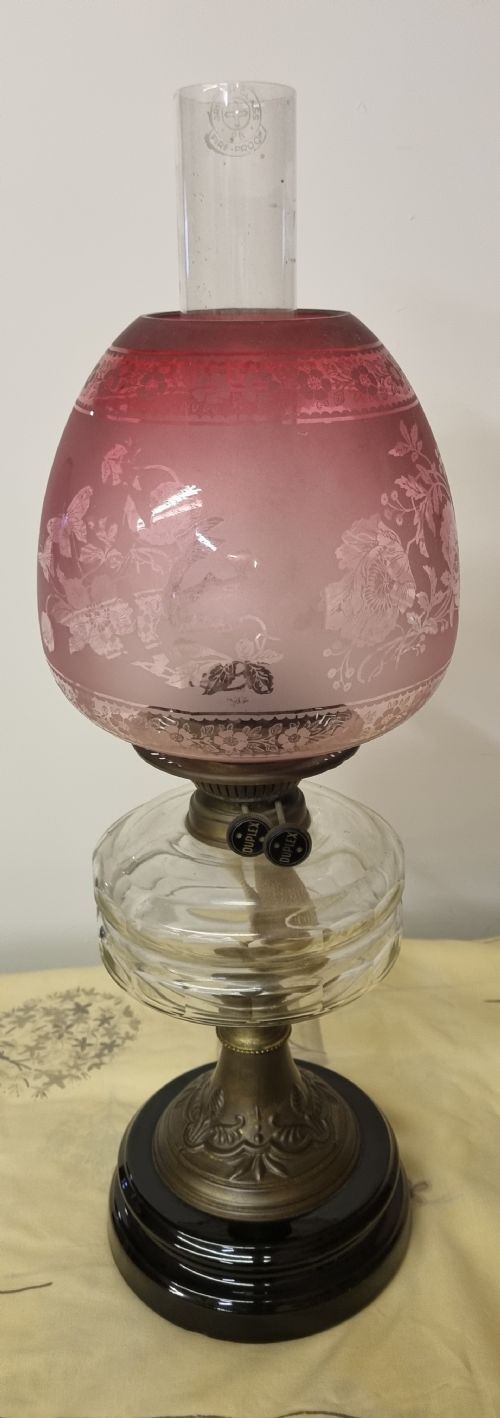
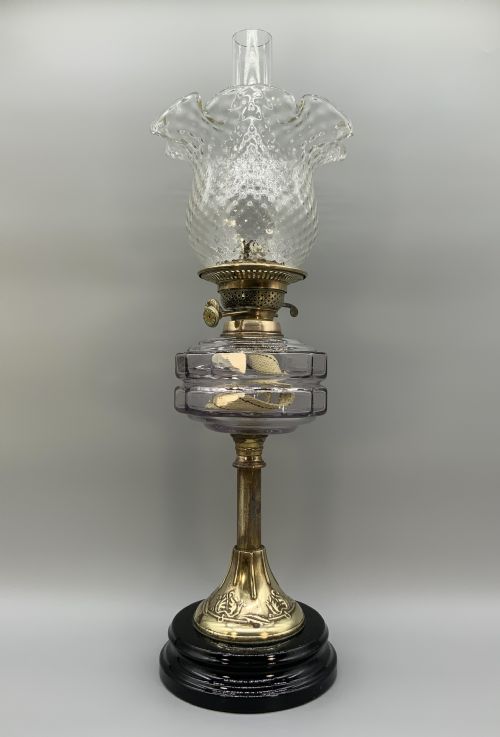
A clear glass kerosene lamp stands as a principal domestic lighting form of the Victorian era, combining oil reservoirs with sturdy metal columns. When searching for a clear glass kerosene lamp, buyers encounter table lamps dating from the mid nineteenth century through to nineteen hundred, largely spanning the Victorian period.
The inventory on this page centres on tall table oil lamps and duplex burners designed for domestic sitting rooms and halls. Most examples pair clear or cut glass reservoirs with solid brass bases and ceramic components, while taller variants incorporate etched tulip shades or terrestrial globes.
How they were made
These lamps rely on heavy cast brass columns and spun metal collars to support weighty glass reservoirs safely. Makers joined these structural metals directly to ceramic bodies and hand-blown glass fonts using secure threaded mountings.
Reservoirs are formed from clear, cut, opal, or milk glass, occasionally paired with delicate hand-blown shades in fabric or glass. Burner mechanisms such as the duplex system utilise twin wicks housed in brass galleries to maximise light output.
Listings demonstrate that Victorian kerosene lamps frequently combine brass columns with cut glass reservoirs and ceramic bases.
What varies in quality
Quality rests in the proportional balance between the heavy brass column and the thickness of the glass font. Superior examples display crisp wheel-cutting upon the glass and solid, unyielding brass castings that keep the lamp stable.
Makers such as Hinks and Young introduced patented duplex burners and specialised gallery mechanisms that separate standard utility pieces from finer production. The presence of original etched tulip shades or terrestrial globes elevates an ordinary lamp to a more substantial decorative object.
Hinks of Birmingham·Young
The Clear Glass Kerosene Lamp Glossary
- Duplex burner
- A lighting mechanism employing two flat wicks running parallel to produce a brighter flame than single-wick designs. This system required wider burners and specialised galleries.
- Font
- The oil reservoir of the lamp, typically formed from clear, cut, or milk glass to reveal the fuel level within. It sits securely atop the metal or ceramic column.
- Tulip shade
- A flared glass shade resembling an open flower, frequently etched or frosted, designed to soften the glare of the dual flames. These shades fit directly into the brass gallery.
- Terrestrial globe
- A spherical glass shade painted or etched with map details or geographic motifs, utilised on Victorian table lamps to diffuse the light evenly across a room.
Clear Glass Kerosene Lamp: Frequently Asked Questions
Can I convert these lamps for electricity?
Many collectors prefer to preserve the original oil mechanism and brass burner intact without running modern wiring through the fuel column. Non-invasive conversion kits exist that allow a fabric flex to pass down the burner without drilling the antique metal.
If you choose to electrify the lamp, consult a professional restorer to ensure the heavy brass base remains stable and grounded. Reversible methods protect the historical integrity of the piece.
How do I clean historical brass and glass?
Wash the glass reservoir and shades in warm soapy water using a soft cloth, avoiding abrasive pads that can scratch the antique surface. Rinse thoroughly and allow the glass to dry completely before replacing it on the lamp.
Polish the brass base gently with a specialised metal cleaner only when necessary, preserving the darker patination accumulated over decades. Avoid getting polish into the intricate recesses of cast ornamentation.
How do I date a Victorian oil lamp?
Examine the burner mechanism for maker marks, patent numbers, and the specific configuration of the wick winders. Manufacturers often stamped their company names directly onto the brass thumbwheels during the nineteenth century.
Compare the style of the glass cutting and column design against documented Victorian periods, noting the transition from mid-century classical brass columns to later Art Nouveau curves.