
Vintage Glass Jar
When you search for vintage glass jar, you are looking for functional containers that combine utility with decorative craftsmanship from past eras.
Vintage Glass Jar
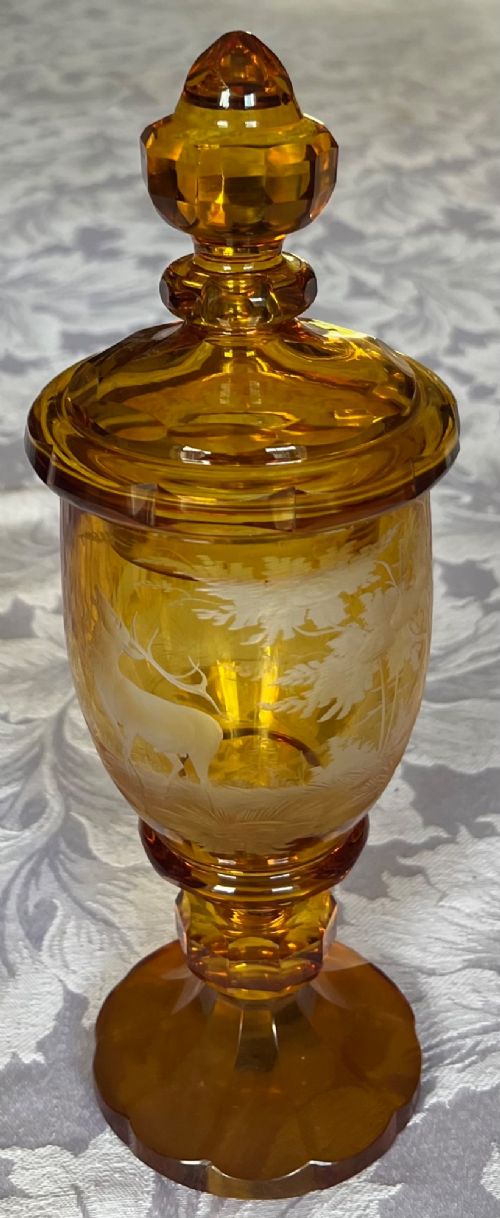
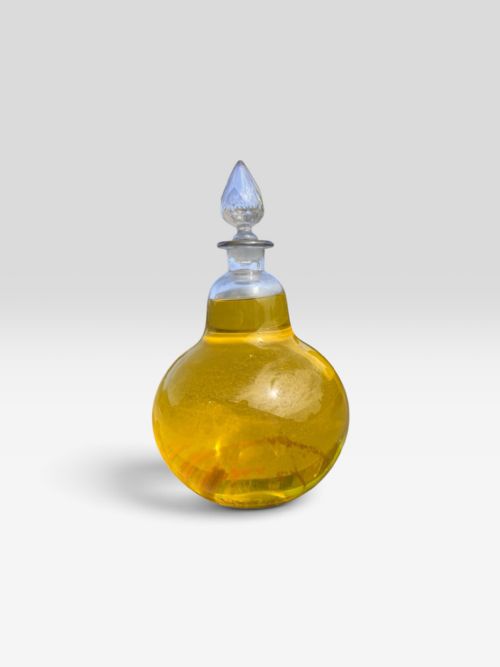
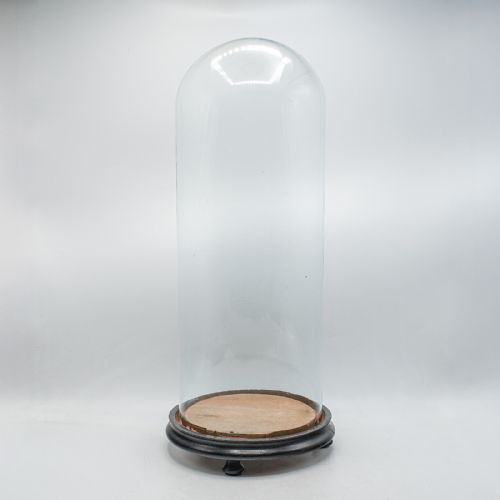
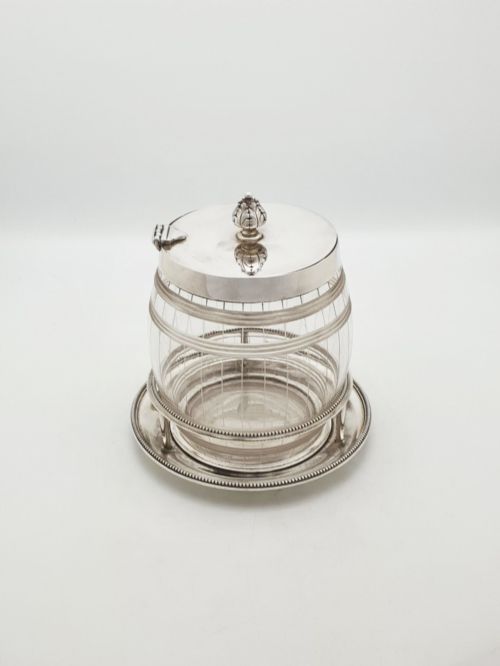
When buyers search for a vintage glass jar, they encounter a diverse array of utilitarian and decorative vessels spanning from the Victorian period through the mid-twentieth century. The selection ranges from large pharmacy carboys and apothecary display jars to smaller domestic items such as biscuit barrels, trinket boxes, and dressing table jars.
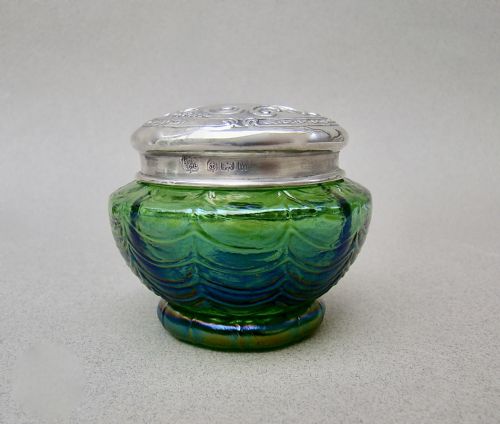
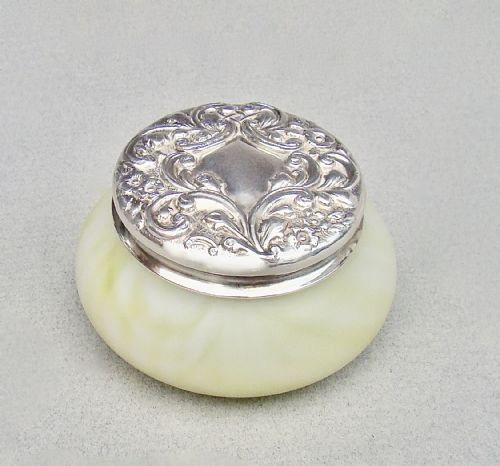
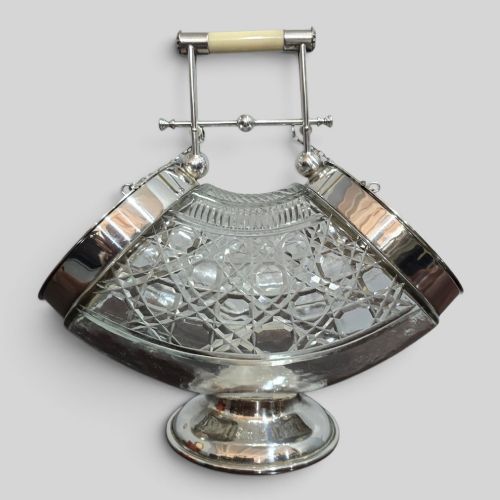
The pieces often feature fitted metal components, including sterling silver lids, brass mounts, and silver plate, bridging the gap between simple storage and refined tabletop or vanity display. Forms originating from Edwardian and Art Deco aesthetics frequently appear alongside nineteenth-century chemist bottles and French apothecary wares.
Originating across England, France, and Bohemia, these items reflect both commercial apothecary use and domestic refinement. Buyers are most likely to meet cut glass vanity jars and silver-topped dresser pots from the early decades of the twentieth century on this page.
How they were made
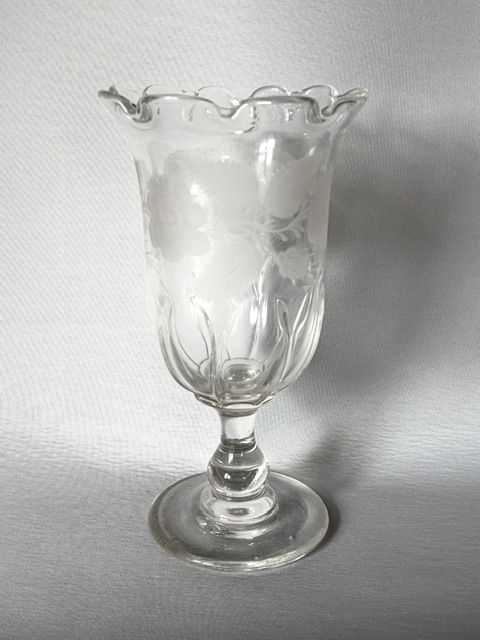
The construction of these vessels relies heavily on hand-blown and mould-blown glass techniques, frequently augmented by deep cutting, etching, or hobnail patterns to catch the light. Heavy crystal and satin glass form the bodies, occasionally utilising coloured glass types such as amber, Bristol blue, cranberry, or deep green.
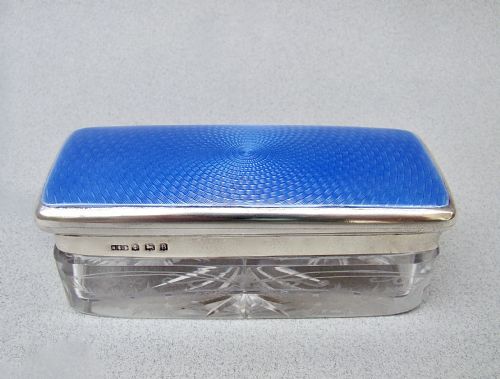
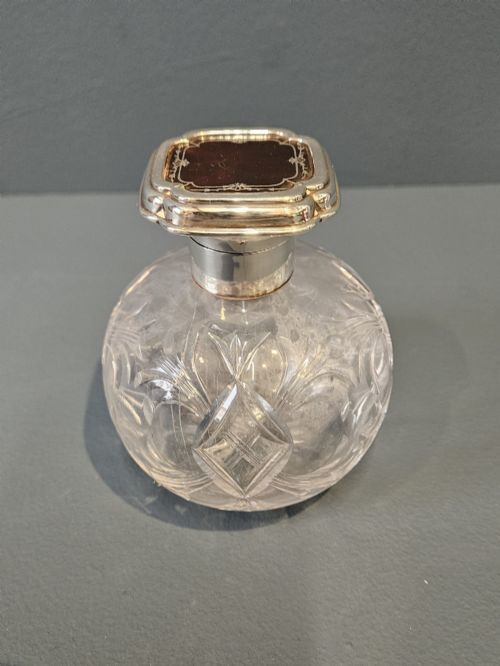
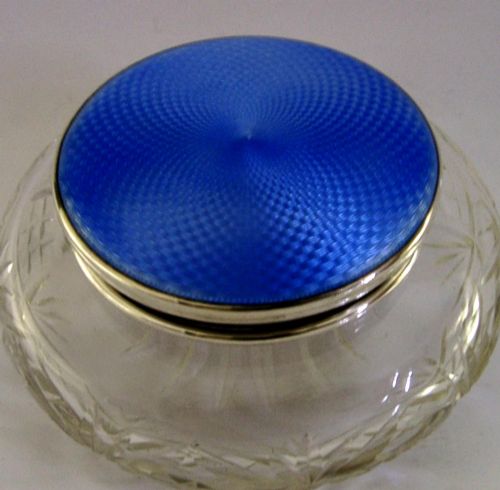
Metalwork forms an integral part of the manufacturing process, with sterling silver, silver plate, and brass used for hinged lids, collars, and stands. Artisans applied decorative surface treatments including guilloche enamel, gold leaf, and tortoiseshell inlay to the metal mounts of dressing table pots and scent bottles.
Listings span the Victorian, Edwardian, and Art Deco periods, encompassing materials from cut crystal and sterling silver to enamel and brass.
What varies in quality
Quality in these containers is dictated by the crispness of the glass cutting and the weight of the metal fittings. Superior pieces display deep, sharp facets and heavy lead crystal bases that feel substantial in the hand.
The integration between the glass body and metal mounts separates standard production from finer examples. Well-made items feature securely fitted sterling silver lids with clear hallmarks and intact enamel work free from chipping or restoration.
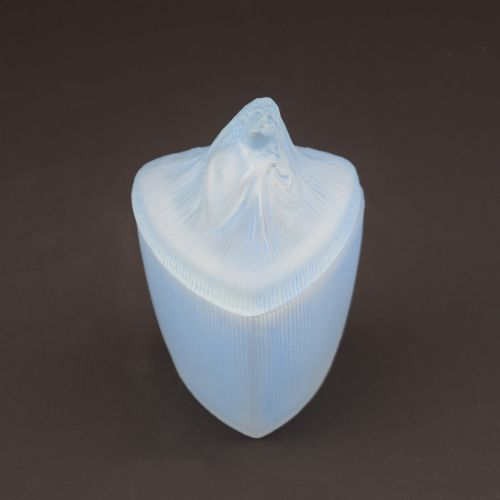
A. J. Pepper & Co·Henry Clifford Davis·A. Bromet & Co·Rene Lalique·Elkington·WMF·Hukin and Heath
The Vintage Glass Jar Glossary
- Carboy
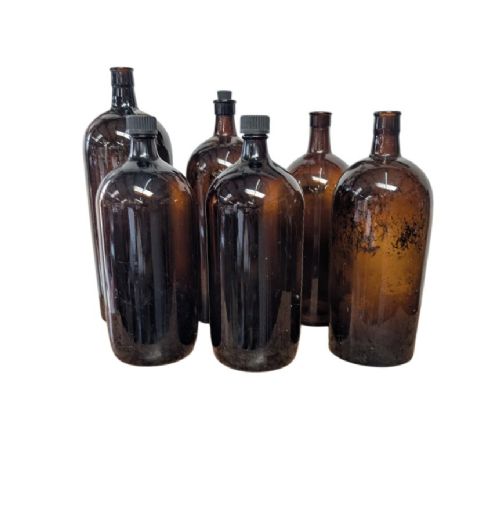
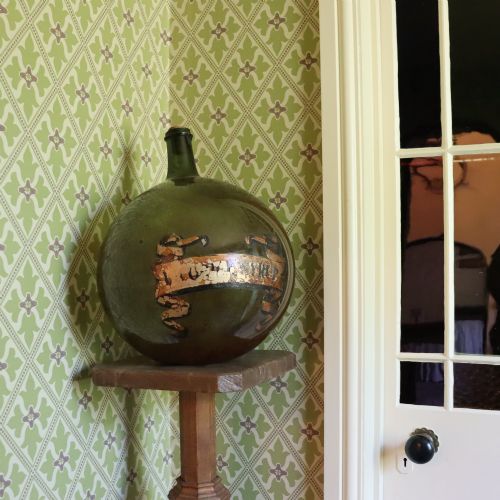
- A large, bulbous glass bottle with a narrow neck, historically used in laboratories and pharmacies for holding liquids. They often feature hand-blown irregularities and pontil marks on the base.
- Guilloche
- A decorative mechanical engraving technique that produces precise, intricate recurring geometric patterns beneath a translucent layer of enamel. It frequently appears on twentieth-century dressing table jar lids.
- Hobnail
- A decorative raised pattern cut into the surface of glassware, resembling the stout nails used on rustic boots. This technique adds tactile texture and enhances optical refraction.
- Pontil mark
- A rough scar left on the base of hand-blown glassware where the pontil rod was snapped off after shaping. Its presence indicates traditional free-blowing methods prior to modern automated production.
Vintage Glass Jar: Frequently Asked Questions
How do I clean an old glass jar?
Wash the glass gently using warm water and mild soap, avoiding harsh abrasives that might scratch the surface. If the piece includes fitted sterling silver or enamel lids, keep the metal components dry during the cleaning process.
Allow the vessel to dry thoroughly before storing items inside. For stubborn residue inside narrow apothecary bottles, use rice grains and warm water as a gentle abrasive scrub.
Were these jars meant for display or storage?
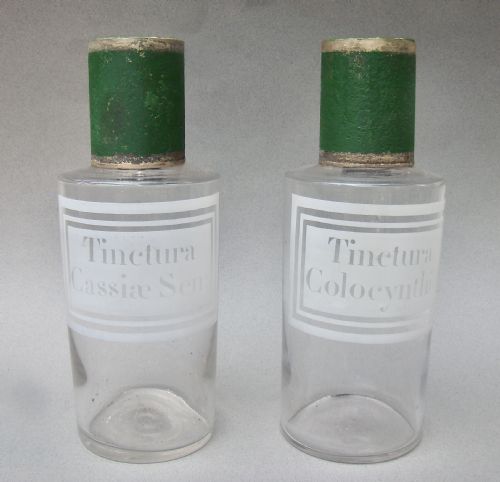
Many of these items served practical daily functions in homes and commercial settings, such as preserving biscuits, dispensing spirits, or holding vanity powders and cosmetics. Apothecary and chemist jars originally stored dry drugs or liquids in a pharmacy environment.
Over time, their decorative qualities transformed them into display pieces for dressing tables and sideboards. Today, they easily accommodate modern storage needs while retaining their historic decorative appeal.
How can I date a silver-lidded glass jar?
British pieces featuring sterling silver lids generally display a set of hallmarks stamped directly onto the metal. These marks typically include a maker's mark, a standard mark, a town assay office mark, and a date letter.
Matching the stamped date letter against official assay office tables reveals the exact year the silver mount was tested and marked. The glass body itself is often contemporary with the metal mount, though older jars occasionally received new silver lids later.
What is the difference between cut glass and crystal?
Cut glass refers to vessels shaped and patterned through mechanical cutting wheels, creating facets that reflect light. Crystal technically denotes glass containing a significant proportion of lead oxide, which increases weight, clarity, and brilliance.
Many antique biscuit barrels and dressing jars combine both qualities through heavy lead crystal blanks subjected to deep wheel cutting. This combination results in the resonant ring and heavy feel typical of finer nineteenth and twentieth-century tableware.