

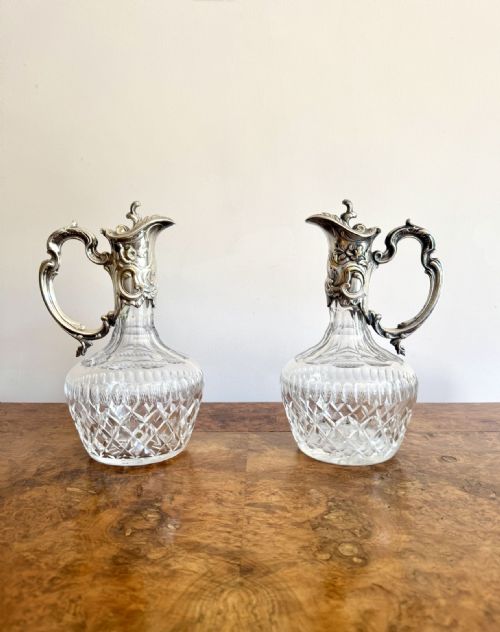


Vintage Glass Claret Jug
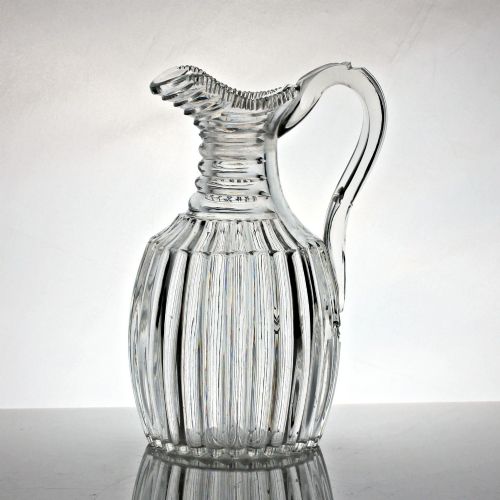
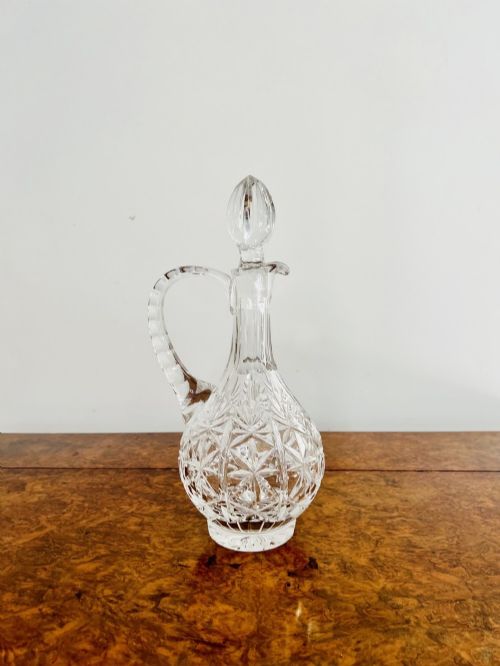
A vintage glass claret jug brings poured wine to the table with the weight of cut crystal and bright metal.
Vintage Glass Claret Jug
A vintage glass claret jug is a serving vessel designed for wine, water, or lemonade, combining a glass body with a handle and pourer. When you search for this phrase, you will find pieces dating from the Victorian and Edwardian eras alongside later twentieth-century examples.
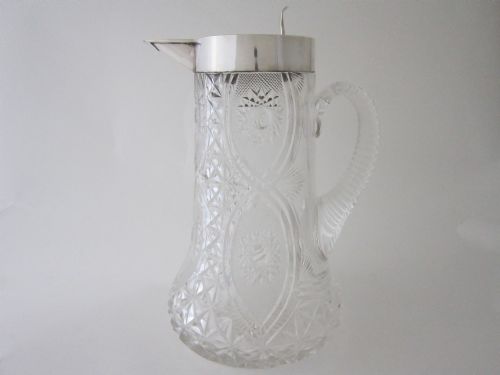
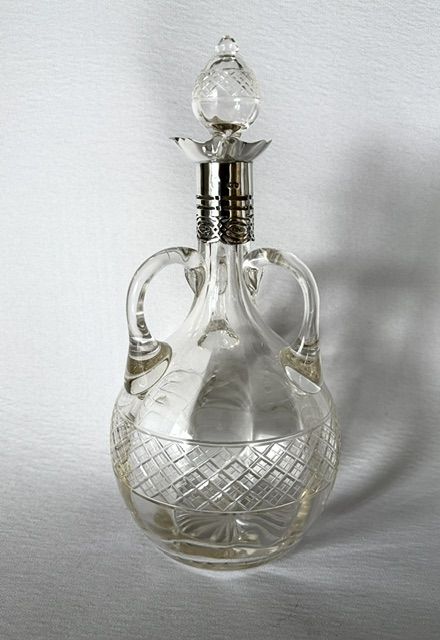
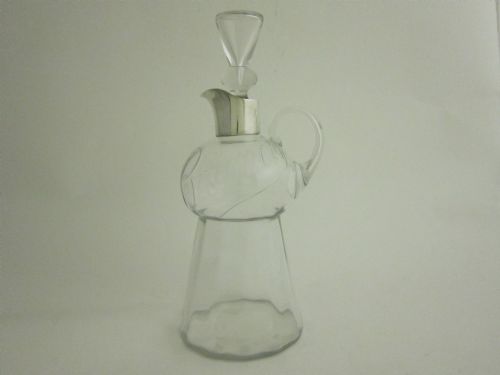
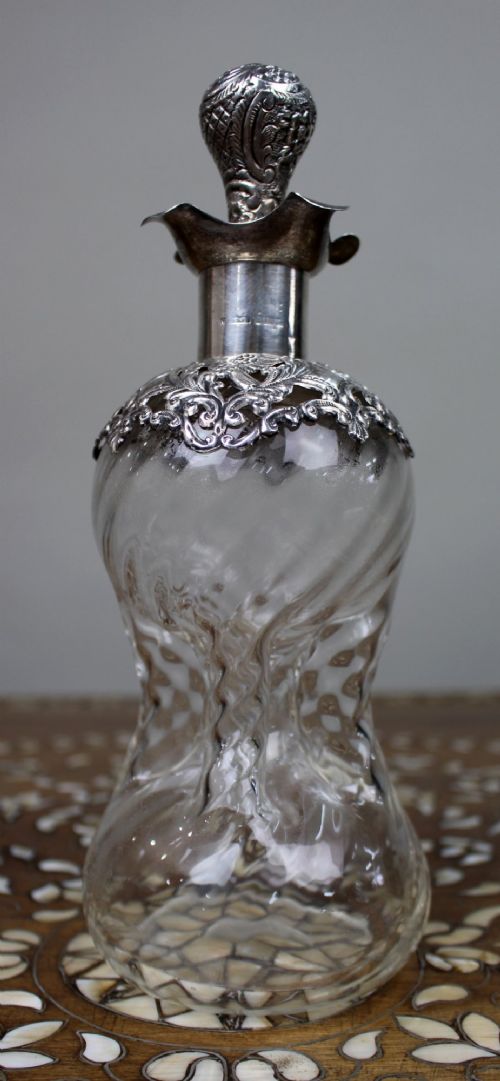
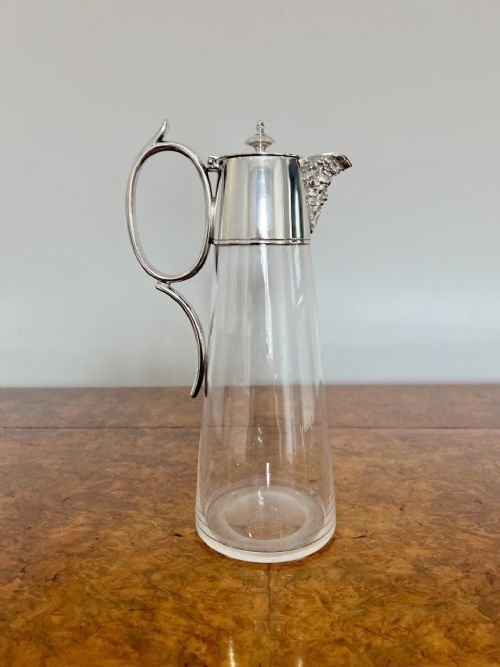
The body of the vessel is typically formed from cut glass, crystal, or coloured glass such as cranberry, amber, or green. Metal mounts in silver plate or sterling silver secure the neck, handle, and hinged lid to the glass body.
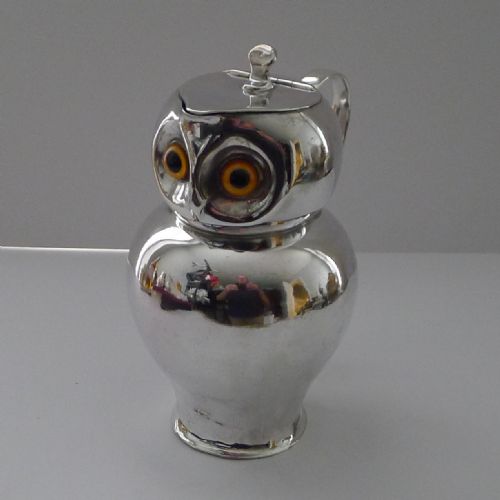
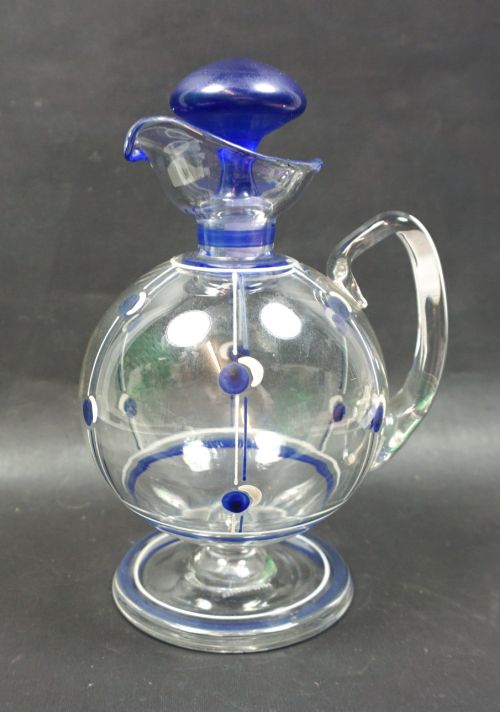
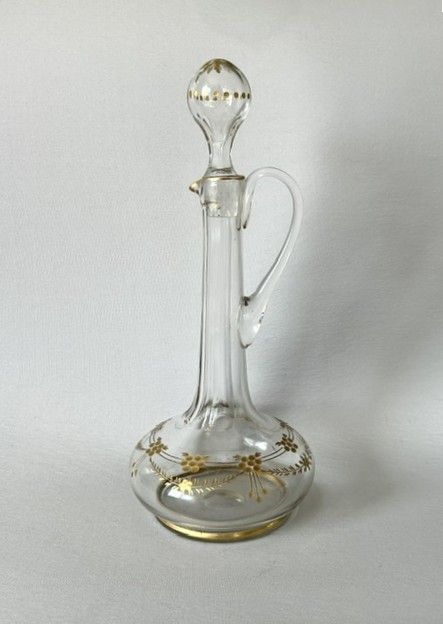
Most examples originate from British workshops, though continental pieces including Bohemian glass and Czech enamel-decorated crystal also appear. Forms range from straightforward pillar-cut cylinders to elaborate novelty shapes and ewers.
How they were made
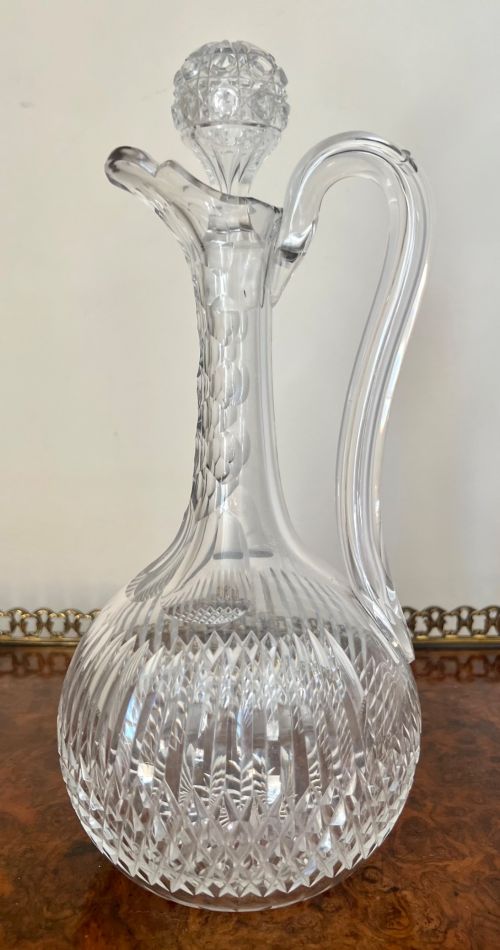
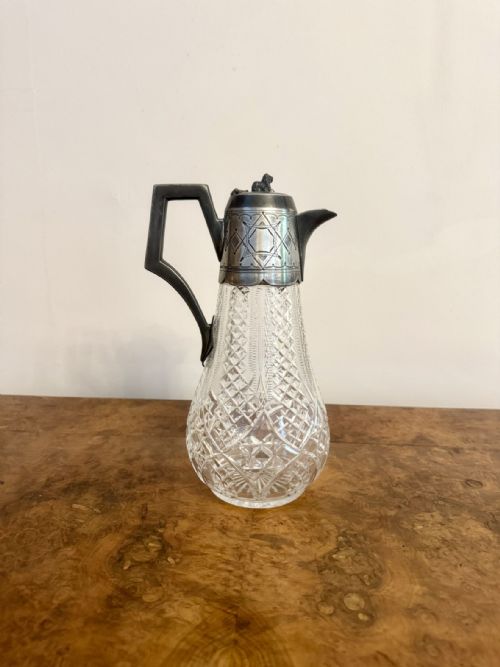
Glass bodies were blown into moulds or free-blown, then finished by hand through cutting, engraving, or enamelling. Facets, prisms, and floral or marine motifs were wheel-cut into the surface to catch the light.
Metal mounts and hinged lids were cast or stamped in sterling silver or silver plate, then fitted securely around the neck of the glass vessel. Many mounts were marked with hallmarks or maker stamps indicating the metalworker and date of manufacture.
Materials recorded across the selection include sterling silver, silver plate, cut glass, crystal, enamel, and coloured glass.
What varies in quality
The clarity and weight of the glass set the foundation, with heavy lead crystal and deep hand-cutting marking out superior examples. Coloured glass pieces depend on the depth and evenness of the hue.
The weight and detail of the silver or silver-plated mountings differentiate standard production from finer work. A sturdy, well-balanced handle and a tightly sealing hinged lid reflect the standard of the original silversmith.
Mappin and Webb·Elkington and Co·Tiffany·Richardsons
The Vintage Glass Claret Jug Glossary
- Claret jug
- A vessel specifically intended for serving red wine at the dining table. These pieces typically feature a handle, a hinged lid, and a pouring spout.
- Crystal
- Glass containing lead oxide, which increases the weight, refractive index, and clarity of the material. This composition allows for deep, sharp cutting.
- Ewer
- A large jug with a wide spout and a looped handle, often used for water or wine. Many Victorian examples adopt classical or revival forms.
- Silver plate
- A layer of silver fused to a base metal, commonly used for the mounts and handles of nineteenth-century jugs. This technique provided the appearance of solid silver at a lower cost.
- Sterling silver
- An alloy of silver containing ninety-two point five percent silver by mass. Mounts in this material carry official assay office hallmarks.
Vintage Glass Claret Jug: Frequently Asked Questions
What is a claret jug used for?
A vintage glass claret jug served as a decorative vessel for decanting and pouring red wine at the formal dining table. They allowed hosts to bring wine from the cellar in a presentable container.
Today, they function both as practical servers for wine and water and as decorative table ornaments when displayed on a sideboard.
How do I date a glass claret jug?
Dating relies on a combination of glass cutting styles, metal mounts, and maker marks. Victorian and Edwardian examples often feature heavy cut crystal paired with marked silver plate or sterling silver.
Later pieces from the Art Deco period introduce clean lines, coloured enamel decoration, or different geographical origins such as Czechoslovakia.
Are these jugs made of crystal or glass?
The listings include both standard glass and heavy crystal pieces. Crystal contains lead, which gives the material greater weight and a sharper refractive cut.
Coloured glass variants, such as cranberry and amber, also appear frequently alongside clear cut glass and engraved crystal bodies.
What metal is used for the mounts?
The mounts, handles, and hinged lids are constructed from either sterling silver or silver plate over a base metal. Sterling silver components usually bear hallmarks indicating the assay office and year.
Silver-plated mounts were produced by prominent manufacturing firms and silversmith workshops during the nineteenth and twentieth centuries.