
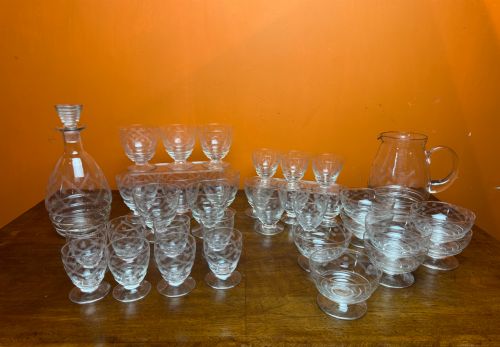

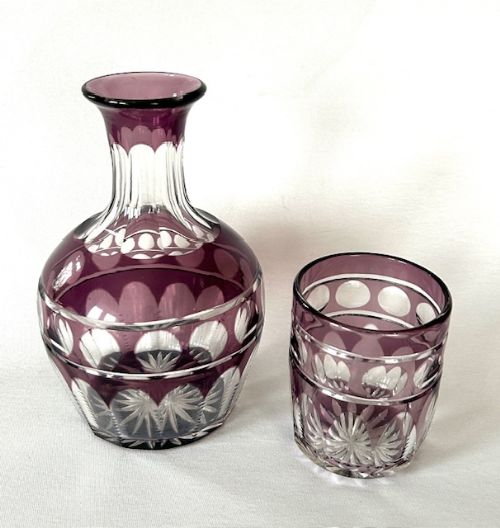


Clear Crystal Pitcher
These heavy, refractive vessels span the nineteenth and early twentieth centuries, bringing brilliance to any table.
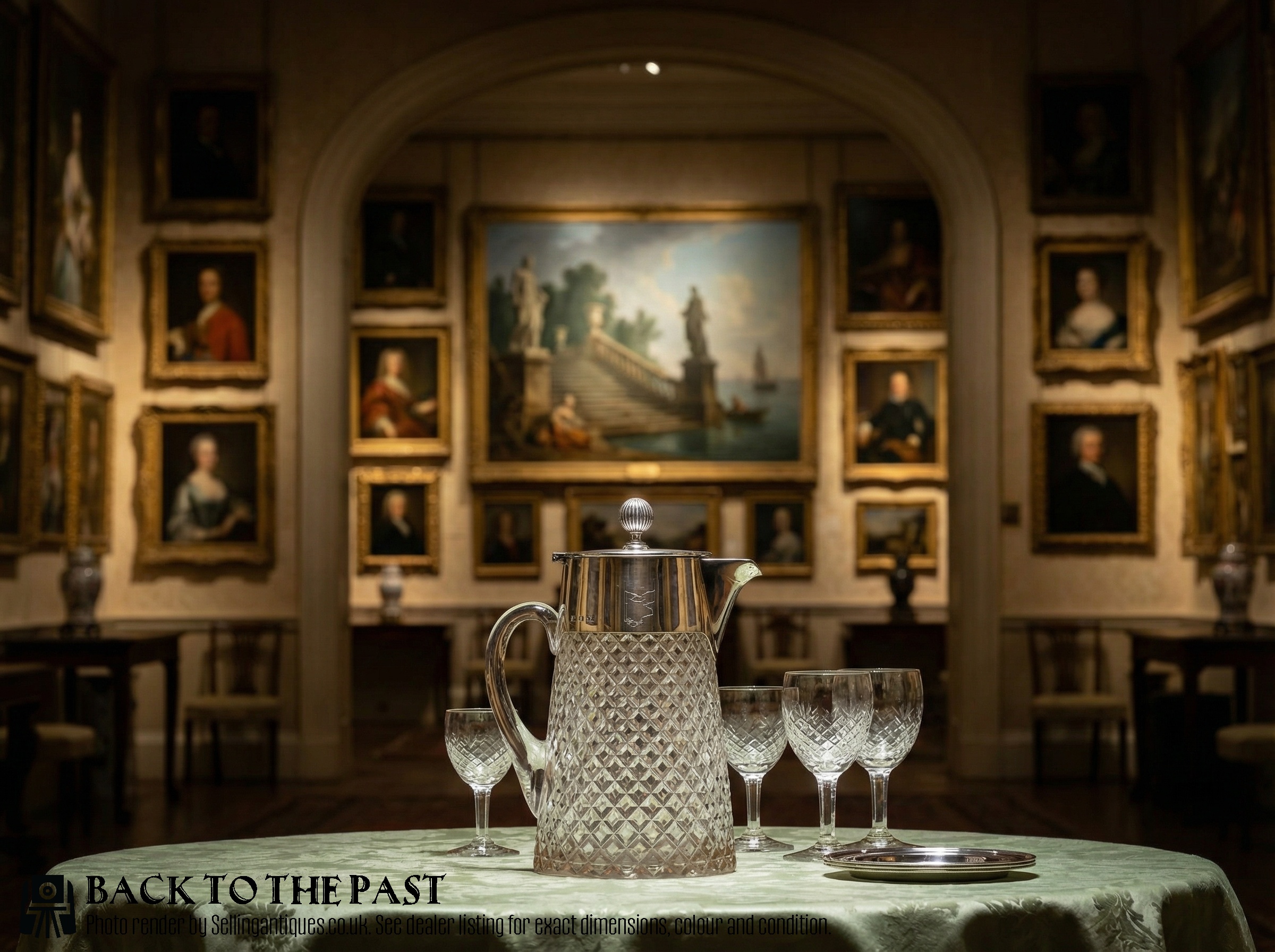
Clear Crystal Pitcher
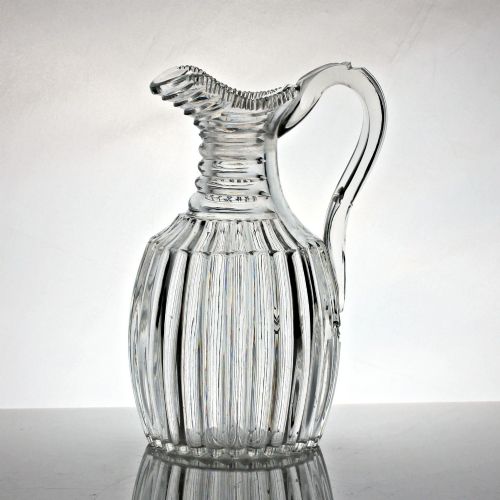
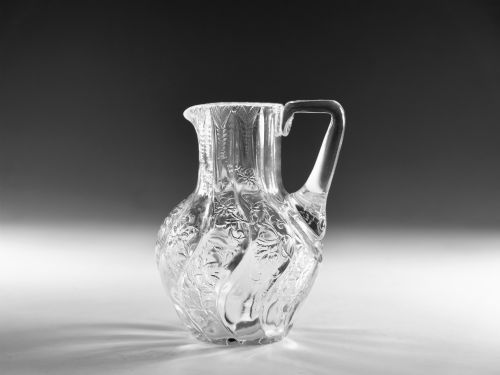
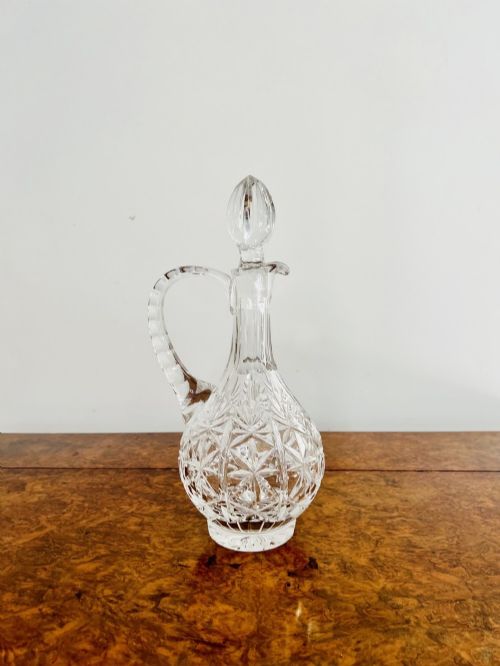
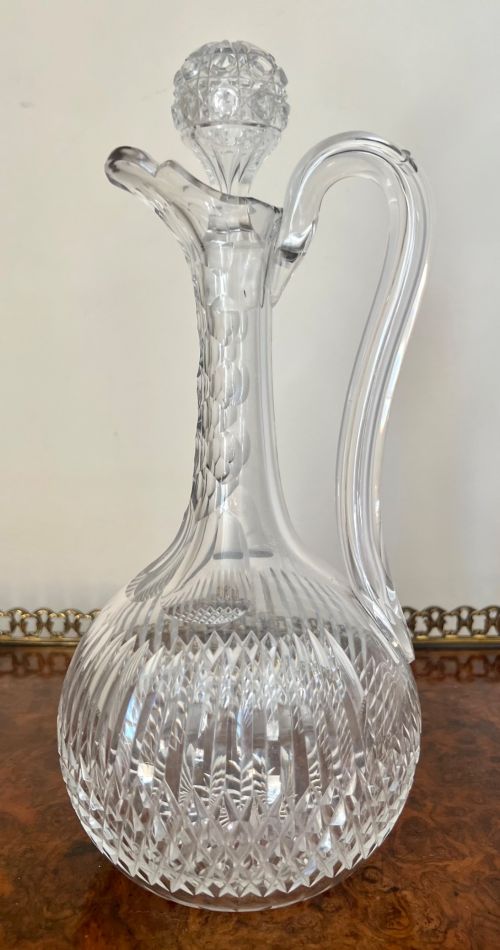
A clear crystal pitcher sits on the dining table or sideboard, designed for serving water, wine, claret or champagne during formal meals. Buyers searching for a clear crystal pitcher will encounter numerous examples spanning the Victorian, Edwardian and Art Deco periods, alongside earlier nineteenth-century forms.
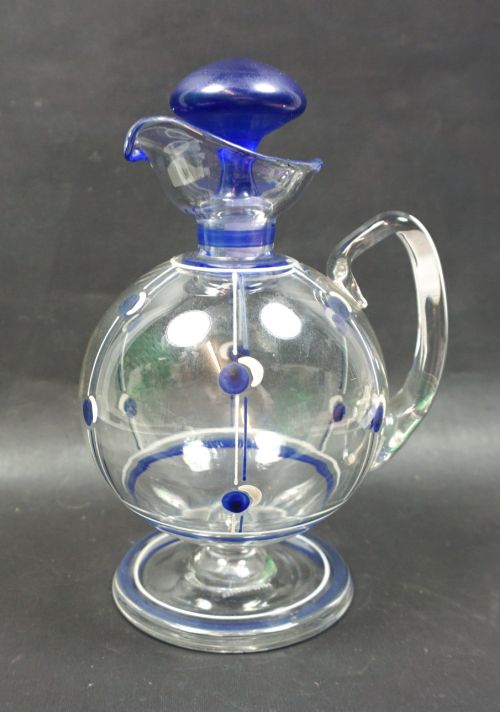
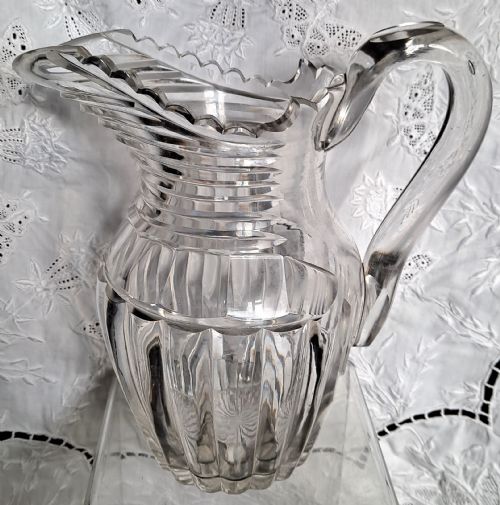
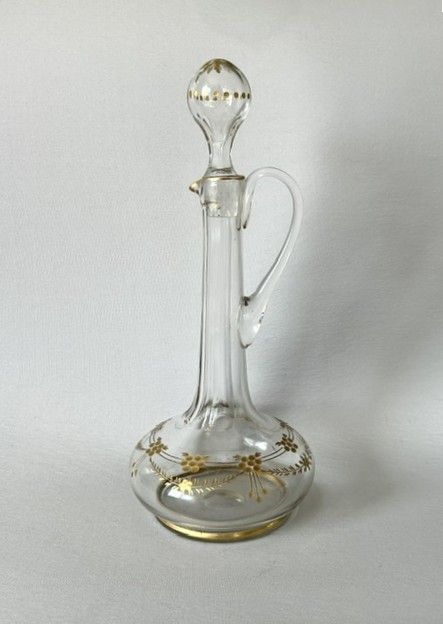
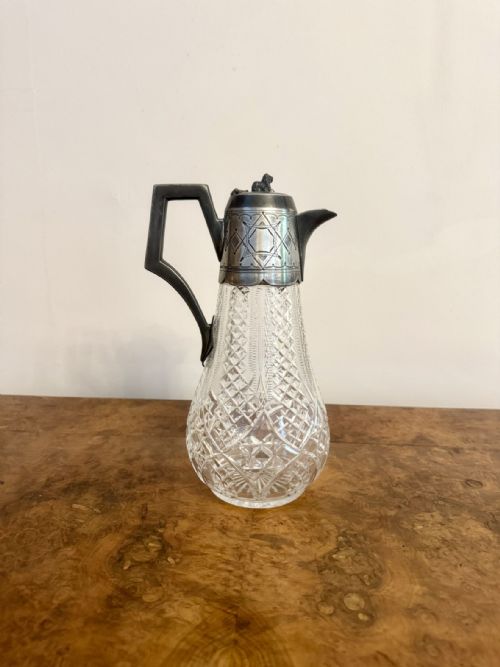
The objects take various functional shapes on this page, including claret jugs, ewers, water jugs and decanters. Many feature mounted metal collars, handles and hinged covers fashioned from silver or silver plate, whilst others rely entirely on blown and cut glass bodies.
Originating from English, French, Bohemian and Czech workshops, these serving pieces reflect the domestic habits of the middle and upper classes from the 1840s onwards. Edwardian and Victorian specimens dominate the selection, often displaying heavy refractive cutting designed to catch gaslight or candlelight.
How they were made
Master glassmakers formed the bodies using lead crystal, clear glass or cut crystal, shaping the molten material by hand blowing into moulds or free-blowing. Craftsmen then employed wheel-cutting techniques to carve deep geometric patterns, pillars, prisms and flutes into the hardened surface.
Decoration often extended beyond cutting to include intricate hand wheel engraving, blue enamel details, white latticinio twists, gilding and etched motifs such as grapes and vines. Metalsmiths completed the vessels by securing silver or silver-plated mounts, collars and spouts directly to the glass necks.
Clear Crystal Pitcher Retail Price Guide 2026
Typical asking prices for clear crystal pitcher among the pieces listed under this phrase on Sellingantiques today, from the lower quarter to the upper quarter. They describe what is for sale here now, not the wider market.
Materials recorded on this page include lead crystal, cut glass, silver plate and clear glass combined with enamel and gilding.
What varies in quality
The clarity and weight of the crystal establish the baseline, with high-lead content metal offering superior brilliance, heft and ring. Superior examples display crisp, deep wheel-cutting where the facets remain sharp to the touch rather than softened by acid polishing.
Stevens and Williams·Webb Corbett·Richardsons·Baccarat·Hukin and Heath
The Clear Crystal Pitcher Glossary
- Claret jug
- A specialised vessel designed specifically for serving red wine at the dining table. They frequently incorporate hinged silver mounts and protective covers.
- Ewer
- A large jug with a wide spout and a sweeping handle, historically used for water or wine service. Victorian and Edwardian examples often feature heavy cut crystal bodies.
- Latticinio
- A decorative glass technique utilising fine opaque white or coloured glass threads twisted within clear glass. It creates delicate linear patterns inside the vessel wall.
- Intaglio
- A method of glass engraving where the design is carved into the surface rather than raised. This technique produces sunken, detailed motifs that appear three-dimensional.
- Silver plate
- A layer of silver fused to a base metal foundation, commonly used for the handles, collars and hinged lids of serving jugs. It provided the look of solid silver at a lower cost.
Clear Crystal Pitcher: Frequently Asked Questions
What is a clear crystal pitcher used for?
These vessels served liquids like water, wine, claret and champagne at formal dining tables throughout the nineteenth and twentieth centuries. They allowed hosts to decant and present beverages attractively to guests.
Today, they function both as decorative dining accessories and as practical pitchers for serving drinks during dinner parties. Their refractive glass bodies add traditional elegance to modern table settings.
How do I date a cut glass pitcher?
Examine the style of the cutting, the form of the handle and any accompanying silver mounts, which often carry hallmarks with specific date letters. Victorian pieces tend to feature heavy geometric cutting and ornate silver lids, while Edwardian examples often display lighter, refined floral motifs.
Art Deco specimens from the 1930s introduce streamlined shapes, enamel decoration and stylistic influences from Czechoslovakia. Comparing the vessel shape to documented factory designs helps narrow the production window.
Are silver mounts original to the glass?
Makers during the Victorian and Edwardian eras routinely designed glass bodies specifically to fit custom-made metal collars and hinged covers. Hallmarks on the silver often correspond directly to the stylistic period of the glass.
Professional mounting ensured a secure fit around the neck of the jug, functioning alongside the handle for balanced pouring. Inspecting the join where metal meets glass reveals whether the assembly is period-correct.