

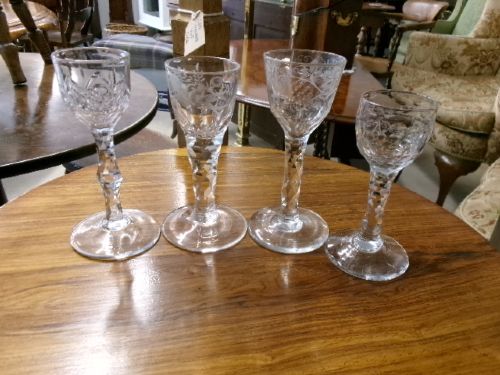
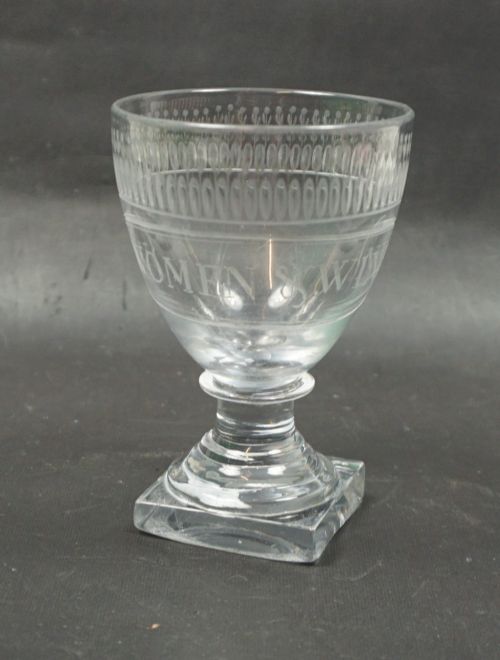
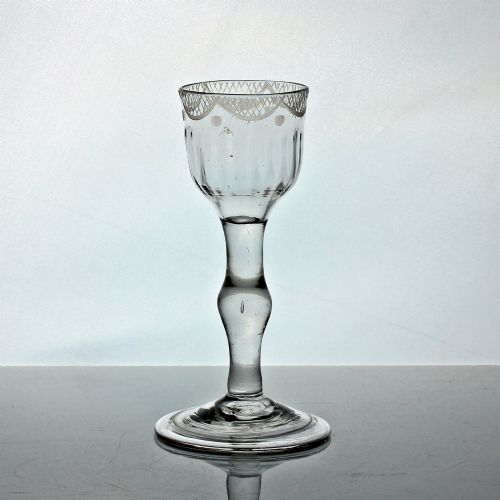
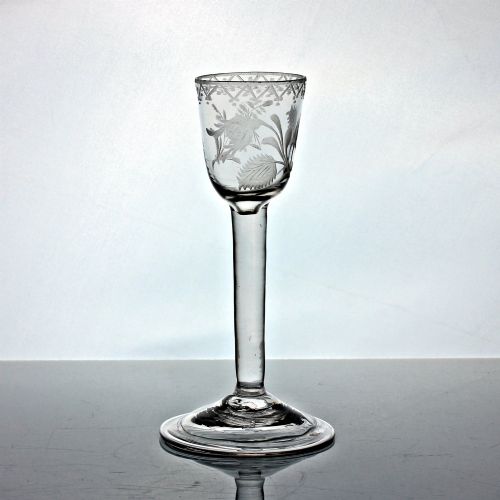
Engraved Wine Glasses
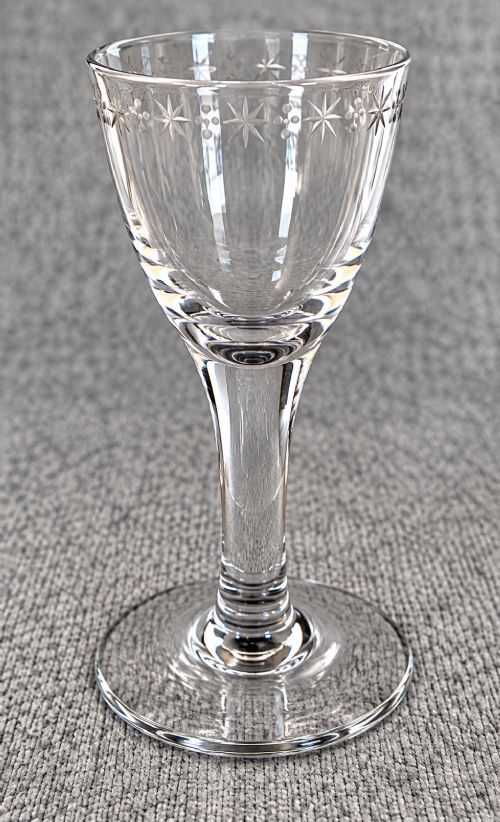
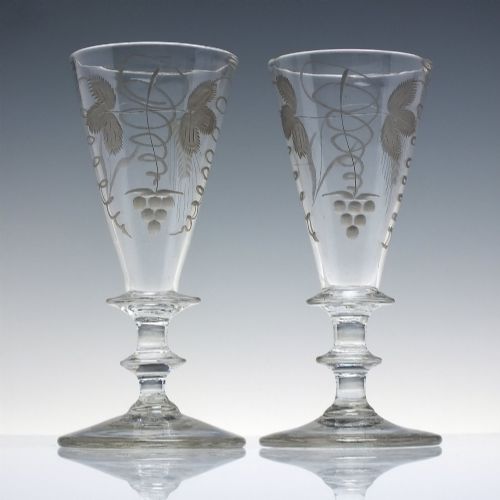
When buying engraved wine glasses, you are acquiring drinking vessels decorated with wheel-cut or diamond-point surface patterns spanning the Georgian to Edwardian eras.
Engraved Wine Glasses
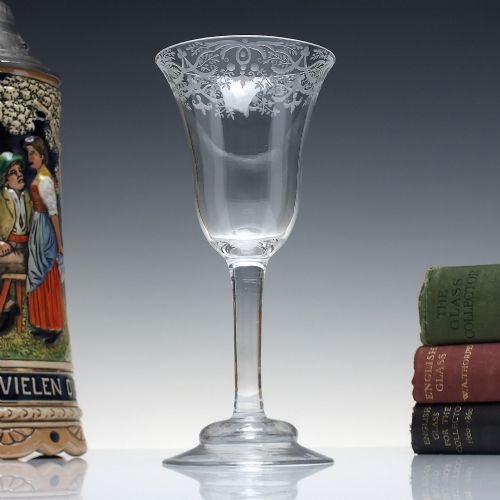
Engraved wine glasses span domestic stemware produced across the eighteenth, nineteenth, and early twentieth centuries. The selection ranges from eighteenth-century Georgian dram glasses and balustroid stems with air or opaque twists to Victorian and Edwardian coloured glass services.
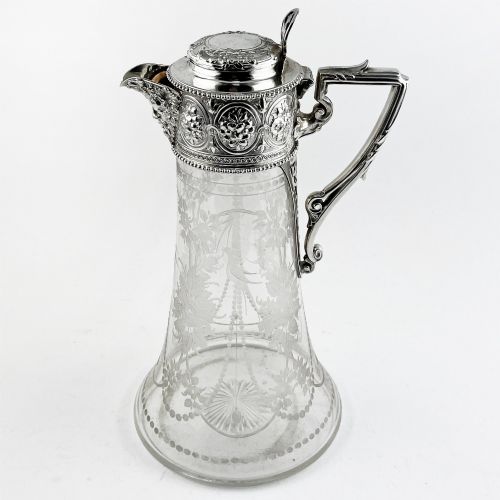
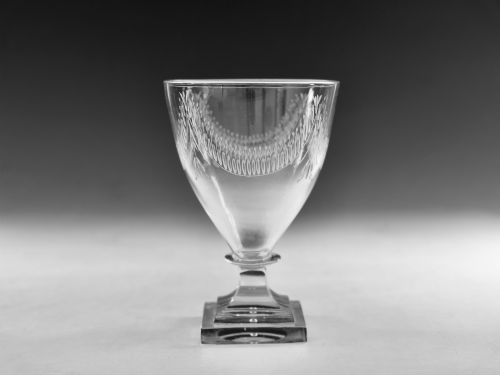
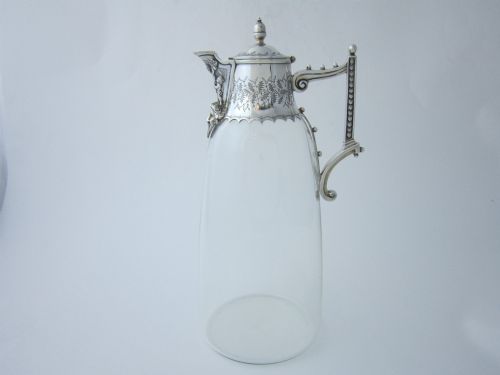
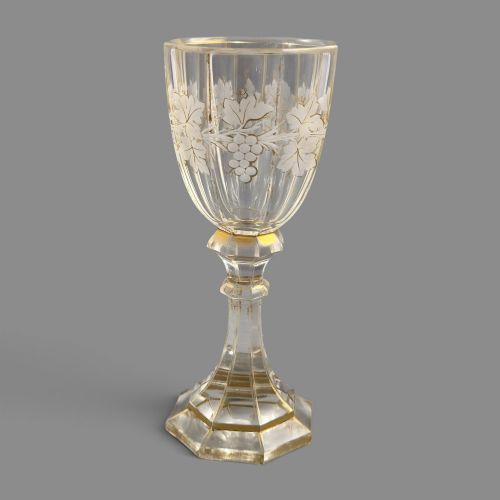
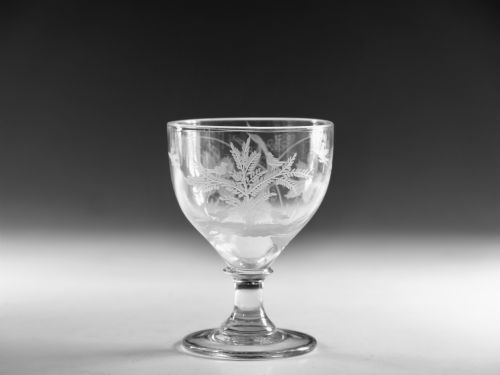
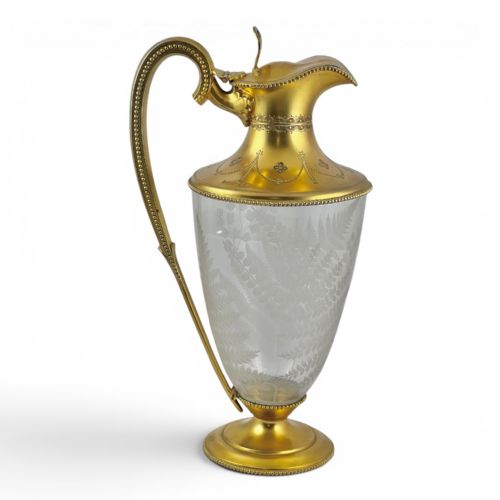
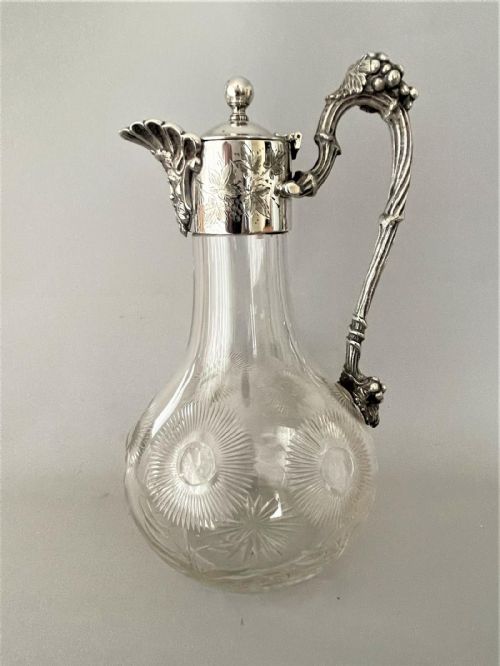
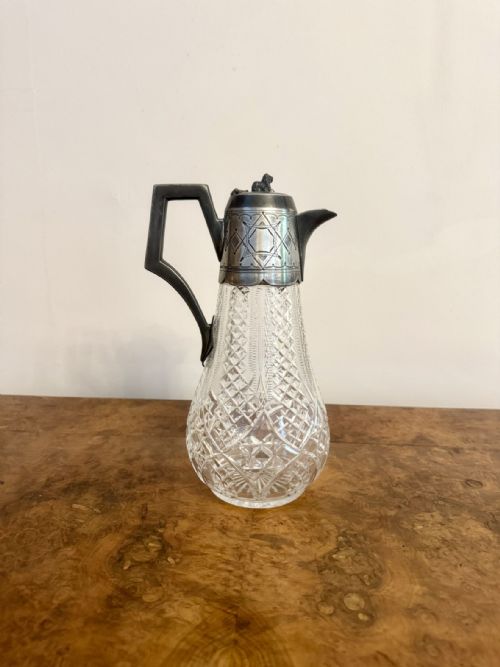
Forms include standard wine glasses, ale glasses, goblets, and rummers, alongside related vessels like claret jugs and decanters. Examples appear in clear lead crystal as well as coloured glass including cranberry, amber, green, and blue hues.
What varies in quality
Quality rests upon the precision and depth of the wheel engraving, the clarity and weight of the lead crystal, and the sophistication of the stem form. Pieces exhibiting fine, crisp detailing in complex armorials or botanical scenes sit at a higher tier than simpler, routine commercial work.
The integrity of the glass itself, the balance of the proportions between bowl, stem, and foot, and the presence of undamaged, well-fitted precious metal mounts or gilding further differentiate standard table examples from exhibition or documented works.
Listings feature lead crystal and clear glass alongside coloured glass bodies in amber, cranberry, green, and blue across the eighteenth to early twentieth centuries.
Asprey and Co. Ltd·Moser Bohemian·Webb Corbett·Baccarat·Josephinenhutte·Joseph Keller·John Walsh
The Engraved Wine Glasses Glossary
- Air twist
- A stem formation containing elongated internal air bubbles drawn into spiral threads. This technique creates a delicate linear pattern visible within the transparent glass stem.
- Opaque twist
- A stem featuring white or coloured enamel glass threads drawn into single or double spiral strands. These opaque glass filaments stand out sharply against the clear lead metal.
- Rummer
- A heavy-bowled drinking vessel used for wine or punch, typically featuring a short sturdy stem and a wide foot base. This robust form emerged widely in the late eighteenth and nineteenth centuries.
- Baluster
- A thick, swelling stem shape resembling an architectural column, often found on mid-eighteenth-century drinking vessels. Variations include light balusters and nodal stems.
- Intaglio
- A technique where the design is sunk beneath the surface of the glass by means of a small rotating abrasive wheel. This produces deep, three-dimensional sculptural motifs.
Engraved Wine Glasses: Frequently Asked Questions
How do I date an engraved wine glass?
Dating relies on combining the form of the bowl, the construction of the stem, and the type of metal used in the glass composition. Eighteenth-century examples often display baluster or twist stems, whereas Victorian pieces frequently utilise facet cutting and coloured glass bodies.
Foot form and pontil mark characteristics also provide clues. Pontil scars on the underside point towards earlier hand-blown manufacture before smooth machine-ground bases became standard.
What is an opaque twist stem?
An opaque twist stem contains internal threads of white or coloured enamel glass twisted into spiral patterns. Makers produced these by incorporating canes of opaque glass into the hot metal before drawing and twisting the stem.
Single series twists contain one set of enamel threads, while double series twists combine outer and inner spirals. This decorative stem style is characteristic of mid-eighteenth-century English lead glass.
Are these glasses safe to use?
Most antique drinking glasses are physically stable enough for gentle use, but antique lead crystal requires careful handling. Hand washing in lukewarm water is essential to preserve the surface engraving and prevent thermal shock.
Exposure to modern dishwashers can cause clouding and surface damage to historical glass. Due to age-related fragility and potential trace metal content in certain nineteenth-century coloured glass, some collectors prefer display over dining.
What does Jacobite engraving mean?
Jacobite engraving refers to political iconography associated with the exiled House of Stuart, popular among sympathisers during the eighteenth century. These glasses typically feature covert symbols such as the white rose of York, oak leaves, or specific Latin inscriptions.
Authentic pieces require careful examination of the glass metal and engraving technique to distinguish period work from later commemorative reproductions. The presence of air twists or plain stems often corresponds with the era of active political sentiment.