



Vintage Aperitif Glasses
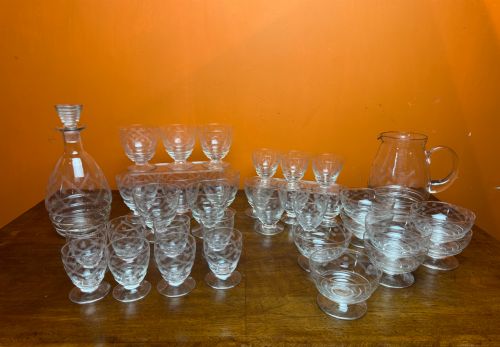
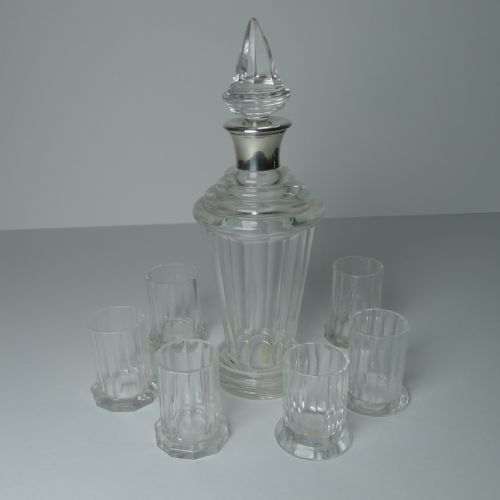
These vintage aperitif glasses bring small pours of wine, sherry and cordial to the table in glass, lead crystal and silver plate.
Vintage Aperitif Glasses
When you search for vintage aperitif glasses, you encounter stemware, cordial glasses, liqueur glasses and decanter sets made for pre-dinner drinks. These vessels date from the Regency and Victorian eras through the Edwardian period, 1900, 1910, 1920 and 1930.
The most common forms on this page are matched sets of cordial and liqueur glasses, often accompanied by decanters, serving trays and larger drinking suites. French Art Deco, Art Nouveau, Georgian and Victorian styles dominate the selection.
Makers and manufacturers represented include Karl Palda, Saint-Louis, Theresienthal and Moser. Pieces range from single pairs to large suites of thirty-four glasses.
How they were made
Glassmakers shaped these pieces from clear glass, lead crystal and coloured glass, frequently applying hand-enamelled details and twenty-four-carat gold leaf. Artisans used cutting, etching and engraving techniques to ornament the surfaces with geometric patterns and starburst motifs.
Metalwork complements the glassware in silver-plated mounts and serving trays, while Austrian and Bohemian workshops combined glass with silver components. Hand-blown bowls and stems reflect the specific manufacturing methods of the nineteenth and early twentieth centuries.
A tango pair of liqueur glasses from the 1920s brings a flash of bright, rhythmic colour to the sideboard.
What varies in quality
The distinction between ordinary and exceptional glass rests on the clarity of the material and the precision of the cut or engraved decoration. Heavy lead crystal and hand-enamelled finishes require greater skill from the artisan than plain pressed glass.
Completeness alters the character of a service, as matched sets of eight or twelve command more attention than isolated pairs. Signed works by recognised factories retain a stronger identity through their documented origins and distinct stylistic traits.
Karl Palda·Saint-Louis·Theresienthal·Moser
The Vintage Aperitif Glasses Glossary
- Cordials
- Small stemmed glasses designed for drinking concentrated liqueurs after a meal. They usually hold a fraction of the volume of a standard wine glass.
- Lead crystal
- Glass containing metal oxides that increase weight, brilliance and resonance. It allows for deeper, sharper cutting by the glass cutter.
- Enamel
- Opaque vitreous composition fused to the surface of the glass by heat. Hand-enamelling adds coloured patterns and metallic accents to the vessel.
- Decanter set
- A matched grouping consisting of a serving tray, a decanter and a matching series of small glasses. These sets were used for dispensing aperitifs in domestic settings.
- Stemware
- Drinking vessels raised on a stem above a footed base. This form prevents the warmth of the hand from affecting the temperature of the chilled drink.
Vintage Aperitif Glasses: Frequently Asked Questions
What is an aperitif glass?
An aperitif glass is a small drinking vessel designed for serving alcoholic drinks before a meal, such as sherry, vermouth or liqueur. These glasses are smaller than standard wine glasses because aperitifs are served in modest quantities.
The selections on this page include cordial glasses, liqueur glasses and small wine glasses from the Victorian, Edwardian and Art Deco periods.
How do I date old glassware?
Dating glassware relies on style, manufacturing technique, shape and decorative motifs. Regency and Victorian pieces often feature heavy forms and hand etching, while 1920s and 1930s items display geometric Art Deco lines.
Maker marks, signatures on the base and factory documentation also help establish the decade of production for crystal and enameled services.
Can I use antique glasses daily?
Using vintage aperitif glasses for occasional toasts or evening drinks is entirely practical if handled with care. Hand washing in warm water preserves the gold leaf, enamel and delicate stems.
Avoiding sudden temperature changes prevents thermal shock in older lead crystal and blown glass.
What is the difference between a cordial and a liqueur glass?
Cordial and liqueur glasses are both small stemware items intended for post-dinner or pre-dinner sipping, and the terms are often used interchangeably. Cordial glasses traditionally held fruit-infused syrups or spirits, while liqueur glasses held stronger spirits.
On this page, both types appear in matched sets ranging from pairs to services of twelve or more pieces.