

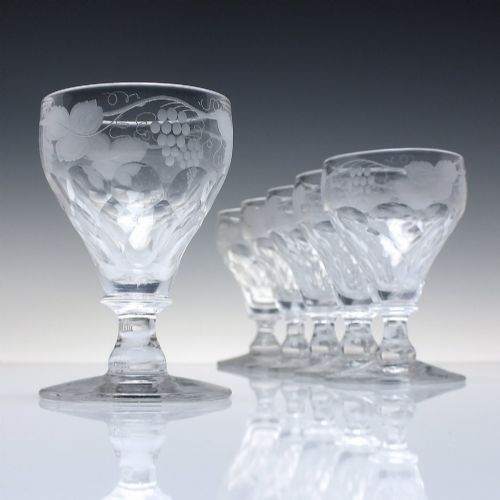
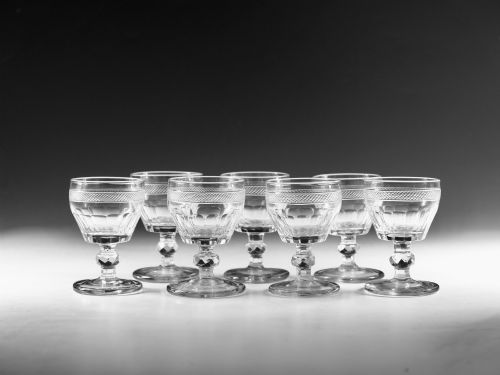


Clear Crystal Port Glasses
Clear crystal port glasses bring brilliant clarity and weight to the table, and collectors prize them for their traditional forms and sparkling cut bowls.
Clear Crystal Port Glasses
When you search for clear crystal port glasses, you are looking at small drinking vessels designed specifically for fortified wines, often accompanied in listings by related glassware such as wine glasses and sherry glasses. These pieces span from the Georgian and Regency eras through to the Victorian and Edwardian periods, reflecting centuries of dining traditions.
The versions you are most likely to meet on this page include antique port glasses alongside matching glassware forms, often paired with decanters from the same period. They appear in styles ranging from Regency and Georgian to Victorian and Edwardian glassware, showing the enduring appeal of heavy lead crystal at the table.
Materials and construction
Makers formed these items using lead crystal, cut glass, and clear glass, shaping them through traditional glassblowing techniques before applying decorative cuts. The heavy lead content gives the material its characteristic refractive quality and substantial feel in the hand.
Surface decoration frequently involves wheel-cutting or etching, seen on pieces ranging from early nineteenth-century decanters to later dessert wine glasses. Workshops utilised precise cutting techniques to create facets, rings, and intaglio motifs that catch the light.
Clear Crystal Port Glasses Retail Price Guide 2026
Typical asking prices for clear crystal port glasses among the pieces listed under this phrase on Sellingantiques today, from the lower quarter to the upper quarter. They describe what is for sale here now, not the wider market.
Listings feature lead crystal and clear glass items spanning the Georgian, Regency, Victorian, and Edwardian periods.
Judging quality and craftsmanship
Quality rests upon the crispness of the glasscutting and the purity of the metal, where sharper facet edges and heavier lead crystal indicate superior manufacture. Pieces with precise wheel-cut details and well-balanced proportions stand clearly apart from simpler, later commercial wares.
The brilliance of the clear glass and the absence of cloudiness or heavy bubbles distinguish finer examples from standard production items. Makers who achieved thin, resonant bowls paired with stable bases demonstrated a higher level of glasshouse skill.
Webb
The Clear Crystal Port Glasses Glossary
- Lead crystal
- Glass containing a significant proportion of lead oxide, which increases weight, clarity, and the refractive index. This material allows for deep, sharp cutting without chipping.
- Prussian style
- A decanter design featuring horizontal neck rings, typically three in number, popular during the Georgian and Regency periods. These rings provided a secure grip when pouring.
- Intaglio cut
- A technique where the design is carved into the surface of the glass rather than leaving the pattern in relief. It creates a smooth, sunken motif.
- Ship's decanter
- A decanter with a broad, flat base and a sloping body designed to prevent tipping at sea. They are frequently found in clear crystal from the Regency era.
Clear Crystal Port Glasses: Frequently Asked Questions
Can I use these glasses for modern wine?
Port glasses are traditionally smaller than modern wine glasses because fortified wine is served in smaller portions. You can certainly use them for port, sherry, or dessert wines.
Their compact size also makes them suitable for liqueurs and spirits, allowing you to enjoy drinks in authentic period style.
How can I tell Georgian glass from Victorian pieces?
Georgian and Regency glassware often exhibits a darker metal tone with hand-polished pontil marks on the base and heavier, simpler cutting. Victorian pieces frequently show brighter, more complex machine-assisted cutting and etching.
Examining the weight and the sharpness of the facets helps reveal the manufacturing period.
Why do some decanters have three rings?
The horizontal rings on the neck of a decanter, known as neck rings, served a practical purpose during the Georgian and Regency eras. They provided a secure grip for wet hands when pouring wine at the dining table.
Over time, these functional rings evolved into a standard decorative feature of traditional decanter design.