

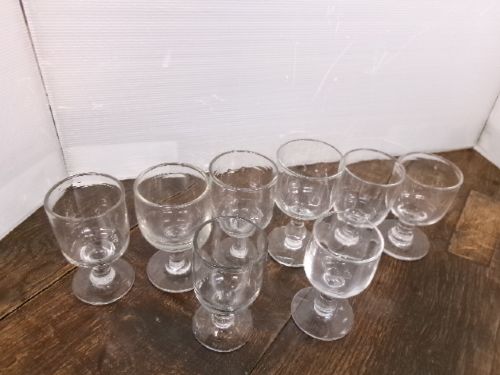



Vintage Port Glasses
These vintage port glasses and associated barware bring proper period weight and deep colour to the table.
Vintage Port Glasses
When you search for vintage port glasses, you enter a domain of heavy-bowled glassware and companion decanters shaped for fortified wine. The pieces appearing here span the Georgian, Regency, Victorian, and Edwardian periods, running from about eighteen-thirty through the early twentieth century.
Decanters form an essential part of the category, often rendered in lead crystal with three-ring Prussian necks and matching stoppers. Alongside them sit spirit barrels and silver-mounted bottles designed to hold port, brandy, and sherry.
How they were made
Makers of these items relied on heavy lead crystal and blown glass, shaping bowls by hand before applying deep wheel-cut decoration. The resulting weight gives each glass and decanter a solid feel in the hand.
Surface ornamentation on Victorian and Georgian examples often includes delicate etching alongside multi-ring necks on decanters. Metal components combine glass with silver plate and sterling silver, particularly on Edwardian spirit bottles.
Vintage Port Glasses Retail Price Guide 2026
Typical asking prices for vintage port glasses among the pieces listed under this phrase on Sellingantiques today, from the lower quarter to the upper quarter. They describe what is for sale here now, not the wider market.
The listings span periods from Georgian and Regency up to Edwardian, encompassing lead crystal, coloured glass, and silver-plated decanters.
What varies in quality
Quality in these drinking vessels rests on the depth of the metal and the crispness of the cutting. Superior lead crystal shows sharp facets that catch the light cleanly, whereas lesser pieces display softer edges from hurried finishing.
The depth of colour in green and aqua dessert glasses also distinguishes better work, alongside the matching quality of stoppers on decanters. Original matching sets command greater attention than assembled groups.
The Vintage Port Glasses Glossary
- Prussian neck
- A decanter neck featuring three distinct horizontal glass rings. This design helped secure the vessel during pouring and shipping.
- Rummer
- A large, sturdy drinking glass common in the Georgian and Victorian eras. They were traditionally used for ale, cider, or punch before finding a place for heavier wines.
- Lead crystal
- Glass containing a significant proportion of lead oxide. This addition increases the weight, refractive index, and clarity of the material.
- Spirit barrel
- A horizontal barrel-shaped vessel mounted on a stand. These were utilised for storing and dispensing spirits at the sideboard.
Vintage Port Glasses: Frequently Asked Questions
Can I still drink port from these glasses?
Yes, these antique vessels were made for serving fortified wine and remain entirely usable today. Their smaller bowl sizes suit the higher alcohol content of port.
Hand washing preserves the finish and ensures the lead crystal stays bright for regular dining use.
How do I date a glass decanter?
Examine the base for a pontil mark where the blowing iron was snapped off, which often indicates older Georgian or Regency manufacture. Sharp three-ring necks and heavy lead crystal also point toward the nineteenth century.
Edwardian pieces frequently introduce silver mounts and more standardised stoppers compared to earlier handmade examples.
What is the difference between a rummer and a port glass?
Rummers feature larger, broader bowls designed for bulkier portions of punch or ale. Port glasses and dessert wine glasses offer smaller capacities suited to sipping sweet fortified wines.
Georgian and Victorian dining habits dictated different glassware sizes for each course of a meal.