
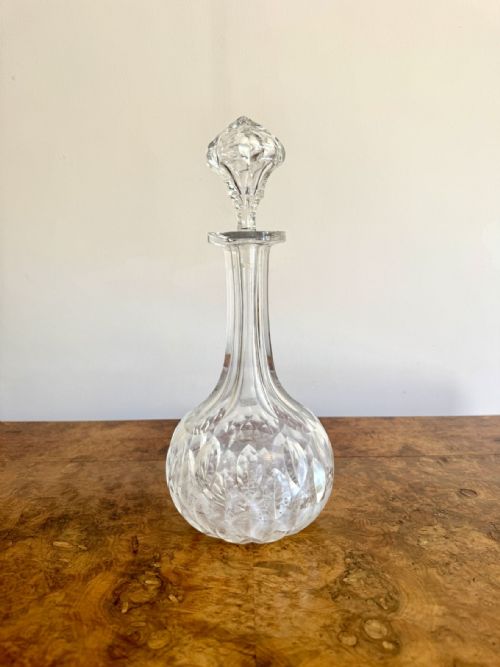
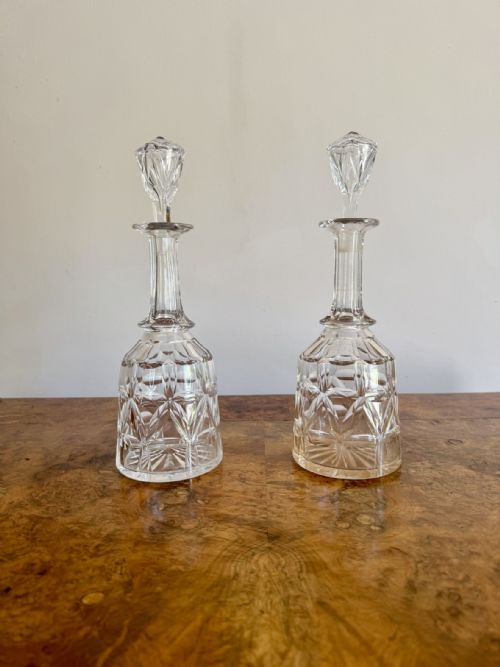


Cut Lead Crystal Decanter
A cut lead crystal decanter brings heavy brilliance to the sideboard, catching candlelight through decades of precise wheel-cutting.
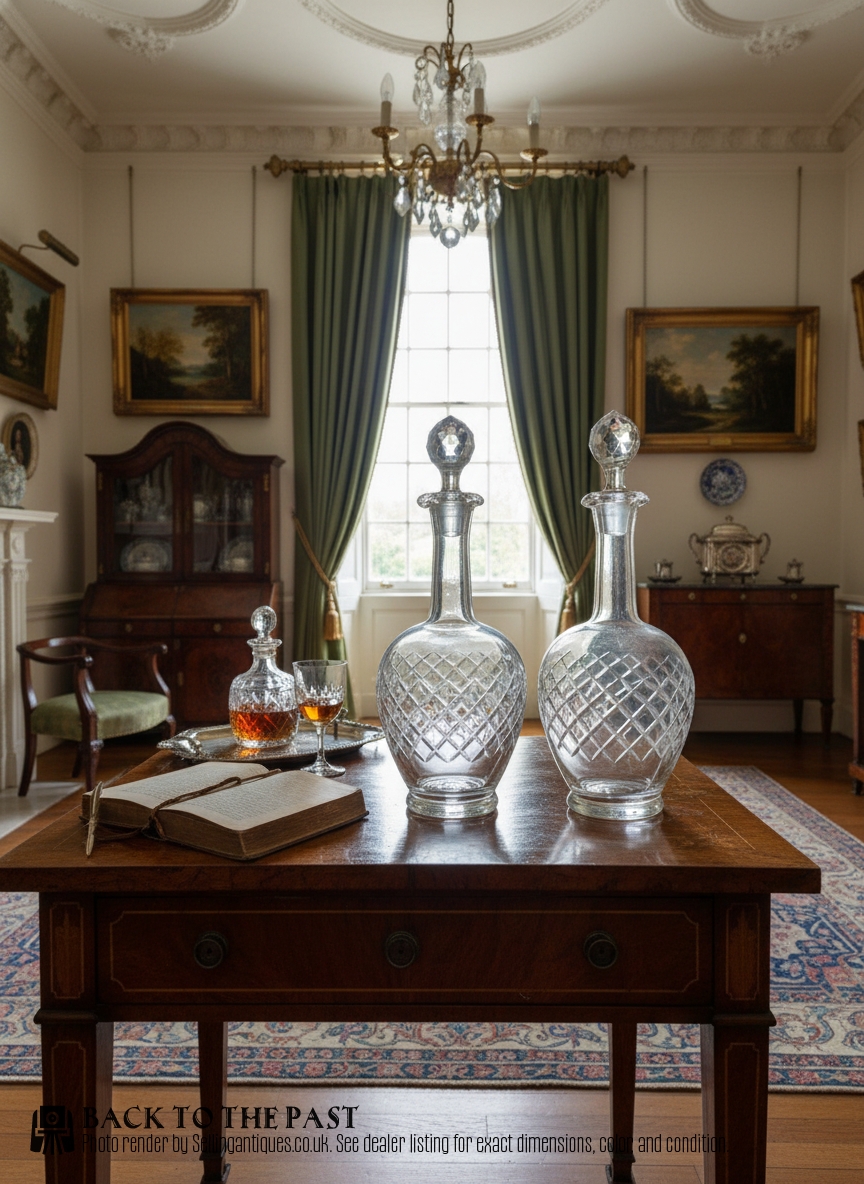
Cut Lead Crystal Decanter
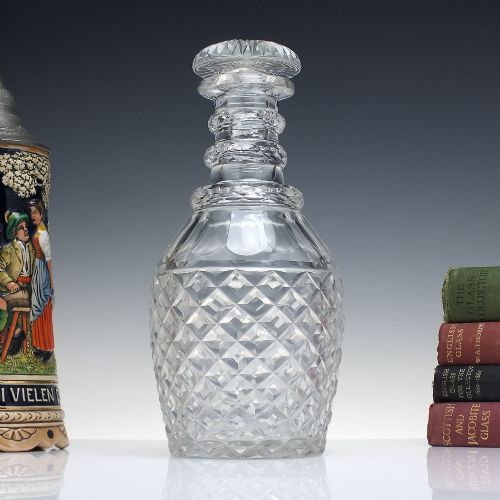
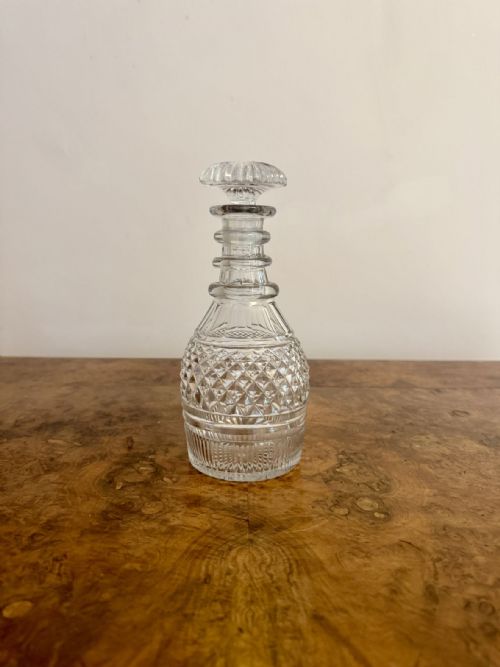
A cut lead crystal decanter is a heavy, clear vessel designed to hold and pour wine or spirits, shaped by periods spanning the Georgian, Regency, Victorian, and Edwardian eras. Buyers searching this phrase meet everything from early nineteenth-century Prussian forms with neck rings to late Victorian and Edwardian spirit decanters.
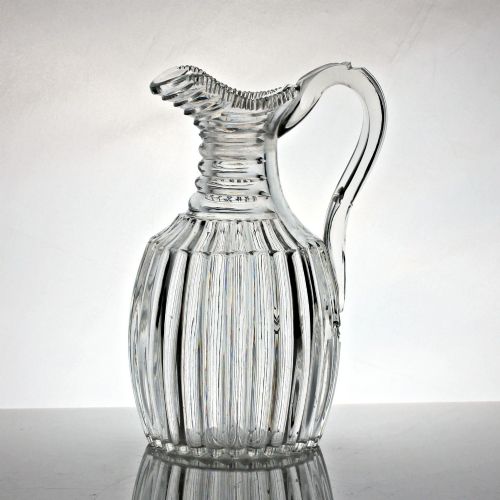
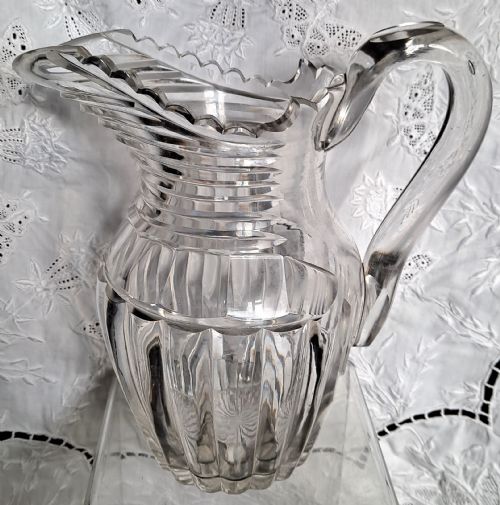
The objects listed range from single bottles to pairs and trios, taking forms such as mallet decanters, ship's decanters, ewers, and water jugs. Most examples on this page date from the nineteenth and early twentieth centuries, rendered in clear cut glass, lead glass, and crystal.
How they were made
The creation of these pieces relies on heavy lead glass or crystal, blown into moulds or free-blown before undergoing extensive wheel-cutting. Craftsmen cut deep facets, pillars, prisms, and horizontal rings directly into the thick metal to refract light.
Some vessels feature optical blowing where the gather takes pattern inside a ribbed mould, while others incorporate engraved labels or polished flat surfaces alongside deep geometric cutting.
What varies in quality
Quality rests in the weight of the metal, the crispness of the wheel-cut facets, and the brilliance of the glass. Superior pieces show sharp, clean edges to the cutting rather than softened or rounded impressions.
The proportion of the neck rings, the stability of the base, and the matching quality of the original stoppers separate ordinary utility vessels from the finest examples.
James Powell
The Cut Lead Crystal Decanter Glossary
- Lead crystal
- Glass containing a significant lead oxide content, increasing weight, clarity, and the refractive index that creates rainbow sparkles.
- Prussian decanter
- A form originating in the Georgian period featuring a wide base, tapering body, and distinct parallel rings around the neck.
- Pillar cut
- A style of heavy geometric cutting featuring vertical flutes or pillars running down the body of the vessel.
- Ship's decanter
- A decanter with a wide, stable flat base designed to prevent tipping aboard a moving vessel at sea.
- Mallet decanter
- A bottle form with a straight tapered body resembling a wooden mallet, common in the mid-nineteenth century.
Cut Lead Crystal Decanter: Frequently Asked Questions
What is a cut lead crystal decanter?
A heavy glass vessel cut with geometric patterns to hold wine or spirits.
These pieces span Georgian, Victorian, and Edwardian periods.
How do I date a cut glass decanter?
Look at the shape, neck rings, and cutting style.
Georgian and Regency pieces often feature multiple neck rings, whilst Edwardian and Victorian examples show heavier, deeper prismatic cutting.
Can I use antique decanters for daily serving?
Yes, they remain functional vessels for wine and spirits.
Careful hand washing preserves the lead crystal and prevents damage to the stoppers and facets.
Why do some decanters have wide flat bases?
Wide bases belong to ship's decanters built for stability.
The broad footprint stops the vessel from sliding or tipping during travel.