


Vintage Garden Console Table
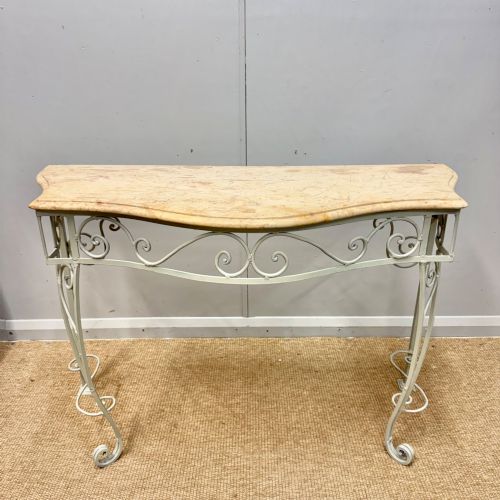
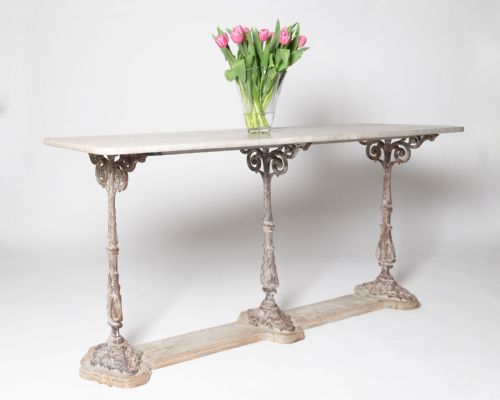
These vintage garden console table pieces bring sturdy metalwork and stone surfaces into outdoor spaces, offering both practical workspace and classic architectural presence.
Vintage Garden Console Table
When searching for a vintage garden console table, buyers encounter a robust mix of nineteenth-century and early twentieth-century ironwork, wood, and marble. The pieces span Victorian, Edwardian, and French country styles, built originally for conservatories, orangeries, and potting sheds.
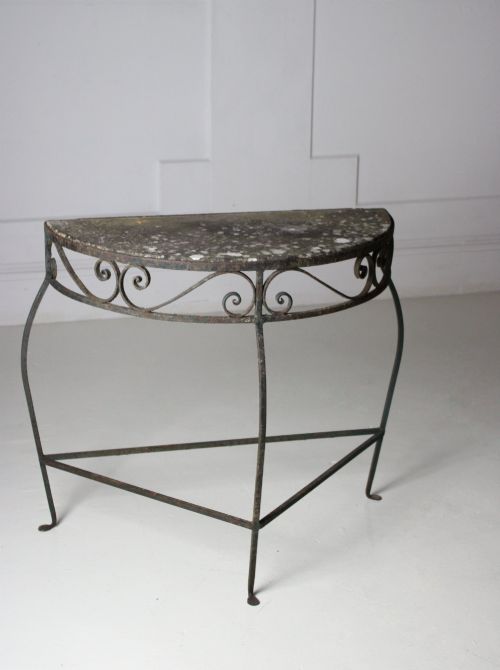
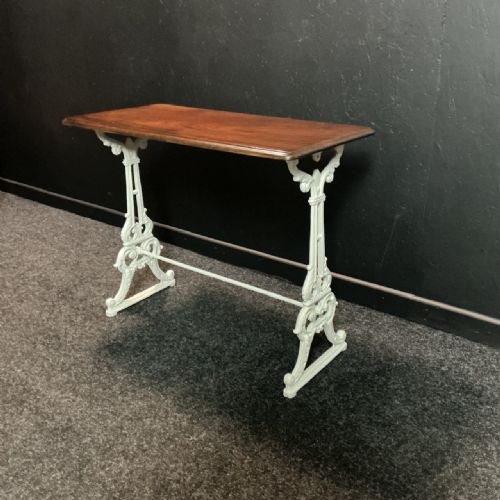
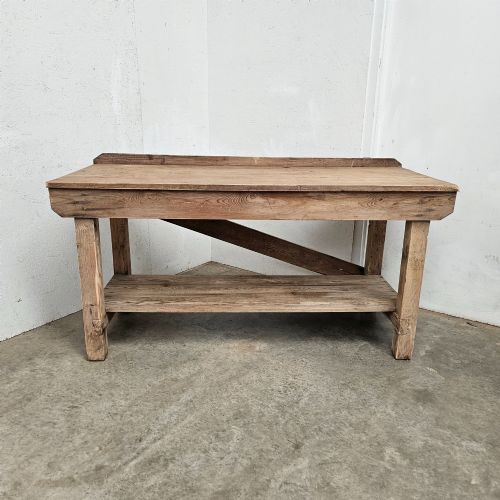
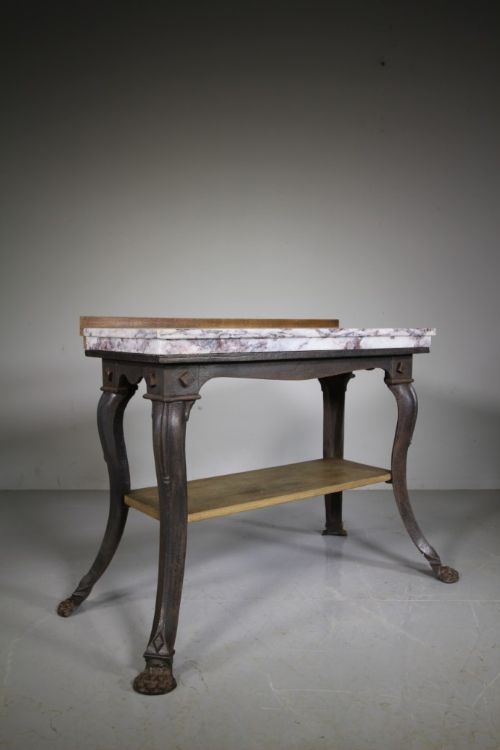
The most frequent examples on this page are narrow console and side tables featuring heavy cast or wrought iron bases paired with marble, pine, or copper tops. Forms range from simple folding metalwork and potting tables to grander marble-topped console designs dating from the eighteen-eighties to nineteen-twenty.
Materials and Construction
Frames rely primarily on cast iron and wrought iron, forged or moulded to provide heavy, stable supports for outdoor and conservatory use. These metal bases frequently exhibit painted surfaces or natural verdigris patinas accumulated over decades.
Tops utilise contrasting materials, pairing heavy white marble or weathered pine with the industrial metal structures. Some specialised pieces incorporate copper sheeting or timber planks salvaged from domestic and horticultural furniture.
Several tables here began life as heavy Victorian laundry mangles before losing their rollers to become garden console tables.
Assessing Quality and Character
Quality rests in the heaviness of the casting and the integrity of the structural joints. Finer examples display crisp moulding on iron bases and substantial, well-fitted marble or timber slabs rather than thin replacements.
The balance between original weathered surface texture and structural soundness determines the character of each piece. Tables retain distinct value when their aged patinas remain untouched by aggressive restoration.
The Vintage Garden Console Table Glossary
- Console table
- A narrow table designed to stand against a wall, frequently featuring a decorative base and a stone or wooden top. These pieces serve practical functions in hallways, gardens, and conservatories.
- Orangery
- A large glass-roofed building used traditionally for protecting delicate plants through winter. Furniture built for these spaces prioritizes weather-resistant materials like iron and stone.
- Verdigris
- A green patina that forms naturally on copper and brass through atmospheric oxidation. This chemical weathering adds significant visual character to garden metalwork.
- Potting table
- A functional work table used for gardening tasks such as repotting plants. They typically combine sturdy wooden working surfaces with lower storage shelves.
Vintage Garden Console Table: Frequently Asked Questions
Can I leave these tables outside?
Most of these pieces utilise cast iron, wrought iron, and stone which withstand outdoor conditions well. However, protecting marble and timber surfaces from harsh winter frost prevents cracking.
Regular cleaning helps maintain the original metal patinas while stopping excessive moisture damage to wooden components.
How do I clean a marble top?
Wash the marble surface using warm water and a soft cloth, avoiding harsh acidic cleaners that etch the stone. Mild soap removes everyday garden dirt safely.
Dry the slab thoroughly afterwards to prevent water marks forming on older, porous stone surfaces.
Are these tables heavy to move?
Iron bases and marble slabs combine to create substantial weight, making these tables very stable in breezy garden settings. Two people are usually required to lift and reposition them safely.
Smaller folding metal variations offer lighter alternatives if you need to move the furniture frequently.
How do I date an iron base?
Nineteenth-century and early twentieth-century castings often display distinct mould seams, tool marks, and hand-finished details. Heavier gauge metalwork and traditional joining techniques indicate earlier production periods.
Comparing the bolt types and paint layers provides further clues regarding the approximate age of the frame.