


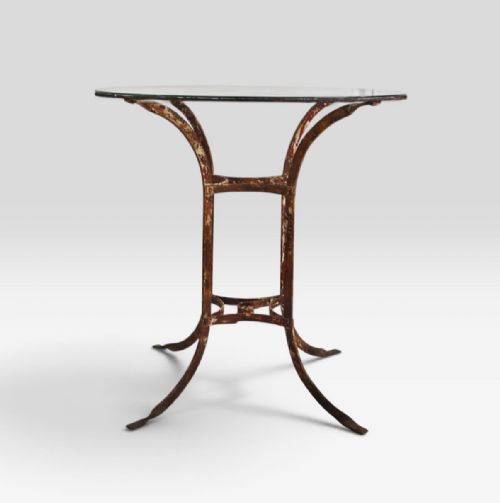
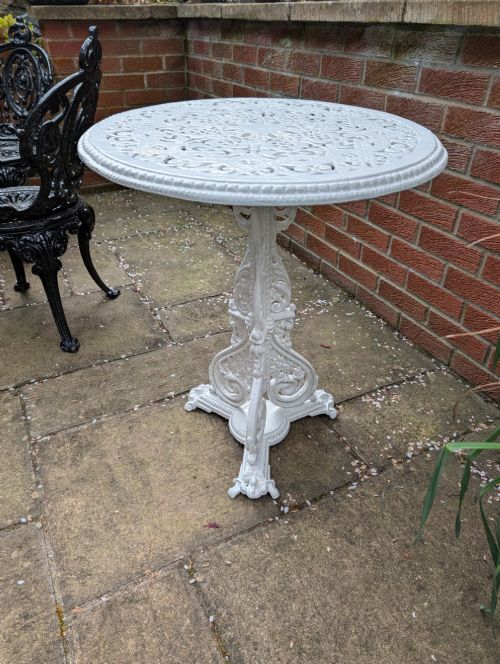
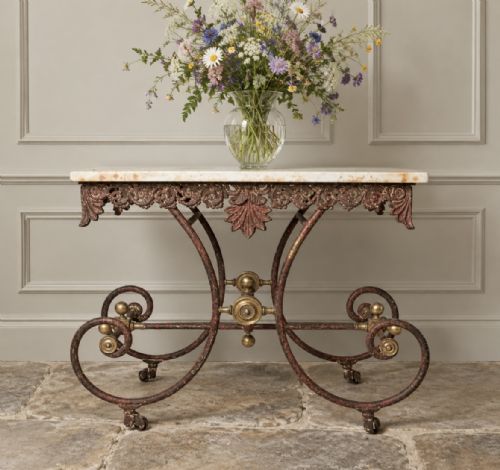
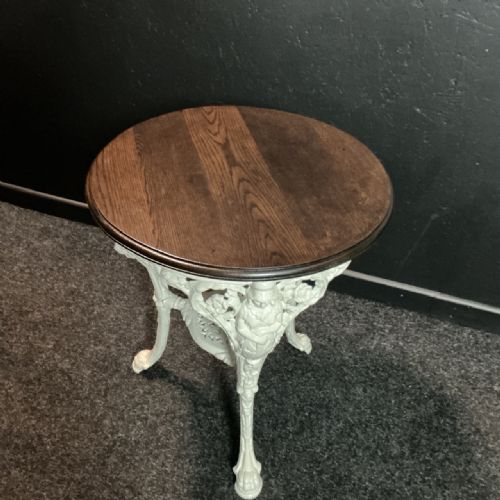


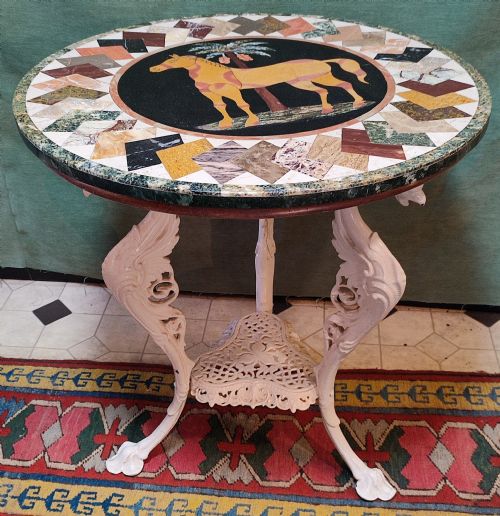


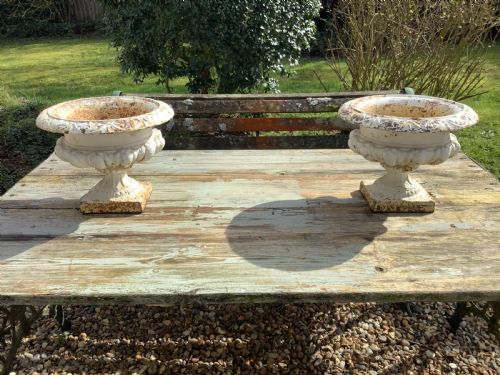

Painted Cast Iron Table
A painted cast iron table brings industrial strength and ornate design to garden rooms, conservatories and pubs.
Painted Cast Iron Table
A painted cast iron table combines robust metal bases with stone or timber surfaces, serving practical roles across domestic and commercial settings. When searching for a painted cast iron table, buyers encounter formats ranging from compact bistro and drinks tables to larger console and garden furniture.
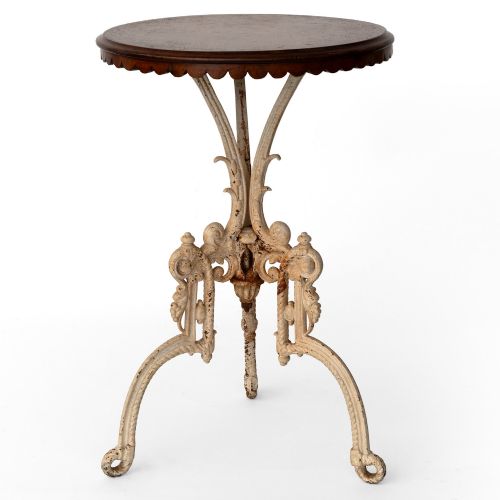
The majority of pieces span the nineteenth century and the Victorian era, alongside French regional examples. Forms include dedicated conservatory, orangery, and pub tables, often featuring circular tops supported by heavily decorated pedestals.
Origins divide between English workshops and nineteenth-century French designs. Tables frequently pair heavy metal structures with marble, cedar, oak, or hardwood tops.
How they were made
Foundries poured molten metal into sand moulds to create intricate structural bases with openwork tracery, faux bamboo moulding, or figural Britannia designs. These heavy cast components provided the necessary stability for outdoor and public environments without requiring additional fixings.
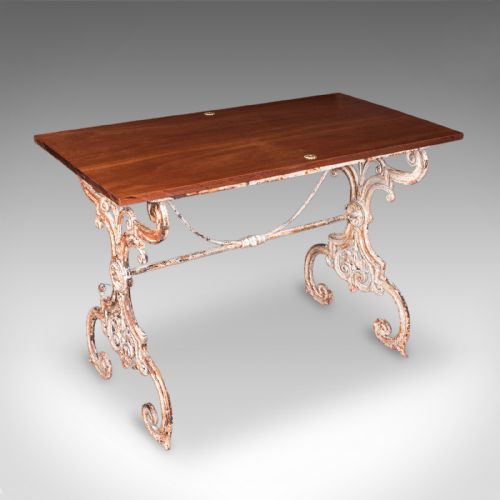
Makers integrated timber and stone surfaces directly onto the metal frames using wooden sub-frames or direct stone placement. Cedar, oak, and marble formed the working surfaces, secured above brass or iron fittings.
Protective layers of white or coloured paint were applied directly over the porous metal surfaces to prevent oxidation and to brighten garden and conservatory interiors.
Painted Cast Iron Table Retail Price Guide 2026
Typical asking prices for painted cast iron table among the pieces listed under this phrase on Sellingantiques today, from the lower quarter to the upper quarter. They describe what is for sale here now, not the wider market.
Listings feature items from the 19th Century and the Victorian period, utilising cast iron, marble, oak, cedar, and brass.
What varies in quality
Fidelity of the casting separates standard utility pieces from high decorative examples. Crisp definition in foliate scrolls, faux bamboo joints, and Britannia figures indicates superior pattern work and careful foundry finishing.
The selection of top materials alters the character and balance of the object. Thick marble slabs and dense timbers like cedar provide permanence and visual weight that thinner secondary woods do not match.
The Painted Cast Iron Table Glossary
- Britannia table
- A Victorian pub table featuring a cast iron base shaped as the seated figure of Britannia. This form gained widespread popularity in nineteenth-century hostelries.
- Console table
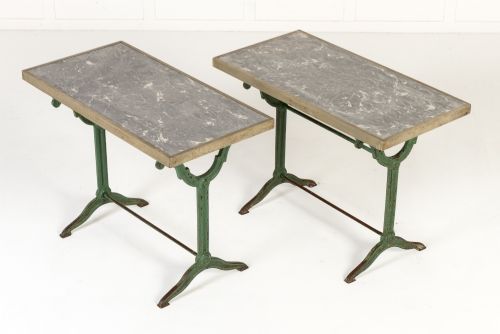
- A table designed to stand against a wall, frequently supported by ornamental brackets or pedestals. In ironwork, these often feature narrow marble slabs.
- Faux bamboo
- A decorative treatment mimicking the segmented stems of natural bamboo. Victorian founders frequently cast this motif directly into iron table bases.
- Orangery table
- A sturdy piece built for semi-protected garden rooms and glasshouses. These items needed to withstand seasonal temperature shifts while holding plants or serving refreshments.
- Bistro table
- A small café or garden table intended for dining or drinks. These typically use a single central pedestal to maximise legroom.
Painted Cast Iron Table: Frequently Asked Questions
Where were these tables used?
These pieces functioned in nineteenth-century domestic conservatories, garden spaces, and commercial pubs. Their durable construction suited environments exposed to heavy daily use or moisture.
Pub interiors utilised compact circular designs for patrons, while larger console and planting tables served country houses and glasshouses.
Can I leave them outside?
Cast iron endures outdoor placement well, provided the painted surface remains intact to block moisture. Many examples spent decades in gardens and orangeries.
Protecting the table during harsh winter months preserves both the painted finish and any fitted timber or marble components.
How do I identify Victorian pieces?
Nineteenth-century items often display registration marks, foundry stamps, or specific design motifs such as Britannia figures and faux bamboo moulding. The weight and thickness of the cast components also point to this period.
Stylistic cues align closely with Victorian conservatory and pub culture, distinguishing them from later reproductions.
What top materials are common?
Surfaces include heavy white marble, cedar, oak, and general hardwood. Marble tops offered a cool, easy-to-clean workspace for drinks and planting.
Timber tops brought warmth and natural grain to conservatory and indoor settings, secured directly to the metal frame.